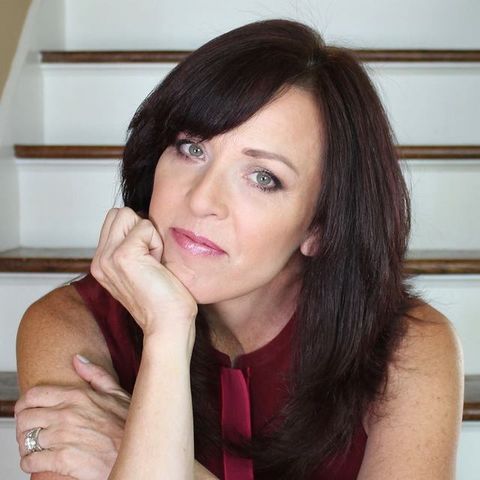
Welcome to the Breakdown to Breakthrough podcast.
My name is Lisa A.
Romano.
I am a life coach,
Bestselling author,
YouTube vlogger,
Meditation teacher,
And expert in the field of codependency and narcissistic abuse.
I am a believer in the power of an organized mind.
My aim is to help people learn what it means to live above the veil of consciousness rather than living a reactive life.
May your heart feel blessed,
Your mind feel expanded,
And your spirit find hope as you spend time with me here at the Breakdown to Breakthrough podcast.
So today we're going to be talking about a codependent myth that I believe many of us need to address and it has to do with this idea that if you're a good person,
If you are a normal person,
Then you're happy all the time.
If you're a normal person,
You don't have needs.
Everything's just fulfilled.
Things just work out for you.
If you're a normal person,
Then you never have to ask for your needs to get met.
If you're a normal person,
You're never sad.
If you're a normal person,
You're never angry.
If you're a normal person,
There's this idea that you should always be happy.
Things are always working out for you.
And if you're a codependent person,
Chances are that you struggle with your identity.
You don't believe that you're worthy.
If you've come from a dysfunctional home,
There's a sadness about you.
You've lost childhood experiences.
You were forced to grow up sooner than you should have.
You were forced to live a hypervigilant life,
Observing the people around you,
Being very careful about what you say.
You may have lost yourself in trying to anticipate the next move of the adults in your life.
And you've lost the ability to just be playful.
And you have issues with that,
Although they might be internal.
You might be angry when you see people really having fun.
It might really tick you off when people are able to let go.
And in your head,
You might feel like,
How dare they be so happy?
My life is blah,
Blah,
Blah,
Blah,
Blah.
They should have to work like me,
You know,
Or they have no idea how hard I work and how much is on my plate.
And it's true.
There is a lot,
Especially if you're somebody who is trying to be enough.
You may be somebody who is super responsible,
Maybe too responsible.
And so,
Yes,
You have a lot on your plate.
If you're a caretaker,
You might be taking on way too much.
You might be taking on the responsibilities of other people.
And sure,
There's a lot on your plate.
If you've manifested a narcissist into your life,
You absolutely have way too much on your plate.
This might be all driven and in my humble opinion by subconscious childhood programming.
You know,
These recordings in your head,
You're not good enough,
You have to take care of everybody else,
Blah,
Blah,
Blah.
But there's also this other tape that says,
If you are normal,
You'd be happy.
Right?
And you're not.
So there's this codependent myth that drives us.
And all it does is make us more unhappy.
And the myth is that normal,
Healthy people are always happy.
Or the myth is that normal people are never sad.
Right?
And so here we are experiencing some unbelievably unrealistic personal expectations.
We have these incredibly difficult personal lives.
And there's some background program that has us believing that if we do these things,
If we take care of everybody else,
If we people please,
If we deny our own needs,
Then we'll be happy.
You see,
But here's the problem.
We're not.
And then there's another background,
Subconscious childhood dysfunctional program,
That shames us even deeper,
And has us believing that we should be happy.
And that if we're not happy,
We're not normal.
And so whatever's wrong is us.
It's us.
So it compounds our brokenness.
It compounds our shame.
Right?
So it's really important that if you are the adult child of an alcoholic,
If you are the adult child of a narcissistic parent,
If you grew up with parents who were workaholics,
And never showed you how to have fun,
Never showed you how to relax,
You had to be the best,
You know,
You couldn't have sloppy homework,
Your room could never be a mess,
Everything had to be perfect,
Perfect,
Perfect.
If you were compared to other siblings,
If your mother showed favor to one sibling over you,
Or perhaps a cousin,
If your parents talked about the other children who were so much better than you,
Whatever the case may be,
You have been driven to think that there's something wrong with you.
And in order to be happy,
You have to prove yourself worthy,
You have to overachieve to experience happiness.
This drives you to the brink of brokenness and burnout.
And the entire time,
The fact is you're not happy,
You're chasing happiness.
And then the subconscious program below the veil is,
Because you're not happy,
You're not normal.
And so I think that we really need to be able to activate a prefrontal lobe,
Which is the powerhouse of the thinking brain,
The neocortex as well.
There's a process called metacognition,
Where we have the ability to think about the way we think.
If we're not thinking about the way we think,
We're not thinking,
We are reacting,
We are recycling.
And so I really hope that you begin to think about the way you think.
This is the only way to heal from codependency,
To heal from narcissistic abuse,
Because narcissistic abuse is also tied to your identity.
You thinking you need this person's approval,
You becoming addicted to their approval,
You not understanding that the narcissistic supply,
That you supply the narcissist,
Is their addictive,
Their addictive fuel.
So learning to think about the way that you think,
Learning to observe these background noises,
These background programs that I call them,
You know,
It's not you,
It's just your programming.
I say it all the time.
That's my tagline.
When I began to realize that my life,
Literally the life that I constructed,
Including summoning three amazing children to this planet,
Including getting married,
Having a home and a business,
Living where I lived,
My furniture,
My business,
Everything.
When I realized everything was designed by way of subconscious,
Dysfunctional childhood programming,
It scared the heck out of me,
Because I realized how unconscious and subconscious my choices were.
That I was chasing approval,
That I was addicted to approval,
The approval,
Making sure that I was people pleasing and taking care of everyone else.
And I did not realize that I was living an unconscious life.
If you don't know the beliefs that you hold,
Then you won't understand your life.
If you believe that normal people,
Healthy people,
Are happy all the time,
And if you believe that healthy people never get sad,
Then you will experience shame when you feel sad.
And that is only going to make healing and breaking this codependency code and healing from adult children of alcoholic issues,
Healing from narcissistic abuse,
Harder and more difficult.
Feeling unhappy is normal if something happens in your life that makes you feel unhappy.
If you are unhappily married,
It's normal to be unhappy.
The problem that we have is,
I mean there's so many layers to this,
When you are the adult child of an alcoholic or the grandchild of an alcoholic or the child of narcissistic parents,
You don't realize that you not only seek approval,
But you seek permission.
I was so unhappy as a little girl,
But I didn't feel like I had permission to be unhappy.
My parents brainwashed me to believe that there was something wrong with me.
They said,
I'm not happy.
They brainwashed me to believe that there was something wrong with me.
They told me all the time,
Look what you have,
You should be happy.
You have no right to feel this way.
You're looking for attention.
You are selfish.
And so I believe that I was,
There was something wrong with me because I was so unhappy.
I had nothing to point out.
My parents didn't drink.
Right?
My parents,
Worked in the house all day.
My dad went to work every day.
She was home.
I didn't understand adult,
That she was the adult child of an alcoholic.
I didn't understand that her rage had affected me.
I didn't understand that her rejection of me was why I was unhappy.
I didn't understand that.
That was invisible.
And you know,
When you live in a world of dysfunctional people,
They throw things in your face.
I cook for you.
You have shoes on your feet.
I take you to the doctor.
What more could you want?
The invisible bonds that are so important are non-existent,
But they don't even know that they're non-existent.
And so you grew up feeling like you,
Because you feel unhappy,
But everyone's telling you that you don't have a right to be happy.
So then you think that you have this myth that healthy people are happy.
And if I was normal,
I would be happy.
And so you also look for permission to not be happy.
You should never have to ask for permission to not be happy.
If you're unhappy,
The first order of business is to accept that,
To come out of denial that you are unhappy,
And to allow yourself permission to say,
I am not happy.
Your truth sets you free.
The ultimate truth is that you are enough,
And you have nothing to prove.
But before you can get to that truth and to be spiritually set free,
You have to accept what is.
And understanding that there's a codependent myth out there that says,
You know,
If I was normal,
I'd be happy.
And everybody is happy.
And healthy people are happy all the time.
No,
Healthy people accept when they're not happy.
They understand that what's happened in their experience is a reason and it's valid to be unhappy.
And they also realize that emotions are like,
You know,
It's like a rainbow.
There are so many different colors that an emotion that we're supposed to experience,
And we're not supposed to attach to our emotions.
Our emotions are states of being.
But below an emotion is the self,
Is the calm,
Serene self that understands that everything that happens is an experience.
And it's an opportunity to fall more deeply in love with the self and the truth.
And getting to the ultimate truth that I am enough as I am because I am.
I have nothing to prove.
I have nothing to prove.
I don't need permission to feel what I feel.
I don't need to seek validation.
I don't need to be happy all the time.
It doesn't mean I go around and kick the dog or take it down on the kids.
It means that I learned to accept my unhappiness is okay for the moment.
It means that recognizing when I am unhappy gives me an opportunity to figure out what I'm doing and what I'm thinking and how I'm living my life in order to move me into a state of more happiness.
So when I am unhappy these days,
I accept it.
And then what I do is I look in my experience for what might be making me unhappy.
Am I dealing with a draining person?
Am I taking on too much?
Am I budding into someone's life?
Am I trying to fix someone's life?
Am I acting in a codependent way?
Am I trying to save and rescue someone?
So I find myself when I am unhappy,
I accept it and then I observe myself and I take responsibility for how I'm showing up.
Then I detach.
I let go.
I focus on myself and I start to take care of myself.
And then suddenly I'm not so unhappy anymore.
And so if you're someone who thinks that everybody's happy all the time or if you're a healthy person you should be happy all the time,
I hope this episode has helped you identify that false belief and given you some tools to think about as you move ahead on your journey,
On your healing and awakening journey.
Namaste for now.
Bye.