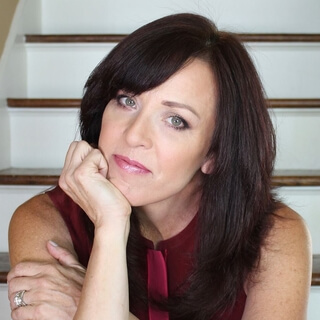
Welcome to the Breakdown to Breakthrough Podcast.
My name is Lisa A.
Romano.
I am a life coach,
Best-selling author,
YouTube vlogger,
Meditation teacher,
And expert in the field of codependency and narcissistic abuse.
I am a believer in the power of an organized mind.
My aim is to help people learn what it means to live above the veil of consciousness rather than living a reactive life.
May your heart feel blessed,
Your mind feel expanded,
And your spirit find hope as you spend time with me here at the Breakdown to Breakthrough Podcast.
Namaste,
Dear ones.
So today we're going to be talking about nine boundaries narcissists violate.
First of all,
I want to say thank you so much for being here.
Thank you so much for being dedicated to personal development work,
To raising the bar on our level of consciousness,
To choosing to live above the veil of consciousness rather than below it.
If you come from a dysfunctional family,
It is not your fault that your subconscious mind has been programmed against you,
That you live in survival,
That you associate fear with feeling yourself off the wall.
That's very normal.
It's not uncommon for those of us who come from dysfunctional homes to be afraid to speak our truth.
That's why so many of us play it small.
And I'm so glad that you are here trying to find a way to play it big,
Trying to find a way to make your best self shine in spite of what's happened in the past.
So today we're going to be talking about the types of boundaries narcissists push.
And this is a really important topic because those of us who have come from dysfunctional families,
We don't even know what a boundary is.
In our house,
When I was growing up,
It was about every two to three days before the house exploded.
I could literally count on my fingers,
The amounts of days where the house was quiet,
Where mommy didn't explode or daddy didn't explode.
I'm so grateful that I learned to realize that shadows are the result of negative childhood experiences or negative feedback.
So part of my shadow was Lisa,
You're not enough,
Right?
And running from that,
Trying to be perfect,
Trying to be perfect,
Trying to be perfect,
Trying to be good enough,
Avoiding this,
Hey,
You're not enough stuff from the outside and not knowing that the negative feedback from my childhood taught me or helped me create a shadow,
This idea that you're not good enough.
And it wasn't until I stopped the madness in my own mind and I let everything go that I knew it is so scary to wake up and go,
Where am I?
It's like Rumpelstiltskin syndrome.
Like how many of us got the message that it was selfish to take care of the self.
It's selfish to think well of yourself.
You should think poorly of yourself.
You don't know what a boundary is.
When you come from dysfunctional home,
No one's teaching you mom and dad are walking around stoic.
They don't show emotion or mom and dad push your emotions down or mom and dad stuff,
Their own emotions or mom and dad have no ability to emotionally regulate.
So where are the boundaries?
Siblings are attacking one another.
Mom has a golden child.
Dad has another golden child.
One child's a scapegoat for mom.
Another child's a scapegoat for dad.
Children don't even have a chance to get along in narcissistic families.
It's so sad,
But it doesn't have to be that way.
You are a conscious human being.
You have choice.
Isn't that beautiful,
Dear one?
You're not a silverback gorilla.
You know,
You're not a flamingo hanging out in the Florida Keys somewhere.
You get to be whatever you want to be.
But that's difficult because to make that choice,
You have to turn from everything you've ever known.
That's scary because the brain is designed for the familiar.
The brain bucks that which is unknown.
It's a safety default mechanism of the brain.
In the familiar,
We know what to expect,
But that keeps us stuck and that keeps us small.
And make no mistake,
If you're here trying to recover from codependency,
I can guarantee you if you stay on this path long enough,
You,
Dear one,
Will experience a spiritual awakening.
You will realize the first part of your life was all a bunch of matrix gobbledygook.
You were drinking the Kool-Aid.
You just didn't know it.
You know,
And so were your ancestors,
Your mom,
Your dad,
Your sisters and brothers,
Your husband,
Your wife.
But you have an opportunity to awaken.
And so that's why I wanted to create a session around boundaries.
Because if you came from a dysfunctional home,
You're like,
What's the boundary?
You know,
No one respected me.
I wasn't allowed to talk.
I wasn't allowed to feel.
So emotional boundaries,
You have a right to experience your own emotions.
Imagine that.
Think about that for a moment,
Dear one.
You have a right to feel your feelings.
Amazing.
So when we're having emotionally,
When we have emotional boundaries being crossed,
This idea is that the person we're dealing with is telling us that we don't have a right to feel what we feel.
We don't have a right to be autonomous.
You have a right to take care of yourself.
But when you're dealing with a narcissist,
The narcissists make it impossible for you to hold on to what you think,
To hold on to what you feel.
The narcissist will also blame you for what they feel.
So we're losing this ability to see other people as autonomous 3D human beings because the narcissist says,
I'm angry.
I punished you.
I did bad things to you.
I hit you.
I smeared your name.
I lied about you.
I tried to destroy your business,
But you made me do it.
You see how the narcissist makes you responsible for their feelings?
That's crossing an emotional boundary.
So if they harm you,
You deserved it.
This is the message that you will receive.
They were in their right to become enraged.
Narcissists wish to control your emotions.
They want you to feel what they want you to feel,
Thereby causing you to live in denial of your own reality.
So emotional boundaries get crossed in various ways.
And the more you understand and recognize how emotional boundaries get crossed,
The better you are prepared in your relationships when you are speaking to other people.
So recognize that you have a right to feel your feelings and other people have a right to feel their feelings.
This is how we level up our consciousness.
And we,
In that space,
Once we see that clearly,
It's like,
Huh,
If I'm unhappy,
It's my job to make myself happy.
I might have to set a boundary.
I might have to go no contact.
I might have to shutty shutty.
I might have to level up my education.
I might have to change where I live.
I might have to cut certain people out of my life.
I might have to change things.
And so when we're up leveling our consciousness,
When we're doing this,
We are ultimately finding freedom,
Emotional freedom.
Because if I can take responsibility for how I feel,
I let you off the hook,
But here's the beauty of it.
I now expect you to take care of you.
I no longer allow you to blame me for your anger,
For your alcoholism,
For your drug addiction,
For your gambling addiction,
For your porn addiction,
For your sex addiction,
For your inability to keep money in the bank.
I no longer,
I no longer allow you to blame me for why you keep getting into trouble.
So the next one,
Financial boundaries,
You have a right to make your own money.
You have a right to spend your money the way you wish.
You have a right to buy what you want to,
When you want to,
And to spend your money how you see fit.
You have a right to spend your money on yourself,
Making sure you are well taken care of.
So you have a job.
You have a right to live in the apartment that you want to live in.
You have a right to buy the car that you want to buy.
When you are dealing with a narcissist,
Narcissists,
However,
Feel like and want you to believe that you're responsible for taking care of them.
So what does that mean?
Your money is their money.
Their aim is to get you to pay for what they should be paying for themselves.
They have no problem spending your money,
Dear one,
But will become angry,
Bitter,
Sneaky,
And resentful if you expect them to spend their money.
Narcissists will use your money.
The well runs dry.
They will discard you.
A narcissist will expect you to pay for their DWI tickets.
They'll expect you to take the money that you made for the week and to bail them out of jail.
And they will expect you to compensate for their mistakes.
And they won't care because it's all about them.
The next boundary is the self-care boundary.
So you have a right to self-care.
You have a right to love the self.
You have a right to make you a priority.
You have a right to educate yourself,
To exercise,
To eat well,
To buy yourself the clothes that you desire,
To read and to do the things that empower you.
Now here's the issue.
A narcissist doesn't want you to self-care.
This is a huge red flag.
And so a narcissist will see any attempt made by you to take care of yourself as a threat.
So be on the lookout for that.
The narcissist will sabotage your ability to self-care.
They might withhold money from you.
They might mock you.
They might insist to your children that you're selfish because you're taking care of the self.
They may throw away the books that you're reading.
They may fake being sick so you can't go to that yoga class.
They'll throw a temper tantrum just when you're about to go take a hot shower or go for a walk.
Or they'll guilt you when you dare to spend time without them.
So these are the red flags that someone is violating your self-care boundary.
Conversational boundaries.
You have a right to be heard.
You have a right to be understood and to be treated as if what you have to say in a conversation is valid,
Important,
And worthy.
You have a right to feel safe when speaking with another person or within a group.
It's amazing when you think about it,
Especially if you've come from a house or a childhood home full of trauma and drama.
When you think about this idea that it is so unhealthy to not be heard in a conversation,
Feeling unheard,
Being treated with indifference by our family,
By the adults in our family,
And then having that indifference mirrored by siblings.
So if you were mom's scapegoated child,
Your brother may have been the golden child of your mom and your brother may show you indifference.
So he's just mirroring the energy of mom.
And so when you have something to say after school or at the dinner table,
Rather than mom mock you,
Your brother mocks you first.
So he's doing the dirty work of the narcissistic mom.
Now narcissists will talk over you.
They will mock you.
They will invalidate you.
They do not hear you.
Your words will be twisted.
Your words will be devalued.
You'll be talked over and you will be told that what you have to say is irrelevant.
Another boundary is a sexual boundary.
Sexual boundaries refer to what you are comfortable with regarding intimacy.
You have a right to say yes and a right to say no.
When it comes to sexual experiences,
You also have a right to be in a monogamous relationship if that is what you wish to be in.
And if you're in a relationship with someone,
You two should be in agreement for what the boundaries are around the relationship,
Including is this a monogamous relationship,
Including what is okay and what is not okay regarding intimacy.
Now if you're dealing with a narcissist,
A narcissist will push that boundary.
They will act like they heard you when you say no or you say yes or I like this and I don't like that,
But they will push back on anything that you said or a lot of what you said.
If they want to do something that you don't want to do,
Say no to a narcissist and they will come up with all of this backwards rationalization about their friend's wife allows him to do this.
His friend's wife is okay with this.
His ex-girlfriend did this.
What's wrong with you?
Or it could be male,
Female,
It could be female,
Male,
Where the female is pushing a male counterpart to do something that he's just not comfortable with.
So if you're dealing with a narcissist,
They act like they hear you,
But in time what will happen around sex is that what you like and what you don't like will be exploited.
So that's a huge red flag.
So physical boundaries,
These refer to your person,
Your body,
And your space.
This includes your right to say no to touch and to your preferences and all things that concern your body and space.
Do you like public displays of affection or are you uncomfortable with that?
What kind of touch do you enjoy?
What don't you enjoy?
What makes you feel safe and what makes you feel unsafe?
How much personal space do you need to feel comfortable in your relationship?
Now these are the types of things that hopefully you're learning to be more verbal and authentic about in a relationship,
Although it does take time to develop this type of authenticity because authenticity is tied to vulnerability and vulnerability is tied to fear and oftentimes fear is tied to childhood trauma and bad memories and negative feedback from the environment.
So this is really a heroic journey to be able to be honest with the self and to be able to say,
Hmm,
This is what I like and this is what I don't like.
And then to be able to verbalize that with another person,
You're risking this person walking away from you.
You have to be willing to risk whoever you're dating,
Even married to,
You have to be willing to risk them abandoning you and rejecting you to save the self.
In other words,
Like it is not okay to cling to someone at the expense of yourself.
It is not okay to lie to yourself,
Lie to others,
And to lie to yourself at the expense of yourself.
It's not.
And the less you abandon yourself,
The more you honor yourself,
The less you fear being abandoned and the more able you are to be vulnerable because now you're not attached to an outcome.
Now you're not seeking the approval of this person.
Now it's just you being you.
When we're lying to ourselves,
When we're pretending we like things that we don't,
We're really abandoning the self to try to keep that in mind.
So material boundaries,
You have a right to own what you own.
You have a right to do what you want with what you own.
Now narcissists will use your things without asking.
They will take your car,
They will eat your food,
They will borrow your clothes or take your clothes,
Give your items away and guilt you into allowing them to take what is rightfully yours.
Dare to say no to a narcissist and you will be shamed and emotionally manipulated into feeling guilty for daring to exert rights over your possession.
So you're at work,
You have a community refrigerator.
There's a narcissist in the group that continues to eat your yogurt bowl.
Every day you come in,
You put your food in the refrigerator and there's some narcissist in your office that doesn't give a damn that this is your food.
You go through the trouble of putting your name on the container.
It doesn't matter.
The narcissist sees that,
Doesn't care and thinks,
Oh,
What's for lunch today?
And they actually eat it.
And when you ask them who ate it,
They will not tell you.
Or if they do,
They might admit that they did it,
But they don't care.
They'll say things like,
Would you put it in the community refrigerator for,
Well,
If you didn't want anyone to eat it,
You shouldn't have put it in the refrigerator.
All of this backwards rationalization to justify poor behavior.
Don't get caught up in that because that's a trap because a narcissist wants you to reveal how you feel,
Right?
That's the goal.
And the more emotional you are,
The more of a narcissistic supply you become because they don't care about you.
They don't care that you're hungry.
They don't care that you're saving your pennies,
Your nickels,
And your dimes.
You're making your own lunch because you're trying to put your kids through grammar school.
They don't care.
Or you're trying to buy your kids a pair of glasses.
You don't matter.
And this is so hard for us to wrap our minds around.
But once we wrap our minds around and we detach from this idea that other people have consideration the way you do,
And you would never eat someone else's lunch or never take someone else's food out of the refrigerator,
You would never do that.
You have to wrap your mind around this idea that not everybody's like you blows your mind when you think about it.
And it makes you kind of feel a little bit unsafe because you're a fairy tale illusion of the world has been shattered.
This idea that people out there that are their predator type personalities,
They're parasitic,
They live off of other people and they don't care about how other people feel is freaking terrifying,
You know,
And that's why so many of us,
You know,
Keep the rose colored glasses on and we give everybody the benefit of the doubt.
You know,
We believe there's good in everybody,
You know,
And oftentimes you're the one that gets exploited,
But it's awesome.
And it helps develop resilience when we just accept that not everybody is like you.
Not everybody is considerate.
Not everybody has empathy.
If you identify someone in your life that has no respect for your physical boundaries,
You need to recognize that as a red flag.
I hear this a lot with my clients who have roommates and they happen upon a narcissistic roommate that takes her shoes,
Right,
And then goes to spend time at her boyfriend's for the weekend and never even tells her roommate that she took her shoes.
And then when the roommate is confronted about taking the shoes,
She lies.
And then when the roommate comes back on Monday,
Suddenly the shoes appear,
Right?
And then the roommate that got that took the shoes is angry and then begins to gaslight my client who knows that her roommate took the shoes,
Trying to convince someone that what they think is inappropriate so that they can avoid responsibility because a narcissist doesn't want you to catch them.
If that means we need to put a lock on our door and if that means that the other roommates are a little ticked off that we're suggesting that they don't respect boundaries,
Then that's what it means.
That is what a codependency recovery is all about.
I'm going to honor reality and where I need to set a boundary,
I will set it and how you feel about it has nothing to do with me.
I've been put in a position where I need a boundary and now I'm going to set the boundary.
And if that ticks you off,
Well maybe you shouldn't have crossed the boundary.
Spiritual boundaries.
You have a right to believe what you believe and to believe in what you want to believe in.
You have a right to practice whatever faith you feel most in alignment with.
Narcissists will either negate or devalue what you believe or coerce you into believing what they believe.
If you do not believe in a particular faith and a narcissist does,
They will devalue you and your choices.
So spiritual boundaries are those boundaries that we have a right to honor that has to do with our faith and or our lack of faith.
You have a right to feel what you feel.
Remember,
This is a journey you're trying to unfold.
My point is most of us are evolving our ideas about our higher power over time.
So it's totally okay wherever you are,
Whatever you believe,
If this is your path and this is your journey.
People who are healthy accept you like wherever you are is wherever you are and that's where you need to be.
You're an individual.
But I accept what you believe and I don't judge what you believe and I don't think less of you because you think differently than me.
We're just at different places,
You know,
Mentally and emotionally,
And that's okay.
But wherever we are,
We need to accept what we are.
This is healthy.
Someone who is more narcissistic is going to suggest that you don't have the right to feel and think what you think when it comes to a higher power.
The last boundary we're going to talk about is called time boundaries.
I wanted to offer some context to the innumerable ways a narcissist violates you as an autonomous human being.
And I wanted to bring light to the various ways in which you have a right to see yourself as a separate autonomous human being from other people.
And I wanted to help you understand the many ways in which you have a right to exercise your right over your boundaries.
So the last one is time boundaries.
So you have a right to spend time as you see fit.
You have a right to budget your time and to do the things you want with your time.
Narcissists will exploit your time.
Narcissists will do what they can to make sure your time is spent babysitting their ego,
Praising them,
Boosting them up,
Catering to them,
And making them the center of your world.
Your time is not your time.
You will be guilted or shamed for daring to take care of yourself and not putting them first.
The expressions that you'll hear a narcissist say are,
Why couldn't you look at the PDF I sent you?
What were you doing that was so important?
Did you have a look at my pictures?
What do you think about that picture?
I took a picture of that sunset and that sunset and that bird and that seagull.
And what do you think about that?
And I put this outfit on today and I sent you pictures.
I need your opinion on that outfit.
Narcissists don't see people as they are.
We are props in the life of a narcissist.
They feel entitled to exploit your time and to demand that you pay attention to them because what they're seeking is a manipulation.
They're trying to manipulate this sense of importance out of you.
You see,
When you say Bravo,
That's awesome,
Right?
They feel good about themselves.
You have given them the boost that they need.
So their mask stays in place and they'll get angry at you if you don't affirm them.
Just if you peel yourself back from it,
It is maddening.
But once you see it,
It's like toothpaste out of the tube.
You can't get the toothpaste back in the tube anymore.
And then as you begin to recognize that a narcissist is monopolizing your time and crossing that boundary,
That's when you begin to pull yourself back and pull yourself back.
Give them the message that you are no longer their source of narcissistic supply.
The shop has been closed.
No more narcissistic supply here.
We're going to have fair communication.
I'm going to get the feeling that you care and you are considerate of my time.
And so it's difficult to peel ourselves out of these situations,
But it starts with seeing the hole in the wall.
Most of us are in a boat.
I just got an image of a boat in my head.
We're in a boat.
We're in a bunch of little holes and we just keep paddling.
The narcissist is drilling holes in our boat,
But we just keep paddling.
We keep paddling.
We're so afraid to confront the narcissist and throw them overboard.
No,
I'm just kidding.
I don't advise throwing anybody overboard.
That's just a metaphor.
My point is we are so below the veil of consciousness.
We are so that frog in the pot of water.
We're so boiling in that pot of water.
We have so acclimated to the heat that we don't know any other way.
And I just don't think that's any way to live a life,
Right?
So if you're a mom and you're in a codependent relationship with someone who is narcissistic,
Your children are watching.
If you are a man and you are in a relationship with a narcissistic woman and you have children,
Your children are watching,
Your family is watching,
And you have the right to have people that you care for honor your boundary.
But how do we get someone to honor a boundary if we don't realize that they violated that boundary?
Codependency recovery is also,
We have to know that as we change our entire way of thinking and feeling and being in the world begins to change.
So our manifestations,
The result of beliefs that created thinking,
That created feeling,
That created actions,
That created outcomes.
And I know in my life,
When I began to upset that process,
I went back to the beginning and I understood my beliefs and then I changed them.
And then when I,
My beliefs began to change,
My thinking changed.
And when my thinking changed,
My feelings changed.
So I was vibrating at a different,
With a different frequency.
And as I began to vibrate differently or resonate on a different frequency,
My actions changed.
And that upset the entire family system that I was in.
And that was really scary.
That was really,
Really scary.
And that is where I really relied on what I was learning about codependency and seeing the long-term goal,
Keeping my eye fixated on the goal,
Which was being in a healthier relationship one day,
Or just being out of an unhealthy relationship.
And I just knew that everything that I was going through,
I was going to have to walk through the fire.
My therapist at the time said,
Listen,
It took a while to weave this marital blanket and it's going to take a while to unweave it.
But it was tough.
I got to tell you,
Unweaving that blanket,
Because all of my fears came true.
Everything that I was afraid of came true.
I had an emotional,
Mental breakdown.
I came to realize that I wasn't only codependent.
I was struggling with love addiction and I was in severe,
Severe withdrawal and I was not making good decisions.
And as a result of not making good decisions,
I was dealing with the shame of not making good decisions.
And in time,
I learned to forgive myself because I realized that the fears that I had and the things that I engaged in at the time due to coming out of a relationship that I was dependent upon and going into withdrawal,
I learned that I had to forgive myself.
And until I forgave myself,
These fears were going to chase me.
The only person that I really needed forgiveness from really was myself.
And the more I forgave the younger self who was having a mental and emotional breakdown,
The more I forgave her,
The more I had empathy for her,
The more I wanted to wrap my arms around her and say,
Hey,
Listen,
Kid,
It could be no other way.
You had very poor role models.
You had no one that had any wisdom truly that you could go to.
You were an emotional wreck.
You could only play with the tools that are in the shed and you didn't have many.
You did the best that you could.
It was a bad time.
But now that you know better,
You do better.
Thank you,
Maya Angelou.
So really turning all that love and passion onto myself,
Facing the dark night of the soul,
Weeping and crying and just allowing all of this guilt and the shame to ooze out of me,
Which is the result of all of my shadows.
And my story is not unique.
I'm not a freaking unicorn.
I'm not a unicorn.
We all go through this stuff.
We're all here to evolve our consciousness and we're all here to forgive the self.
But my point is that we're here for such a short amount of time and we focus so much on the mistakes that we make.
And the more we focus on them,
The more narcissists will exploit them.
So as someone who has really embraced the self-forgiveness,
Self-acceptance journey,
I can tell you that the more you forgive yourself,
The more those fears dissolve.
And that really is important.
Let people talk.
Narcissists will never tell the entire story.
They'll tell a very small portion of it and they'll leave the most important parts of that story out.
We have to accept that.
They're going to smear your name.
They have to because they can't be the one that you left because they're not good enough.
They can't be the one that you abandoned.
There has to be something defective about you.
You had to do something to leave.
It has to be your fault.
And that was a huge aha moment for me when I realized it could be no other way.
I had to be the one that everyone blamed.
I had to be the one that was wrong.
And so it's really difficult when you're ending a relationship,
The smear campaign is coming,
The exploitation of the truth,
The twisting of the truth.
At the end of the day,
What ends up happening as we're evolving our soul is we begin to realize there was no escaping our dragon.
There was no escaping our fear.
There was no escaping the abandonment.
There was no escaping the rejection.
But that's okay.
Because if you stay close to this path,
You learn that you were always enough.
You learn that you can find people that resonate with you.
You can love the self.
You can recover from childhood trauma.
You can ease yourself.
You can heal from anxiety.
You can heal from depression.
You can end your codependency.
You can stop seeking approval.
You can stop being needy in a relationship.
You can learn to set boundaries.
You can say no more.
It takes time.
I think I become what I feel I do.
What you think and you feel affects how you behave in relationships.
And as your thinking and feeling changes,
You change in a relationship.
And guess what?
The whole relationship changes.
And that's when you really have to be strong.
The relationships that were good,
They get better.
The relationships that were never good,
They fall apart.
So you have to hold on for the ride because things are going to change.
We also have to give people an opportunity to adjust to our new self.
I was totally willing to give the people in my life time to adjust to new Lisa,
To the Lisa that was going to set boundaries,
To the Lisa that wasn't going to be shushed anymore,
To the Lisa that was not going to be permitted to take care of herself.
But unfortunately,
In my life,
There were certain people that just were completely intolerant of the new Lisa and who wanted to break me.
And those are the people that I had to part ways with.
And it was really,
Really hard because it felt like I was pulling my skin off because I loved these people,
But I knew that I couldn't sacrifice myself to hold on to these relationships.
And I had to let that go.
And again,
It's important that we realize that none of us are perfect.
So we don't take this idea that we've never made mistakes.
So we haven't participated in some cases in the demise of relationships,
Because that's just not true.
If I was really super healthy,
I would have never ended up in the relationship that I ended up in.
But those of us who are struggling with low self-worth and those of us who've come from dysfunctional homes,
Those of us who are starving for affection,
It's difficult for us to set boundaries.
It's difficult for us to walk away.
So the unhealthier we are,
The more we tolerate and the less boundaries we set.
So I think part of the recovery process is absolutely identifying the boundaries and relationships that need to be respected.
Now that I know that these are the boundaries that I have a right to be respected,
Now I have some ammunition.
So now I have some context,
I have some cognitive context.
So now when I'm violated,
When my time boundary is being violated,
When my material boundaries are being violated,
When my conversational boundaries are being violated,
When my spiritual boundaries are being violated,
Now I know it.
Now I can call it out.
Now I have some context.
Now I have a label and that helps to bring order to chaos.
Namaste everybody.
Until next time.
Bye for now.