Welcome to the Breakdown to Breakthrough Podcast.
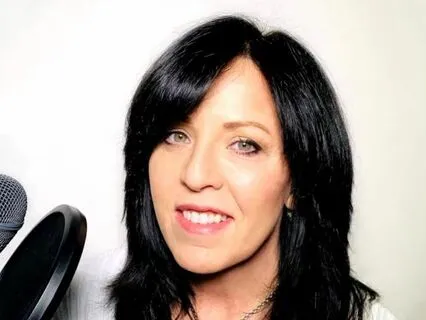
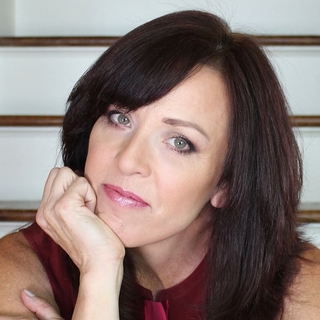
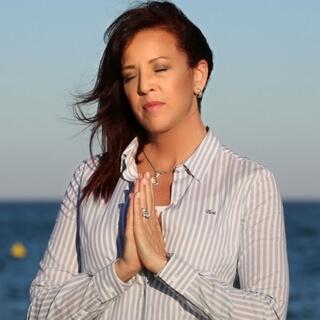
My name is Lisa A.
Romano.
I am a life coach,
Best-selling author,
YouTube vlogger,
Meditation teacher,
And expert in the field of codependency and narcissistic abuse.
I am a believer in the power of an organized mind.
My aim is to help people learn what it means to live above the veil of consciousness rather than living a reactive life.
May your heart feel blessed,
Your mind feel expanded,
And your spirit find hope as you spend time with me here at the Breakdown to Breakthrough Podcast.
So today we're going to be talking about complex PTSD and why it is children who come from childhood traumatic backgrounds have a difficult time trusting their emotions as adults.
One of the common complaints that I have as a life coach dealing with people who have complex PTSD,
Those of us who are struggling with codependency,
Those of us who are raised by alcoholic or narcissistic parents is that we struggle to accept negative emotion.
When we have a negative emotion or a strong emotion,
We very oftentimes don't know what to do with it.
We feel terrified that we have a negative emotion.
So let's say mom calls,
You and your mom are estranged.
Let's say mom calls you and she says,
Hey,
Mary,
What's up?
And you don't want to talk to mom.
Now you have a strong negative emotion towards mom and you set a boundary.
You say,
No,
I'm not up to talking today.
I'm sorry.
I need a little bit of time.
Very oftentimes what will happen is that Mary will feel guilty about setting that boundary with mom.
Oftentimes children of trauma struggle and guess at what normal is.
We don't know what is normal.
What is valid?
What is appropriate when we have a negative emotion?
Are we wrong when we have a negative emotion?
Are we bad because we have a negative emotion?
And so it all comes down to feeling like we can't trust our inner reality,
That we have no confidence in our thought process or in our emotions.
It can create so much cognitive dissonance and it can create a feeling of sadness and depression for those of us who are struggling with this CPTSD.
And I think many people are struggling with CPTSD.
They just don't know it.
And so that's why I think sessions like this are so important.
And so when we think about negative emotion,
We want to realize that we were taught how to deal with negative emotions in childhood.
I'm going to be offering a diagram very shortly,
So stay tuned with that.
That should make things a little bit clearer.
So think about it.
As a child,
If you had a negative emotion,
What happened in your experience?
If you're like a lot of children who have grown up with alcoholic or narcissistic or abusive or neglectful parents,
You were conditioned to understand that your negative emotions were a threat to your survival,
That you were in the best case and the best situation if you were able to stuff your emotions and acted like you were okay.
You were taught to distrust your negative emotions.
You were taught that negative emotion is bad.
When you feel and have been conditioned to feel like negative emotions are bad,
As a child,
You think that you're bad.
You can't separate the two.
Children aren't narcissistic,
Not in a NPD type of way,
But they're naturally egocentric.
So if something's happening outside of them,
They can't separate it.
They think it's happening because they made it happen.
So if mommy's in a bad mood,
It's their fault.
If mommy's in a good mood,
They were able to control that.
They made mommy happy.
And so it's really important that we understand this idea of childhood programming,
That every child is programmed through repetition,
Observation,
And consistency to have certain associations to negative emotions.
We all do.
So when we think about it,
We're talking about this idea.
I like to think about this idea as having two pathways.
When it came to negative emotion,
The first pathway in my brain is that,
You're wrong.
You should never have negative emotion.
Whatever you think and whatever you feel is wrong,
Mommy said so,
Daddy said so.
All the time,
What I would hear is,
If you want to be angry,
If you want to cry,
Come over here.
I'll give you something to cry about.
And so I wasn't allowed to have negative emotion.
Or if I seemed angry,
I was shamed.
What do you have to be mad about?
Look how you live.
You should be so grateful.
You have food on the table.
What do you have to be angry about?
So I had the one pathway,
My negative emotions are just wrong.
The second pathway a lot of us experience with CPTSD and end up with codependency as a result of it,
Codependency is a manifestation,
The people-pleasing end of it.
So there's this continuum that happens in our lives.
The second pathway tells us that we're still wrong.
Why?
Because we're void of validation.
So on one side of the equation,
We're being told overtly that we're wrong.
And on the other side,
We're never being validated.
And so our emotions,
We don't know how to emotion regulate because we are being invalidated and then we are being told that what we feel and what we think is incorrect.
Now just think about these two pathways that happen in a child's brain that eventually become subconscious faulty childhood programming.
And so just think about it.
It's not my fault if I,
As an adult,
When I have strong emotion or strong negative emotion,
Don't trust how I feel.
My superego comes along as a filter and tells me,
You should not feel what you feel.
Why?
Because my superego learned as a child that when I had strong negative emotion,
There was a very strong negative outcome.
My superego is just trying to keep me safe,
Is just trying to get me to do what my family of origin has taught me to do.
It doesn't mean that the information and the data that my superego is offering me is correct or healthy.
On the road to recovery,
We need a third pathway.
The third pathway is all about what we needed as children,
Which is learning to validate any emotion as valid.
Now we're not saying that emotions are factual.
We're just saying that emotions are energy in motion and they just are.
In healthy homes,
Evolved parents do not take their children's emotions personally.
But unfortunately,
Many of the innocent children of the world are raised by traumatized and unhealed parents.
So when a six year old child says,
I hate you,
Mommy,
Mommy is triggered because mommy thinks she's doing everything that she possibly can for this little boy and mommy is now triggered and tries to control what this child feels and will pull the authority card,
Guilt the child,
Shame the child and make the child feel wrong for their feeling.
I'm not saying that we want little six year olds to go around and be disrespectful.
What I'm trying to help everybody understand is that children should be allowed to understand and experience their emotions without being shamed.
And if it's done in the right way by a parent and with a parent that is emotionally regulated,
Then this is the best outcome for the child because then the regulated,
Emotionally regulated parent can help regulate the emotions of the child.
So let's get to the diagram.
So here we have,
We're going to write down two pathways,
A,
You're wrong,
B,
Let's never validate your emotions.
This equals mental confusion regarding negative emotion.
Now what will happen is you're going to hear when this is your experience,
When you only have these two pathways and you hear you're wrong and you have never validated for your emotions.
This creates mental confusion around negative emotions because there's a negative outcome.
We have to understand this is why as children,
This equals our subconscious programming.
So let's do this,
Our subconscious minds.
This is SCM.
This is a subconscious mind.
This is the data that's in the subconscious mind as it relates to negative emotion.
Now what will happen is when we feel negative emotion,
That's when we hear the voice of the superego that tells us we're bad,
Right?
Why?
Because negative,
Oops,
Are bad,
Because negative emotion threatens survival.
Really important that you understand that,
That negative emotion as a child,
What that does is that threatens our survival.
So negative emotion is something that will threaten our survival.
Now the brain is designed to keep you safe.
So the superego is going to say things like you're bad because it's trying to get you to not express the negative emotion.
So this is a very innocent,
Very,
Very innocent experience.
There's nothing wrong here.
What's missing is data.
What we need is a third pathway.
Now the reason this is important is because if we got what we needed as children,
We would have a third pathway.
We would integrate with our emotions far more easily if we had received this third pathway,
Or if we can teach ourselves this third pathway.
So the third pathway is us accepting how we feel.
Now when we accept how we feel,
We're not saying that,
Oh,
I'm angry and I'm going to go kick the dog,
Or I'm angry at my husband and I'm going to stop talking to him,
Or I'm angry at my friend and I never want to see her again.
That's not what we're saying.
In other words,
We associate feelings with facts and they're not facts.
Feelings are not facts.
Feelings are indicators.
They just tell us where we are,
And if I am unhappy,
That means that I am far from where I want to be.
It's just an indicator that I'm not yet where I want to be.
That's all it means,
And when I notice negative emotion,
It's just an opportunity to mold whatever I'm feeling and thinking so that I can get back into alignment with how I want to feel.
So getting back to the third pathway,
If we had a third pathway,
Or if we as adults create a third pathway,
Then we can integrate our emotions.
Now we don't have to fear our emotions.
So the third pathway is us accepting how we feel without judgment.
Now if I can accept how I feel without judgment and I can shift how I'm thinking,
Then I can get out of negative emotion.
So that's really important.
So it's not just not judging how I feel.
It's also the action step of shifting my thinking.
So this is really important stuff because if you can understand that if you came from a traumatic childhood home,
You really have only two pathways when it comes to thinking about your emotions.
You're wrong.
You shouldn't be feeling that way,
But you do,
And on the flip side,
You were invalidated as a child.
No one said to you,
Wow,
Mary,
This is why you feel the way you feel,
Or it's okay that you're angry.
The world is going to end because you're angry,
Or it's okay that you're jealous of your friend right now.
She's getting a lot of birthday presents.
It's not your birthday and that's okay,
But of course you're just feeling a little bit jealous of her and that's okay.
It's called healthy,
Positive mirroring.
It's not about judging what your child is feeling,
Which is what parents do.
Parents don't like the way a child feels and they tell their child they shouldn't be feeling what they're feeling,
And when you should someone,
You create a lot of shame,
Right?
And to heal from CPTSD and to heal from codependency and to heal from being raised by a narcissistic or an alcoholic parent,
We must heal the shame these dysfunctional childhood experiences have created within us.
So I'm hoping that what you hear me saying,
That it is possible to create a new pathway in your brain that will help you alleviate the adrenaline that kicks up,
Because when you have a stressor,
Your brain secretes adrenaline and that knocks the prefrontal lobe offline.
You cannot reason,
You cannot be logical about your emotions,
Your emotions get bigger and bigger and bigger and bigger and bigger.
You're right back into your childhood trauma and what comes out of your mouth is oftentimes an ego defense strategy and it can sometimes hurt your relationships unnecessarily,
Or it will cause you to not set a necessary boundary,
Which will hurt you in the long run.
And so the third pathway is about you learning to just embrace everything that you feel.
So you walk into the bedroom and the bed is unmade and you're upset at your husband or your spouse because they said that they were going to make the bed.
Accept that emotion,
Accept that emotion is valid and real.
It's just an indicator because it's indicating that you're out of the flow.
You had an expectation,
Reality didn't match that expectation and you have an opportunity in that moment to adjust your expectation,
To come into non-resistance with what is.
If anything hurts us more than anything,
It's being in resistance to what is and what is is something that we can't control in the moment.
What we can control is our perception of what is happening.
And so if you are willing to shift,
If you're willing to say,
Wow,
I have this negative emotion about this thing and I give my little two year old self permission to have negative emotion about this thing,
Nudge the judge.
It's all about accepting whatever raw human emotion comes up inside of you.
And that doesn't mean you act on that negative emotion because how you want to feel is non-resistant.
You want to feel at ease.
You want to feel peaceful in your body.
You want to feel integrated and feeling out of alignment is just your opportunity to recognize,
Oh,
I'm not where I want to be.
So what thought can I come up with now?
Just 2%,
How can I shift this 2%?
How can I have a better feeling thought about this current experience that will alleviate the tension and the resistance I have to this negative emotion?
I accept how I feel.
There's nothing wrong with how I feel.
I'm human after all.
What do I want to do with this emotion?
So if you walk into the bedroom,
The bed is unmade.
You love your spouse.
Do you want to have,
You have to think about your intention.
You want to feel close to your spouse.
Is this a mountain or is this a mohill?
It's all up to you.
It's all about how you perceive it.
One of the things that I do in my life is if I have a negative emotion in the moment,
I ask myself,
Is this a mountain or is this a mohill?
Is this a feeling and is this feeling representing a fact?
If it's just a feeling,
Then what I want to do is get very,
Very cognizant about my outcome and my goal.
The subconscious mind needs a new goal.
It's not about spinning our wheels anymore.
It's not about keeping other people happy anymore.
It's about us being authentic with ourselves.
So I always accept whatever I feel.
If it's anger,
If it's jealousy,
If it's rage,
If it's sadness,
If it's disappointment,
It's confusion,
I embrace it all.
It's like I'm saying to my inner child,
It's okay that you feel this way.
I'm not going to judge you.
The parent within me that's reparenting my inner child,
I'm not going to judge you.
I just want to be here to empathize with you.
Just the validation of how you're feeling is going to reduce the stress immediately.
Now once the stress comes down,
It's at that point that you can start asking yourself,
Well,
How do I want to feel?
How do I want to perceive this situation?
How do I move forward?
So I really hope that offering you this third pathway allows you to understand that if you're struggling with strong emotion or strong negative emotion,
Dear one,
It ain't your fault.
All adult children from dysfunctional,
Alcoholic,
Narcissistic,
And abusive homes struggle with strong emotions.
So give yourself permission to have this third pathway that allows you to accept whatever you feel without judgment.
And I promise you it does take practice,
But if you practice this,
You will have a lot less resistance in your body and you will find alignment with how you want to feel quicker than you ever imagined.