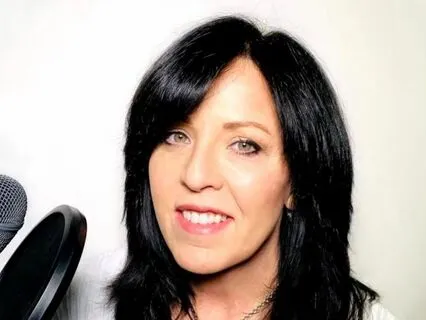
Welcome to the Breakdown to Breakthrough podcast.
My name is Lisa A Romano.
I am a life coach,
Best-selling author,
YouTube vlogger,
Meditation teacher,
And expert in the field of codependency and narcissistic abuse.
I am a believer in the power of an organized mind.
My aim is to help people learn what it means to live above the veil of consciousness rather than living a reactive life.
May your heart feel blessed,
Your mind feel expanded,
And your spirit find hope as you spend time with me here at the Breakdown to Breakthrough podcast.
So today we're going to be talking about three major reasons wounded adult children fake happiness.
When we're talking about adult children,
We're talking about adults who feel like children.
We're talking about those of us who grew up and who feel inadequate.
We have very low self-worth and we respond to adult situations very much like a child would.
We subjugate our needs for the sake of others.
We feel subordinate to other people.
There's a real lack of self-efficacy.
We don't feel like we have the ability to stand up for ourselves,
To speak on behalf of ourselves.
There's a real deficit in the ability to self-advocate.
And adult children come from all walks of life and it doesn't matter if you come from Zimbabwe or New Zealand or Australia or Queens,
New York where I was born and raised.
It doesn't matter.
If you grew up feeling unworthy,
If you grew up feeling not good enough,
If you grew up in a home where there was addiction,
If you grew up in a home where there were family of origin issues that were dysfunctional,
If you grew up in a toxic family,
If you grew up feeling like who you were was unimportant and that made you feel like you did not belong,
Then you may have some adult child issues.
And dear one,
That is not your fault.
It's not your fault for any reason whatsoever.
It's not your fault that you were born into a toxic family system.
It is not your fault that the brain is wired for survival.
It is not your fault that the brain is wired for a negative bias,
Meaning that our brains are literally wired to look for the negative.
Why?
Because if we're looking for the negative things in life,
Then we're more likely to survive.
If we walk around just looking for pink unicorns all our life and thinking everybody's wonderful,
Then the chances are that we will be naive,
We will be gullible,
And we could suffer major consequences from not being able to see the holes in the wall.
And so in terms of survival and human beings being able to survive through hundreds of thousands of years,
We understand that it is beneficial to be able to see the negative,
But it is just as important for us to be able to see the positive.
However,
When you have child issues,
Childhood adverse situations that have happened in your life,
You've experienced adverse experiences in your life as a child,
Then we have to deal with that as adults.
It is not our fault that there are neurological consequences,
There are psychological consequences.
In other words,
Epigenetics applies to a cell in a Petri dish as much as it does to us being born into a particular family system.
Is it the cell,
Meaning you or me,
Or this little tiny infant that was born,
Or is it the culture medium that changes us?
Is it nature or is it nurture?
In my opinion,
Based on my research and based on my own life,
Who you were born to matters.
And that really helps us deal with shame,
Because when you realize that Johnny,
Who's come from a wonderful family,
Who gave him the attention that he needed and that is required for healthy development of a child,
And you look at yourself in your own life and you think,
Wow,
Look how far Johnny has gone with his life.
We were born in the same neighborhood,
Our parents had the same jobs,
But why is it that Johnny isn't afraid of failure?
Or why is it then that when Johnny makes a mistake,
He recovers really quickly?
Why is it that Johnny's able to have fulfilling relationships?
Why is it that Johnny sees the world as,
In terms of the glass being half full versus half empty?
Why is it that Johnny isn't afraid to put himself out there and I can't seem to manifest a healthy relationship?
And I am never really happy at the jobs that I have.
I always feel like something's missing.
I always beat myself up.
Why is that?
Well,
If you look at Johnny's relationships with his parents and the type of family that he was born into,
Chances are it's a lot different than yours.
It's not your fault.
And so when we're talking about why is it that so many adult children fake it,
They fake happiness,
I really wanted to create this session so that people who are faking happiness,
A,
Wake the hell up and you realize that you are faking happiness.
I mean,
If you're anything like me as a recovering codependent,
I didn't even know that I was faking happiness.
I had no clue.
I was living so far below the veil of consciousness.
I was so full of automation patterns,
Which are programming patterns.
I had so many limiting beliefs.
I mean,
Neurologically,
I was a complete mess and I didn't even know it.
I was wired to survive.
I was not wired to enjoy my life.
And that was really an epiphany.
But even having that epiphany,
Like that aha moment,
I had no idea where to go from there.
And that happens a lot.
So we realize that our lives have been troubling since we're children.
We realize that we have CPTSD.
We realize that we carry shame.
We realize that we're codependent.
We realize that there's something that we're doing that is causing us to have these consistent experiences over and over.
And we might even know,
Oh,
My mom was an alcoholic,
Or my dad was an alcoholic,
Or my grandmother was an alcoholic.
I'm the grandchild of an alcoholic.
I know this,
But I don't know what to do from there.
And that's significant because it's true,
Right?
Just because you know that you are something doesn't mean that you know all you need to do to not be that anymore.
Just because I knew I was codependent didn't mean I knew how not to be codependent.
That was something that came after the epiphany of,
Holy mackerel,
I'm codependent.
So I want to talk about three major reasons why we as adult children fake it and we don't even know that we're faking it.
The first thing is that we don't even know that we're not being authentic.
What I mean by that is that it is so our norm to smile on cue.
It is so our norm to make sure that everybody else is okay.
It is so our norm to feel responsible for other people's failures and also feel responsible for whether they succeed or not.
It's almost like we feel,
And once you look at it consciously and objectively,
Which is not below the veil,
Once you look at it above the veil you can see how insane it is.
How a codependent views other people is,
I'm responsible for whether they swim.
I'm responsible if they fail.
I'm responsible if they succeed.
And we carry this burden with us and that's very much the result of childhood programming.
It is very much the result of not feeling good enough and like a carrot on a string that's being held in front of us,
Which is what?
What's the carrot?
Our mother's attention,
Our father's validation,
Seeking approval,
Love,
Being held,
Being hugged,
Being touched in a healthy way.
I remember craving my mother just brushing my hair without yanking on it.
I remember craving wanting her to give me a hug in a healthy way because everything was so abrasive when she did touch me.
And that is something that I can still tap into today.
I can still remember what it feels like to be aware that mom was rough and to be aware at the same time that I wish that she just put her arms around me and tell me that it's okay.
Every child should feel like they can crawl up into their mother or father's lap,
Or at least an adult in their life.
Someone that is safe,
Someone that is healthy,
Someone that is going to protect them,
Make them feel safe.
And when you don't have that one person in your life,
Then you develop all sorts of survival skills to help compensate for that fear level that you have because you feel so distrusting of other people.
But when this is your norm,
You don't know that you're faking it.
You're not even aware that you're not being authentic.
You don't even know.
You have been forced,
As Gabor Mate says,
To look for attachment over authenticity.
You betcha.
Psychologically,
And that's not our fault.
As children,
We will seek attachment over being authentic.
Why?
Because being authentic meant pain.
If I told my mom that I felt a certain way,
I was mocked.
If I asked for an extra potato,
I was called a pig.
If I wanted a pair of socks that were different than the socks that were in my drawer,
I was called selfish.
So having a want and expressing that want takes a lot of courage when you have been conditioned mentally and emotionally to associate a negative outcome with daring to ask.
And that's why so many adult children don't ask.
We are so afraid of being seen as a burden,
We just stop asking.
But we don't know,
This is the key,
We don't know that we're not asking anymore.
We don't know that we're in an automation program,
That we are living below the veil of consciousness,
And that we have been conditioned to be inauthentic out of survival.
We don't know it.
So the main reason,
Or the number one reason,
That we fake our happiness is because we don't even know we're doing it.
We don't know that we're not being authentic.
In order to be authentic,
We have to forego the need to please other people,
Which means that we have to look our abandonment trauma in the face,
And we have to choose the self,
Which is terrifying.
Because it goes,
It literally,
We're staring into the mouth of the fire-breathing dragon,
Which is abandonment.
And it is absolutely liberating to get on the other side of that,
Although it's not very easy,
But there are things that you can do to get to the other side of it.
You can't take a pill on Monday and wake up on Tuesday a non-codependent.
This takes a lot of inner work.
The good news is that the work works,
If you're willing to do the work.
The second reason that so many of us are inauthentic,
Or we're faking our happiness,
Is because this is all happening at the subconscious level.
So huge mind-blowing moment,
Like drop the mic moment,
When you consciously recognize that the mind that you have,
That you observe,
Whether you realize you're observing your mind or not,
You're observing your mind.
The problem is when we think we are the mind,
We're really not the mind.
The mind is basically this screen that our subconscious beliefs play up against.
So whatever's in the subconscious mind gets projected onto this field in the conscious mind,
It's like a screen,
It's like a television screen.
And whatever's streaming from the subconscious mind,
Boop,
Is what you're watching in the conscious field.
The problem is,
It's like we,
Well we do it,
We don't realize we're doing it,
It's like we step into our plasma television screen and we think we're Bravo,
We think we're TLC,
We think we're NBC and CNBC.
We don't realize we're not the story that's being played out on the screen.
The story is our story,
It's what happened to us,
But we're not the story.
We are so much more than this storyline or this history or this narrative,
But we don't know that.
And so we're faking our happiness because at the subconscious level,
We don't know that we're doing it.
We have been neurologically programmed through conditioning to fear speaking up.
So in terms of how neurology works,
It's all,
It works through chemistry,
Pain versus pleasure.
So if I associate pain with speaking up,
Asking for more as a child,
Or if I'm watching my mother and she's hostile and she's abrasive and she's aggressive and she's screaming all the time,
And I know that when I reach for her she pushes me away,
Then I'm being conditioned to fear her.
So fear has certain chemical outputs and we associate cortisol with fear.
And cortisol causes certain neurotransmitters to be secreted and these neurotransmitters trigger the fight-or-flight system.
And so literally at a neurological level,
My brain is being wired to avoid that pain.
So if I'm a one-and-a-half-year-old,
I could be 18 months old and be conditioned to fear mommy and be conditioned to fear crying.
Like I'm gonna start stuffing my emotions because I know that if I yell,
Mommy yells louder.
Or if I reach for her,
I get pushed away.
So at a neurological level,
I'm being subconsciously programmed,
If you will,
To fear authenticity.
I don't even know it's happening.
So this is all subconscious.
This literally becomes a way of life.
That's the second reason we're faking happiness.
Now the third reason that we fake happiness,
Again we don't know that we're doing it,
Is because many codependents have been conditioned to think that their parents or the people in their lives don't really care about what they have to say.
This was my experience big time,
Where I was conditioned to feel that my parents just didn't want to hear it.
All they wanted to hear was that life was great.
Life was great.
If I dared say I'm having trouble with my husband,
I'm having trouble in my marriage,
Oh stop,
You're just being silly.
You are always difficult to please.
You are always a drama queen.
I learned to button my lip and not say anything to my parents.
I was conditioned to understand they want me to smile.
They want me to tell them everything's fine because they didn't know how to deal with authenticity.
And so I learned to fake happiness because as a result,
As a child,
I thought I associated more pain with speaking up and more pleasure with faking happiness.
I knew that if my dad called me and said,
Hey Lisa,
How you doing?
I knew that what he wanted to hear was everything's great dad,
How are you?
I knew that I could not have a true authentic relationship with my father.
I couldn't.
So being authentic,
I would be called a liar.
I'd be called a drama queen.
I would be told that I'm making things up.
And so you can't be authentic.
And so what does that do as the adult child?
That teaches you that speaking up is wrong.
It's not something that you should do.
That the world prefers that you smile on cue.
The world prefers then that you fake it.
You can't tell anybody the truth.
You can't tell anybody how you really feel because you're going to be criticized.
Another thing that happens along the same lines is that we feel,
We get the message that speaking our truth,
We are seen as a burden.
And we get the feeling that if we tell our truth,
Other people see us as a burden.
And that all,
That will elicit all sorts of shame and guilt.
We don't feel worthy of having someone listen to us.
And we don't even want someone to fix us as much as we want to know that there's somebody out there that resonates with what we're saying and can have empathy for us and can help us work it out.
But we,
Again,
If we go back to why we're faking it,
We don't know that we're faking it.
This is norm.
We are subconsciously programmed at the neurological level to fake it,
To avoid further abandonment.
And third,
We have been conditioned to fake it because our parents just couldn't handle the truth.
They couldn't handle their own truth.
Those of us who are adult children,
Many of us,
Many of us grew up with alcoholic parents who were in denial of their own addiction.
I know someone personally whose children have stopped speaking to him and he drinks every single day to oblivion.
He's younger than me and he looks 10,
15 years older than me just from the alcohol.
His children have stopped speaking to him.
He's on the verge of divorce and he will look you square in the eye and say,
I'm not an alcoholic,
Even though his father died of alcoholism and his grandfather died of alcohol-related diseases.
This is true.
Denial is real.
And so here is a man who's faking it,
Living his life in complete denial,
Which is a fake.
What's authentic?
Authentic is,
My God,
I'm in pain because my children don't want to talk to me anymore.
And what's authentic is I have a drinking issue and this is robbing me of my ability to have healthy relationships with my family.
And how does that make you feel?
But when you're someone whose own father and grandfather were unable to speak the truth and be authentic,
You didn't learn those tools.
But the good news is,
And that's why we say in codependent recovery that oftentimes when we have a food addiction or we have a chemical addiction and we have any type of an addiction that we're relying on to help us make it through a day,
It's really important that we deal with those addiction issues as well.
It's very difficult to recover from codependency while we're in denial of something in our life or some addiction that we have that's taking us away from what we really feel.
The crux of codependency is us learning how to speak our truth.
But we have to understand that when we speak our truth,
All of our trauma is going to be triggered that's tied to abandonment.
The good news is there is a way out and you can successfully get to the other side,
But you have to come out of denial.
And so dear one,
If you're faking it,
It's not your fault.
There are reasons that you fake it and none of them are your fault.
None of them from it being subconscious to the pain versus pleasure principle,
To being conditioned like Pavlovian conditioning,
Being conditioned to feel as if authenticity is a threat to attachment,
That's not your fault.
But from a higher state of consciousness,
From living above the veil,
From using tools,
You are able to get to the other side and you're able to live an authentic life.
I promise you that you can get there.
Namaste,
Everybody.