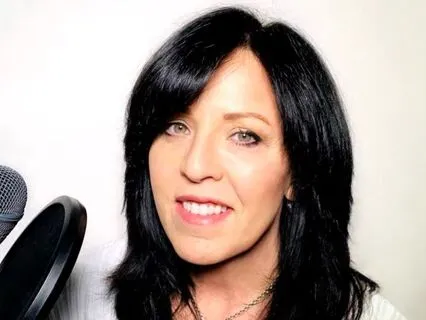
Welcome to Breakdown to Breakthrough,
The podcast that empowers you to transform your life by awakening to your true,
Authentic self.
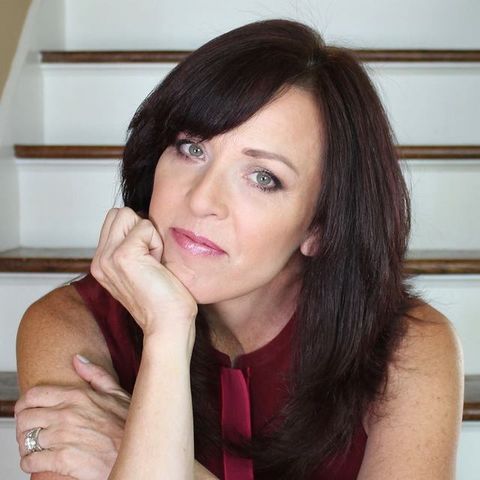
I'm Lisa A.
Romano,
Your host.
As an award-winning author and certified life coach,
I've dedicated my life to helping others understand the incredible power of an organized mind.
I believe that true empowerment begins with awakening to our false self.
My mission is to support you on your journey toward mental and emotional regeneration through conscious and deliberate awakening.
In this podcast,
I'll share insights,
Tools,
And transformative stories that illuminate the path to healing and self-discovery.
So today,
I want to talk about why and how codependents tend to push the wrong people away and what we can do about it.
So when you're codependent,
You have a lack of selfhood.
You have grown up feeling invisible.
You have grown up feeling unheard.
And as a child,
Before the age of seven,
You want to remember that you were in a theta brainwave state.
This is a brainwashing state.
This is a state in which your inner world,
Your personality is being shaped.
Your beliefs about the world are being shaped.
All of your patterns and programs for who you think you are and how the world operates coming down to your self-value,
Whether or not you think that you're good enough or you're not good enough,
Whether or not you can trust your inner instincts,
Whether or not you think that you have something called self-efficacy,
Meaning that by the time you're seven,
You should know whether or not you have some command over your environment.
You should know by the time that you're seven years old that if you say something,
People will listen.
You should have been taught by the time that you're seven that whatever this thing is that is the self,
That it is worthy to be seen,
It is worthy to be heard,
It is worthy to be understood.
Your parents,
If you were lucky,
Were emotionally regulated.
They were fair-minded and you hit the ball out of the park if you have enlightened parents,
Parents who see you as a divine extension of creator.
They see themselves as custodians of your soul,
Custodians of your mind,
Custodians of your heart,
Parents who understand that they are forming and shaping how you see the self and how you see the self,
Dear one,
Will determine your fate.
What I've learned in my own healing journey is that my life changed when I recognized that childhood created patterns,
Patterns of thinking,
Patterns of feeling,
Patterns of reacting,
Patterns of being,
Behaving,
Relationship patterns.
I married my ex-husband.
Why?
Out of a pattern.
The way he was,
His energy mirrored my mother's energy.
In my opinion,
Passive-aggressive,
Vulnerable,
Narcissistic traits,
Not saying that he's diagnosable,
I'm just saying that if we go through the characteristics of what vulnerable narcissism is,
In my opinion,
He had a lot of those traits.
Doesn't mean that I was perfect.
I was a very controlling codependent.
I was a very needy codependent.
I didn't understand why no matter what I did,
No matter how I minimized myself and toned myself down and gave and gave and gave,
Why things just weren't turning out the right way for me.
And when you're codependent,
You don't know that you're codependent.
You're frustrated.
You don't know that these childhood patterns are governing your life.
You don't know that you're marrying your mother or your father or mix.
You don't know that you'll be attracted to narcissistic bosses or narcissistic coworkers and that you'll fall into this pattern of overdoing and subjugation.
And then what's really hard,
I mean,
It's all horrible,
But what's really horrible is you go home at the end of the day and you think what's wrong is outside of you.
You think you're underappreciated.
You think that they're selfish and lots of times they are.
You think that there's just,
If they just listen to you and then you bring it back to yourself because it's a control issue.
When you're codependent,
You feel powerless and so you're always looking to control something.
But you're always looking to control something outside of you.
When you are codependent,
You are living in a box.
You are living in a box below the veil of consciousness and you don't know it.
And you are trying to get people to come into your box with you.
You are trying to figure out how to draw people in.
Now,
What we really need to understand is that,
And I think this was really pivotal in my own healing journey,
Was that wasn't my fault.
I crave love like somebody who was starved of sodium would crave pretzels.
I craved attention and affection the same way anyone who was denied potassium would crave bananas.
When I understood this pivotal idea,
So much shame was alleviated.
I understood,
Dear one,
It could be no other way.
If you are denied a healthy sense of self from your mother and that is supposed to come from your mother or come from your father before you're three years old.
Before you're three years old,
You should have some form or psychological concept of ego.
Who am I?
And if by the time you're three years old,
That concept of self,
That concept of ego causes you to feel like you're not good enough,
Then you're stuck.
You're stuck in this box for the rest of your life until you have some sort of U-turn awakening.
As human beings,
Most often our awakenings come because of great trauma,
Because a marriage has fallen apart,
A relationship has fallen apart.
We are in the throes of eating disorders or gambling or alcoholism.
There's something that's happened,
Or we're discarded by a family member or family members.
There's a death in the family.
This often happens in toxic families.
When a matriarch dies,
The siblings start to turn on each other.
It's like,
Oh my God,
All of the family dysfunction comes out.
It's like having mom or dad alive,
Kind of like kept a lid on it.
Now that they're gone,
It's like bats out of the belfry.
It's like,
We're all out now.
It makes sense,
Even in terms of the law of attraction,
Because that which you resist persists.
When the cover is gone,
When it's blown off,
It's all coming out.
That could be a really difficult time in your life if you're a codependent,
If you have felt powerless your whole life and you've wanted to try to keep family dynamics together.
It's just disintegrating.
It could be very,
Very difficult for you.
But I think it's also important that we understand the psychological components where we're born into these families that have patterns of codependency,
Oftentimes tied to alcoholism or gambling,
Where we understand that now they did studies where they understand today that back when they were studying alcoholism,
They began to see a pattern in the partners of alcoholics.
They tended to be very codependent.
They tended to be rescuers and people pleasers and fixers.
They had a lack of identity.
This is where we will focus on,
I'm still struggling with this.
Not struggling,
But at least I'm aware of it.
It's so much easier for me to make sure that Anthony goes to his doctor's appointments,
Anthony being my husband.
I'm on top of my daughters,
Like,
Go to the dentist,
Get the oil in your car changed,
Taking care of my grandchildren,
Taking care of my clients.
But at the end of the day,
It's like,
And how did you take care of yourself today,
Lisa?
It is a pattern in me that I continually have to be aware of and break.
And that really is the recipe.
Identify your childhood patterns.
You can't fix a hole in the wall you can't see.
Identify the family patterns,
Spend time breaking those patterns,
And eventually recreate new patterns.
Now,
It's important that we understand that the backstory of a codependent is someone who's grown up feeling invisible,
Unheard,
And not good enough.
And there's so many labels for codependency,
Insecure attachment,
Anxious attachment.
We are those people who have these insecure attachment issues because we're not centered in the self.
We don't have a healthy sense of self.
We don't even know we have a self.
We live externally.
Hypervigilance.
Maybe you've heard that word in your healing journey.
Hypervigilance is a big deal.
It's not like we're not trying.
We go to CODA.
We go to Al-Anon.
We go to ACA meetings.
We go into therapy.
Lots of us take the medication.
But nothing's really getting fixed.
At least that wasn't my case.
I tried everything,
Including the medication,
And the 12 steps,
And various therapists.
But it wasn't until I began to understand why I was codependent,
What those inner child wounds were,
And I worked on the first part of my recovery was identifying these patterns that were governing my life.
And that's where I began to get really interested in the subconscious mind,
Hypnosis.
I studied people who had multiple personality disorders,
And I was just so fascinated at the strength of the subconscious mind.
And I thought,
It's not me.
It's my programming.
And that one very clear thought really helped me reorganize and almost get the longitude and latitude of where I was and where I wanted to go.
And without that,
You're kind of like just a feather in the wind.
And so it's really important that you understand the backstory.
What is it you're trying to achieve?
And part of understanding the backstory,
That's wonderful,
But you also have to understand what is the cost of not recovering.
And one of those major costs is that you will continue to push good people away.
Let me explain.
Now,
When you're codependent and you have a loss of selfhood,
But you're also subconscious,
So you don't know you're giving off this energy.
You don't know that when people come around you,
They really don't trust you.
And they don't trust you because you don't seem authentic.
You seem disingenuous.
You want something.
When you're codependent,
And this is really hard to accept.
It was like a sledgehammer to my forehead when I was in early stages of recovery,
And I was identifying this negativity in myself.
When you're codependent,
You oftentimes say,
Well,
I'm the peacekeeper,
And I fix everybody,
And I'm everybody's therapist,
And I'm there for everybody,
And everybody can rely on me,
And I'm working my finger to the bone.
That's one part of it.
But you know what?
You're secretly really resentful.
My mom was a typical codependent with high narcissistic traits.
So while she was people pleasing,
And fixing,
And enabling,
She was full of resentment.
When my father walked out the door,
There were days where steam would come out of her ears.
That woman was not happy.
That woman didn't take care of herself.
She had no life.
She didn't have a car.
She quit high school.
She quit her job.
She was a telephone manager at the time.
She quit her job to marry my dad,
Take care of him,
Help him run his business.
I mean,
It was selfless,
Selfless,
Selfless.
And she always thought,
Like all codependents do,
That if I take care of this other person,
This other person's naturally going to take care of me.
It's a fantasy.
It's a fallacy.
It's our inner child's wound manifesting.
It happened to us before the age of three,
In my opinion.
When you're born to parents that you can't connect with,
Your little mind,
Your little ego has this need for connection.
And so if you think about how much of a critical thinker is a three-year-old,
Not much.
They don't have much cognitive ability.
All they know is that they want love.
And what they learn,
Even before eight months,
Babies are trying to get their mothers to smile back at them.
Babies coo because they want mommy to coo back.
It's this beautiful connection.
And there are so many experiments about that.
You can even find them online if you're really interested.
Is that if you ignore a baby,
If you pick up a baby and you have a flat expression,
That baby is very uncomfortable.
Where did my connection go?
That baby thinks they're part of their mother.
And when mommy disappears and goes offline,
It is terrifying.
And you can see it.
I can see it in my granddaughter,
Who is two and a half.
When I'm on my phone checking an email,
She looks at me,
She's looking into my eyes.
Grandma,
Are you with me?
Are you here?
And that's when I put my phone away,
I'm like,
I'm here,
I'm here,
I'm here.
I know how important,
Are you here?
Are you with me?
Can you see me?
And the minute I have something in my hand,
I'm watching television,
Or I'm listening to someone else,
Or I'm looking at my phone,
I've left the building.
I'm not connected to this baby,
And that baby feels all alone.
But now she's two and a half.
She's had two and a half years of feeling loved,
Which is,
She can handle that hit a little bit more than a six month old,
Or three,
Four,
Five,
Six,
Seven,
Eight month old.
So it's really important that we understand the backstory of codependency,
So that you can understand what went wrong,
So that when you start to step into the accountability phase,
Which is,
How am I pushing people away?
You can sustain that hit.
You need to be able to sustain that hit,
So that at a deep,
Deep level,
And I'm talking the deepest level,
Right?
The subconscious mind is 500,
000 times to a million times stronger than your conscious mind.
Okay?
Everything that's coming up into the conscious field,
In your mental field,
Dear one,
Is a product of the subconscious mind.
Subconscious mind is tied to your feelings.
If you're codependent,
You don't know what you're feeling.
You've been taught to suppress,
Suppress,
Suppress,
Keep a lid on it.
We can't feel those feelings.
Mommy might push me away.
Daddy might push me away.
I might lose my family.
And so when you're codependent,
You live in a box of suppression.
And all of these feelings are in that box,
But you,
Dear one,
Have been taught that you can't ever let those feelings out.
So now what happens is you're operating from this place of deep wounding,
But you don't know it.
And as a codependent,
Then what ends up happening is that you have all of these wounds.
You don't know what you feel.
Your subconscious mind is being affected all day,
Every day by what you are suppressing.
And eventually what's going to happen,
And it happened in my life,
I can speak with authority on this,
Is that when my body started to fail from the stress,
From high cortisol levels,
Adrenal fatigue,
I ended up with migraine,
Headaches,
Rashes all over my body.
They tested me for cancer and lupus and MS.
It was a mess.
Years I went through this.
I was getting allergy shots,
B12 shots.
I mean,
I was dying,
And I had no clue why.
And it all went back to,
Yes,
The umbrella term of codependency,
But I was committing spiritual and physical,
Mental and emotional suicide every day that I was codependent,
Giving and giving and giving,
Not receiving,
For many reasons,
Because you can't receive from people that are comfortable taking and not giving,
Which was my case.
And so you can attract people who are highly narcissistic when you're codependent because they gain narcissistic supply by receiving,
And a codependent receives a source of narcissistic supply by giving and hoping to receive.
But we're like puppies,
And that little bit of attention and affection and future faking,
Love bombing that we got in the beginning has wet our palate.
So we want more,
And we want more,
And we think,
Well,
I had it once.
I have to keep striving for it,
Have to keep striving for it.
So I believe we've been conditioned,
Pavlovian conditioning,
Where the more intense my connection to someone who is highly narcissistic has come because I get this intermittent validation.
I get these little hits,
Like a hit of heroin,
And then there's a lull.
And in that lull,
I'm trying to figure out,
How do I get it back?
How do I get it back?
It's an addiction,
But I don't know that I'm addicted.
And so when you're codependent,
You can attract people who are highly narcissistic,
But you're also repulsing those who are healthy.
And I remember early on in my journey,
I was attracted to boys that were not attracted to me.
I was attracted to the boys that were flirting with the other girls.
That was repetition compulsion.
I was attracted because I loved the mother that rejected me.
And by the time I was three years old,
I was trying to figure out how to please my mother so I could get her attention.
I never got it.
I mean,
Really,
I never got it.
I felt like,
Again,
Feelings,
And remember,
Feelings are when you're impregnating the subconscious mind.
Feelings are the beginning of a belief.
If you have the continual feeling and feeling and feeling throughout your childhood,
And that doesn't get interrupted by an external adult that you trust,
Those feelings become beliefs and they become neurological pathways.
And so the neural net that is governing your reality is of lack.
It is of neediness.
It is of not good enough,
But you don't know it.
That's why all of my work is centered upon getting back to that,
Finding out what went wrong,
And then we'll work it from there.
Once you figure out what went wrong,
The rest is kind of simple,
But it also comes down to where you are in your recovery journey.
By the time that I was diagnosed with codependency,
I was willing to do almost anything to heal.
I was done.
I was literally dying.
I had the fear of leaving my children behind to my ex-husband and his family who treated my children differently.
I think because I was just the type of daughter-in-law,
I couldn't kiss your butt.
I couldn't pretend I was okay if I wasn't okay.
I couldn't let you treat my children differently and not call that out.
That's just always been who I've been.
And I think that's what led to me being a scapegoat.
I knew something was wrong in my family.
I was the most emotionally honest.
So if I was upset by our dynamics,
I had a puss on where my brother and my sister,
My opinion were much better actors,
If you will.
And I get that.
That's not their fault.
When you come from a dysfunctional family,
You all play roles.
And also when there is someone who's out,
If you have a sibling that's out,
The younger siblings or other siblings don't want to be out.
So they played mommy and daddy's game more than the sibling who's out.
It's all psychological because they're trying to save themselves,
But it creates havoc in future relationships with the siblings.
But that being said,
When you are codependent and you don't know it,
You're acting out this repetition compulsion.
And so while on one hand,
You will attract narcissistic people because as a little one,
That's what you learned.
In order to feel safe,
I have to fawn.
In order to feel safe,
I have to figure out how to find pleasure with mommy.
So that might be,
I won't tell her that I'm hungry because that might upset her that she has to make me something to eat.
So I'll just go hungry.
Or it could be,
I won't really tell her that I want her to come to my school play because when I ask her to do things for me,
She gets really upset.
Or I'm not going to ask her for a hug because I know that when I ask her for things,
That makes her angry.
So what we do then is we take those feelings that have become beliefs.
Now it's our neural net.
It's the way we operate in the world.
And so we watch our friends date people and break up with people.
And we're like,
Why did you break up with him?
Well,
Because he wasn't nice to me.
And a little girl who's codependent is going to think,
Well,
Just figure out how to please him.
Right?
Just keep doing for him.
Then he'll stick around.
Why would you get rid of him?
He likes you.
It doesn't make sense to a little codependent girl,
A little teenager.
To a codependent little girl who's never felt loved,
You like me,
I'm going to hold on to you for dear life.
And I'm going to do anything to please you.
I'm going to be promiscuous.
I'm going to drink if that's what you want.
I'm going to hang out with your friends that are robbing banks if that's what you want.
I'm not going to say anything.
Right?
It's so sad.
And it all goes back to childhood.
So when we're codependent,
We can attract the negative.
And unless we awaken.
And unfortunately,
I think humanity,
I think we're moving in the right direction.
But I think many of us,
Especially if you're in my age group,
Between 50s,
60s,
I'm right in the middle.
I'll be 60 soon.
50s,
60s,
70s,
Even 80s.
We come from a generation where we weren't allowed to have a self.
We just had to put up with what was happening.
But I do think that we're moving in a different direction.
So now,
When we're codependent,
Yes,
We can attract the negative.
And we stay in those relationships.
And it isn't until we're at death's door,
Or we find out that our spouse has cheated on us,
Or they've bankrupt us,
And they've lied to us.
Something significant happens.
We just wear the camel.
And that little piece of straw just broke our back.
One of the most profound things that my therapist finally found a good one,
Who understood codependency,
Because he was a recovering codependent.
Interesting how that works.
He was a living embodiment of codependency recovery,
Which is very different than going to a therapist that has never gone through codependency recovery,
In my opinion.
Not to say that there aren't therapists who understand the dynamic.
But when you're working with someone who's been through that fire,
They understand what it's like,
Those many deep,
Dark nights of the soul,
When you are holding yourself accountable for what you've done to your children through your controlling behavior.
How you've tried to guilt your children for attention.
How you've tried to punish your children for not validating you enough.
This is why they say codependency and narcissism are mirror images of one another.
What differentiates,
I think,
A codependent.
.
.
Well,
Lots of things differentiate codependence from a narcissist,
Is that it's a biblical story.
If two people are in a dark room,
But one of them is blind,
And the other can see.
When the light is turned on,
Only one person can see.
When you're codependent and you're highly narcissistic,
You live below the veil.
You're shame-based.
You're acting,
And you're looking for a source of narcissistic supply.
For a codependent,
A narcissistic supply is,
Am I enough?
Please tell me that I'm enough.
Which is a form of narcissistic supply,
Because your ego is so starved.
What we're trying to do is get a little bit of that,
I'm enough,
So I don't implode.
Where a narcissist comes at it with power,
And dominance,
And aggression,
And they're much more manipulative,
In my opinion.
They don't care how they treat you,
Where a codependent cares how you see them.
There are differentiations.
There are differences,
But we've really got to be careful when we're trying to heal from codependency,
Because that accountability factor is everything.
If you can't see that as a codependent,
Your needy energy,
Because of what you did not receive as a child,
Is going to repulse people that just want to be in an authentic relationship,
Then it's going to be hard for you to get past it.
Recovery depends greatly on what type of a codependent you are,
And where you are in your recovery.
When my therapist told me that I was codependent,
I wanted to heal.
I would have done anything,
And that meant I have to see my own flaws.
I have to see my shadows.
I had to admit it,
But on the other side of that,
There was the light.
I could see the good in me.
I could see the innocence in me.
It could be no other way.
It was my job as a being with a mental body,
As well as a spiritual body,
To figure out the mental body,
So there were no more blocks to me living an authentic life,
And in alignment with who I truly was.
I remember one of the things that my therapist said was,
Lisa,
This relationship is going to die by a thousand cuts.
It's not going to be one big blow,
And he was so right,
Because like many codependents who are in these relationships,
And you start waking up,
Oh,
I'm the adult child of an alcoholic.
Oh,
My mom was highly codependent.
Oh,
You know,
I've just been accepting crumbs,
And buh,
Buh,
Buh,
And just waiting for the pat on the back.
I don't want to do that anymore.
It feels like ick.
When you start to wake up,
It's like ick.
I don't want to do that to my partner.
I don't want to do it to my friends.
I don't want to feel like a victim all the time.
I don't want to feel like a perpetual person who's subjugating.
I don't want to feel empty all the time.
I have to take responsibility for myself,
Right?
Once you get to that point,
It's really hard to face all these things about yourself,
But once you understand it's not your fault,
It gets easier,
And I remember when I said to my therapist,
I don't know.
I'm not happy in this relationship,
And he's not interested in healing.
He told me straight up,
I'm not changing.
He came back from our last therapy session saying,
Our therapist said I don't have to change,
Like stepping it.
They say the Bible is the living word.
There's a big difference between reading the Bible,
And studying the Bible,
And living what the Bible can teach you.
What I was learning was living the word of codependency.
When he said that to me,
I turned around and I said,
You're right,
And I should have never tried to change you.
I am so sorry.
What I should have done,
But I didn't have the self.
What I should have done was recognize how unhappy I was in this relationship,
And basically I should have stepped out of this a long time ago,
But I'm so sorry,
Because what I did was I tried to change you,
And I really meant it.
That's what I'm trying to say about the difference between a codependent and a narcissist.
When you turn the light on,
Only one person is going to be able to see the truth.
It's not the narcissist.
By definition,
It's not going to be the narcissist.
When you reflect to a codependent,
This is what's going on,
This is why.
It's sort of like when you cross over and there's this life review,
There's no judgment.
When you're healing from codependency,
It has to be the same thing.
You have to be able to see your shadows.
You have to be able to see how you tried to control people to stay with you,
Or you didn't know how to change yourself,
So you tried to change the people outside of you.
Yes,
Even if they're highly narcissistic,
You will try to change them.
You will complain.
You will browbeat them.
You will cry.
You never think about me,
You never think about me.
You will not talk to this person.
That person won't care that you're not talking about them,
But these are the actions you'll take,
And what you need to do is become empowered to be able to see the past,
See the pattern,
Start breaking the pattern,
Step into the courage it takes to see the self and see the shadows,
Knowing that your victory is on the other side of this,
That you can recreate new patterns,
Which I have done,
And I work at this work ferociously every day.
I'm not going to stop until I croak.
I'm going to keep trying to evolve and get this right and get this right,
Because I know that I am enough.
I know that I am enough,
And so when you're a codependent,
You're going to attract highly narcissistic people while you're asleep,
But at the same time,
You're repelling people who genuinely like you or are attracted to some facet of your personality.
Why?
Because when you're a codependent,
You are trying to pull people into your box.
You are needy.
There's something inside of you that you are not tending to,
And that's so sad,
And all of my work teaches people how to tend to that wound,
How to tend to that inner child so that your energy is no longer needing.
When you meet someone and you have a needy energy and you don't even know it,
You're below the veil,
And like I said,
You will do things,
You'll go into risk-taking behavior.
I've done that myself.
I cannot believe the situations that I've found myself in as a woman with men,
Because I was so detached from myself and so lonely and so afraid of being alone,
And that was my inner child inside a big female sexual body acting out,
Please don't leave me.
What do I have to do to keep you here?
That's a very dangerous place to be.
That's why so many little girls who are on the path to codependency are promiscuous.
They don't want to take drugs,
But if their boyfriend is taking drugs,
They take drugs.
They don't want to go into that gang,
But if that boyfriend that's showing interest in them says,
You're in this gang,
I want you to be in that,
They get into that gang.
It comes from an I am not enough place,
And we need to tend to that,
Because we're going to attract the bad and push away the good.
Somebody who loves us,
Just who wants to get to know us,
Comes at us genuine.
What happens is,
When you're in a healthy relationship,
It's you,
You,
The other person,
And in the center,
There's another energy.
It's the we energy,
And both have to contribute.
When we are highly codependent and we don't know it,
We give up ourself to this other person,
And that's unhealthy.
If that person goes west,
We go west,
Even though we don't want to go west,
But we'll go west,
So we're off our center.
That person goes east,
We go east.
Even though we don't want to go east,
We go east.
It's so important that you think about,
When you're codependent,
You want something,
And that other person's going to feel,
Uh-oh,
They want something.
Now,
If someone is healthy,
They'll feel that,
It'll feel disingenuous,
And they'll start to back off.
It's natural,
Because those are natural energetics.
It doesn't feel authentic.
You're trying to take something from me.
Now,
When we're codependent,
That's true.
What are we trying to take?
That's a hard word.
A lot of people have an issue with that,
But what are we trying to receive or gain?
What we're trying to gain from the other person is a sense of,
I am enough.
That's my job.
That's not that person's job to tell me that I am enough.
What a codependent will do,
Lots of times,
Is put someone on a pedestal,
And when that person does not mirror back,
I am enough,
After this person is doing so much for them,
That codependent will start to be very upset with that person that they've put on the pedestal.
Someone who's healthy does not want to be put on a pedestal.
Someone who is unhealthy wants you to put them on a pedestal,
And they will reign from that pedestal.
When you start acting up,
They're going to gaslight you.
When you start getting all emotional,
They're going to gaslight you.
When you start saying that they're not enough,
They're going to gaslight you.
This is a dynamic that codependents find themselves in all the time.
We just swing from left to right,
Left to right,
And until we find and discover those patterns that make us this way,
That are controlling our lives,
Until we break them,
And until we create what I refer to as a neural net,
A healthy neural net,
That allows me to first anchor to my true self.
I have to figure out who I am.
I have to feel that beingness inside of me.
This way,
I can sustain the hit when you don't give me what I would like you to give me,
Or I decide through discernment,
Not hypervigilance,
Through discernment,
Through an analysis,
A proper analysis through a logical mind.
When I balance the left brain with the right brain,
My logical mind understands my emotional mind.
My emotions are no longer governing my life.
Logic and reason is governing my life,
And I decide this relationship is no more.
I do it from a state of oneness,
And a state of owning who I am,
And accepting this relationship doesn't fit.
I don't want to be with this person.
I can't give to this person.
It doesn't feel reciprocal.
That's why I love the term,
The living Bible,
Because you know when you meet someone who is living their truth versus somebody who is reading a truth.
When you're doing this work,
It has to go from your head to your heart.
Once it goes to your heart,
The new feelings that you have for yourself change you at the neurological level.
We want to get you into a place where you are operating from the true self.
When you operate from the true self,
You can take the hit.
Your love of self is no longer dependent upon a narcissist or a friend who is just like,
I don't know,
This feels a little needy.
It doesn't feel genuine.
It feels like you always want something from me.
You always want something from me,
And I don't want you to want something from me.
I just want to be a part of your life and share a life with you,
Or share experiences with you.
To get us out of that back and forth pattern like behavior,
We really have to get you anchored in the self.
Once we get you anchored in the self and we're breaking all of these dysfunctional patterns,
That's when you connect to your true self.
That's when you know what you think,
You know what you feel,
You know what you want,
And you're able to,
From a higher state of consciousness,
Decide who should stay and who should go,
Anchored in the self.
Namaste,
Everybody.
It's a bow to the love and light that is absolutely in you.
Until next time.