Welcome to the Breakdown to Breakthrough podcast.
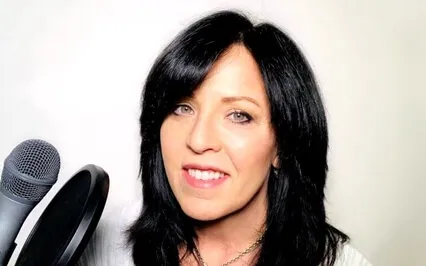
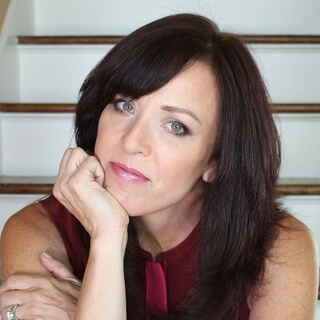
My name is Lisa A.
Romano.
I am a life coach,
Bestselling author,
YouTube vlogger,
Meditation teacher,
And expert in the field of codependency and narcissistic abuse.
I am a believer in the power of an organized mind.
My aim is to help people learn what it means to live above the veil of consciousness rather than living a reactive life.
May your heart feel blessed,
Your mind feel expanded,
And your spirit find hope as you spend time with me here at the Breakdown to Breakthrough podcast.
So today we're going to be talking about how you being codependent can screw up your kids.
So codependency is very near and dear to my heart.
I grew up in a home that was affected by alcoholism.
My grandparents were alcoholics and I am of the opinion that my parents were dry alcoholics.
My father had high narcissistic traits.
My mother had emotional paralysis in my opinion.
I believe that she was a highly codependent woman and she didn't know it.
When you are codependent,
You don't know it.
Codependency is not in the DSM,
Although I believe that it should be.
When you are codependent and you have this emotional paralysis that happens in your life that leads to other things like anxiety,
Lack of self-esteem,
Low self-worth,
Distrust,
And inability to express your feelings.
You don't even know what you feel,
Let alone know how to access them or express how you feel.
You can't trust your decision-making process.
You end up dependent on people.
You end up trying to control other people's behavior and you don't know why it is that you are losing yourself and life is just getting worse.
You often present as someone who believes they are a people pleaser.
You tend to be perfectionistic.
You tend to be fear-based,
Have a very high fear of abandonment.
You tend to be someone who's rigid.
It's hard for you to let go and have fun.
Sometimes you can actually feel yourself not being able to let go and not being able to have fun.
You don't feel safe,
But you don't know it.
These cluster of symptoms manifest in behaviors that we have recognized over the years as being codependent behaviors.
This is a passion of mine because when it was laid out in front of me and I was diagnosed with codependency and depression and I really dug into what it meant to be codependent,
I was struck by the fact that I was raised by a mother who was codependent and I developed codependency too.
One day after having a bit of an argument with my ex-husband,
I looked over at my three children watching television.
They were actually watching Rugrats at the time and I knew that I had up until that time programmed them to be codependent as well.
That absolutely terrified me that perhaps one day my children will feel as lonely,
As stuck,
As powerless,
As emotionally paralyzed,
Spiritually stunted.
They will not know who they are.
They will feel like they are feathers in the wind.
What other people think about them will control them.
The idea that my babies that I loved more than life itself would spend their life subjugating their needs to make other people happy and were more than likely going to attract people that they needed to take care of,
People who would exploit their kindness,
People who would frustrate them,
People who they would frustrate.
The idea that my children would live the kind of life that I was living terrified me.
I wish that I could say that I got well and I committed to healing from codependency because of me.
But true to codependency,
What I could have never done for myself,
I did for my children.
I think it's a very candid conversation to have.
I think it's a very necessary conversation to have because codependency is something that can be altered.
Codependency we must remember is neurology.
What I mean by that,
And I've been saying it for a long time,
It's not you,
It's your programming.
What I mean by that is that when you grow up in a home where the rules are oppressive,
Your parents never allowed you to express yourself.
You had to really withdraw into yourself.
You weren't allowed to think.
You weren't allowed to feel.
You were living with the fear of abandonment.
Your parents were super critical.
They were super rigid.
Your home may have been very condemning.
You may have felt persecuted.
Perhaps you felt like I did,
Like you were a specimen on a Petri dish.
Perhaps you grew up in a codependent narcissistic home yourself.
Perhaps one of your parents were codependent and maybe your other parent was an alcoholic or had an addiction or a mental health issue.
Maybe in your home you weren't allowed to talk about the truth.
There was the no talk rule.
Maybe you got the feeling from your mother that you weren't allowed to talk about your father.
So all of these emotions,
Where do they go?
Where do all these feelings go?
They have to go underground.
When you're not allowed to talk about how you feel,
Bad things happen.
You don't feel connected to yourself.
There's a loss of spirituality.
You can't connect to who you really are if on the survival level you've been taught that you accessing your emotions is akin to death,
Meaning that you got the message in your childhood home that if you spoke about the truth,
There was going to be a punishment.
Maybe your father would really get upset and maybe that would cause an argument between your mom and your dad.
Or maybe your mother would panic if you started to talk about what was really going on in your home.
Maybe you watched your mother lie to her friends about what was really going on with your dad.
Maybe you got the impression from your family home that no,
We don't talk about what's really going on in our home.
We pretend that everything's okay.
It's common for people who are stuck in codependent,
Narcissistic,
Codependent alcoholic,
Codependent addicted relationships for the codependent to cover for the person who is creating the chaos in the family.
This is a very dangerous thing when we as the codependent are obsessed with our spouse's behavior and we end up focusing on their behavior.
We end up feeling controlled by their behavior and then what we do is we try to control their behavior.
If we live with someone who is passive aggressive,
We feel controlled by the passive aggressiveness.
If we live with someone who is narcissistic,
Who lacks accountability,
Who lies,
Who distorts reality,
Who gaslights,
We become controlled by that person's behavior.
In turn,
We try to control that person's behavior.
We are stuck.
It is emotional paralysis and we can't get out of this loop.
The really dangerous thing about this situation in my opinion or the sad thing,
Although there are many,
Is when there are children involved,
They're watching this dynamic and they are being literally programmed for codependency as well.
This is generational.
Codependency is absolutely tied to survival.
As a child,
You were taught that it wasn't safe to be yourself.
When you fear abandonment,
Your brain then is wired for survival.
There is a neurological consequence.
Strong emotions cause neurons to bond together and intertwine together.
If you think of a thought process as a train,
The neurology that is necessary to carry this thought is the neurological pathway.
Think of the train as the fear or the thought or the experience and think of this train traveling along these tracks,
Which are neural pathways.
There's actual research out there that suggests that microdosing with particular,
Of course under a physician's care,
But microdosing with medicinal mushrooms can create such a psychedelic transcendental experience that you can create new neural pathways in your brain and override these PTSD neural pathways,
Which means that,
Think about it,
If a strong emotion created this survival strategy or their survival brain,
Survival wiring,
Then strong emotions like love and safety and trust can also create new neural pathways and basically get the brain out of a state of emotional arrest,
Which is emotional paralysis.
So all is not lost.
We can actually retrain the brain,
Which is what my coaching programs and meditations,
Journaling prompts,
That's what they're all about.
In my life,
I recognized that my goodness,
I was taught that I was not good enough and my mother's rejection of me was akin to survival.
So what happened?
My brain wired for survival.
It did not wire for thriving.
It wired for survival.
It was not my fault then that at a subconscious level,
Everything about my life was motivated by fear and by avoiding a devastating outcome,
Which was abandonment.
And when we understand codependency at the neurological level,
At least in my case,
When I understood it could be no other way,
It wasn't me,
It was my programming.
It was the rejection of my mother.
It was the fear of my father.
It was watching my mother fawn after my father and me getting the idea impressed into my subconscious mind through the feeling realm that if I lose my father's favor,
That is akin to death.
The survival brain doesn't know whether or not we feel the way we feel because of a train that's coming at us or a saber tooth tiger is coming at us or what we feel,
These strong,
Intense emotions associated with death.
When you're a child that is associated with abandonment because abandonment is death,
What else could be worse than being abandoned by your mother,
Abandoned by your father?
And when you have a person in your family that is domineering,
That is controlling,
That is will punish you for not thinking the same way,
Who is threatened by your autonomy,
Which is the case with the narcissistic parent,
Narcissistic parents demand conformity.
Narcissistic parents do not want you to have autonomy.
They want you to fear them and or admire them.
They have to be put on a pedestal.
If you are their child,
You will grow up feeling oppressed and this will cause an emotional paralysis.
This will cause you to not feel able to connect to your spiritual self and that is why what I learned to do was,
Oh no,
I have to return back to the divine self.
That is what I need to do,
Which if you are someone who has participated in any of my online e-courses,
You know that's what this is all about.
My first book,
It's called The Road Back to Me.
It was me finding my spiritual self again in spite of being cut off from the sacred part of me,
Which was love,
Which was self love.
Children are not able to experience themselves as good when the external world is punishing,
When the external world sends them the message that who they are is not worthy of love.
And so parents who are not understanding of what it is a child needs or parents who are living below the veil of consciousness,
Parents who are acting out their own trauma,
Their own inability to love and connect with their children don't understand or maybe they do,
But it's my belief that parents don't understand how necessary it is to make a child feel seen,
To make a child feel heard,
To make a child feel loved,
To make a child feel wanted.
I just left my daughter's house and babysat for a couple of hours with my granddaughter who's only about to turn four months.
And I got as close as I could to her little nose.
I looked into her eyes and I said it over and over and over and over and over,
I love you.
I love you.
I love you.
You are wanted.
I love you.
You're such a good little girl.
We love you.
I'm already starting to program this little girl for the I love you.
I want that to be part of her internal wiring.
I want that to be part of her perception of self.
When my little granddaughter thinks about herself,
I want her to hear,
I love you.
And that starts at home.
So today we're going to be talking about why it is,
I know it was a very long intro,
But it's an important intro.
It's important to lay out the foundational understandings of codependency,
Where codependency comes from and how it manifests and why it is a cluster of symptoms,
Why it is something that we need to understand as a cluster of symptoms,
A cluster of behaviors,
As well as a cluster of very specific thought processes that are the result of experiences in childhood.
What I'm referring to is if you grew up feeling,
Although many people say that's not unique,
Everybody grows up feeling that way,
But when you grow up feeling abandoned,
Rejected,
On top of growing up with people in a home,
The authorities in your life were oppressive.
They taught you that you weren't allowed to talk about what was really going on in the home.
When your home felt like a tag team wrestling match and everybody was against you,
Maybe you were the scapegoat child.
When you feel terrified to speak your truth,
When you feel like the worst thing in the world that could ever happen to you was for you to actually let an honest part of you out because the moment you did,
The external world,
The people responsible for you,
The people that you are powerless to,
The people that you depend on are going to reject you,
That is when you lose the connection to the divine self.
That's why if you are codependent,
You are not connected to your spiritual side.
Your spiritual side is connected to your emotional side.
When you're codependent,
You're not sure of how to access your emotions.
You're not sure of how to feel your emotions.
You're not sure of what you feel.
You doubt what you feel.
You doubt the validity of what you feel and this arrests you.
Codependency is a cluster of symptoms,
A cluster of beliefs,
A cluster of feelings,
A cluster of behaviors.
It is essentially an identity issue.
You have as a child determined that you are bad.
That's what shame is and so the self that you think you are is no good.
How can life progress beautifully from that point?
How do you as a human being,
If you feel since you're two years old or three years old that you are bad,
How do you develop self-esteem?
How do you develop self-efficacy?
How do you become self-actualized?
You can't because you are living in survival and you have yet to achieve the first level or the first stage in emotional development which is trust versus mistrust.
The ability to trust that the being that you are is enough to receive what you need from the external world.
So I want to talk about some of the symptoms that I experienced in my relationship with my ex-husband and hopefully paint a picture for anyone out there who thinks that they might be codependent and they have a real fear of transferring this codependency onto their children because it is spiritual death and you're not living.
You're not alive.
When you're codependent,
You are on autopilot.
You're breathing but this neurology,
This subconscious programming,
It's what's running your life and you need to break through.
So I want to paint this picture for those of you who feel like you might fit into this category.
So I was preoccupied with my ex-husband so I was focused on him.
I wasn't focused on myself.
Why is that important to recognize if you're a codependent mom or if you're a codependent dad?
Because when you are other focused and you are not self-focused,
Then you are teaching your children to focus on what other people are doing and they don't have the neural wiring or the programming for how to look within.
I felt like I was losing control.
When you are codependent,
You feel out of control and you are because your belief systems have you believing that you have to control something that you can't control,
Which is someone else's behavior,
Which is how someone else perceives you.
You are looking for validation,
Although you don't know it nor do you need it but you think you do and that becomes like a brain lock.
I felt like I was losing control so my children did not have up until,
Oh my goodness,
Probably until my son was probably 13,
14,
15 when I was really in the throes of codependent recovery.
Up until then,
He had a mom that literally felt out of control and he deserved better.
I was in denial of the true problem.
I didn't know I was codependent.
I didn't know that being raised by two adult children of alcoholics was a thing.
I had no clue that because my grandparents were alcoholics that that had somehow affected me.
I was clueless.
If I'm in denial of how my parents have wounded me and how my grandparents have wounded them,
Then I am teaching my children to be in denial of how my parenting had affected them over choice so I felt stuck.
Parents who feel stuck,
They don't trust their mindset.
They don't trust the decision making process.
You're not somebody who has a whole lot of self-esteem or self-efficacy.
You don't have self-confidence.
Those of us who are parents,
We are teaching our children to feel the same.
Children cannot develop healthy sense of self if parents are not modeling a healthy sense of self.
My health was declining.
Along with having codependency and not being aware that I was codependent,
Fixating on what my husband was doing,
What he was saying,
How my ex-husband felt,
My life was declining.
My physical health was declining.
I developed late onset asthma,
Adult asthma.
I never had asthma before in my life.
I developed migraine headaches.
I was developing pins and needles in my mouth,
On my legs.
I was developing the auras in my eyes.
I had gastrointestinal problems.
I had rashes all over my body.
I had biopsies done on these rashes.
The doctors didn't know what was wrong with me.
I was definitely failing.
I blew out my thyroid as well.
I ended up with uterine fibroids.
I had to have an emergency hysterectomy.
I had precancerous cells in my uterus.
I actually died on the table and had a near death experience.
And I fully believe that from the time that I was a little girl up until my marriage,
I was dying slowly.
I was not connected to love.
I was not connected to myself.
And so my body had no energy.
It had no sustenance.
I was just giving energy out and expecting energy to come back in.
I thought that the answer was outside of me because the people that I loved taught me that what was inside of me was wrong.
It was corrupt.
It was dirty and it was bad.
So I never even thought about looking within.
I was extremely dependent upon my ex-husband,
Upon his family,
And upon my family.
When I say dependent,
I didn't realize it then.
I was in denial of it,
But I was fixated on what these people thought about me.
I was fixated on how they treated me.
I was fixated on whether or not I felt like I could gain their approval.
And when a parent is fixated on seeking someone else's approval,
You are not showing up for your children.
Your mind has this addiction towards what is happening outside of it.
And you don't realize that you are not emotionally present for your children as much as you should be.
You will be short with your children.
You will have less tolerance for them because you are preoccupied by what's happening outside of you,
Thinking that you can control what's happening outside of you when you can't.
I didn't know that I was living in survival.
So parents who are living in survival are living in fear.
I did not recognize that my children had a mother who was run by fear,
Who did not feel good enough.
Like I said earlier,
I was obsessed with my ex-husband's behavior.
And then I became obsessed with trying to control his behavior.
So if he called me a wacko,
If I thought that he had lied to me,
If he was making up a story,
Then I became fixated on this behavior.
And then I tried to fix it.
I tried to change it.
I thought that if I have a conversation with him until 4 a.
M.
,
Eventually it would sink in.
If I said what I needed to say in 35 different ways,
Certainly one of those 35 different ways was going to sink in.
I had no awareness that I could have been married to someone who was going to bring out the worst in me,
Although it ended up being the best thing for me because it broke me down to the point where I could have these tremendous breakthroughs.
When I was in the relationship,
I had no clue that there were people in the world who were designed not to hear you,
Who enjoyed stonewalling and who wanted to maintain power and dominance over the relationship through withholding of love,
Through withholding of exactly what you needed.
So I want to talk now a little bit more about the characteristics of codependency and they include I could not identify my feelings.
I could not express my feelings.
I could not trust or maintain healthy relationships.
There was this sense that I needed to hide myself in every relationship.
There was a sense that I was flawed and they were going to find my flaws and why would they want to be with me anyway?
And so I was always careful.
I was always holding onto myself in an unhealthy way,
Unable to truly reveal myself in fear that they would abandon me.
And you have to remember that as a little girl,
I was taught that what was going on inside of me was bad.
It was shameful.
It was broken.
The idea of revealing this to someone was terribly frightening.
Revealing my true self was tied to death.
It was tied to abandonment.
So my brain was in a constant state of survival.
I just didn't know it.
As a result of being afraid of what people thought about me,
I developed these coping strategies that had me believing that if I was perfect,
Then people would love me and they wouldn't abandon me.
And this was the pain versus pleasure principle,
Essentially a coping strategy,
Although it was built upon an immature understanding of self.
I was a little girl when I decided that maybe if I win the blue ribbons in the art show,
Then maybe mommy will think I'm good enough.
It was me trying to find a way to secure survival.
I wasn't trying to be manipulative.
I was simply trying to get a need met.
And by the way,
I didn't create the survival brain.
I didn't create the paradigm that has us feeling as human being that we need to secure to the members of our tribe in order to feel safe.
I didn't create that paradigm.
I didn't create the organic brain.
I didn't create the amygdala.
I didn't create that need inside little infants.
You me,
Here we are,
Spiritual beings plopped into these physical bodies,
Born to these very flawed human beings.
We have an ID,
We have an ego,
We have an inner critic,
But we also have a higher self and we have to recognize that we are doing our best.
A lot of people are going to raise their eyebrows and not like what I'm about to say,
But a narcissist in most cases has very similar wounds to a codependent.
They fear abandonment.
They fear rejection.
They fear being humiliated because they feel at a core level not good enough.
Now the way their traits and their wounds manifest is different than a codependent,
But it's important that we keep in mind that all of us,
No matter who we are,
Are little tiny spiritual beings that are born into these bodies with a survival brain that has been wired to secure an attachment to someone outside of us,
Preferably our mother and our father.
When that attachment goes awry and we are not able to securely attach to the people that should love us,
That should protect us,
Our survival brain knows there's something wrong so our brain then wires for protection.
It is not easy for us to connect to other people.
Why?
Because there's fear there.
Because if I get too close to you and you figure out what's inside of me,
You're going to figure out what my mother figured out.
I'm bad and then you might leave me.
And so we're stuck in this loop of seeking approval from the outside.
I remember feeling like,
Why can't I have fun?
Why can't I let go?
Well,
In order to let go,
You have to let your inner child out.
In order for you to belly laugh,
In order for you to feel confident enough to let go,
You've got to feel like it's okay to let your guard down.
And as a little girl,
It wasn't safe for me to let my guard down.
When I did,
My mother was right there with an emotional machete,
Making me feel bad about myself,
Wanting me to feel bad about myself.
And it sounds crazy,
But it's true.
There was a part of my mother I feel that enjoyed making me feel less than.
She needed to dominate me.
And more than likely it had to do with the relationship that she had with her mother,
Because the relationship that she had with her mother was very sadistic.
My grandmother was cruel to my mother.
I have forgiven her.
I understand it.
My mother was programmed.
My mother was wired for survival and she was doing the best that she could as a 19-year-old teenager married to my dad.
I get it,
But that doesn't mean that the inner child that I was,
The being that I was,
Didn't suffer because of it.
And that is why I'm motivated to do the work that I do today.
I felt responsible for my ex-husband's moods.
I felt responsible for my children's moods.
That caused me at times to overindulge my children because I was afraid of their rejection.
It caused me to struggle with boundaries with them from time to time,
Telling them no.
It caused me to feel down when they were down.
I know that I hurt my children by crossing boundaries that I didn't know were there.
And I know that I also programmed them to keep their two fingers on the pulse of other people,
The emotional pulse of other people,
Because I modeled that for them.
I lived for my ex-husband's acceptance.
I turned myself into a pretzel to try to be good enough for him.
And I modeled that behavior for my children.
Especially my son has definitely exhibited those codependent traits in relationships.
And I absolutely know that's because he saw them in me.
It has had devastating consequences.
My son married someone who nearly bankrupt him,
Who lied from the first interaction that they had.
And as a mom,
I write about it in the Codependency Manifesto.
My son was going through this crazy-making conversation with his ex-wife and coming through the veil and realizing that everything was a lie.
From day one,
Everything was a lie.
And when it started to hit him that everything was future-making,
There was a lot of gaslighting,
Constant pathological lying about the most mundane things,
He wanted to believe her.
He was so worried about how she felt.
He needed her approval.
She was dominating him and he didn't even know it.
And when it started to fall apart,
I was triggered.
And I was writing the Codependency Manifesto at the time.
I got so sick when this started to happen and I think it was because in my head,
I thought that if I got divorced and I got well,
I could avoid my children from going down the same track I did.
Take it from me,
If you're a codependent mom,
If you're a codependent parent,
If you're a codependent grandparent,
It is so important that you break the patterns of codependency within you,
That you understand that your brain is living in survival.
And the little people that are watching you are being downloaded by your behaviors,
Your symptoms,
Your belief patterns,
Your behavior patterns,
And your language patterns.
No matter what I did with all the work that I did with writing,
I think I had written seven or eight books at that point.
I had my YouTube channel going.
I'd been interviewed by many,
Many people.
My kids knew that I was a codependency recovery coach.
They knew all about it.
Still,
My son got involved with a very abusive,
Narcissistic relationship.
And so it messed with my mentality a little bit and it ignited the rescue in me.
Like I could not rescue my son from the codependent relationship that he was in,
Which was very codependent of me.
I wanted to prevent my son from feeling the consequences of these choices.
We did tell my son,
You're being catfished.
This is like catfish and 90 day fiancé all in one,
Dude.
But he didn't want to listen.
And he was living below the veil of consciousness.
He was caught up in the romance of the relationship like many codependents do.
But I was so highly triggered.
And it took a while for me to be able to rely on the tools that I've created to bring them to the forefront of my mind,
To detach,
To see the boundary and to recognize this was his path and that this relationship was going to teach him many of the lessons that I learned the hard way.
It is possible,
Even if you do go down the path of codependent recovery,
That your children may end up in a codependent slash narcissistic relationship.
But if you get healthy,
If you understand the hierarchy of needs that you have to address within yourself,
If you understand the systems and processes and tools that you can rely on to keep yourself stable,
To identify your boundary lines,
Then you can help your children when they're ready to come to you for help.
So I want to talk a little bit about how it was that I was able to heal myself or at least get myself on the healing path.
And some of the things that have helped me get back in touch with myself.
So the first thing that I did was I needed to raise my awareness around codependency.
I needed to raise my awareness around trauma.
I needed to raise my awareness around emotional neglect.
I got very involved with the subconscious mind.
I wanted to learn everything about the subconscious mind.
I wanted to understand how people became hypnotized.
As it turns out,
Children are in a theta brainwave state up until the age of about seven.
So we are all programmed by this external stimuli,
Whether we like it or not,
We're powerless to it.
But as we find the road back to the self,
As we dive back into the self,
As we focus on the self,
Then we are able to raise our awareness around this initial programming,
Around this neural wiring,
And from a higher state of awareness,
We can actually program our brain because the brain is plastic.
The brain can actually heal itself.
You can actually change the brain,
Which is amazing.
When I was in nursing school,
I remember the professor telling us that,
No,
This is it.
You can't change the brain.
It turned out he was wrong.
And that wasn't that long ago that he was telling all of these nursing students that you cannot change the brain.
Turns out the brain can regenerate itself,
Which is amazing.
So the first thing that you want to do is raise your awareness around codependency.
The second thing that I did was I began to raise my own self-esteem with tools.
I recognized that whatever I was doing in the external world that had me relying on other people,
I had to start relying on myself.
So I created tools that helped me shift.
I created tools that helped me reorient back to the self.
I worked on creating more realistic expectations of myself.
I worked on creating boundaries.
I began to understand I cannot realistically control what someone else thinks.
As a codependent,
You aren't aware that you're thinking that way.
You aren't aware that you on some level are trying to control what's happening between the ears of another human being.
You can't do it.
And when I began to see that logically and rationally,
I wasn't so much controlled by this faulty limiting condition anymore.
My brain began to change.
I was retraining my brain.
The way that I was white knuckling it through life thinking,
Oh,
I have to be perfect for this person.
I have to worry about what this person thinks about me.
As I began to work through the tools and systems and processes,
My awareness started to rise.
It was like,
Lisa,
You can't control that anyway.
It was like,
Oh,
Okay,
Why do I even try?
I was released from it.
It took time,
But that's basically the short synopsis of how I did that.
I began to work on creating boundaries.
So when I caught myself feeling like I had the right to tell someone what to do,
I had the right to jump in and try to fix someone's life,
I had the right to offer my opinion,
I shutty shutty.
It was like,
No,
I don't have the right to tell someone how to live their life.
It is not up to me to fix that person's life.
It's not up to me to jump in and rescue that person.
It's up to this person to get the help that they need,
Ask for the help that they need,
And to focus on themselves.
I don't deserve the glory of that person's rescue.
That's up to them.
I began to understand that in the rescuing of other people was this little girl that was trying to feel good enough.
And I began to rescue myself on a 3D level.
I realized it was my ego trying to use a situation in order to feel better about itself.
And I just didn't like the way that felt.
That was icky to me.
It felt controlling.
It felt manipulative.
It felt like,
Well,
I'm going to rescue you.
And the cover story is if I rescue you,
Then I'm a good person and I get your validation.
I feel good enough,
Right?
My mother's wrong.
I'm really not a bad person.
How I looked at it to help me flip pain versus pleasure on its head was when I try to do something for you and I'm looking for a payoff,
It's manipulative.
It's tainted.
It's not coming from true integrity.
If I was doing that with my parents or my ex husband,
I wanted to make sure that I caught myself and I stopped doing that completely.
No more.
I only did things for people because I intently wanted to and I didn't want to pay off anymore.
So that's another thing that I did.
So I decided that I wasn't going to enmesh or caretake with my ex husband anymore.
And that is when the marriage really started to crumble because he didn't like that so much.
He enjoyed being taken care of.
I remember saying to him,
Listen,
I know what's wrong with us.
We're codependent.
All I have to do is like stop enmeshing with you.
All I have to do is like let you buy your own Barbasol.
All I have to do is stop trying to be everything for you.
All I have to do is stop caretaking for you.
You're allowed to feel what you feel.
But this is very threatening to him because from his position,
He would be losing control over me.
If I stopped seeking his validation,
Then what?
That was what made him feel powerful and dominant.
So he wasn't too happy when I said that we're going to start relying on boundaries as a couple and start taking care of ourselves.
I went back to college.
I became certified in fitness and nutritional sports nutrition.
And these were things that threatened him.
I started taking dance classes,
Things that a healthy,
Normal person should be able to do just because they want to.
These were extraordinary,
Giant victories for me,
But they threatened the stronghold that my ex-husband had over the marriage.
And that is when it became very clear to me that it wasn't just me,
It was also him.
Because up until that point when I was in codependent recovery,
I hadn't really figured out that piece of the puzzle yet,
But that's when it became clear.
I was living with someone who exploited my fear of abandonment.
I also took as many online classes as I could about self-esteem.
I began to really get involved on the internet with trying to figure out how it is that I could actually get back in touch with myself.
I probably read about 200 books in the span of a year and a year and a half.
Trying to educate myself around this idea of the self.
Where was I?
Where was I in all of this?
And that was very helpful.
I began to make decisions for myself.
In the morning,
I would journal about it and just say,
No,
Lisa,
You have to make this decision and whatever consequences come,
They come.
I was developing this servitude for self.
I was serving myself.
I was serving my ideas.
I was serving my decision-making process.
I was detaching from needing other people to make decisions for me and to comfort me.
Remember when you're codependent and you have been raised by someone who withholds love or someone who is very rigid and you have this insecure attachment,
Then the person that you think you are is bad.
So when something springs up from within you,
You don't trust it because you think it's bad.
You think it's corrupt.
I actively stopped seeking approval.
I've got so good at observing myself from a higher state of awareness.
I call it the eagle in the sky exercise.
I got so good at observing my thoughts that I could see when I was seeking approval.
Rather than run out and make a big deal about the mail lady or the mailman delivering my mail,
It was just like,
Hey,
Thanks for the mail.
And that was it.
A codependent looks for approval.
A codependent wants to be liked.
A codependent wants to know that the person that they're talking to feels seen,
Feels heard.
But below the veil of consciousness,
We're trying to wash ourself of the stain of not feeling good enough.
And I made a decision like,
Damn it,
I am not going to seek this imperfect person's validation anymore.
We're all the same.
We all have the same type of wounds and no one is my God.
And I'm not going to put someone before me and I'm not going to grovel.
Not ever again.
I'm not going to grovel.
So I began to catch myself when I felt the propensity to like look for approval.
And I stopped it.
I nipped it in the butt.
I began to journal and became radically honest with myself.
It was like no more lying to yourself,
No more pretending the walls are down.
You're going to get to the bottom of this.
And journaling was incredible.
I've developed journaling prompts,
Self inquiring questions,
Key challenge exercises to really keep me honest with myself.
I don't lie to myself.
I don't BS myself because I know that when I do,
There's trouble coming.
Radical honesty is definitely something that you could adopt.
I stopped depending on people to understand me.
I stopped thinking that everybody has to understand my position.
Everybody has to help me feel good about my decisions.
I recognized that I was going to struggle,
Especially in the beginning with making decisions.
I remember this manifested one afternoon at my mom's house when my father and mother decided to move to Pennsylvania.
I was in the middle of my very,
Very toxic,
Troubling divorce.
I was devastated that they were planning on moving then.
They were following my sister and her husband of the time to Pennsylvania.
My brother was very upset about it.
And he said to me,
Lee,
You're not going to say anything.
You're not going to confront them.
You're not going to tell them this is crazy.
Like they're leaving six grandchildren here.
Here they were running to cater to my sister to make sure she was okay.
And she had a husband.
I was going through a divorce and I was in a terrible,
Terrible mess with him.
It was very challenging.
I did feel abandoned,
But I let myself feel it.
I refused to jump into the ring with my brother.
And instead of letting that out,
I just said,
They're old enough to make their own decisions.
If they want to move,
They can move.
And that was a huge,
Huge shift for me.
I didn't go into victim mode.
I didn't go into self pity.
I didn't go into dependency.
I went into complete honesty.
I could hear myself saying,
This is sad and this is making me feel alone.
And this is making me feel depressed.
And this is making me feel abandoned.
And I really wish that they wouldn't do this.
But then I went to another level.
However,
They're adults and they have a right to move.
They have a right to do anything that they want to do.
And it is not fair for me to expect them to stop what they're doing to take care of me.
I'm a big girl.
I've got myself into this mess and somehow,
Someway I will get myself out of it.
And so I really hope that the story that I've just shared with you helps you identify any codependency traits within yourself.
I hope that it helps you awaken to the potential that your codependency has to infect and affect your children because our children are learning from us.
I also hope that what you see on my social media,
What you see in my books,
What you see in my brain-based trauma-informed e-learning courses,
Hope.
I hope that what you see is that it is possible to heal from codependency.
I also want to share that my son is now in what seems to be a very healthy,
Mutual,
Satisfying relationship.
It's wonderful to see him happy.
It's wonderful to see him feel heard.
It's wonderful to know that he is in love with someone that makes him happy and to watch them grow together.
It's just a wonderful feeling.
So he's okay.
I also want you to know that my two daughters are in healthy relationships.
They're moving forward in their life and together we as a family,
We've made it through the storm.
I'm not saying that the trip through the storm is easy,
But I am telling you that with the right mindset,
With understanding the hierarchy of needs that you have to address,
With understanding the certain systems and processes,
Having the right support system and especially the right mindset is going to be able to allow you to get to the other side of this.
What's on the other side is life.
What's on the other side is your true self.
What's on the other side is your connection to your divinity.
I encourage you to take this trip if you are struggling with codependency,
Not only for you,
But for your children and for future generations as well.
Namaste,
Dear ones.
Until next time.