Welcome to the Breakdown to Breakthrough Podcast.
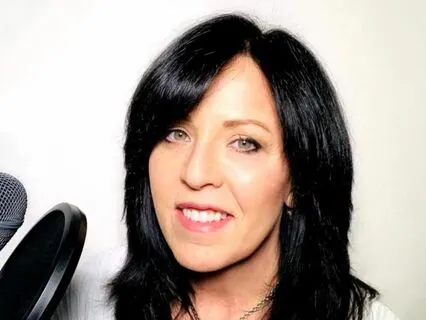
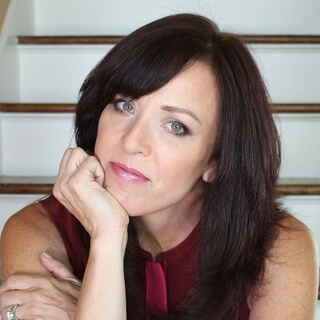
My name is Lisa A.
Romano.
I am a life coach,
Best-selling author,
YouTube vlogger,
Meditation teacher,
And expert in the field of codependency and narcissistic abuse.
I am a believer in the power of an organized mind.
My aim is to help people learn what it means to live above the veil of consciousness rather than living a reactive life.
May your heart feel blessed,
Your mind feel expanded,
And your spirit find hope as you spend time with me here at the Breakdown to Breakthrough Podcast.
Namaste,
Everybody.
So today we're going to be talking about the types of partners codependent people attract into their lives.
So if you're struggling with codependency,
You're struggling with a sense of self.
You're someone who feels invisible.
You're someone who doesn't feel comfortable in your own skin.
You're somebody who tends to enable other people's poor behavior.
You feel stuck in toxic relationships.
You don't know how to set healthy boundaries.
You don't even know what a healthy boundary is.
Chances are you have married an alcoholic.
Chances are you have married a narcissist or you've attracted narcissists in your life,
Including friends.
Chances are you are married to and or friends with and or have been attracted to people who suffer from addictions,
Who have yet to figure out that they have addictions that need to be resolved.
You tend to attract people who have high conflict personalities,
People that trigger your abandonment trauma,
People who exploit your kindness,
People who exploit your empathy.
You tend to attract people who are psychologically manipulative.
They know that you're wounded.
They know that you have trauma and they use it to their advantage to gain control over the relationship.
If you are codependent,
Dear one,
First of all,
It's not your fault.
Codependency is a coping strategy.
Its root cause is emotional neglect in childhood.
Oftentimes those of us who are codependent had alcoholic parents or we had dry alcoholics or parents.
We had people who were emotionally neglectful.
We had emotionally immature parents.
Our parents fought all the time or they just didn't speak or we knew they didn't like each other and we knew that it was not a good way to live,
But no one ever talked about what was really going on.
So there was the no talk rule.
There was this sense that emotions were nasty and dirty and we just didn't talk about them.
You got the feeling that your house was very cold,
Very stoic,
And no matter what you felt,
You weren't allowed to talk about it.
And as a result,
You felt very confused as a child.
Your inner world didn't match the outer world.
Maybe your home looked perfect.
Maybe mom and dad looked perfect,
But nothing felt perfect on the inside.
Maybe you were forced to go within.
Maybe you fantasized a lot as a child to escape the emotional abandonment from childhood.
Maybe there were bad consequences.
So if you did cry,
Something bad happened and you do that once or twice to a child and that child learns real quick that speaking up for themselves is bad.
So below the veil of consciousness,
Pain versus pleasure kicks in,
The default mode network kicks in,
And at the subconscious level,
You become a codependent adult in time.
You become someone who thinks it's their job to take care of other people.
You become someone who looks outside of themselves.
You become someone who is always focusing on the needs of your partner.
And when this shows up in a relationship,
What happens is a codependent,
Their sweet spot is focusing on other people.
The problem is that we end up with people who have lots of problems.
And why does that work?
Well,
It works because we don't know how to fix our own problems.
It works because no one ever taught us that what was going on inside of us was valid.
So we never look within.
So we keep looking without.
And as we look without,
We attract people who need to be fixed,
Who we think need to be healed,
And we focus on them.
And that keeps us busy and running from the fear of abandonment within.
And the problem is,
This is a very toxic relationship.
This is spiritual death.
It is you being the passenger in someone else's life.
This is you saying,
I have no reality.
I have no sense of self,
And I'm here just to support you.
I'm here to manage your ups and manage your downs.
I'm here to make you feel better when you feel bad.
If you feel bad,
I feel bad,
And it's my job to make you feel better.
You feel bad,
Then I feel like it's my fault that you feel bad,
And it's my responsibility to make you feel good.
So this is a very enmeshed relationship in which two people have lost their individuality.
A huge problem is that not only can a codependent attract a narcissist and an alcoholic or someone who's suffering with a gambling addiction or someone with a super high conflict personality,
You can also attract another codependent.
So you can attract an avoidant codependent,
Someone who struggles with the fear of engulfment.
And so they're very reserved,
But they want to be in a relationship with you,
But they're very reserved and they're much more comfortable with you sharing how you feel.
And they also appreciate when you're chasing them for approval,
It makes them feel like they're in a relationship,
But not really in a relationship.
It really goes back to the fear of vulnerability and their need for a defense,
But they want to be in a relationship,
But they don't want to be 100% in the relationship.
And the other codependent is the one who pursues the avoidance in the relationship.
And eventually what happens is the more obvious codependent,
The codependent who is chasing after approval,
Chasing after connection in the relationship,
What he or she does gets tired of it.
It's tired of chasing their partner and then they shut down and then they start mirroring the avoidance personality.
They stop talking,
They stop being the first person to start a conversation.
They just get quiet.
And then in time,
The avoidant person starts pursuing the pursuer in the relationship.
And this is a cat and mouse game.
This is very unhealthy and many of us die in these toxic relationships.
And I'm here to tell you,
It's just not necessary.
Codependents tend to marry codependents and they tend to attract narcissists,
Marry narcissists and marry people who have gambling addictions,
Have alcohol addictions or chemical issues.
They end up marrying people with a porn addiction,
A sex addiction,
People who are addicted to something outside of themselves that takes them away from the relationship,
Which is all part of the fleeting that a narcissistic partner does or someone who is involved in addiction does that takes them away from being able to be present in the relationship.
And this is a hand in a glove because a codependent person was trained early on that love is not a given.
You have to chase love.
So unfortunately,
On the quantum level,
This all makes sense.
And until we break the patterns and the subconscious beliefs responsible for the codependency traits,
We often stay stuck in these relationships for a lifetime.
I'm here to tell you it doesn't have to be that way.
So step one is to identify areas in your life that you think might be troublesome.
Ask yourself,
Do I chase approval?
Do I look for approval in my partners?
Do I tolerate things that I wouldn't want my friends or my children to tolerate?
Do I enable poor behavior?
Do my,
Do I make excuses for my partner?
Do I tend to lose myself in relationship dynamics?
Do I tend to want other people to tell me what direction to go?
Do I try to find ways to make my partner happy,
Especially when I'm afraid I've disappointed them?
Do I ruminate and ruminate and ruminate and worry about what people might think about me?
Am I constantly looking to be validated and do I consistently feel invalidated in my experience?
Do I feel like I'm a hamster on the wheel and do I crave to feel seen?
Do I want love?
Do I feel unloved?
Do I not feel good enough?
Do I crave to feel good enough?
Do I want it all?
Do I want more in life?
Do I want more out of myself and more out of my relationships?
Do I feel the need to transform my life in a big way?
Do I feel like I'm holding myself back in some way and I'm not aware of it?
Do my relationships hold me back in a way and I'm not aware of it?
These are super powerful questions that you begin to ask yourself as you begin to awaken from the possibility that you might be struggling with codependency.
I hope that this session has been helpful.
I hope that it's opened up your mind.
I hope it's given you some insight into how you can transform your life in powerful ways when you begin to heal from codependency.
Namaste,
Everybody.
Until next time,
Dear one,
You are enough.