Welcome to the Breakdown to Breakthrough Podcast.
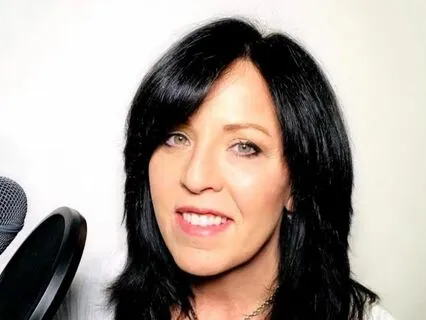
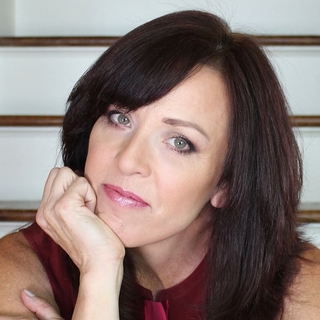
My name is Lisa A.
Romano.
I am a life coach,
Best-selling author,
YouTube vlogger,
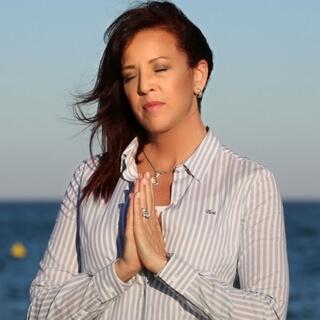
Meditation teacher,
And expert in the field of codependency and narcissistic abuse.
I am a believer in the power of an organized mind.
My aim is to help people learn what it means to live above the veil of consciousness rather than living a reactive life.
May your heart feel blessed,
Your mind feel expanded,
And your spirit find hope as you spend time with me here at the Breakdown to Breakthrough Podcast.
Today we're going to be talking about the concept of loving,
Expecting to be loved,
And how that might be a cause of why we end up in toxic relationships,
And why no matter how much we give in a relationship or how careful we are in picking a partner,
We end up feeling like we are in unfulfilling relationships,
Or we end up feeling like the person that we've manifested really isn't who we want.
When we are striving for success and the measure of success is outside of us,
Perhaps it could be in the size of our paycheck,
The size of our car,
The size of our house,
This concept of size,
This concept of something being large and being really,
Really important is also tied to something that I can achieve,
That I can gain from outside of me.
Think of it as a measurement or a ruler.
When we love with the intention of being loved,
Then we are really,
Whether we're conscious of it or not,
We're using some type of a ruler.
When we are ruling something or we are judging something,
We're already assuming or perceiving that the thing outside of us may not meet our expectations,
It might not be enough.
This is the crux of the law of attraction,
Where I cannot attract or draw into my experience that which I am not a vibrational match for.
If I want abundance,
But I'm always looking at my bank account and thinking,
Wow,
I have so little dollars,
Or I'm focused on my paycheck not being what I'd like it to be,
Or I'm focused on how much my cup of coffee costs at Starbucks,
Then I am measuring that which is outside of me.
In essence,
I'm saying it's not enough,
And essentially that vibration is one of lack.
I don't vibrate or believe or feel as if I have what it is that I actually desire.
I'm not a vibrational match for it.
When we are in relationships,
Whether we are codependent or not codependent,
We really have to be careful about this concept when we are loving other people,
Expecting love in return.
How does that show up if you are codependent?
Well,
I would say most oftentimes,
Codependency is rooted to childhood emotional neglect and adverse childhood conditions where there is not enough sufficient maternal warmth,
Where homes are unpredictable,
A lot of yelling,
A lot of fighting,
Addiction,
Incarceration,
Divorces,
Sometimes deaths,
Sometimes diseases,
And sometimes alcoholism,
And sometimes there's just so many children that you get lost in the numbers,
Or perhaps you were raised by parents who just didn't talk to you,
Thought you were a baby,
Thought you were a kid,
And even though you were a baby and you were a kid,
Acting as if engaging with you wasn't important.
I can tell you as the mother of a very bright 15-month-old granddaughter,
The work that my son-in-law and my daughter put into this baby every single day of her life is unreal.
It really is exemplary,
And the thing that I see is that their input has affected the output,
And the way that they love her and the way they engage with her on a daily basis,
This baby,
Every waking moment is being engaged with.
It's just phenomenal.
And then there are children who never get spoken to,
That are treated as if they're a blank slate,
And there's no sense in trying to communicate with them because they're just babies.
And obviously,
What goes in comes out.
If nothing goes in,
Nothing's going to come out.
And so the more we engage with children,
The better.
The more we treat children as if they are intellectual human beings,
The better.
Of course,
Age appropriate.
So it's important that we think about this idea of input equals output,
And it's also important that we realize that when my input is lack,
When I'm focusing on lack,
When my output is lack,
When I'm trying to measure my self-worth by how well other people love me,
Then I'm loving with conditions.
I'm loving expecting a certain outcome.
That's not exactly loving.
Loving is unconditional,
And love is a commitment.
Love is not an emotion.
Emotions are fickle,
And thoughts are fickle,
But a commitment and a decision,
Those are not fickle.
The only way to really achieve any type of success in business,
Personal success,
Relationship success,
Is through commitment.
And people that you engage with,
People that you partner with,
People that you partner with in business as well as relationships,
Should have the same level of commitment.
They should have the same desire.
They should have the same level of self-accountability.
If they don't,
They are not good fits.
They're not good partners.
And when you know that you are in a relationship with somebody who is as committed as you are,
Then the relationship has great potential to flow.
Oftentimes we love people because we're trying to get love in return,
Which means our picker is off because we're coming from love in the lack.
You will love me the way I expect you to love me,
And then that will mean that you love me.
And so we have all of these conditions and all of these perceptions that we put on our partners,
And when they don't match our criteria,
We feel wounded,
And that's when we start to withdraw.
And the belief system in our head is justified through the ego system or the ego construct that says,
See,
I knew that you were not good enough.
I knew that you would leave me.
I knew that you would do this to me.
So we have to ask ourselves,
Am I loving with conditions?
Am I loving for the sake of being loved in return?
Because that's always going to end up in a negative way,
Because I'm going to then behave in a way that convinces you that I'm worthy of being loved,
And that is essentially codependency.
Please need me.
Please see me.
Please take care of me.
Please affirm me in a way that my mother and father never did.
Please listen to me.
Please hear me.
Please figure out all my needs.
And we are coming into the relationship needing to be seen by this other person.
So we're loving,
Expecting to be loved versus loving ourselves and bringing the best version of ourselves to the table.
And when we bring the best version of ourselves to the table,
And what is going in is self-grace,
Self-compassion,
Self-empathy,
Self-accountability,
And we love ourselves without limits,
And we are striving to be our personal best.
So we're going for the 1%.
So we're not looking to be perfect,
Because perfectionism is really a mask to avoid shame.
Perfectionism is a disastrous way to live your life,
Because it's really not you trying to be your personal best.
It's you trying to avoid criticism,
Which means that you're avoiding shame.
So when we look on the inside,
And we heal our inner child,
And we work on codependency,
We work on increasing our level of consciousness around our childhood wounds,
And we learn to observe them from a higher state of consciousness as the observer detached,
And we offer ourselves self-compassion,
Then we can break through the codependency matrix or the trauma matrix and begin to love ourselves unconditionally.
And when we love ourselves unconditionally,
We go for the 1% versus the 25%,
The 30%,
The 40%,
The 50%,
Where we're expecting ourselves to make these giant leaps in mastering ourselves.
It's just not possible.
It's not neurologically possible.
Usually if you're going to be successful,
You have to shift,
And when we're talking about a neurological shift,
It takes time to create a new neural pathway.
And when we look at it from that angle,
When we realize my personal success will happen over time,
And in order for me to be my personal best,
My neurology has to be its best.
So let me work in the 1% field and the 2% field,
Where I strive to be a little bit better each and every day.
So we're just looking for an incremental shift.
And if I backslide,
Let me just hold myself accountable.
Let me see it.
Let me offer myself grace.
Let me get back on the consciousness horse and try again.
And so if we want love on the outside,
We have to love ourselves on the inside.
And I really hope that this resonates with many of you out there,
Especially those of you who have never really felt loved and never really felt seen.
We've got to stop looking for that sense of self and that sense of being seen on the outside and begin seeing it on the inside.
And that happens when we hit the pause button,
When we learn to shati shati,
When we learn to look within,
And we do the tough work that we have to do to figure out how we have become neurologically and subconsciously the people we have become.
And when we do that work,
That's when we're free to break free of the chains of the past.
Namaste.