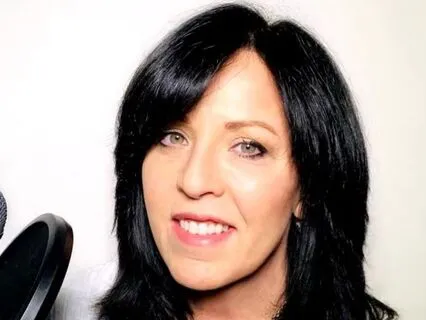
Welcome to Breakdown to Breakthrough,
The podcast that empowers you to transform your life by awakening to your true,
Authentic self.
I'm Lisa A.
Romano,
Your host.
As an award-winning author and certified life coach,
I've dedicated my life to helping others understand the incredible power of an organized mind.
I believe that true empowerment begins with awakening to our false self.
My mission is to support you on your journey toward mental and emotional regeneration through conscious and deliberate awakening.
In this podcast,
I'll share insights,
Tools,
And transformative stories that illuminate the path to healing and self-discovery.
If you are codependent,
Then you are overly emotionally reliant on other people.
We are overly emotionally reliant on other people's approval.
We are reliant on making other people happy.
We are reliant on making sure that other people don't stress.
Oh my God.
We are reliant on making sure that other people's lives are as easy as possible without checking in with the self.
We are addicts in the sense that no,
Maybe we don't drink,
Maybe we do,
But we have an addiction nonetheless.
We have addictions to making sure that the boats that we're on don't rock too much.
So that means that we are the monkey in the middle and we put ourselves there.
So if we sense that mom and dad are going to start to scrap and get into it,
We jump in.
If we notice that our siblings are going too far off the path,
We jump in.
We know that our nieces or our nephews or our neighbors or our friends are struggling and we jump in.
We are so addicted to needing to control the outer environment that we are completely detached from what we are doing,
Why we are doing it,
And how to stop it.
We cannot fix holes in the walls that we cannot see.
We are addicted.
We are addicted to other people.
We are addicted to our patterns.
We are addicted to our beliefs.
We are attached to our behaviors.
It is so sad,
And I am someone who is still on the recovery path,
Still unearthing things,
But at least now I have the understanding,
I have the knowledge,
I have the know-how,
And I have the skills to observe a pattern,
Hold myself accountable for that pattern,
Work it out.
I've developed incredible journaling prompts and some strategy steps that help me reclaim my grounded state and help me prepare for when I begin to let go of some addictions that I know are going to trigger my survival response because being addicted to peace means that I am afraid of chaos,
Which means that I will give up myself for the sake of peace because I associate such a sense of fear and unsafety with chaos.
And so if I see it anywhere,
I want to stop it.
I want to control it.
Why?
Because I grew up in an unpredictable home.
I was persecuted and criticized and neglected emotionally.
I was raised by people who had unhealed trauma,
And they were control freaks,
Highly critical.
It could be no other way,
But I went off that crazy wheel.
I went off that karmic wheel.
The law of attraction is simply a cause and effect,
And it's not my fault that I was born to this,
That I was brainwashed or conditioned and programmed to behave this way,
To think this way,
And to live this way,
But I don't want to do it anymore.
I don't want to do it anymore,
And I don't want to teach my children to do this.
I don't want to model codependency and self-abandonment for my children.
I want to model authenticity.
I want them to learn to love themselves and be able to say,
No,
This is not enough for me,
And even if they're disappointed,
And even if they're struggling,
And even if it's hard to tell the truth,
They tell the truth.
They tell their truth.
Dis-ease is when someone does not speak the truth.
I was sick and nearly died from inflammatory diseases because I was afraid to tell the truth.
I told my truth when I was seven.
I told my father,
I don't think mommy loves me,
And he told me,
Don't ever say that again,
And I never did.
And when my son was two,
And I knew I made a mistake by marrying my ex-husband,
But I was 25 years old,
I gave up nursing school,
I was in this relationship completely financially dependent upon this person,
I went to my mother.
Mom,
I think I made a mistake.
She never asked me why.
She never asked me what was going on.
She looked me dead in the eye,
I'll never forget this,
I was outside my car with my son in his car seat,
And she said,
Get in that car,
Drive home,
And go lay in the bed you made.
That's what she said.
Never asked me why I felt that way,
Never.
And so when you grow up feeling like you can't speak your truth,
Those emotions stay within you.
We know this,
This is scientific,
Don't believe me,
Go look it up.
Stress causes dis-ease.
Dis-ease in the body is disease,
Okay?
But dis-ease,
In my opinion,
Starts in the mind.
Starts in the mind.
If you have a disorganized mind,
It's because your mind wasn't organized properly.
You didn't hit emotional and psychological and social milestones in order.
And that's not your fault.
Your hierarchy of needs,
They weren't fulfilled,
And you can't progress to the next level of needs or milestones,
Social milestones,
Psychological milestones,
Emotionally intelligent milestones.
You can't hit them until you go back and complete those steps,
And that's not your fault.
And so we as codependents become addicted to outer conditions because as children,
We told ourselves that if mommy was happy,
We would be safe.
So yes,
It becomes an addiction,
Meaning I have no control over it now because I'm hypervigilant at the subconscious level.
I am so tuned up and so highly empathic now as to what's happening outside of me,
I can't not pay attention to how people feel.
I'm absorbing it.
And my subconscious mind has been now received so much data as it relates to fear and feeling safe that I can't not worry about you.
Not worrying about you triggers Amy the Amygdala.
Letting you suffer the consequences of gambling or addiction or causing arguments with your spouse or your children or your narcissism.
Me trying to help you figure things out would make me feel safe if you listened and you did what I asked you to do,
But that's a control issue.
So as a codependent,
We're addicted to control.
We're unhappy when people are unhappy,
And we think that our sense of control comes from making people happy.
Why?
Because if you're happy,
Then I can rest.
If you're unhappy,
That makes me insecure,
That makes me anxious.
So I become addicted to control.
So now I don't know that that's my issue,
But I'm walking around planet Earth and that's what I'm looking for.
I'm looking for a sense of control.
But what am I really tuned up for?
Chaos.
So I can be addicted to chaos.
Why?
Because I know how to function there.
I know how to function in chaos.
And whatever my brain associates the familiar with is what it associates safety with.
So here I am as a codependent.
No,
I'm not drinking.
I'm not drugging.
I'm not gambling,
But I'm addicted nonetheless.
And it's controlling me.
I'm possessed.
Yeah,
You are possessed.
You're possessed by your subconscious mind until you break through and until you awaken.
And not only that,
You have to awaken,
And I'm just pulling up my notes.
You have to awaken,
But then you also have to develop life skills.
Awakening is huge.
But the mind is like your bicep.
If you don't work it out,
You're going to lose that muscle tissue.
It's the same with the mind.
If you don't hold onto an aha moment,
And that's why we scroll on social media,
We watch tons of reels on YouTube and on Instagram,
You're not learning.
That's not learning.
That's short-term memory stuff.
Short-term memory.
In order for you to really learn how to break through codependency,
In order for you to break through an addiction to someone else,
To their approval,
In order for you to overcome the fear of abandonment,
It has to go from short-term aha moment to long-term memory.
That takes time.
This is a process of self-reframing.
We take this journey one step,
One week at a time,
So that your aha moments,
Your breakthroughs become long-term memory.
That's how you change.
I want to talk a little bit about,
Well,
I wrote down seven things that codependents can become addicted to,
And why.
This isn't to beat a codependent up.
Listen,
I'm a codependent myself,
Or I should say I'm a recovering codependent.
Every teacher,
Every coach,
Every guru,
Every person that you follow,
Think about Louise Hay.
What did she teach?
She taught what she most had to learn,
And I think they make the best teachers,
Because I'm zoned in on this.
I'm honing in on codependency.
I'm honing in on early childhood development.
I'm honing in on how to heal the subconscious mind.
I'm honing in,
And if I can heal myself,
Then I can carve the way for other people.
And so,
I don't want anybody to feel like,
Oh,
There goes Lisa again.
She's beating up codependents.
No,
I'm not.
No,
I'm not.
It might feel like that,
But you know what?
I don't want to identify as a victim.
I want to identify as someone who.
.
.
This happened to me.
I was victimized as a child.
I was.
That's not my fault.
It's not my fault,
But I'll be damned if I'm going to carry that label with me for the rest of my life,
Because if I do,
I will not seize opportunities.
I'll feel like a victim.
I'll see an opportunity as a challenge and as something that was intentionally thrown at me to prove to me that either people don't believe in me or my subconscious mind will use that and say,
See,
It's their fault.
You just can't do that.
You're so wounded.
You can't do that.
I am not leaving planet Earth feeling like a victim.
I don't want to identify as a victim.
See,
There's a big difference between,
Wow,
I was abused in childhood or emotionally neglected or experienced this type of trauma.
That's true,
But we are not those experiences.
You know what's hurting us?
Not the experience,
But our attachment to the memories and the perceptions that we developed during that period in our time when we were going through these traumatic experiences.
It's the leftover stuff.
It's the imprint.
It's the schema that the mind develops as a result of it.
It is the survival habits,
The survival thinking,
The habitual thinking,
The negative thinking.
I don't want it.
I don't want it.
And you look at people like Oprah Winfrey or Tony Robbins,
So many,
So many well-known people who have had such incredible trauma in their life,
And they're doing great things.
They don't see themselves as victims,
But the only way to really get what we want in life is to claim,
I'm not a victim.
I was victimized,
But this is how I'm going to break through.
My process has always been calling myself out on it,
Like a tough love,
Higher self,
Like you're doing that,
Knock it off,
Like you're going to attract that.
Is that what you want to attract?
Oh,
You're teaching your kids that.
You want to do that?
Keep it up.
Keep it up.
I don't want that.
And so this session is really about,
Hey,
Codependent,
If you're like me and my work resonates with you and you really want to break through,
This is where you want to look at because you can't solve a problem where you can't find a solution to a problem you don't know you have.
See,
Lots of codependents are controlling,
But they don't know that that's a problem or they don't see that the way they exist is a problem.
Now,
Once you see it as a problem,
It's like,
Okay,
Now I can start working on it.
Great.
And in that moment,
You celebrate,
Figured it out.
The moment you notice,
Wow,
I was doing something I shouldn't have been doing is self-awareness.
Celebrate that.
Don't beat yourself up.
There's a fork in the road of consciousness.
You can either go down the left path,
Which is you beating yourself up,
Where you can celebrate and sing,
Hallelujah,
I just noticed that.
And in the next moment,
I'm going to do better.
So I'm going to run through these.
So codependents become addicted to approval.
So codependents often seek constant approval and validation from others,
Leading to them compromising their own needs.
So if I'm focusing on you and I have an addiction to focus on outside,
And I have an aversion to focusing on myself because I don't know how to,
Or when I look within,
I feel shame,
Or I've been brainwashed to think,
Oh,
No,
No,
The answer is to let go of the self and to focus on others.
If I have been conditioned to,
Oh,
No,
The world's going to fall apart if I don't focus on you,
Then that becomes an addiction.
Number two is rescuing others.
We may feel a compulsive,
Compulsive neurotic need to help or rescue others,
Often at our own expense.
And this leads to a cycle of enabling unhealthy behaviors in others.
So why would my alcoholic daughter have any reason to really challenge herself and stick with recovery if mommy paid her bills,
If mommy paid her rent?
Addiction tells you that you don't have a problem,
That,
You know,
Say you like to party once in a while.
It's no big deal.
You know,
You didn't like that job anyway.
It's a bunch of rationalizations.
We make excuses for this.
And that's why they say rock bottom,
Rock bottom experiences is so important because it offers that person so much pain that now they have a reason not to drink.
But we're addicted to enabling and rescuing.
We also are addicted to control.
So codependents have an addiction to controlling situations and people to maintain a sense of stability and predictability in their lives.
It also will keep you stuck.
Growth happens outside the familiar.
There is no growth inside the familiar.
Trust me,
I know.
I still have to push myself to try new things,
To go to different places,
To go there alone,
Go there alone.
Take a chance.
Go there by yourself.
Try it.
Try it.
Try it.
Be all up in your insecurities.
Be all up in what do people think about you going to the movies by yourself or going to dinner by yourself or going to an exhibit by yourself.
Be all up in your feels,
But do it anyway.
Embrace it.
We can become even addicted to conflict.
So some of us may find ourselves drawn to drama and conflict in relationships,
Which can create a cycle of emotional highs and lows that we become addicted to.
Why?
Because it's familiar.
It's familiar.
That's why so many codependent men and codependent women push away the nice guy.
They're not attracted to the nice woman.
The woman that will stand by their side,
Be loyal,
Doesn't look for attention from other men,
Is completely loyal to the guy,
But he wants the woman who will bring chaos into his life.
Maybe his mother was chaotic.
Maybe that was their cycle,
The mother-daughter cycle.
But a codependent man oftentimes will attract somebody who he needs to rescue,
Who he needs to take care of,
Who refuses to take responsibility for our own emotions,
And there he is.
He's in that cycle.
We can become addicted to neglecting self-care.
So we often neglect our own self-care and our needs,
And we become addicted to the role of caretaker and martyr.
So I went through this early on in my marriage.
I was buying my clothes from BJ's.
I didn't have to.
I was buying my clothes from BJ's,
And it was almost like a badge of honor to show up at my son's kindergarten with baby puke on my shoulder or complaining about how tired I was,
How exhausted I was.
I was up with the kids all night or complaining about how much I did for my mom.
I mean,
Ew,
Puke,
Ugh,
You know,
I want to gag myself these days when I think back,
Back,
But it wasn't my fault.
That was a very immature,
Unaware,
So severely immature,
Young codependent that I was,
That was repeating my mother's patterns.
I thought that abandoning the self meant that I wasn't selfish.
See,
My mother impregnated me with the idea that self-care was bad,
Self-care was selfish.
And so I thought,
Oh,
Okay,
So if I'm sacrificing myself,
Like,
That's a good thing,
Right?
But now I was looking for affirmation for that.
Yeah,
That's a good thing that you self-sacrifice,
Oh,
You know,
Good for you,
Lisa.
But it never came because that's needy and that's thirsty and that's manipulative.
And so people see through that,
Although I didn't know at the time.
I see through it now and other people,
I can spot that 10,
000 feet away now,
But it's taken me a while to get here.
But what I'm sharing is true.
If it's stinging you,
It's like,
Ooh,
That might be me.
That's okay.
Just sit with it.
Like,
You don't have to do anything with that.
You don't have to,
You know,
Create a punch list of things that you have to do and you don't have to go buy your clothes at Saks Fifth Avenue now and not complain about how hard things were the night before the kids.
That's not the answer.
If you have a rough night with your kids,
That's a rough night with your kids.
The difference is posturing yourself as a victim,
Seeking validation and some sense of,
You know,
Empathy or sympathy or pity from someone outside of you that justifies this faulty cognitive distortion about what your identity is and where you should be achieving that identity.
That's what you have to be careful of.
Martyrs also become angry when,
If they're really subconscious and they've been this way for like years and years and years,
They'll become angry when you don't mirror back to them how great they are.
They could become angry.
That's where you start.
That's where I think this starts to slide into the swimming end of the pool where it's narcissism.
So,
Oh,
When I don't tell you how great you are,
When I don't praise you for being this person that has all of these fights that you fight for other people and I don't agree with you and you're complaining about how you throw yourself into this organization and that organization,
You're complaining about how tired you are and how much money you're losing.
I'm like,
Okay,
It's a choice.
You're ticked off at me because in your head you're thinking,
Oh,
No,
No,
That's the way to get you to affirm me.
That's narcissism.
Right?
So,
Oh,
I have to affirm you because this is your choice?
I'm not playing that game,
Right?
So,
We've got to be careful.
While we're codependent,
We're looking for this and when we don't get it,
We feel abandoned and we shrink into the self.
We feel ashamed of the self and oftentimes it feels even more self-abandonment.
It's just a mind game.
But at least if we talk about it,
Then we can expose it and we can start to heal it.
We also have an addiction to the fear of abandonment.
So this is a deep-seated fear of being alone or abandoned and this can drive our codependent behaviors and this leads to the unhealthy attachments to others.
So typical of a codependent,
Let's say a female,
Heterosexual female,
She meets a man and all she can think about is like,
I hope he likes me.
I hope he likes me.
Well,
What if you don't like him?
Oh,
I hope,
I hope,
I hope I meet his needs or I hope he thinks I'm beautiful or I hope he thinks I'm kind,
Blah,
Blah,
Blah.
So you're not interviewing men when you date them.
You're just,
You're actually begging them to give you permission to be in their life without any logical interview on your part where you ask yourself,
Wait a minute,
Is this what I want?
Does this shoe fit me?
Right?
Codependence.
I know cause I've been there.
We'll cut our toes off to make a shoe fit and then we'll complain that our feet hurt.
We'll come and we'll stay there for 10,
20,
30,
40,
50 years.
Right?
Not that we're dumb,
It's just that we're unconscious and we don't know that we're codependent.
We don't know that some survival pattern is running the ship and that without awakening and processing the pain that causes these addictions and this fear of abandonment,
We're not going to heal.
We're going to stay stuck.
And the last thing is emotional turmoil.
So the emotional highs and lows of codependent relationships can create a cycle that some of us become accustomed to even if it's unhealthy.
So in other words,
It's like,
I remember growing up in my home,
My mom was so codependent.
I think she had narcissistic traits too.
I know she did.
And she can only be calm for three days.
So there was this cycle and I was a kid and I could tell you like day one,
She's calm.
Day two,
She's calm.
Uh oh.
Day three,
She's going to blow.
If my mother didn't blow on day two,
She was definitely going to blow on day three.
And so that,
That pattern becomes part of what your brain is recognizing and it begins to brace for impact.
But it also,
There's this certain level of control that comes with identifying that pattern.
And then you adopt that pattern.
So you're an adult,
You're a mom,
You're whatever,
You're at work.
And guess what?
Guess whose cycle you're in?
Her cycle.
So you're only calm for about two days and then you feel this,
This turmoil happening where you create it in your life and there's this explosion and then you start to come down from it.
And it's like,
Okay,
You have just fulfilled a pattern.
That's not your fault.
The good news is dear one,
That you can break free of this.
You can break through this.
I'm doing it.
I've done it.