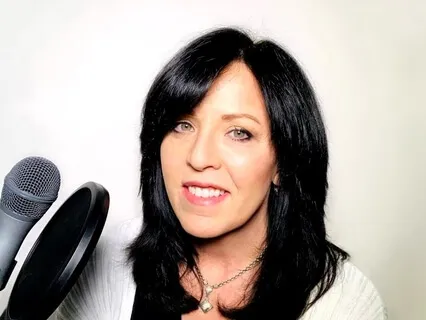
Welcome to the Breakdown to Breakthrough podcast.
My name is Lisa A.
Romano.
I am a life coach,
Bestselling author,
YouTube vlogger,
Meditation teacher,
And expert in the field of codependency and narcissistic abuse.
I am a believer in the power of an organized mind.
My aim is to help people learn what it means to live above the veil of consciousness rather than living a reactive life.
May your heart feel blessed,
Your mind feel expanded,
And your spirit find hope as you spend time with me here at the Breakdown to Breakthrough podcast.
So today we're going to be talking about the mind,
Which is basically the subconscious mind and the higher mind,
Which is what we should all be achieving for striving for to think and to live and to be more highly conscious rather than reactive to the nonsense that happens in the subconscious mind,
Which is essentially a rodeo where thoughts are bullets and impulses are bullets and needs and wants are bullets.
And we often don't realize how irrational our thoughts are and how compulsive our innate drives are to feel wanted,
To feel respected,
And to feel loved.
And so let's break it down.
And so Freud helped us understand the mind as the id,
The ego,
And the superego.
And let's just understand a little bit about the id.
So the way I look at the id is this aspect of our personality that is rooted in needs,
Desires,
Wants,
Very impulsive,
Very compulsive.
I want this.
I need to be loved.
I want to be respected.
I need to be believed.
And it's all about feeling secure and feeling in control over the ability to get one's needs met.
And so the id is that aspect of our personality.
If you think about it,
When you're first born,
You have survival needs.
You need to eat.
You need to sleep.
You need warmth.
You need safety.
You need to feel connected to the environment,
To your parents who were supposed to supply a safe,
Nurturing environment where whatever needs you had,
They would have been supplied.
Up until about nine months old,
A baby really does think that they are an extension of their mother.
And so if there are problems within the first nine months,
There could be some issue with feeding.
There could be colic.
There could be adoptions that take place.
There could be a death in a family.
There could be anxiety within the mother,
Anxiety within the father,
A divorce,
Who name it.
When this child's sense of stability is fractured,
Something happens to make the child feel disconnected and this does not go unnoticed by the psyche of the forming child and a sense of safety is threatened.
By the time the child is between the ages of two and three,
Their ego is formed.
And what poor ego,
Ego is responsible for mitigating the impulsive needs of the id with this idealized version of the self.
And so if you're a child that did not feel connected,
Did not feel safe,
Then somewhere along the line,
You began to believe that it was your fault.
By the time that you were two or three,
You're forming these ideas of the world.
By the time you're two or three,
You know that if you say certain things to mommy and daddy,
They will either see you or reject you.
By the time you're two or three,
You figured out how to feel safe,
How to feel more in control.
Sometimes fawning,
Right?
Fawning is a way to people please and to feel more in control over your environment.
If you smile and you're a good little girl and you're a good little boy,
Maybe mommy and daddy won't yell at you.
If you clean up your room,
Maybe mommy and daddy won't yell at you.
If you're a child that has trouble with organization and it's difficult for you to take care of your room or it's difficult for you to do everything that you think will please mommy and daddy,
Sometimes saying no is a form of maintaining power and control.
No,
No,
Do this,
No,
Do that,
No,
Help me with this,
No.
Sometimes just saying no is a defense mechanism and it makes a child that feels powerless and frustrated more able to feel in control over their environment.
Whether you say no or you say yes,
As a child what happens is you're disconnecting from your true self and you're losing the ability in the future to develop patterns that are fair and that actually serve you.
So ego is that aspect of personality that understands it needs the 3D world.
It becomes attached to things in the 3D world,
In the matrix.
It becomes attached to these ideas that if I do this then I'm good enough.
If I achieve this then I'm good enough.
The ego is that aspect of your personality that makes decisions or not.
So ego is that aspect of your personality that is basically the aspect of your personality that is in touch with the 3D world.
Ego is very aware of the environment,
What's happening around them.
Now by the time you're five you develop the superego and the superego is the aspect of the subconscious personality that has developed an idealized version of a future self.
The superego is the subconscious aspect of your personality that has this idea of an idealized future self.
By the time you're five you have been downloaded and programmed through the id,
The ego,
Your environment,
Your experiences with mother and father,
Grandma,
Grandpa,
Aunts and uncles,
Your schools,
Your religion.
All of these external experiences have helped you formulate an idea of who you should be to be enough.
Who you should be,
Not who you are,
Not what you really love,
Not what's true for you on an innate natural organic level.
The superego has been downloaded by the environment through punishment,
Through withholding of love,
Through rejection,
Through acceptance,
Through validation,
Like a computer to formulate this idea of who you should be and who you think you should be.
Listen to all the shoulds.
Who you think you should be,
What you think you should be that would satisfy or should satisfy all the desires and needs of id.
So the superego,
The ego and the id are subconscious.
They're immature processes.
They're unrealistic.
They're unrealistic.
If you are born gay,
But your religion tells you you should not be gay,
Or by the time you're three or five,
Your society has downloaded you to believe that there's something negative about being gay,
Your idealized version of self is not gay.
Your idealized version of self,
Future self,
Is heterosexual.
Maybe this idealized version of yourself is married with children.
Can you see the conflict?
I'm born gay.
That's innate.
But your ego and your superego,
That's what's happened to you.
That's what's helped formulate and develop your personality,
Which is not you.
These are programs that run until you become more conscious.
And I firmly believe that the world is in chaos and there is so much depression and anxiety,
Divorce and angst,
Narcissism and codependency because people don't understand their personality is not them.
Inside their mind,
They believe the program.
They observe the program and they're not detached enough or aware enough from the programs.
They believe that the programs are them.
Now the idealized self is a version.
It's a picture in your head.
So you're at point A,
Right?
You're psychologically and mentally and physically and spiritually point A.
So I'm alone in an apartment somewhere and I have this job that I'm not thrilled about.
But in my head is this idealized version of myself.
I should be much further along in my career.
Listen to the shoulds.
Should shame.
I should be further along in life.
I should have a house.
I should be married by now.
I should be making a difference in the world.
I should have better control over my finances.
I should have better friendships.
So you're at point A and you think you should be at point D or E or F.
And in this space between point A and point D or E or F is shame.
That is the narrative of the inner critic.
So you have the superego that forms by the age you're five.
Unloaded and programmed to believe that you should be some other version of what you are.
And so you go on in life and you take on all these ideals of school and your pastor or your rabbi or your mother or your father.
You're watching television.
You have experiences of people in your life that have and have not.
And you're taking all this data in and you're thinking that's the way to be happy.
If I could just do that,
If I could just be that,
Then I'll be enough.
Then my life will be happy.
Then everything will be good.
And you're taking all this data in and you're not understanding that you're developing this should shame experience.
If I did this,
I should do this,
But I'm not doing this.
How is a human being who is at point A and wants to be at point D,
How is a human being supposed to muster up the energy to get to point D when there is nothing but should and shame in the way?
It's like you're on a mountain and you see the second mountaintop and there is a pathway.
There's a bridge to get from mountain A to mountain B,
But it's full of bricks and stones.
I should be on mountaintop B.
I should be on mountaintop B.
But you're looking at this path and it's a monumental task.
And so many people go,
I'm just going to give up.
I'll never make it across the mountain.
Even though if you stood there and you whistled while you worked and you didn't berate yourself from the inside out,
If you stood there and took every stone off that path,
Off that bridge,
Eventually you'd make it to the other side.
And there are people in life who have learned how to do this.
This is mastering the self.
So if you have two people,
Same goal,
I want to get to the other side.
And you have someone who came from a dysfunctional home whose family was chaotic,
Unpredictable,
For whatever reason.
The ego decided I'm going to say no to get along or I'm going to fawn to get along.
And then you have another child that comes along or another person who had a healthier relationship or has worked through their stuff and says,
Well,
I want to get from point A to point B.
So I'm just going to enjoy the day.
Instead of talking about how hard this is going to be to get from point A to point B,
I'm going to whistle while I work.
I'm going to imagine myself being on the other side.
I'm not going to berate myself and beat myself up while I move these stones.
So the Bible says do everything with a joyful heart.
That's what that means.
It is impossible for someone to get across that bridge if their inner dialogue is so negative,
So self-loathing,
So self-berating.
And the mind is subconscious.
If you have one negative thought about yourself,
Your brain is a congruent tool.
It agrees with you.
If it argued with you,
We might call that schizophrenia.
So if you think you suck,
Your brain goes,
Yep,
And this is why,
And this is why.
Remember when you did that?
Remember when you did that?
It's designed to be your mirror.
In other words,
If you want to berate yourself,
Your mind will do that.
It will help you.
But if you want to empower yourself,
Your mind will do that too.
It's a tool,
And people don't use it.
People don't use it.
If you decide that that's the path I need to take to get from point A to point B,
And you decide,
You wake up and you say,
I am not going to devalue myself anymore.
I have made mistakes.
I am not a perfect person,
But I am not going to berate myself with this inner dialogue.
I know that the idealized version of myself may be unrealistic.
It's taking me out of the now.
If I think I should be something that I am not,
I will experience nothing but shame.
I will accept where I am.
I will accept and surrender to what has been.
I don't have to like it.
But it's my thought process.
Yes,
My parents have helped create this thought process,
But there's also a natural experience,
A natural egoic experience,
Natural ego defense mechanisms,
A natural tendency for a child's mind to develop an idealized version of self.
You know,
Before the age of seven,
We're all in a hypnotic brainwave state.
That's not our parents' fault that that is the mechanism of design.
In terms of fault,
Yes,
Our parents have screwed up.
Many of them have screwed up.
Many of them have blamed us and criticized us,
Trying to get us to do what they think we should have done.
And yes,
Some of our parents hurt us on purpose.
They did.
Some parents who are so narcissistic actually enjoy controlling,
Dominating,
And hurting their children.
That's a fact.
It's an ugly fact,
But it's a fact.
And then there are parents who think by blaming their children and criticizing,
Oh,
Don't do that,
Do this.
They're somehow molding their children to survive.
My father wanted me to become a nurse because he wanted me to survive.
He didn't realize that when I said to him,
Dad,
I want to be a writer,
And he said,
No,
You'll never make any money as a writer.
He shamed me.
He took me away from my innate gift,
Which is writing and expressing myself and helping other people understand themselves more cognitively and more clearly,
Helping people clear the cobwebs out of their minds so their minds can function better,
Helping them understand what happened to them so they can reclaim their personal power.
He didn't know that.
I think many of us experience that,
Understanding the ego and the superego and this idea that,
Oh,
My gosh,
I have downloaded this idealized version of myself.
And I'm at point A,
Stuck in my life after another bad relationship,
And I think I should be at point D,
But I'm berating myself for not being there.
No wonder I can't get there.
We are all meant to fly,
And this heaviness caused by dysfunctional thinking,
This is subconscious thinking.
This is irrational thinking built upon the small mindsets of children.
We formulated these ideas about ourselves when we were young,
When we were immature,
We weren't highly conscious,
And this unconscious state or subconscious state is running our lives,
The cycle of self-abuse,
Self-abandonment.
It's time to come off the crazy train.
Now you're conscious,
But most of us aren't using our consciousness.
We're not expanding our consciousness.
We're stuck trying to chase this idealized version of ourselves.
Oh,
If I do that,
Then I'll be happy.
I should do that.
I should do that.
I should do that.
I should do that.
I should do that.
I don't do that.
I suck.
I don't do that.
There's something wrong with me.
I never did that.
I always fail.
This self-deprecation,
It's an internal ferris wheel of unconscious,
Recycled nonsense.
It's a loop.
And the only person that can get you off that loop or get your mind or your point of focus,
Your state of awareness,
That's all it is.
You're not shifting your state of awareness.
You're allowing old negative programs to consume you.
And then you know what happens?
Your brain produces chemicals that match that experience.
Now you feel depressed.
Now your heart rate changes,
Your blood pressure changes,
Your insulin changes.
You crave sugars.
You're tired.
You don't want to move.
And then you look at yourself and say,
I'm a waste of life.
You're stuck in a pattern of subconscious beliefs.
Your it,
Your ego,
Your super ego are subconscious programs.
The wonderful,
Miraculous,
Amazing thing is that your brain is a computer and your higher state of awareness.
You can train your mind to shift your focus.
You can expand your level of consciousness and say,
Yes,
That happened to me.
Oh,
And that's why my ego did that.
And that's why my super ego did that and felt that and thought I should do this.
You know,
I was,
I was abused and shut down as a child.
And I thought I learned to think that if I shut down,
My mother would love me more.
Or if I did what my mother wanted me to do,
Then I would experience happiness.
But I was angry at my mother.
And so sometimes I said no to maintain the power.
Think about a child who's stuck in that dynamic.
Right?
Think that love is conditional.
How does a child who's been raised to think that love is conditional survive?
All of us want to feel powerful.
And sometimes we make poor choices in order to maintain that power.
A child that rejects mother eventually.
No.
It says no all the time.
Or a child that rejects love from father all the time.
Because before the age of seven,
This child felt like their love was conditional.
Maybe they were immature parents.
I'm not talking about sexually abusive parents.
I'm not talking about narcissistically abusive parents.
I'm talking about the day to day parent that makes mistakes.
That doesn't listen to their child as often as they should.
That has maybe six or seven children.
That's doing the best that they can or has lost their job and is suffering with their own woes and trying to maintain a home.
And just isn't attuned to their child as much as the child needs.
Think about the child that begins to say no because that child is experiencing,
I don't feel good in this house and I'm angry and I don't feel good enough.
Think about that child who's saying no.
No to life.
To hold on to a sense of power who is now bucking against authority.
Meanwhile,
There are so many avenues open to this person to change their life and they say no.
I had an uncle who said no to love.
He was so shut down because his parents were alcoholics.
He didn't trust anyone.
He wouldn't come to our house for Christmas because he thought we wanted gifts.
So he said no.
He said no to the sun.
He said no to walks.
He said no to healthy food.
Everything was no.
And I believe it was because very early on my uncle experienced such abandonment because his parents were alcoholics that the only thing that made him feel safe was the word no.
That's not living.
That's not conscious.
And so the answer I believe is to understand what went wrong.
Understand the id.
Get inside the mind.
Open up the hood of your car.
Look inside.
Oh,
That's my id.
Those are my childhood experiences.
That's my ego.
Oh,
I believe that by the age I was age of three.
Oh,
That's my super ego.
Oh,
Those are the rules of my family.
Oh,
That's the idealized version of myself.
And that's in conflict because I'm not there yet.
Now instead of encouragement encouraging myself to be myself and to accept myself in the now,
I beat myself up.
No wonder I can't get to where I want to go.
No wonder I can't experience the joy of living in the now.
That is the problem.
And so until we understand the self,
Until we step into higher self,
So higher self,
Think about higher self as a 100 story building.
You start off at the ground floor.
You become more aware on Monday,
A little bit more aware Monday afternoon.
You meditate.
You journal.
You observe.
You hear a negative voice and you say,
No,
No,
No,
No,
We're not beating ourself up today.
You speak to that voice.
No,
No,
No,
No,
We don't do that loop anymore.
No,
No,
No,
No,
No,
We don't beat ourselves up.
We don't say negative things.
No,
No,
No,
No,
We don't ruminate anymore.
No,
No,
No,
That's just a reflection.
No,
No,
No,
I can create a new vision in my head.
Right?
I can decide what my reality is going to be in this moment.
Yes,
I made mistakes.
You have to accept what was.
You have to accept that you feel shame.
If you feel shame,
Yes,
I can feel that shame.
You accept everything.
Yes,
I feel embarrassed.
Yes,
I think everyone thinks I'm this.
Yes,
I think that,
But it's okay because I'm a human being.
I've made mistakes and a new day is coming.
I have a right to be myself.
I have a right to make mistakes.
My mistakes are part of my history and I'm going to learn from them.
Now you're at floor number two.
I can forgive my mistakes.
I can love myself.
I can stay in the now.
Now you're at floor number three.
I can be grateful for eyesight.
I can be grateful because I can think.
I can be grateful for the friends that do love me.
I can be thankful for my house.
It's not a big house.
It's not a big apartment,
But I can be thankful.
Floor number four.
I have a job.
I'm grateful for my job.
If I don't have a job,
I can look for a job.
I could send out resumes.
I can take action in the 3D world that moves me closer and to the other side of that mountain.
Floor number five.
I'm so grateful for the opportunity to expand my mind.
Floor number six.
And every day you move another stone.
Every day you milk a higher state of consciousness.
Now you're no longer a slave to subconscious programs.
In order to master your life,
You have to master the self.
You have to master id,
Ego,
And the superego.
You have to redesign the superego's narrative.
This is the most difficult,
Difficult work that you can do and the most noble.
You don't have to worry about changing the life of anybody else.
Change your own life.
Because once you change and master your life,
That's when you tap into the flow of potential.
Potential is a field.
It's like a stream,
But you have to get there.
And negative thinking is never going to get you there.
The field of potential is within every single human being.
I believe the field of potential is in between the neurons in the brain.
I believe right at the end of a neuron is a field of potential.
But if you don't stop the negative impulses coming from one neuron to the next,
You're going to stay in a loop of negative neurons and neural pathways.
And like a Ferris wheel,
These neural pathways just fire and fire until you say stop.
Until you say,
No,
We're not thinking that today.
We're thinking this.
You have to shift your focus to a future goal that is within your reach.
And you know what?
It's not about conquering the world.
It's about brushing my teeth today.
It's about taking a shower today.
It's about making my bed today.
That is a huge accomplishment for someone who's suffering clinical depression,
Who is stuck in a loop of dysfunctional thinking.
I'm going to be grateful today.
I'm going to be honest today.
I'm going to go for a walk today.
I am going to confront negative thinking today.
I am going to repattern my negative thoughts today.
I am going to wash the dishes.
I am going to organize my drawers.
I'm going to throw out things in my home I no longer need.
I'm going to take out the garbage.
I'm going to sweep under the couch.
I'm going to vacuum the cobwebs out of the corners of my home.
I am going to take everything out of my refrigerator and clean everything from top to bottom.
I'm going to love myself.
I am going to become disciplined.
I am going to create a ritual.
I am going to make me a priority.
I am going to create a sacred hour just to me.
Loving me.
Forgiving me.
Understanding me.
Looking under the hood of me.
I am going to empower myself with positive affirmations.
I am going to eat well.
I am going to bathe.
I am going to condition my hair.
I am going to look in the mirror and say,
I forgive you.
I love you.
You are enough.
It is not your fault.
The subconscious mind is an organic mechanism.
It must be mastered.
You must say you are sorry for berating yourself.
Please forgive me for berating you for not knowing how to stop the berating,
To stop the self-deprecation.
Please forgive me for not supporting you,
For not loving you,
For not caring for you,
For not understanding.
That's what every mother and father should say to their child so that that child can learn to say that to themselves.
If you are a wounded adult child from a dysfunctional home,
You are not alone.
Your subconscious mind is a result of an innate design that's gone corrupt.
It's gone rogue.
But the amazing thing is you have the power to change it.
And I know that it can seem like a monumental task.
But I promise you,
My life is proof.
It was pretty bad.
It was pretty dark.
I had no job.
I got divorced.
I had three kids.
And I was out of money.
And I knew that beating myself up for the mistakes that I made for bringing children into the world,
Even though I knew I should have never gotten married,
Even though I knew I should have never quit college,
Even though I had all these self-deprecating thoughts,
I knew that unless I changed those thoughts,
My life was never going to change.
And my children would never have a chance at developing a healthy life.
And so I changed my thoughts.
And it happened a little bit every day.
And I hope that this session and this episode has encouraged you and motivated you to do the same.
You are not your id.
You are not your ego.
And you are not your super ego.
You have a higher soul.
And the field of potential is within you.
Your negative thinking is blocking that field.
Change your thoughts.
And you can change your life a little bit every day.
Namaste.
See you next time.