Welcome to the Breakdown to Breakthrough Podcast.
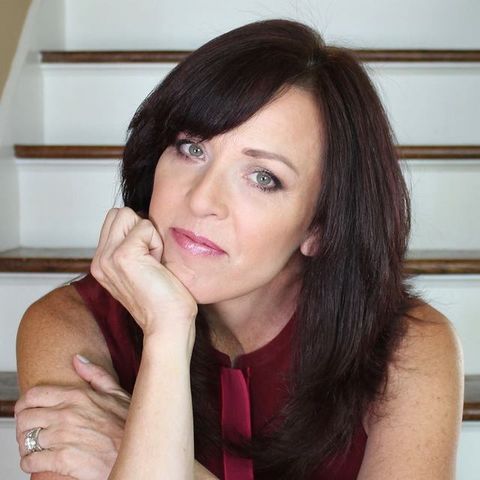
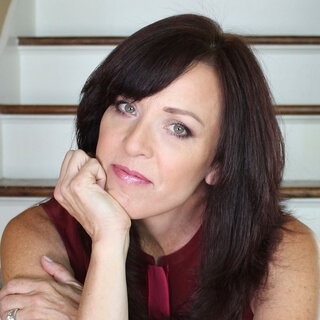
My name is Lisa A.
Romano.
I am a life coach,
Bestselling author,
YouTube vlogger,
Meditation teacher,
And expert in the field of codependency and narcissistic abuse.
I am a believer in the power of an organized mind.
My aim is to help people learn what it means to live above the veil of consciousness rather than living a reactive life.
May your heart feel blessed,
Your mind feel expanded,
And your spirit find hope as you spend time with me here at the Breakdown to Breakthrough Podcast.
So today we're talking about codependency and narcissism and why those of us with high codependent traits attract narcissists into our lives or why we are prime targets for those people with high narcissistic traits.
So codependency is rooted in emotional neglect.
It's rooted in unpredictable home.
It's rooted in a home,
A childhood home that lacked healthy mirroring.
It's rooted in a home where attachments to our parents were very insecure.
So children who develop codependency traits are children who grew up in unstable homes,
Homes where there was alcoholism,
Where there was narcissism,
Where there was sexual abuse,
Where there was physical abuse,
Where there was emotional discard,
Where there were a lack of boundaries,
Where there was yelling,
Where there was screaming,
Where there was this abuse of others,
Where there was a lack of self-esteem in the parents,
Where there is a lack of respect for the parents,
Where there was chaos,
Where homes that were completely unpredictable,
Where there were unsafe rules,
Where there were rules that just did not make sense,
Where there was rigidity,
Where there was aloofness.
You could develop codependency and have a father who is a physician and a mother who is Catholic and went to church every Sunday and was a PTA mom.
But in that situation,
If you have someone who is highly religious and has a problem with feelings and is more concerned about their salvation than they are what's happening with their children,
Throw in some alcoholism and children are being ignored.
Also if you have a dad who is a physician and he was always working and there is workaholism and there is a lack of understanding of the need for emotional contact and connection with their children.
So if you came from a home where it looked perfect on the outside but both parents were out to lunch emotionally,
Like the children just did not matter.
In some cases,
We grow up in homes where everything looks perfect and our parents tell us that you have a perfect life but there is this aloofness,
This emotional distance,
The inability to connect to people on an emotional level.
There's this fear of expressing an emotion.
You get the sense that emotions are bad,
Emotions are dirty.
You start to feel like there's something wrong with you,
Like you can't be stoic like your parents.
You don't understand when you're a little kid that mom is obsessed with painkillers or dad's obsessed with the secretary or dad's an alcoholic and dad is drowning his feelings in alcoholism and mom is drowning her feelings with a boyfriend or whatever,
Has an eating disorder and is dealing with her emotions that way.
It's a good time to understand that parents are wounded too.
They perpetuate the cycle of aloofness.
They perpetuate the cycle of self-absorption.
They are not very good at taking care of their own emotions.
They are not showing up for their children.
If you grew up in a home like that,
Then it's very likely that you have some codependency symptoms,
Not your fault.
My motto is it's not you,
It's your programming.
What I like to say is it's not your fault.
You are enough and it's not you.
This is something that is a consequence of growing up in a dysfunctional home.
Different traits,
If you're somebody that suffers from codependency,
You are other focused.
You feel like everything is your fault.
You may have been turned into the nursemaid of your mother because she was an alcoholic.
You have been turned into the nursemaid of your father because he was unhappy with your mother.
You've literally been turned into a nursemaid.
You grew up feeling like it's your responsibility.
As a child,
You wanted to save your parents so you feel guilty that they're unhappy.
You feel guilty that they're sad.
You look at your siblings and you feel sad that your siblings don't have a parent who loves them.
You're being molded into this nursemaid and you're not even realizing that your childhood is being robbed from you.
As an adult,
This does not go away.
This is an unconscious,
Subconscious program,
A neurological pattern that is ingrained.
Because we all live below the veil of consciousness,
Until we don't,
We are living through the default mode network of the brain on autopilot and we are the nursemaids of the world.
We are the mops and the brooms of society.
We are at work and our boss is having a bad day and we feel guilty that the boss is having marital problems and we want to fix the boss's problems.
We ask the boss if there's anything that we can do.
You want to go grab lunch and before we know it,
We've become this boss's therapist.
Before we know it,
We are ruminating about what this boss is going through.
At the demise of our own life,
We're not taking care of ourselves.
In relationships,
We tend to be targets for people with high narcissistic traits who can feel that we're other focused,
Who can feel that we have a need to feel seen,
That we have a need to take care of other people and that essentially we lack a self.
I always get perturbed when I hear people say,
Oh,
You just need self-esteem.
Well,
It's impossible to have the esteem for something that you don't have.
When you've been raised by parents who are overreactive,
Who have no ability to regulate their emotions,
Then you end up feeling guilty because of your parents' issues.
In all of those experiences,
The depressed mom,
And I'm not trying to upset anybody and make anybody feel guilty,
But we have to be aware as parents as to how our depression and our codependency and our alcoholism,
Our shopaholism,
Our workaholism affects our children.
When our children feel invisible and when our children hear us complain,
They want to fix us because they love us.
When we cannot be fixed,
They feel guilty and this travels with them their entire life.
Then they go out into life and they want to fix other people.
I think my son has these qualities.
I think I was that mom who was depressed.
In fact,
I know I was.
I think my son very early on wanted to fix his mommy.
I've seen my son year after year,
Relationship after relationship,
Want to fix women.
I have to live with that.
There's a lot of undoing that has to be done.
I do my best to do that.
I'm just hoping that my son is becoming more and more aware of his own codependency traits so that he can focus more on himself and understand the consequences of worrying more about others than we do ourselves.
I'm speaking from experience.
I'm speaking from that mom space where I know that my unhappiness and my codependency and my depression affected my children.
This stuff is real.
Karma is real because the sins of the mother and the father fall on the children.
What happens is,
I just want to say that I became codependent because I wanted to save my mother.
I wanted to save my father from them.
There were days that I wish I could save my mother from my father's abuse.
There were days that I wish I could save my father from my mother ignoring him.
There were days I always,
For as long as I could remember,
I wanted to save my brother from my father who was verbally abusive and physically abusive.
The time where my sister had a very tragic event happen and my parents didn't handle it well,
I wanted to save my sister from my parents' reaction.
I was groomed to be a codependent and I was below the veil of consciousness.
This has now followed through in my children's life.
I can see this very,
Very clearly.
We have to understand that people who have high codependent traits,
We attract people who need to be fixed.
It's important that we recognize this.
I attracted somebody who needed to be fixed,
Who needed to be rescued.
My mother attracted my father who needed to be fixed and needed to be rescued.
It doesn't work.
Codependence have a need to fix.
We are other focused.
We care more about what other people think about us than what we think about us.
We feel the feelings of other people.
We are rescuers and we feel guilty when we're unable to help other people.
We can also be manipulative because we give so much energy to other people and below the veil of consciousness what we're seeking is,
Can you see me?
Do you love me?
Can you please tell me that I am worthy?
Can you please love me?
Please tell me that if I do all these things for you,
I am lovable.
I don't know that I am lovable and I believe that I have to do these things in order to feel lovable.
I have to rescue you in order for me to feel lovable.
If I can rescue you,
Then I am enough.
This is what we seek and this is why we attract people who are insatiable because they need someone that they can abuse,
That they can act this narcissistic abuse cycle out on.
A narcissist needs to dominate and control and it's so much easier to dominate and control someone that is already broken,
That is already wounded.
And this is why those of us with codependency,
We have to awaken.
We have to understand how childhood programming has affected us.
We have to become aware of our codependency traits.
We have to become aware of how many times we seek validation in others.
We have to become aware of why we do what we do.
Are we walking our neighbor's dog because we want to or are we walking the neighbor's dog because we don't know how to set a boundary?
Are we walking the neighbor's dog because we're afraid the neighbor's going to go and talk to the other neighbors about us?
Do we fear confronting people about how we really feel?
Do we fear abandonment?
Do we fear being called a bitch?
Do we fear being abandoned and feeling worthless?
Remember,
The fear that we have is being abandoned again.
We were already abandoned in childhood and we suffer the fear of abandonment today.
And a narcissist will use that against a codependent as long as the day is long.
This is the cycle.
The minute you confront a narcissist,
They will begin to discard you.
They will push you away.
They will stonewall you.
They will give you the silent treatment until you,
As somebody who is highly codependent,
Begs for forgiveness,
Wishes to take on the responsibility for the argument or the fight,
Even though you're not responsible for it.
And the cycle continues.
So I so hope that this has helped inspire you to look a little bit deeper at your own childhood and look a little bit deeper at your codependency traits.
And I hope that you understand the value of healing the inner child,
The value of healing codependency and understanding the value of loving the self.
The more you love the self,
The greater your life will be.
This is a tool that you can use on the self-help journey and on the personal development journey.
Thank you so much for being here.
Bye for now.