Welcome to Breakdown to Breakthrough,
The podcast that empowers you to transform your life by awakening to your true,
Authentic self.
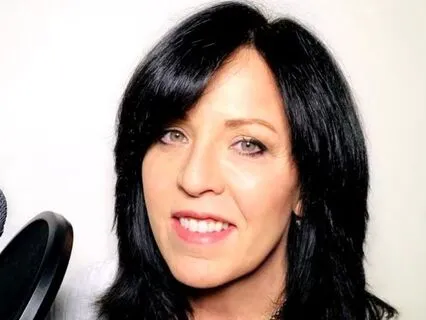
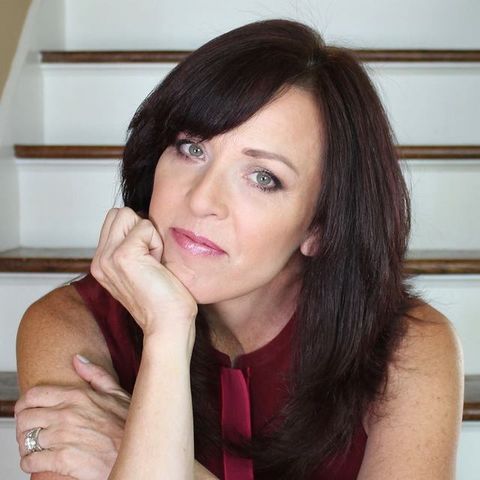
I'm Lisa A.
Romano,
Your host.
As an award-winning author and certified life coach,
I've dedicated my life to helping others understand the incredible power of an organized mind.
I believe that true empowerment begins with awakening to our false self.
My mission is to support you on your journey toward mental and emotional regeneration through conscious and deliberate awakening.
In this podcast,
I'll share insights,
Tools,
And transformative stories that illuminate the path to healing and self-discovery.
Codependent men and women suck at communication.
Now that's not a dig,
That's just a fact.
And if you understand what codependency is,
Then you can understand why it is we suck at communication.
In order for me to communicate clearly to you,
I need to know who I am,
What I think,
What I feel.
I should be able to back up what I think.
I should be able to back up why I feel what I feel.
I should have enough self-confidence to be able to tell you how I feel and share with you how I feel without focusing on the outcome.
When codependents communicate,
They are focused on the outcome.
They are focused on avoiding abandonment.
They are focused on what you think about them.
They are focused on the fear of what you might think about what they think.
This is not their fault.
A codependent person is not broken.
A codependent person is not stupid.
A codependent person is stuck.
A codependent person is wounded.
A codependent person lives below and from the veil of consciousness.
A codependent person has an inner child that is doing the best that they can.
An inner child that has been downloaded and programmed through repetition and consistency to understand that telling the truth is unsafe.
The human brain,
By default,
Doesn't give a crap if the soul that incarnates into that body is happy,
Is secure,
Is content,
Is able to feel happy.
Your brain isn't concerned about that.
Your brain and your nervous system has one agenda,
And that is to avoid pain and to keep you safe.
So emotional pain counts.
So as children,
Those painful experiences,
And yes,
Dear one,
Please hear me,
Emotional neglect matters.
It's hard to miss something you never received.
So maybe you didn't experience the big T traumas like your friend from down the block.
Maybe your father wasn't overtly narcissistic,
Or mom wasn't overtly narcissistic.
Maybe she was passive aggressive.
Maybe she didn't know how to emotionally regulate.
Maybe she guilted you.
Maybe she never asked you about your day.
Maybe when she was frustrated,
She shamed you for wanting an extra potato.
Maybe she just didn't ask you how you felt or cared about how you felt or what you thought about what she was doing in her life and the decisions she was making that affected you.
Maybe you had no one there anchoring to you,
Hey,
This is what's going on.
That's why this is going on.
That's why this is happening.
This is why you feel the way you feel.
Hey,
As a matter of fact,
How do you feel?
Those of us who suffered this type of abuse,
Abuse by omission,
We oftentimes hear ourselves wondering,
Are we making this up?
Are we just dramatic?
Is there something wrong with us?
Because we don't have a specific memory stored in our memory bank.
What's wrong with us is what didn't happen to us.
It's the attention we didn't get.
It's the grounding to the external person that was supposed to nurture us consistently and make us feel safe and help us explore ourselves and witness for us how we felt.
Someone outside of us who was securely attached.
Somebody who could see us and make us feel seen and taught us about unconditional love.
We didn't have that.
And so our memory bank might not be full of a bunch of terrible big T traumas,
But we'll still feel this emptiness.
We'll still feel like there's a hole in our chest.
We'll still feel incomplete.
We'll still feel unworthy.
We'll still feel anxious and depressed and nervous about relationships.
We'll still suffer from low self-worth and low self-esteem and a loss of identity.
We'll still suffer from being afraid to communicate what we really think and how we really feel.
So our communication will suck.
If you ask a codependent what they want to do on the weekend,
They don't know because they have been wired to worry about what everybody else wants to do on the weekend.
And they've been wired to rescue everybody else and to worry about everybody else.
And that's not their fault.
Because worrying about the self,
That caused pain and suffering.
It wasn't safe to express ourselves as codependent adults when we were children.
When we were children,
It was not safe to express our emotions.
It was not safe to say,
Hey mom,
Hey dad,
I'd like to do this.
And besides that,
No one asked us.
And if we had really unhealthy parents,
Really emotionally immature parents who are toxic,
And they were so caught up in their own pain,
Maybe because of their own trauma,
Then we grew up feeling invisible.
And so we are egocentric when we're children,
Which means we assume everything is our fault.
So if I'm unable to get mom's attention,
It's not mom's passive aggressive,
Or mom's a covert vulnerable narcissist,
Or mom's codependent and is too afraid to divorce her husband.
And so therefore all the kids have to suffer.
It's none of that.
It's I'm not worthy enough for my mom to pay attention to me.
That's how that gets translated and impressed.
That's the message I received as a child.
If I have a dad who's aloof and who is very an angry person,
And he's demonstrative and only talks to me when he's disciplining me,
I don't think my father has issues.
I think it's my fault my father can't connect to me.
And so what happens then is that we grow up and this flips.
It's still subconscious,
But then what ends up happening lots of times is that we rather than think it's just us,
We start to think it's our partners.
They don't understand us.
Our siblings don't understand us.
Our mothers and fathers don't understand us.
Our boss doesn't understand us.
We can't figure out why it is that the people outside of us just don't have a clue as to how hard we're trying to please them.
And that's because as children,
We thought it was us.
And then when we grow up,
We think it's them because our programming is I'm doing everything I can to please you.
Like why isn't this working?
Why do my children keep moving away from me?
Why do I keep finding myself in issues with the people that I attract into my life?
Why do I always worry about being abandoned?
Why am I so afraid to speak up?
Why am I always the last to know?
Why do I always feel like I'm missing out?
Why do I always expect people to worry about my emotions?
Why can't I just let go and have fun?
Well,
If you're codependent,
If you had a narcissistic parent,
If you grew up with alcoholic parents,
Fun is equal to unsafety.
It was not safe to have fun.
I remember being a little girl and being so confused.
Like my mind would just like short circuit.
So I remember laughing a few times and being shamed for laughing.
I was too loud.
Like,
What are you laughing about?
What are you so happy about?
So I internalize that to mean,
Oh,
It must be bad to be happy.
So to make them happy,
I should be sad.
But then that didn't work because then my mother would call me a cold fish.
You're such a cold fish.
You have no emotions.
And I remember like feeling like a zombie and numbing out and dissociating because I couldn't figure out how to be.
And all children look to their parents to help them understand how to be.
That's what all children do.
Now that's not our fault.
That's just psych 101.
It's not your fault that you were born with a brain,
A default brain.
Like you get a phone,
It has a bunch of apps on your phone.
You have a safety app on your phone to avoid water damage or whatever.
There's alarm on your phone.
Well,
Your brain is wired that way.
So your soul plops into this body.
If you believe that stuff,
I happen to.
So your soul plops into this body and it has to operate in a 3D world with a 3D operating system.
That is your brain.
Your brain comes pre-wired to avoid pain,
To seek safety.
The problem is that when you are wired to avoid pain,
You're also associating pain with loving the self.
It's not safe for you to love the self.
It's not safe for you to be authentic.
It's not safe for you to have fun.
Why?
The next shoe is going to drop.
Something bad is going to happen.
Because you have no experience of being able to be carefree as a child.
You have no data for that.
So the brain is always going to default to the familiar,
Which it considers safe.
So if it was safe for you to be hypervigilant and to seek approval and to avoid your mother's criticism so you had to learn to smile on cue and act like you didn't have 103 fever because that would just throw a monkey wrench into her day.
So you learn to pretend.
So you associate safety with pretending.
That's not your fault.
Talk therapy,
It can be very helpful,
But what's wrong is subconscious.
What's wrong is neurological and to heal that takes time and we have to access the subconscious mind through our feelings.
Now the issue that we'll have in therapy,
I think,
Is that for me to undo the damage,
I have to rewire my mind and my nervous system to believe that it's safe to be myself.
Now when I start healing and I look outside of myself as a codependent person who communicates so poorly because I just worry about what you think about me and I don't want to rock the boat.
I just want to sweep it under the rug and I certainly don't want you to hold me accountable for when I go off the rails.
I just want to people please and people please and people please and make everything okay and make believe I didn't say that and I will fawn after you.
I will fawn after you as a codependent and I will confuse you because I don't know how to access that level of accountability where I can look at myself and accept that I made a mistake.
See that's whole object constancy and wounded inner children don't have that.
They see themselves as good or bad.
They see you as good or bad.
So we have to grow up.
We have to help people grow up and develop the life skills that they didn't get as adult children of alcoholics or grandchildren of alcoholics or people born to narcissistic parents or even codependent immature parents.
We have to teach them the life skills that they never had.
And in addition we have to help them rewire at the subconscious level because when you start to heal what happens is you are moving out of your safety zone.
You're moving out of the comfort zone of just doing whatever your partner thinks you should do.
Oh that's scary.
You're moving out of the comfort zone of saying yes when you when you were saying no when you want to say when a part of you wants to say yes the old part of you is going to want to say yes of course I'll walk your dog but the real you is like no I'm done.
I'm not walking your freaking dog right.
That's scary to you and your brain is going to want to pull you back into those familiar patterns.
Amy the amygdala and Harry the hippocampus are I call them sisters and there's a sister and a brother and they live on a couch inside your limbic brain and they pull the shades close and they lock all the doors and they're really afraid of doing anything other than what they know they've already survived.
And so if I've already survived my narcissistic mother my narcissistic father I've already survived all of this chaos as a child I've survived it.
How did I survive it by toning myself down by not having an opinion by running away when things get rough by hiding by isolating by being really really quiet at the dinner table and allowing the abuse to happen allowing the sarcastic comments to happen and never defending myself.
That's how I survived just stuffing my emotions and stuffing my emotions.
That's what I'm going to do my entire life until of course I collapse I get MS I get migraine headaches and something else happens I get arthritis something terrible else else happens that causes me to really self reflect on what's happening in my life.
And that's our journey that's so many of us as codependents.
That is the wake up call when our physical health starts to decline.
At least we're waking up.
That's what I say.
But as we start to wake up what happens is healing requires us to get out of the comfort zone.
So it requires us to learn how to be uncomfortable or be comfortable with being uncomfortable.
In other words like when you start pulling away from these codependent patterns this saying yes when you may know this people pleasing this enabling this passive aggressiveness the being secretly resentful like how liberating is it to just say no instead of secretly secretly resenting your husband or your wife.
How liberating is it to have a conversation around what you really want to do on your weekends versus doing it and hating your wife because you're doing it.
How liberating is it to learn how to talk to people in a healthy way so that you can be heard versus not speaking your truth and allowing Amy the amygdala and Harry the hippocampus to shackle you to their couch in this dungeon because they're too afraid to go outside.
How liberating is it to say you know what I think I want to learn how to play in the sun which is what codependency recovery really is.
You're coming out of the shadows of Amy the amygdala Harry the hippocampus.
You're learning to speak your truth even though your knees are shaking and in the process you're rewiring the subconscious mind.
You are re or down regulating your nervous system.
In other words you are going from associating fear with speaking your truth to fear with to associate fear with not speaking your truth and thus you're slowly and it takes time.
It doesn't happen overnight.
This has to happen bit by bit by bit and then you have to practice it because your nervous system has to down regulate and that takes time and it does help metacognition bring metacognition online.
It helps to bring you into a calm state so the corpus callosum can heal.
So the left side of your brain which is more logical can observe the emotional side of brain and all of a sudden you're not right brained completely where your emotions are completely taking over you and you can hear yourself going and you just can't shut your mouth you just keep going and going and go you want to shut up but you can't have you been there.
I know I have.
So this healing work is so sacred because it brings individuation.
It allows you to individuate as a mind body and a soul.
It creates integration of the left side of the brain the right side of the brain.
You develop heart and brain coherence.
You operate from the from Neo the neocortex.
Isn't that funny.
Neo the neocortex like the matrix.
You operate from higher states of consciousness.
You're not a child anymore.
You've grown up neurologically.
It's so interesting to me that when we're children we're small and when we're wounded our pathways are small they're short and they're wired to Amy the amygdala and Harry the hippocampus and as we grow in personal development as we heal codependency as we confront the narcissistic abuse in our life and we deal with those wounds the neurological pathways start to get longer and suddenly we don't have a short fuse our skin isn't so thin.
We're not so worried about what people think about us.
We give them permission to think what they want.
You talk about liberation.
I am not responsible for your faulty perception of me knowing that you see me through your lens like that is freaking liberating like nobody can control you at that level of consciousness.
Of course you need a hefty dose of accountability.
You can't walk through life not caring how you treat other people but when you get to that point where you know that you're enough you're walking by grace you're kind you're just not going to be as agreeable for the sake of keeping other people happy at this expense of yourself anymore.
That is grace.
That is amazing and that is the path to higher consciousness and that is the path to learning how to communicate with other people to get your needs met in a healthy way.
Now there will be a point of destabilization.
What I mean by that is when you're going through a state of transformation the old stuff has to die off.
I believe that as you go through this process the people and the relationships that were meant to stay in your life.
They're good.
They'll be they'll be by your side throughout the whole metamorphosis through the whole transformation the people who are not meant to be in your life and this includes family.
I hate to say it but it does.
It can include your mother your father your sister your brother aunts uncles cousins.
It just can.
As you're going through this process the people that will celebrate you and who really have your back and who love you and who are not condemning you who are not hoping that you fail who are not listening to you waiting for you to make a misstep or speak out of turn who are not hoping that you'll fail in business who are not secretly stalking you on Facebook just waiting for an opportunity to hurt you and say something nasty about you those people will be eliminated from your life and I find and I have found coaching thousands of people now that is not something my clients have done.
It's generally the actions of the other person make it easy for the codependent person on the healing path to say OK now it's done very very interesting.
Sometimes it will have to be you where you're going to have to say no I'm not doing this anymore.
But as you transcend you come to the other side what will happen is there will be a point of destabilization where what is not of you and not of your greater good is going to burn off.
You have to develop the stainless steel spine and the grit to withstand that fire.
Remember steel is galvanized through fire and diamonds are created under pressure.
You have to remember that and the only way for you to become your true self is to be able to withstand when things happen that feel destabilizing when you start to honor the self and you start to get out of your familiar comfort zones.
Remember speaking on behalf of the self doesn't feel safe to a codependent.
And so you have to understand that speaking on behalf of yourself is going to make you feel really uncomfortable and really unsafe.
But that is the only way to get to the other side and as someone who has gotten to the other side and sometimes I backslide but thank goodness I have the tools now I have the education I have the wisdom now I have the knowledge and I have the skills and I have the commitment and the grit I understand where I'm going.
I understand where I went wrong.
I can get back in the back on track and back in the saddle real quick.
Namaste as a bow to the love and light that is absolutely in you until next time.