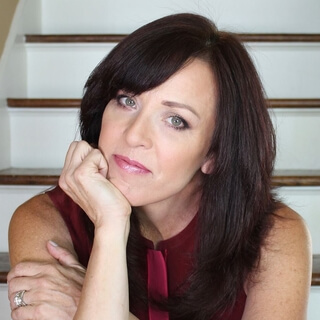
Welcome to Breakdown to Breakthrough,
The podcast that empowers you to transform your life by awakening to your true,
Authentic self.
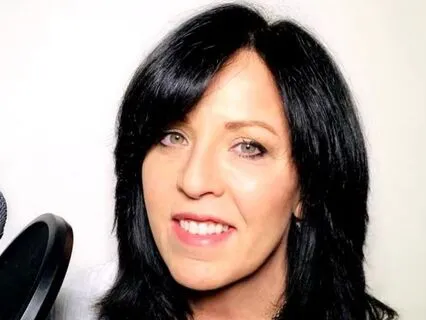
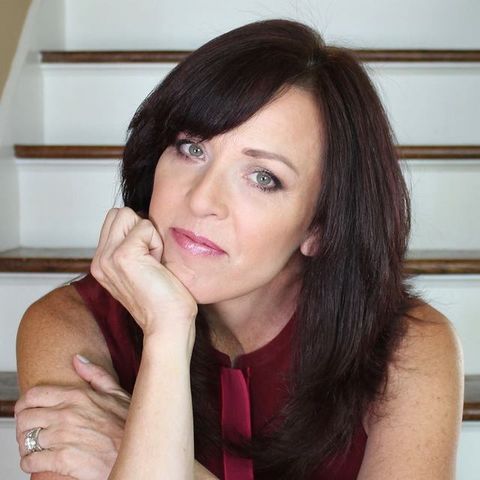
I'm Lisa A.
Romano,
Your host.
As an award-winning author and certified life coach,
I've dedicated my life to helping others understand the incredible power of an organized mind.
I believe that true empowerment begins with awakening to our false self.
My mission is to support you on your journey toward mental and emotional regeneration through conscious and deliberate awakening.
In this podcast,
I'll share insights,
Tools,
And transformative stories that illuminate the path to healing and self-discovery.
When someone disrespects you,
It's essentially a test.
People are always trying to figure out whether or not they can push this person's buttons and how far they can push them.
We have been conditioned since childhood to trust smiles,
To trust compliments,
To trust someone's gentle tone,
To trust when people offer to help us.
We've been conditioned since children to think that is kind.
And if you're anything like me and the hundreds,
If not thousands of people I've coached personally and inside my groups,
You are someone who has been betrayed by smiles.
You've been betrayed by charisma.
You've been betrayed by the mask,
The person that you met that everyone loved,
The person that can make everybody laugh,
The person who was so willing to help other people.
You've been betrayed by that.
And so it's important,
Especially if you come from a background where you ache with vulnerability or you ache to feel seen,
You ache to feel loved,
You will be a target for the mask.
I have learned in my own life that it wasn't the boogeyman that I needed to be afraid of.
It was the people that were closest to me,
The people that pretended to care about me,
The people that other people seemed to like.
It was so hard to explain and pinpoint the pain that I felt because there wasn't a black and blue to point to.
But instead,
There was this slow,
I would say,
Hemorrhaging wound inside of me that I could not explain.
The wound originated with my mom.
It originated with my dad.
It originated with my sister,
My brother,
This constant feeling of being unwanted or misunderstood or judged or criticized or condemned.
My mom persecuting me,
Like your mom persecuting you,
Like your mom persecuting you,
Like,
Shouldn't you be my champion?
Shouldn't you be my cheerleader?
Shouldn't you be the one person that I can tell anything to?
Shouldn't I feel like I can trust you?
And what messed me up was that she went to church.
My dad seemed to love her.
My brother and sister got along with her better than I did.
The neighbors loved her.
My grandmother and grandfather loved her.
So it was very confusing.
So the person that hurt me the most was the person I should have trusted the most.
And so as a little girl,
What did I ache for?
I ached for the other mask in my mother,
The mask that she offered other people,
The mask that she used when she looked into my grandmother's eyes.
I wanted that mask.
I wanted that tenderness.
I wanted that consideration.
I wanted the mask that my mother wore when she was compassionate towards elderly people or people with emotional,
Mental or physical handicaps.
I wanted that mask.
I wanted that mask.
It was still a mask,
But I was a little kid.
I certainly didn't like the mask that she wore when she looked at me and she couldn't stand the sight of me.
That was too painful.
I remember feeling not good enough by the time I was three.
I literally have visceral memories and pictures in my head of feeling like my mother hated me.
Like no child should feel that mom hates you.
And it wasn't a momentary thing.
This continued.
It was the name calling.
It was the psychological harassment and it always happened when no one was looking.
When no one was looking.
When there was a neighbor around,
My mom put on a different mask.
But the whole time I thought,
It's me.
I don't know that I'm being conditioned to want a particular mask.
What mask did I crave?
The kind mask.
I wanted the man that everybody liked.
I wanted the man that talked kindly,
Didn't curse,
Wasn't boisterous,
Didn't drink,
Wasn't overtly abusive.
I wanted that guy.
I didn't know that I still wanted a mask.
And so when I attracted that guy early on,
When I was only 21,
I fell in love with another mask.
I didn't understand what was brewing below the surface.
I didn't understand that for many years because I was conditioned to fall in love with this mask,
To want the compliments,
To want the kind demeanor,
To want the Boy Scout personality,
To want the man that everybody loved.
I was conditioned to want that mask,
But I didn't know it.
I didn't know it.
And so when I met my ex-husband,
I was not aware of what was happening with me on a subconscious level.
I was not aware that I was hoping and loving and aching for something that was superficial.
What did I know?
I was 21.
I was wounded.
I was codependent.
I didn't know who I was.
I lacked an identity.
During my psychological and emotional developmental phases,
I was being conditioned to believe that my self-worth was tied to how well I could please other people.
And so I was tuned up for emotionally and energetically to think that the answer was to please other people.
But here's the Catch-22 karmic Ferris wheel that never ends.
When this is your subconscious program,
You don't attract people that you can please.
You attract people that are always displeased with you.
And that keeps you on the loop.
It keeps you on the loop.
So codependency then is an unhealthy emotional and psychological and spiritual and even identity paradigm or attachment to other people.
It's unhealthy.
When you're codependent,
Your identity is tied up in how well other people perceive you.
Here's the problem.
Oftentimes we don't attract people that are healthy.
And you know,
When we're talking about the spectrum of healthy versus unhealthy,
Not everybody is a narcissist,
But that doesn't mean that they're healthy.
So you can be in a toxic relationship with somebody who would be in a more conducive,
Healthier relationship with someone else than with you.
I would say that my ex-husband and myself are perfect examples of that.
So we were extremely toxic,
But it sounds like or seems like he's in a much less toxic relationship,
But it seems like or looks like he's in a much less toxic relationship.
And this is just an observer.
I have no way of knowing it,
But it seems like he's in a healthier relationship with someone who's more his speed.
And that's great.
And that's not a criticism.
That's an observation.
I am in a much healthier relationship with my husband,
My now husband,
For 15 years because it seems like he's more my speed.
I don't have to prove myself,
But I'm not trying to prove myself.
He doesn't have to prove himself,
So he's not trying to prove himself.
We just are.
We know that we're imperfect.
He knows that I'm imperfect.
I know that he's imperfect.
We don't harp on it.
We don't try to change it.
There's this level of acceptance that comes,
And I think it's because each of us have reached a point in our emotional intelligence that we accept who we are,
And we know that we're not perfect,
But we don't expect partners to exploit it.
So I'm not going to overexplain.
I'm not going to grovel.
I will apologize if I need to apologize because I know that accountability is part of being a healthy human being,
And because I'm imperfect,
I will need to do that.
But in terms of staying in an unhealthy dynamic,
I'm aware enough now to see the writing on the wall and to understand that there are signs that you will notice as you progress through relationships,
Whether they are your parent-child relationships or partner-to-partner relationships or friendships.
I have learned that disrespect is a test.
When a spouse disrespects another spouse,
Hangs up on them,
Criticizes them,
Compares them to someone else,
Leaves them behind,
Completely obliterates their ask and their need,
It's a test.
It's a test to see how much my spouse is going to allow me to violate their boundary.
How much of my spouse are they willing to give up of themselves before I have to tighten up the mask?
And we have to be aware of that.
A couple of things that come to mind are,
This shouldn't be the way it is.
When you are in a healthy relationship with someone,
There should be no coveting,
There should be no jealousy,
There should be no comparison,
There should be no need to coercively control you.
I think about situations in which if the female in the relationship has a lot of power because she makes more money than the man,
If the man is insecure about that and that ruffles the feathers of his ego,
There's a potential,
Because he's not mature enough,
There's a potential for him in really innocuous situations to take digs at his girlfriend or his wife to help make up for the insecurity he feels in relationship to his perception of the relationship being built on power.
So people who are high on the narcissistic spectrum,
They view relationships in terms of power.
How much power can I take in this relationship?
Because that makes them feel safe.
And certainly if they have all the money in the relationship,
They feel safe.
And if their spouse has all the money in the relationship,
That'll make them feel unsafe.
That's why you'll have people come into a relationship and say,
I'm absolutely not signing a prenup,
Even though you should because your partner has accumulated all this wealth prior to meeting you and you're really not entitled to it.
And if you're not in it for what could come and you understand legally that what he or she creates on their end from the moment that you're married,
You might be entitled to that because it's something that you can build together.
But for me,
It's a red flag if someone comes into a relationship and they're just like,
No,
I'm not signing a prenup.
Like to me,
That's a red flag personally.
Maybe not to,
But that's a red flag.
But when we're thinking about what will signify,
What signals high narcissism in a relationship,
It will come down to somebody who sees the relationship as a source or a loss of power.
So how does this show up?
One of the earliest signs that you're dealing with somebody who sees your relationship in terms of the eye or through the eyes or the lens of power is they disrespect you.
Now they disrespect you specifically when there's no audience because they treat you one way while people are watching.
Maybe your girlfriend is on her best behavior when your sister's around because sisters can be super critical of their brother's girlfriends or boyfriends,
Right?
So maybe your girlfriend is like on her best behavior when there's an audience,
When your family members are present.
But behind closed doors,
There are these jabs and there are these digs that occur.
It's a disrespect for you.
And even though she could be beautiful and she could be leaning in and she could be smiling,
You'll feel it.
You'll feel it.
And it really is when people who are more on the narcissistic spectrum,
It's really a test.
Like how much of yourself are you going to allow me to rob you of before you put me in my place,
Before you say enough is enough?
I think in the best scenario,
This does not happen.
You're a kind person,
Not kind,
Fake kind,
Right?
Because to be kind across the board,
Sometimes you can't be kind.
Sometimes you have to tell people to F off.
Sometimes you have to tell people to knock it off,
Like you're being entitled or you're being demeaning.
Or I heard that sarcastic comment,
Like you're sending me a text message or you're writing me an email or you're having a conversation with me.
You know,
It feels like you're pissing in my face,
But you're trying to tell me that it's raining.
Like I could feel that.
There's a lot of that self-righteousness.
People that see the relationship as win or lose,
Conversations as win or lose.
This is a highly competitive person who doesn't really know how to communicate in a healthy relationship where it doesn't have to be a win.
It's a we.
One of the things that I tell my kids all the time is like,
Make sure you partner with someone who understands that we're a we and not a me.
Yes,
You have to maintain your autonomy,
But when you partner with someone,
You have to feel if you're going to commit your life to this person and every decision that you make moving forward,
You're going to bring in,
Well,
How would this affect my spouse?
You deserve that in return.
And when we're starting to understand like what's happening in my relationship,
Because if you're like me,
So many of the things that were wrong,
They were like early warning signs of a malignancy,
But it wasn't yet being picked up on a scan or a blood test.
So I had migraine headaches.
Then I got adult onset asthma.
Then I got stomach issues.
And then it was my hair started falling out.
Then I blew out my thyroid.
It was just physical signs that something was wrong.
And just this constant recycling and nagging of,
I don't think he wants to see me.
I don't think he wants to hear me.
Like my ex had such blinders on that no matter what I said to him,
I never got through.
All these years later,
I'm 60 years old now,
But all these years later,
I think back to that young,
Young girl,
Like 39 years ago,
I mean,
I was a baby 39 years ago.
And I think back to all of these intuitions that I felt that I just ignored.
The way telling him,
In other words,
Like when we were just dating,
I told him something super,
Super personal and he told his sister-in-law about it.
And when I,
When I reacted really strongly about it,
He looked at me like I was crazy,
Which only made me feel even more crazy.
But that was a red flag.
I was disrespected.
How or why do I have to tell a grown ass human being that that was a personal thing and it's not to be shared with other people.
Like I just should not have to say that,
But that was the beginning.
And there were so many other things where I could now look back and go,
Oh my God,
That was so disrespectful.
I understand it wasn't intentional,
But there was also this missing piece of the puzzle that came into play.
Also this inability to see me,
This,
This lack of a desire to see me.
And I really do feel like it was vulnerable narcissism because it's so textbook where people with high narcissism,
They care more about appearance and their mask than they do about the genuine intention between them and another person.
So if you love someone who's a high,
Has high vulnerable narcissistic traits,
They'll care more about what other people think about them and how they treat you than,
Than actually how they treat you.
And then when there's no one around,
They'll care more about controlling the narrative.
And remember the person that controls the narrative controls the relationship.
So they,
They,
They,
They dwindle you down or the dwindle your,
Your self-confidence down.
If you're a strong person,
You'll see it happening and you'll feel crushed because you know,
They're destroying the relationship.
You'll know like,
Oh,
This girl,
This guy is just like,
I see what they're doing.
And it's just a matter of time before this train wreck crashes up against a wall.
I mean,
I think I would see that now,
But back then that's not what happened to me because I had been dwindled down as a child by my mother.
You're selfish or a drama queen.
You're too this,
You're too that.
You're,
You're a weak person because you have a need.
You couldn't figure that on your own.
How dare you want me to help you figure out what,
Not in those words,
Which you say,
But that's the way I felt like,
How dare you?
You're a burden.
You're a burden.
Look how busy I am.
Look how busy I am.
Go figure it out.
Right?
So to feel that,
And because it was the,
The narrative,
She controlled the narrative.
She controlled the narrative in the family.
She told her friends that I was this way.
She spoke to my brother.
This is the way she is.
She triangulated.
She told my father,
You know,
Lisa's a problem.
So she controlled the narrative and unfortunately my super ego absorbed that narrative.
So she,
Her faulty perception of me,
Her inability to love in a healthy way because of her mother wounds,
Because of her ACOA issues,
Being the adult child of two alcoholic parents,
Her depression,
Her unhealed trauma,
Because of all that,
It made her signal impossible.
Like I couldn't connect with her and she couldn't,
But truthfully she couldn't connect to me because it was very natural for me to connect with her.
So she destroyed that connection as a very highly codependent,
Passive aggressive mom.
She destroyed that connection.
And so she destroyed the connection that I had to me inside of me.
And so I did wear a codependent mask.
Please need me.
Please love me.
Please accept me.
Let me take care of you so you never leave me.
That was a mask.
And it's so liberating to like face that mask and to heal those wounds that create those shadows and then to be able to move through life,
Seeing these patterns in relationships.
But if you're not aware of what's going on,
Then what happens is people who are highly narcissistic,
They don't know it,
Especially if they're vulnerable narcissists,
They don't know it.
They actually rely on their mask.
Oh,
Everybody likes me,
But nobody likes you.
So I must be right.
You must be wrong.
So now if I say anything negative,
You use that narrative against me.
So now I'm just a negative person.
Now I'm just a cold person.
Now I'm just somebody that doesn't have a whole lot of friends.
Really what it means is that I'm very particular.
I don't love a whole lot of people.
I don't let a whole lot of people into my circle,
But you're exploiting this vulnerability in me,
Or at least you're twisting it.
If you're somebody who came from that and you didn't have someone that allowed you to anchor to them,
When the person that has pulled you in with their charisma,
With their Boy Scout charm,
With their compliments,
With their smiles and with their supposed warmth and they're studying you,
They know what you want to hear and they become that.
They take on your attributes and your personality traits.
You don't see it happening,
But if you're wounded from the past and you attract this person in,
Then over time they're going to start digging at you,
Devaluing and devaluing you and devaluing you until you get to a point where you are aching and hemorrhaging,
But you can't pinpoint it because the halo effect means and implies that you have cognitive bias.
It can't be this person.
He or she is so warm.
They're so charismatic.
They're so loving to other people.
You won't even see it happening.
I feel like I'm called to help bring this awareness to other people because I did not have the words to explain my own codependency,
My own blind spots to feel needed and to convince someone else I was worthy of their love.
I didn't have the knowledge or the wisdom or the skill set to break through that and it is so hard when you start breaking through that because everything that codependency has been designed to push away from you,
You have to face it.
So I just wanted to offer this session to really help show that you have been taught to trust the kind words.
You have been conditioned to trust this superficial warmth,
But if you are hurting and if you are in pain and it's tied to a relationship,
Then a session like this can be an incredible breakthrough for you.
It could be so beneficial because it will help you see things that you could not see from inside the tornado.
That's what I needed.
And so understand that disrespect is a test and it doesn't have to be an overt narcissist.
It could be the person that's charming you every day and charming your family and charming your dog and charming his family or her family.
It's the person that everybody likes in the group.
It's the person that is morphing to fit the situation.
It's about them.
It's not about you.
And this might be really,
Of course it would be very hard for someone to even see this in themselves,
But to really heal,
I liken it to trying to change your eye color.
Like right now,
I can't see my eye color.
I'm trying to connect with you and I hope that I am.
But a pattern and a character flaw is like a speck in the eye.
And I believe that you can change it if you can see the speck in your eye.
But when it comes to people with high narcissistic traits,
They can't see the speck in their own eye.
And if you can't see it,
Then you can't shift it.
So what does that mean?
That means that people who are married to these people or who are friends,
Friends with these people or people who tend to be highly agreeable and highly loyal and they feel like something's missing,
Then it's up to you to see it,
See the speck in your eye and change,
Work towards your inner transformation,
Work towards healing the parts of you that feel like it's your job to explain yourself over and over and over to see a speck in someone else's eye and say,
Hey,
There's a speck in your eye.
Let me help you fix it.
Let me show you how much that speck hurts me and let me spend the rest of my life trying to get you to not hurt me.
No,
That's codependency.
An empath will spend their entire life doing that until they figure it out and heal and then hopefully we'll never do it again.
But you have not come to try to convince other people that there's a speck in their eye.
That's not your job.
It's your job to see,
Oh,
That person has a speck in their eye and Oh look,
I have a speck in my eye.
And what happens when I change the speck in my eye?
Sometimes when you change,
Change you as a codependent,
That other person knows they can't get away with this crap anymore.
There's no more disrespecting you.
There's no more tolerance for the intolerable.
There's no more trying to please somebody who does this to them,
Either consciously or unconsciously.
Consciously.
There's no more.
Sometimes I would imagine that that relationship can morph into something different than what it was below the veil.
But I think more often than not,
What a healthier thing to do is to see where it goes because it's all about energetics.
And so once you get to a certain level of consciousness,
You,
You tend to not want to tolerate someone else's lower state of consciousness.
So you have to be open to see where,
Where this goes.
If the person who has a speck in their eye and they don't want to change it and they can't see it,
They're not willing to gravitate towards your level.
I don't suggest staying in that.
It's never going to be fruitful for you.
It's always going to hold you back.
And I can tell you as someone who,
And I have to give,
Give thanks to,
To my higher power and my source because I left a marriage with no job,
With no health insurance,
With no alimony.
I left this job knowing,
I'm sorry,
I left this marriage knowing that I didn't know how it was going to make it with my kids.
I left this marriage knowing my family was going to turn on me because they liked the charismatic mask.
They really didn't care that behind closed doors,
This person's mask came off and I was used as a,
Um,
Almost like a power source to make him feel better about himself by putting me down.
And I think his greatest fear was me figuring it out.
I mean,
If I was such a horrible person,
Why did you try so hard to keep me married to you?
If I was just such a terrible mom,
Which you told everybody,
And even me,
Even our kids,
So if I was such a terrible mom,
Why didn't you want to divorce me?
Why did you chase me for seven years if I was such a terrible person?
So a man is not what he says.
A man is what he does.
A man is what he doesn't do.
And that goes for women too.
So I've learned a lot in this journey and I hope that I'm using this space well enough to help you hear certain messages,
Gain certain wisdom that I did not have access to when I was starting my journey.
Because the quicker you see this,
The quicker you can make conscious decisions that are based on logic and reason versus emotions.
Narcissists are strategic and they do the most damage in the lives and the hearts,
The minds,
The bodies,
The finances,
And the family structures of those who think with their emotions.
Now I'm going to say,
Dear ones,
Is about to the love and light that is absolutely in you.
Even if you can't see it,
Feel it,
Taste it,
Or touch it,
There is a light within you.
And it is up to us to dissolve the barriers to that light as dear Rumi has taught us.
It is up to us to bring the light from within our heart space forward and up and up and up into our higher mind so we can operate from this light,
From truth.
The truth is that we're enough and we don't need to put up with this.
So I hope that this has been helpful.
Until next time.
Bye for now.