Hey this is Ish and in this talk I'll be going over a very interesting dichotomy I've noticed in spiritual practitioners as they continue to practice.
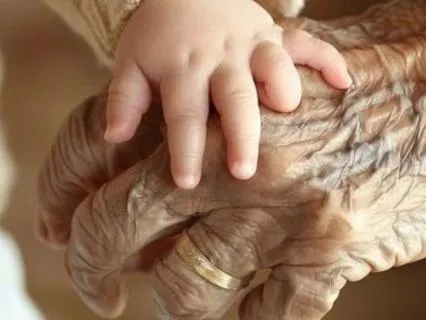
And that dichotomy is that they embody both the presence and energy of an old wise person and at the same time the energy of a baby.
So quite different polar opposites.
And you'll probably notice this now when you start to look at some of your favorite spiritual teachers how they both embody this sense of maturity,
Of wisdom.
But they're also childlike,
They're playful,
They don't really conform to certain rules of how to behave.
They're very free-flowing in that aspect.
And I do also want to emphasize that certain spiritual traditions do bring that out,
These qualities out in you more than others.
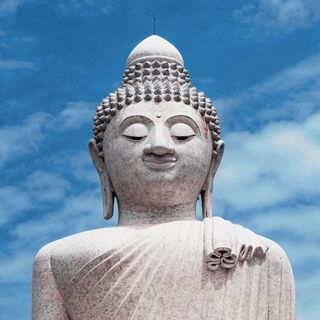
I would definitely say that Zen in is full of these masters that embody both the wisdom aspects and the playful,
You know,
Baby aspects of things.
Definitely more than,
Say,
The dry vipassana schools of insight in Buddhism,
For example,
Where they're more focused on the wisdom aspects and they aren't as expressive,
For example.
But regardless,
Let me go over how this comes about.
So let's look at the wisdom aspect of things and why this is associated with age and maturity.
Generally speaking,
As we get older,
We become more wise,
We become more reflective,
We learn from our mistakes,
Well,
Hopefully.
And our overall demeanor also changes.
So you'll notice that as people get older,
They become gentler,
Softer,
And kinder.
And they also learn to let go of attachments and certain preoccupations in the world,
Which is actually indicative of the spiritual path,
Where you learn to let go more and more of various concepts,
Attachments,
And things that you're clinging on to.
Now to use a classic Buddhist terminology,
There are what is called the hindrances in Buddhism.
And these are mental states that hinder you from achieving concentration in your meditation practice,
And also irritate the mind.
So as meditators,
We learn to let go of these hindrances.
And what are these hindrances?
They are desire,
Aversion,
Sloth and torpor,
Restlessness,
And doubt.
Now,
When you think of someone who is elderly,
Like say,
Let's just use a 80 year old man,
For example.
The 80 year old man probably has less desires in the world,
They haven't retired from their career,
They aren't really looking to conquer or take over the world as they might have as if they were a 21 year old man,
For example,
Full of ambition,
And wanting to prove themselves.
This is typical of younger people that want to make an impact in the world and prove themselves.
But this energy sort of dies down with age,
And also with your meditation practice as well,
As you learn to let go of desires.
So these two things are similar in that aspect.
And it is also typical that as you get older,
You become more forgiving,
You hold onto resentments less,
And you become softer,
More loving.
And a correlate for when you do your meditation practice is that one antidote for aversion,
Or even hatred towards other people or anger towards other people,
The certain resistance to life is practicing loving kindness.
And as you do this,
You become naturally more softer,
More kinder,
More open to people.
And this can be done obviously in any age,
But this quality gives you an air of maturity because you don't hold on to petty grudges,
You're able to let go of things,
You're able to forgive others and move on,
And also have more compassion towards other human beings.
And elderly people and also experienced meditators also are happy in their own energy,
They don't need as much from the world.
So when we're younger,
We just want to experience more and more we want to go to that very thrilling movie or go on roller coaster rides and do very crazy things.
But as we get older,
We're just fine as we are,
We don't need to seek as much thrills because we're contented from within.
And that's actually the bedrock of all the spiritual traditions,
Where they really emphasize this quality of contentment,
Of being happy with what you have,
Rather than trying to acquire more and more over time.
And this is something that naturally comes with age,
And also with your meditation practice as well.
As we get older,
We also become more confident in who we are and the things that we learned and we become more comfortable in our skin.
We also become more equanimous and less pulled by whatever's going on in the world,
Because we are completely contented from within,
We are sturdy within ourselves,
We know who we are.
And we care less about the opinions of others,
And certain just drama and the ups and downs of life,
And we become very centered and poised from within.
This naturally happens as we age and also with our meditation practice.
As we learn to let go of grasping in the world of resisting in the world,
And we become more rooted with our spiritual practice,
Whatever it is,
And we learn to develop faith,
Which counteracts any kind of doubt that we have over practice,
Because we actually see the results from the fruit of our practice.
And this comes with practice.
And obviously,
The more we practice,
We can see this.
And compounded over time,
Over and over the years,
We learn to develop this unshakable confidence within ourselves and our abilities.
And the last point I'll make just on wisdom and maturity and older is that as you get older,
Your area of focus tends to expand more,
Where you are less focused on yourself,
And your concern goes on to other people.
And you become very compassionate,
And you're able to give unconditional love to more people.
This is the high spiritual ideal.
And we can see this in age where when a person is very young,
They tend to be focused on themselves.
And this is actually like healthy narcissism,
Because we are individuating from our parents,
And we're stepping into young adulthood,
And we learn to find ourselves and our focuses on ourselves.
But as we get older,
We take on more responsibilities,
Whether it's our workplace,
Or starting a family,
Or owning a pet,
For example,
And expanding our area of concern,
Not just to ourselves,
But then to our immediate surroundings.
And we can even expand it even further to our community.
So you'll notice that more older people will tend to focus on their community and giving back.
And of course,
This is just a generalization,
But it's more of a trend.
Now,
When it comes to the spiritual practices,
We learn to start to give more as we practice generosity practices,
Which are in all spiritual traditions of giving to others,
We start to expand the circle of concern,
Not just to ourselves,
But extending it out to our community,
People around us,
We start to give more,
We become less stingy.
And this is how our practice gives us air of wisdom.
Now let's talk about the other side.
So this is the baby side of things where meditation can actually make us childlike,
Kind of like an infant.
So one of the very interesting things I've observed,
At least in my own practice is that as you continue to meditate more,
What will happen is that you'll start to see the emptiness of concepts.
So before starting a meditation practice,
You may hold certain fixed views and hold things very seriously,
Which a similar analogy would be just like an ego structure,
Where how an ego structure is very solidified and takes certain concepts and identities and possessions very seriously and an extension of oneself.
But as you meditate more,
We see how these things aren't very permanent,
They aren't stable,
They're subject to change,
And it's not that you in particular own these things.
So these are things that you can look through,
Through the eye of discernment,
Through vipassana practices,
For example.
And as we start to attach and identify less with the various things of the world,
We become freer,
We become looser.
And socially,
We actually become very spontaneous,
We don't really follow conventions as much,
Not to purposely offend,
But just because we don't hold on to very rigid structures of how to conduct yourself and you become more spontaneous.
You just respond to how the moment comes.
You also begin to use your intellectual mind less and simply just respond.
You can observe in babies,
For example,
Or even animals,
How they are completely present.
Whereas when you are an adult,
And you're,
You know,
You have a job,
And you're using your mind a lot,
You'll tend to overanalyze things and try to get to the future.
But what Zen masters do really well is that they are simply just responding in the moment.
And there are tons of different koans of Zen masters and their disciples,
Where the students are trying to figure things out using their mind,
And try to grasp at things and try to find a solution.
And Zen masters keep reminding them,
Hey,
Just be here.
One Zen koan I like is that there's a story of four monks meditating in a temple.
And the prayer flag on the rooftop of where they're meditating at starts to flap.
And the youngest monk comes out of the meditation hall and says,
The flag is flapping.
And then a second monk comes out who is a bit more experienced than him and says,
Wind is flapping.
Now the third monk comes out who's been there much longer,
And he says,
Mind is flapping.
Then a fourth monk comes out who's been there the longest,
He's the eldest.
He says,
Mouths are flapping.
And really points to just make things simple.
You don't have to overcomplicate things.
You don't have to overanalyze things.
The truth is a lot simpler than you think.
And there is a certain wisdom actually of emptiness.
And it is expressed through just spontaneity of being in the moment of not trying to get somewhere and analyzing things using your mind,
But just responding in the moment.
You can also observe this certain dichotomy or difference between a baby and also a Zen master compared to people of the world that don't have a meditation practice and are completely identified with their ecostructures and their mind,
Where they're constantly trying to get somewhere,
And they lose that spontaneity or presence.
One other story I like is from the Tao Te Ching,
The classical Taoist text.
And Taoism actually has influences in a lot.
And one verse of the Tao Te Ching is verse 20,
Where the sage Lao Tzu goes over the difference between the Tao cultivator and people of the world that don't have this practice.
So I'll read you an excerpt here from the Derek Lin translation.
And in the verse,
Lao Tzu says,
The people are excited as if enjoying a great feast,
As if climbing up to the terrace in spring.
I alone am quiet and uninvolved,
Like an infant not yet smiling,
So weary,
Like having no place to return.
The people all have surplus,
While I alone seem lacking.
I have the heart of a fool indeed,
So ignorant.
Ordinary people are bright.
I alone am muddled.
Ordinary people are scrutinizing.
I alone am obtuse,
So tranquil like the ocean,
So moving as if without limits.
The people all have goals,
And I alone am stubborn and lowly.
I alone am different from them,
And value the nourishing mother,
Which is essentially the Tao.
Now,
What this points to is a different way of being in the world.
So,
So many people,
Like I mentioned,
Are using their logical mind so much,
They're trying to analyze things,
They're trying to calculate things to get ahead.
You know,
They're overly excited about things,
They're overly passionate,
But the Tao practitioner and meditators let go of these attachments in the world.
They're peaceful,
They just respond to the moment,
They go from one thing to the next,
They are tranquil,
They take things very slowly,
And they're in no rush.
They also don't carry much baggage or possessions,
And this is because they're empty and contented from within.
They have everything that they need from within,
So they are not trying to get ahead in the world.
And this is the great wisdom that the Tao points to,
Is that you do have everything you need,
Contentment is within you,
You don't need to try to do more,
And accumulate more,
And analyze,
And be logical,
And do all these things,
Which is very common in the modern world,
And especially in a modern culture today.
But rather,
You can learn to let go of,
Respond in the moment,
And you'll find that you'll actually be fine just as it is.
You can be like an infant before you smile.
You have a lot of this potential,
And you're peaceful,
And you just don't need to rush ahead.
So that's what I leave you with today.
I find this dichotomy very interesting,
Of being this wise old baby,
Of combining both this wisdom aspects of our practice,
And the childlike aspects of our practice,
Where we can be spontaneous,
Playful,
Not be so rigid and attached to things.
And you'll notice this within yourself,
As you continue your practice,
Where you learn to learn some of the wisdom teachings of noticing bigger perspectives,
To let go of certain mental hindrances,
Like I've mentioned,
That cloud your meditation.
You learn to let go more and more as you continue to practice,
And you become happier with less and less.
And as you do this,
You become more present in the moment.
You're able to respond.
You're not stuck in your head analyzing the future.
And you become more spontaneous and childlike,
Even with age.
And you have this vitality about you.
So,
Hope you found this helpful.
Thank you.