Hey,
This is Ish,
And today I wanted to give you an introduction to Buddhism.
So today I'll be talking about the Buddha's journey as well as some of the key concepts of Buddhism.
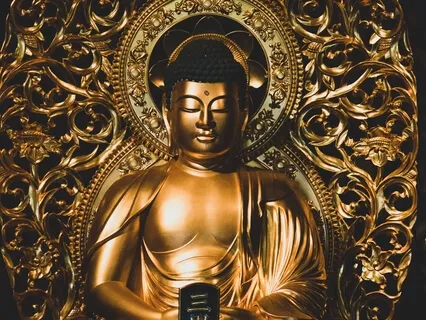
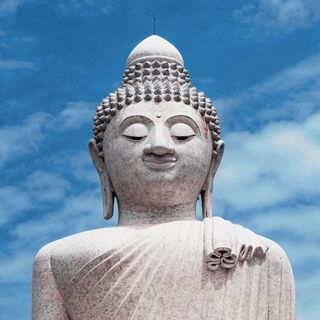
So the Buddha was born Siddhartha Gautama around 400 to 500 BC,
And this was in present-day Nepal and he was a son of a king,
So he was a prince.
And his father really wanted to keep him isolated from the external world and wanted to keep him really sheltered.
So he had Siddhartha locked away in the palace with a lot of material comforts in the world,
So he had unlimited food and drink,
And he had a personal assistant,
And he had dancing girls and he just had a bunch of opulence.
But he led a very sheltered life because he didn't venture outside his palace.
Occasionally he would take it upon himself to go on different excursions outside the palace,
And it was through that that he saw suffering in the world,
Because he wasn't really accustomed to that in his little privileged palace.
So he saw a sick man on the street,
He saw an aging man on the street,
And he saw a person that was dying on the street.
So that kind of shocked him because in his palace everything was kept very safe and people that were falling sick were hidden from him,
So they were replaced very easily.
So this was the first time he was seeing suffering in the human condition.
So he got really curious about that and he said,
Okay,
Why is this happening?
So then he started taking more excursions and visits outside the palace,
And he noticed that there were a lot of ascetics or sadhus,
Or holy men,
And these were kind of like the modern-day sadhus,
Where they have long hair,
The Indians in the robes,
And they just wear like a loincloth,
And they don't really have a house,
They just wander around the streets,
And they live kind of like a harsh life,
But he saw that they were very accustomed to,
In the midst of suffering,
So they're actually thriving and doing well,
So he was curious about that.
So he wanted to study under them,
And he decided to leave his palace and study under a few holy men who were practicing yoga and they were living a very minimalist lifestyle that was also very harsh,
They were just out on the street and kind of starving themselves,
And putting themselves through kind of like torture situations in the name of finding enlightenment.
So when the Buddha kind of followed this path,
He found that he wasn't gaining the spiritual knowledge from following an aesthetic path.
So this is when he came up with more of the middle way,
Middle ground approach of finding enlightenment through moderation,
Because you don't want to have a lot of material abundance and not have an inner spiritual life,
And you don't want to necessarily put yourself through a lot of unnecessary hardship either,
So it's very hard to meditate when you're like starving and you're just like really cold and all that,
So obviously take care of the body and then find a middle path.
And it was through his whole journey that he eventually came to a Bodhi tree and he just meditated until he reached enlightenment.
And then once he did,
He started to teach different people his teachings and what he learned.
So his core tenet of teaching is the Four Noble Truths.
So they go as follows.
So the first noble truth is Dukkha or suffering,
And this just says that in the cyclical nature of life,
Suffering is just there,
Just what it is.
People fall sick,
People grow old,
And there's different things of the impermanence of life,
There are good and bad things,
And suffering is just part of it.
So it's good to accept suffering.
Second noble truth is Samodhiya,
Which is the suffering that comes from craving,
Desire,
Attachment.
So unlike the just natural suffering that occurs to life,
This suffering is caused by your attachment to things.
And it's not attachment just to good things,
But also bad things as well.
So it's both attachment and inversions.
So you can create your suffering through desire and craving and that causes affliction in your mind.
The third noble truth is Nirodha,
Which is cessation.
And this cessation occurs through letting go of attachments.
And you may have heard of this term in the yoga sutras.
So one of the first few yoga sutras is Yogas Chitta Vritti Nirodha,
Which means yoga is the quietening of the fluctuations of the mind.
So it's very similar in this aspect.
So you want to learn how to control the craving and mental fluctuations of the mind,
And that's something Buddhism will teach you.
And lastly,
The last four noble truths is Magga,
Which is path.
And this is the Noble Eightfold Path you can take on to let go of attachments and stop the cycle of suffering.
So what are these Noble Eightfold Paths?
So they are the right view,
The right intention,
The right speech,
The right action,
The right livelihood,
The right effort,
The right mindfulness,
And lastly the right concentration.
So if you kind of group the Noble Eightfold Path together,
The first two,
Which is right view and right intention,
Can be grouped together as wisdom.
So before we start a special practice such as this,
We want to have a nice frame of mind when going through it.
Very similar to yoga,
How you have the Yamas and the Yama,
Where you have the right principles and ethics in place before you start to embark on your spiritual journey.
So you just want to steer clear of behavior that is unwholesome,
And you want to create a nice foundation where you are providing goodwill to other people,
Providing loving kindness where you're extending loving feelings out towards your neighbors and other people around you,
And renunciating the material pleasures of life and also practicing non-violence.
So you're having a good stable base of just being a good human being,
Of being generous,
Giving,
And loving.
And then you have the right speech,
Which is the third step.
Right speech,
Right action,
And right livelihood.
So these together relate to morality.
So now that you have wisdom,
You now have morality,
Which is obviously conducting yourself in a wholesome manner.
And as far as the right livelihood they kind of go over,
You shouldn't sell guns or meats or poisons or intoxicants or sell people like human trafficking.
And also not committing adultery as well.
So these are just to be a good human being and not cause suffering and cause undue suffering.
And then you have the last ones where the right effort,
Right mindfulness,
And right concentration.
So if you group these together,
These are your meditative practices.
So you want to bring in the right effort,
You want to bring the zeal into your practice.
And also there's some hindrances that will stop you from bringing the right effort to your meditation practice.
And these hindrances are sensual desires.
And this is related to like craving attachments,
You like wanting to have chasing after material goods or even sensual pleasures.
And then there's ill will,
Dullness,
Restlessness,
And doubt.
So these hindrances can prevent you from having and taking the right effort.
But there are certain anecdotes you can take and the Buddha talks about you can provide loving kindness and that will help with your ill will.
You can meditate on light and that will help counteract feelings of dullness and feeling really slow.
And as far as restlessness,
That causes a lot of your mind to go back and forth.
And focusing on your breath will help with that.
Then lastly to counteract doubt,
You would just have more of an investigative approach and kind of analyze yourself.
And then as far as the mindfulness goes,
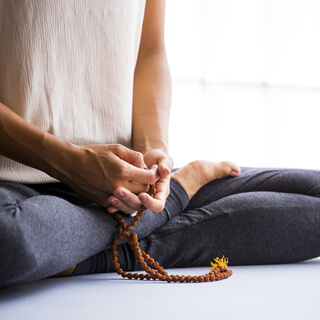
There are different practices you can take on.
So the Buddha talks a lot about Anapanasati,
Which is a practice that's formed in a lot of Vipassana schools,
Something the Buddha taught.
And all you're simply doing is focusing on one pointed focus.
So you can focus on the inhale as your breath hits your nose and then as you exhale.
So that's just one practice.
And the more you can concentrate on that one pointed focus,
You bring your breath back to noticing your breath.
And if your mind wanders,
You bring it back again.
The more you can do this,
It will develop a very sharp mind of concentration.
And eventually that concentration will build to Dhyana or the meditative absorption state,
Eventually leading up to Smadi,
Which is the awakening.
So it's very step by step,
Very similar to eight limbs of yoga.
And in addition to this,
The Buddha also talks about the five precepts.
This is not something that you necessarily have to take as just practicing in a Buddhist but especially for monks in particular,
It's kind of like an added step.
And these precepts are,
You know,
Obviously don't take a life.
So don't kill others.
A lot of Buddhists follow a vegetarian diet.
Second would be don't steal,
Be self-explanatory.
Don't commit adultery,
Do not lie.
And then don't consume liquor or other intoxicants.
And that's just so that your mind isn't controlled by like another substance.
So you want to bring your attention to be a very clear function.
So that's just kind of like a good introduction to Buddhism.
Obviously there's a lot more I can talk about,
More in depth.
But just understanding the four noble truths and understanding suffering and then understand the eightfold path you can take will be really helpful.
So you can start to see in your own life where can you align yourself to be more wholesome?
What actions can you take?
What intentions can you take?
Can you speak the truth?
And then also perform good deeds both in word and action and thought.
And then can you also start the meditation practice which is very integral to Buddhism?
And by following these steps you can slowly start to peel away from suffering.
I mean suffering is there anyways,
But you have a better grasp on it and you have that equanimity present.
So I hope this helps and I venture you to explore more into Buddhism.
Thanks.