Hello,
And welcome to today's episode of the How to Choose Happiness and Freedom Show.
I'm your host,
Lauren Foster,
Happiness teacher and author of Happy and Free on Purpose,
Daily Practices to Live and Love Your Life.
I am so pleased and honored and thrilled to have with me today,
A fellow meditation teacher,
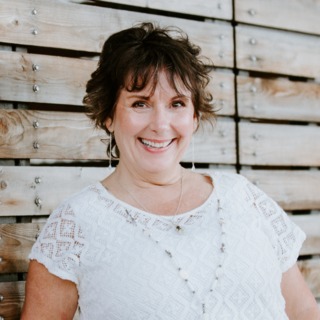
Suzanne Thompson,
And I are both certified by David G as Masters of Wisdom and Meditation Teachers.
And whenever I'm looking for another perspective,
Or just another beautiful soul to reach out to,
I have this built in group in this built in community.
So welcome,
Suzanne,
And thank you for being with us today.
And oh,
I forgot to mention that Susan's also the founder of Soul Archaeology.
Is that how you say that?
Right.
So she's going to tell us,
Tell us what that is all about.
Thanks for being with me.
Well,
I'm so grateful.
It's been an absolute beautiful time.
Yeah,
So as we have that mutual connection of David G,
I,
My first journey to the States was back in 2018,
Actually,
And to do my certification,
Then I started my meditation journey a long time ago.
But because I worked as a change agent within the federal government here in Australia,
And but I was a crisis meditator,
And it was actually David that labeled that,
Which was nice to actually understand what it meant.
And that crisis meditation was that whenever anything got overwhelming,
We'd set ourselves into this moment,
And we go,
Okay,
I'll just go breathe,
Or go meditate.
And that'll just make things better.
And after a moment of massive shift that happened in 2017,
Of the dissolving of a marriage,
Or the breakdown of it completely,
And putting myself into a position of being homeless,
With two small children,
Jobless as well,
I took a step back and realized that something needed to change.
And that was,
I actually wanted to find stillness amongst all of this.
So gratefully started to practice daily.
And then with the introduction of David G through Hay House,
Because I'd always been,
I'd always used Louise Hay and Dr.
Wayne Dyer as my guides in meditation practice.
And so then that's brought me through this magical journey since 2017,
To where I am today,
Which has been loving,
And also challenging,
And grateful to be honoring that I live in an ampersand world,
That we have a coin and it is both sides,
And we don't meditate to always be calm.
It's about working through whatever you're feeling at that moment and owning it.
So you can feel uncomfortable,
You can feel,
You're allowed to feel anger,
You're allowed to feel stress,
But it's then how do you work and flow through that.
So that led me to understanding that as adults,
We're so on this journey to remember stillness,
To remember peace,
And watching two little humans grow,
Or they're not little,
As in young humans,
Evolving humans,
Come through.
I see them as my best teachers.
They show me everything.
They're constantly a mirror,
And they reflect in me what I reflect in me and what they reflect in themselves.
And it showed me that over the last couple of years,
And I think it wasn't,
It hasn't just been around the pandemic,
But definitely stress and trauma in many ways has been unfolding and how to live in a constant life of change.
And so for me,
What unfolded with a daily meditation practice and actually twice daily meditation practice,
And I reflect on that now because my meditation practice has always changed,
But I was always very particular about the benefit of meditating in the morning and starting the day.
And just having an afternoon practice or an end of the day practice as well.
And I,
In the last sort of week and a half,
I've noticed that that afternoon one because of school holidays and kids has actually shortened.
And upon reflection,
It actually makes a massive difference.
But with practicing meditation and seeing the benefit of what it's actually done for the children,
Because I actually incorporate them into it.
They sometimes come down to the beach with me to meditate or at home if it's raining.
And I had always,
I think,
I was always I had always resonated with a meeting that I had sat in on that was with the Dalai Lama back in 2012.
And he,
And it's a quote that's been used,
But for me,
It just every time I say it,
And every time I hear it and it vibrates,
It hits.
And it enables me to actually know that I'm doing what I love,
Which was that if every eight year old meditated for eight minutes,
Sorry,
For 15 minutes a day,
In one generation,
We would have dissolved all violence.
And I want to make that happen.
I'm here to do that.
So soul archaeology was born actually at the nest within the first meditation teacher training with David.
And I've stuck with it.
And it was because I am a qualified archaeologist,
I studied,
And I understood this whole concept of widening one sieve to uncover the gems that lie inside of you,
Of your soul.
And so now that's what I'm doing is I've made it my purpose,
Well I haven't made it my purpose,
It is my purpose.
I realised it,
I remembered it.
So I am now in the process of guiding,
Well,
I'm actually working with little,
Littler kids as well,
Like little one year olds as well.
So in childcare centres,
So primarily looking at four to eight or nine year olds and delivering and guiding them on a daily meditation practice.
So teaching very young children the power of meditation and to have a meditation practice at that age,
That's awesome.
And it's the difference,
The point of difference is that schools and teachers are doing a fabulous job of welcoming in many different modalities.
But where I've seen the science come in and involved is that as you know,
You and I both know about having that starting the day within that stillness,
It just sets you.
So it can actually,
You can then remember to then come back to that.
So yeah,
So I've set it up so that it actually enables the teachers to sit the kids down.
And it doesn't matter if one child engages or if all children engage,
But at least if it brings them together in that moment for five to eight minutes.
I've worked no more than that,
Because that's the general span.
And it's a co-created process as well.
And what I mean by that is I listen to many different things going on in the world.
And it's a practice that enables them to remember stillness,
To remember comfort,
And to remember compassion.
And that they were,
And to also remember that they,
As you and I are,
Are perfect as and whole as we were created,
So that we actually don't lose sight of that.
Right.
That's not something we need to earn.
It's something that we have just by existing.
Yeah.
I love that you're teaching children that at that age,
Because they learn so much easier than adults.
And yeah,
And then this will be ingrained in them throughout their life.
Yeah.
I like that.
I love it.
So what does that look like?
Do you go into the schools and teach the teachers or do you teach the teachers?
So with the little kids are the ones that have got four and five-year-olds in early learning centers.
I'm working with just,
I have to be face-to-face because over here,
Most of those centers don't have a digital platform.
And the science shows that the amount of screen time that should be accessible to them is virtually zero at such a young age.
So that obviously,
That is,
And when I said about being in an ampersand world,
That's my local focus is that,
So I'm limited to how many I can do in a day.
And that's by choice because I want to ensure that I can be present and then grow that.
And there is potential to scale it to,
Yes,
Eventually enable to teach the teachers,
But the educators and teachers have enough on their own plate.
And as we know,
It's like teachers are there to give them a broadened education.
And if they themselves on a meditation don't have their own meditation practice,
It's really quite hard to teach it.
It's not just a matter of just reading a book.
It's a practice that is something that's instilling.
So then what I've designed is through science,
A 56-day block,
Which works out to be virtually a school term.
So 56 to 60 days is here in Australia,
Which is what sits in about a school term because we usually have 10-week school terms.
And they're prerecorded.
And I've just moved on to a new platform.
I was sort of setting it up using YouTube and all of this,
And I was finding that I wanted it to be easy for them.
So a platform that was created in the States,
In San Francisco,
By an Australian who has now moved back,
It's called OnPodio.
And they've recently connected with a TV channel called RecessTV.
So gratefully,
It's all come together.
So OnPodio was created for personal trainers and yoga instructors to bring you in.
And there's many different platforms that people are doing.
But for this,
It enables me now to,
Which is what I'm now in the process of doing,
Is connecting all of our stuff from Facebook and Instagram and bringing it all together so that it's in one accessible place.
So are you saying OnPodio,
O-N-P-O-D-I-O,
How do you spell that?
Yeah.
O-N-P-O-D-I-O.
Okay.
And that's where,
So can our listeners go to that platform to learn more about you and.
The easiest way is to come to my website,
Which is soularchaeology.
Org.
So that's S-O-U-L-A-R-C-H-A-E-O-L-O-G-Y.
So there's the A and the E.
It's the bit that always gets missed.
And that's.
Org because it is the purpose is to scale to be an organization.
So what will happen is you come to Soul Archaeology and then you can,
And it'll actually take you.
So initially now it's set up that it sets up a calendly link straight to me so we can meet and talk to see if it's what you want.
And then,
Cause there's an approach for,
If there are teachers that want to get involved or for children,
If they want to work one-on-one or in smaller groups,
Cause I also work on smaller groups and have them around here at home.
Cause I know I have space here to welcome them in as a business and into this space that I call the timing room.
And then there's also for families as well,
Cause I have a Saturday morning session where I welcome everyone down at the beach now that the weather's getting better here.
Now,
What age are your own children?
So Saffron is seven and Jackson's a couple of weeks off nine.
So do they met at,
You mentioned that they come,
They participate in your meditation.
So assuming that there,
That we are meditators and we want to introduce that to our own children,
What,
I mean,
You don't want to make them because that's just like,
So what,
How,
How do you actually get them interested and get them to participate and learn?
Well,
In the beginning,
It was I suppose,
Being a solo parent and I,
And I,
I it's really interesting.
It's,
I've,
I've really not liked using that word for the,
For a bit.
It's actually at the moment,
It's like,
As a parent,
That's,
You know,
I I'm,
I'm a hundred percent present for the kids,
No matter what,
But yeah,
I pretty well much,
I have been a solo parent from the get-go,
But being a solo parent and with what we went through,
It was like,
Especially,
I think where it hit mainly was,
I didn't want to bring them in.
Like,
As you said,
You don't want to force them because there's no point.
So with being in the position that I was in,
It was like,
I was meditating at home and I would sit down in a,
In a space.
I would get up in the mornings and if the children woke up,
Especially Saffron,
If she woke up,
She would just come and she would sit in my lap and normally fall back asleep.
But then while I was meditating and,
And Jackson from the age of the age of five,
I,
He was practicing yoga through,
Through his school once a week.
So then that actually started for him,
That understanding of that.
And then when I,
Because after I did that,
My meditation teacher training with David,
I actually went into study yoga teacher training as well.
More from a philosophy,
A deeper philosophy side,
But also to get a better understanding of that whole body side of things from,
Because the,
The,
The posture is only such a small part of that massive iceberg of,
Of yoga.
And so to get Jackson and Saffron to come now,
It's just a matter of this space that I've also created as I call it the timing room,
It's where I work,
But it's also so where I create,
But it's where the kids create.
So for them,
It's like they create music two different ways.
And there's always a yoga mat down.
So now it's like,
They will come in and do that because the energy in this room is inviting to do that.
They,
We talk it through,
But then what we were doing is it's started it.
I think I started it there last year with,
Cause when we here in South Australia had,
We went into lockdown because we sort of never,
We,
We,
Anyway,
It's a very confusing topic and I don't want to get political anyway,
But I was already in a room.
I was actually contained last year because I had the kids at school and children,
We were,
My parents were vulnerable.
I had,
There was all these vulnerable people in my family.
So we were contained at home pretty well much.
And so I had not much more to do,
But then just deepen my practice.
So I was doing a lot of reading,
I was doing a lot of meditating.
I was doing a lot of zoom meetings and,
And I was finding that with doing this interaction,
This virtual interaction,
I needed to practice more because it was so heavy for me.
It was just so in the head.
And even though you're sitting in the heart,
There was a lot more.
And so,
Yeah,
The kids just now naturally come in,
In the mornings,
It's like,
If they wake up,
Cause I go,
Now that it's nicer weather.
The sun rises somewhere between six and seven here in the morning at the moment.
And so if I'm up and they wake up,
They'll get dressed and they'll come down and walk with me.
And then they sit or they'll just run around and it's for them.
But then also when we drive to school,
We have a practice and we talk about,
We do a gratitude on the way,
Sing a song.
And then I was doing lives on Facebook for most of last year and this year with the kids where I would sit,
Kids would design.
That's what I said about the co-creation is I asked the kids what they think the world needs.
And because when I say the word compassion,
It means something different to them.
Like Saffron example was people need to,
Something about being perfect.
And I said,
Well,
What does perfect mean to you?
And she said,
Just being as good as you can be.
And I went,
Awesome.
So it was,
We have to understand that we have to speak in their language.
So yeah,
So hence I don't use any,
I don't use any major,
I don't talk to them and use the words like mantra or all that sort of stuff.
I just ask them what they think the world needs.
And then we just work through a very simple compassionate project and process,
Which is the practice that Pema Chodron taught,
Which is,
It comes across as actually the opposite to what we normally think of meditation,
Which is you,
You know,
You breathe in the good and then you breathe out what's bad.
And,
But with the compassion practice is you're looking at a situation or circumstance or a human and you see their pain or their sorrow or it's your own pain or your own sorrow or confusion.
And you inhale that.
And then as you exhale through the heart,
You see it in a different light.
One that is knowing that there is that pain,
But you can see that there's a different outcome and there's an opportunity for it to be an alternative,
Not saying that it's going to be better,
But it's just the fact that it's an alternative.
So that's the practice that I found with the kids.
It works better for them because they understand that because,
You know,
They naturally want to,
They're inquisitive.
They naturally,
It's like,
You hurt yourself.
They naturally want to touch it.
They actually want to say,
Can I touch it?
And they're like,
No,
No,
No,
No,
No,
No,
No,
No,
No,
No,
No,
No,
No,
No,
No,
No,
No.
I'm like,
Can I see it?
I'll get the ice pack,
You know,
Or I'll get,
I'll get the tissue or the band aid or whatever.
That's where it goes.
So,
Yeah.
All right.
Well,
So you were going to lead us in a short meditation before we,
Before we close it today.
Is that,
Is that still cool with you?
I'd love to.
I'm always interested to hear and,
And experience other,
Other teachers.
So I'm,
I'm,
I'm really happy about this part.
Beautiful.
Beautiful.
So as I invite all of you yourself and all of your listeners,
I invite you to get comfortable and welcome you into that.
And that comfort is yours and you might be sitting,
You might be lying down and then I welcome you in that comfort to close your eyes.
But if you are unable to,
That is still okay.
Just try and soften the screen so you're actually not observing the screen.
Close your eyes and feel your breath in and out.
And feel yourself breathing in and breathing out.
Now silently say to yourself,
I am breathing in.
I am breathing out.
And then on the next breath in,
Silently ask yourself one thing that you are grateful for,
Or who are you grateful for and breathe out.
Three breaths of gratitude,
Inhale and exhale.
And now I invite you while you're sitting in this space of gratitude to breathe in through the navel and exhale through the heart.
Inhale through the navel and exhale through the heart.
And as you're breathing in through the navel,
Breathe in a little bit of fear.
It might be fear of going outside,
Talking on a podcast.
Exhale through the heart that love you have in yourself.
And how the love for the self through the belly.
Exhale love for the self.
Through the belly.
Feel it traveling up and out through the heart.
I invite you and welcome you to let that go.
Knowing you can always return to it at any time during the day.
I invite you and welcome you to open your eyes.
And I thank you.
Thank you.
That was absolutely beautiful.
Appreciate it so much.
Yeah.
Thank you for being here with us.
All right.
So the website is soul archeology.
Org.
And wherever you're listening to this,
You can probably find it in the notes.
I'll have this so that it's easily clickable.
And so,
Yeah,
Check out Suzanne and teacher and children to meditate and create a world of peace.
It's a beautiful thing.
All right.
Thank you.
All right.
Thank you.
We'll be back next week with another great episode.
In the meantime,
Remember happiness is a choice.
You can always choose to be happy first.
I'll see you soon.