Think meditation is hard?
Do me a favor.
Take a slow,
Deep breath in and now breathe out.
Congratulations.
You just meditated.
Hi,
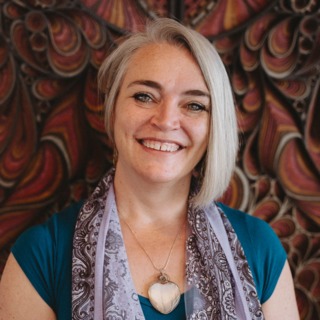
I'm Crystal Joukowsky and this is Breathe In,
Breathe Out,
A weekly mindfulness and meditation podcast for anyone ready to own their own shit and find a little peace while doing it.
Hello,
And welcome back to Breathe In,
Breathe Out.
I am Crystal Joukowsky and as always,
I am so glad that you're here.
I'm honored that you've decided to spend this time with us and expand your horizons and just be the amazing you that you are showing up in this world.
Along the lines,
I told you guys that we're going to introduce you to different stuff and different ways that you can take care of yourself and different people that can help you or inspire you on your own journey.
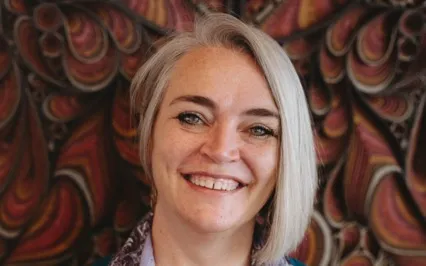
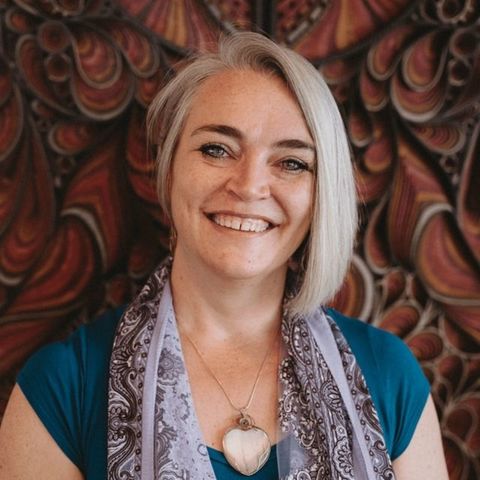
And today I'm excited because we have Tammy Kiekefer,
LCSW.
We're going to ask her all that.
What does it mean?
She has operated as a successful psychotherapy practice since 2002.
She provides individual family and couples therapy around anxiety,
Depression,
Domestic violence,
Trauma,
Relationships,
And personal empowerment.
Tammy is a certified yoga instructor and she weaves concepts of holistic therapy into her clinical work.
So I'm really glad that she's here and welcome today.
Thank you.
Thanks for having me on.
Licensed clinical social worker,
Right?
LCSW?
Yep,
That's correct.
In the moment my brain went,
Wait,
What am I doing here?
Wow,
Let's pause.
Brain fart.
It's all good.
Happens to the best of us.
So you've had this successful practice since 2002.
What brought you to psychotherapy?
You know,
I was one of those rare people who kind of knew my entire life what I wanted to do.
And I remember I was in my geometry class and I'm not a math person and it was 10th grade and it hit me.
I was like,
I want to be a therapist.
I want to have private practice.
And I just,
I kind of,
I started learning more about it and I got my bachelor's and I've worked in all kinds of areas in the criminal system and inpatient outpatient schools.
I've had groups and then I along the way got my master's and I've just kind of had my eye on the goal of having private practice and I absolutely love it.
Every day is different and I never know who's going to be sitting on my couch next and we're in my Zoom room these days.
But I do,
I just love my job.
It hit you when you were in 10th grade.
What was your exposure to counseling and that kind of social work?
What was your exposure before that?
I think I was always the person in my family who everyone came to talk to and my friends came to talk to.
I think I've always been empathetic and I think just kind of seeing things big picture.
And how I've described it before is that I feel like everyone kind of has a puzzle,
Their own little puzzle box and your picture is on the front and sometimes it gets all jumbled up and you have to put your pieces back together.
And I've always looked at that like there's a why behind the behavior and that's always been fascinating to me.
Whether I was younger,
Working with my friends or talking to my friends about their problems.
So it's just kind of always been connecting with people and helping people has kind of always been my thing.
I really love that statement,
The why behind the behavior,
Because we don't just act the way we act.
There's a reason that we are reacting to something that somebody said.
There is a reason that we don't like this or that or the other and taking a moment to say why?
I don't think that we often enough do that.
Let's all be little kids.
Why?
Why is sky blue?
I love that.
Exactly.
But why?
But why?
I did that.
But why?
Some of us have lots and lots and lots and lots of whys behind the behavior.
So you have to dig and dig and dig and that's okay because pretty soon all of it becomes clear and then you have the power to change it because now you know why.
Yeah,
And like you said,
They have all of those whys but those whys are like a protective layer before you get to what's really going on.
It's like,
Well,
Because I think we do that so that we can avoid going deeper,
Avoid trying to admit that we don't know or avoid facing something unbelievably challenging that's like just sitting there saying,
Huh?
Yeah,
It's scary.
It can be very scary.
And I think that that's why,
I guess also in my practice,
I know when people come in for the very first time,
They're nervous and you know what?
I'm nervous too.
I'll kind of have a little bit of jitteries before I meet somebody new like,
Oh my gosh,
Are they going to like it here?
They going to like me?
Are they going to feel comfortable?
And so I really,
That's the first part is just helping people feel more comfortable because if you're not open,
Then I don't know what's going on.
And if I don't know what's going on,
Then I can't help you.
So it is,
It's,
It can be scary to look in the mirror and own your stuff.
It's okay to cuss.
My tagline is own your shit.
It's okay.
Everybody knows we cuss here.
Yeah.
Yeah.
Yeah.
Yeah.
I am right at home.
Yes,
Please be.
So you get people coming in.
What,
What are some of the biggest conceptions of talk therapy that you have come up against that you feel are hurdles for people going in to get help?
I think,
I think just opening up,
I think making that first phone call to say,
I think I need help.
That's a tough one because like you said,
All of the little protectors that we have around us all the time.
I mean,
You have to have protectors because otherwise you never get anything done.
You just be kind of a bubbly mess.
I would anyway.
So,
So I think that,
Yeah.
I think making that first phone call and just saying like,
I don't know what else to do.
I've,
I feel like I've tried everything that I can do.
And I think that,
You know,
I rarely get the phone call of someone saying,
I think I'm getting ready to go into a crisis.
That never happens.
People are like,
I need to get in now.
When's your first opening?
And,
And it's,
I mean,
People,
We do,
We just wait too long to make that phone call every now and then I'll,
Yeah.
I want everyone to hear that for a second.
I really want to repeat it in a different way.
You mean that talk therapy is not only for people in a state of crisis,
It's actually beneficial before you get there?
100%.
Cause I think that's a con,
I think that's a misconception people have is that only people in crisis have it.
Only people in crisis go talk to somebody and need that extra boost or need that extra direction in life.
And having that relationship with a therapist ahead of the crisis means that you're not panicking and you're not,
For lack of a better word,
Dating around trying to find a therapist that really jives with you and understands you and works with you.
So if you hear me correctly,
I'm just going to tell you right now,
It's great to look for that ahead of time and say,
You know what?
I hear that it's good and maybe it's something that I could use and maybe I'll just kind of go check it out and see what's there and see if there's somebody that can help me.
And you might be surprised at how much easier life becomes because you have that safe space objective friend,
For lack of a better word,
That you can go to and just say,
Hey,
This is a problem for me.
Yeah,
Yeah,
Definitely.
And because I think you think about how often people are actually in crisis enough to pick up the phone.
I mean,
Hopefully not 24 seven,
But,
And it doesn't last 24 seven.
So the crisis hits and then there's the panic.
And then that's,
That's when you pick up the phone and find someone,
You know,
You're right.
It's like,
You're in panic mode,
You're in survival mode.
So then the crisis goes away and you're like,
Ah,
I don't really need a therapist.
I got this,
I got this.
But then the next crisis happens and then they start building.
And now all of a sudden you've got a different level of anxiety,
A different level of depression,
A different level of toxicity in your relationship.
And so why wait?
I really want you to think about this guys.
When was the last time you were in crisis that you actually picked up the phone and called somebody and said,
I need help.
I think the majority of us when we're in crisis actually shut down more.
And it's less about reaching out for the help.
And it's more about survival and just trying to get through what we're going through.
So you don't reach out.
And then the next time that thing comes around,
It's just bigger because you didn't have the bandwidth when you were in crisis to find that trusted source that you can talk to.
Right.
Yeah.
Not really where I expected this conversation to go.
And yet I'm very,
Very glad that we're going there.
Fantastic.
It is.
I like it that when I'm watching a hockey game or a football game and they're talking about mental health and they're talking about men and mental health and they're talking about Sondermine has a ton of advertisements and I'm like,
Wow,
In the middle of a hockey game,
They're encouraging people to get into therapy.
Like this is amazing.
This is great because the stigma of like something's wrong with me or I'm broken or I'm not going to be there.
I'm a mess or no one's ever going to want me because of my counseling or just all those kinds of things that you tell yourself.
They're just so false and you're just such a better person when you can do some self-reflecting and feel good about yourself.
And when you feel good about yourself,
You're going to be so much more available for healthy relationships,
Whether it's with your neighbor or a colleague or a family member or a romantic partner.
But yeah,
I mean,
Yeah.
Realistically it helps you in the self-ownership aspect of life because I don't know very many people that can take constructive criticism from a family member or a close friend.
It really just makes them mad that you're judging them and telling them how to live their life.
And yet going into a counselor or a therapist and actually talking and saying,
This is where I'm at and having them help you understand where you're at and helping you see a different perspective allows for deeper self-introspection and deeper ownership of your shit.
Yes.
See,
That was a Freudian clip right there.
Oh,
I like that.
I like that.
It's kind of a new word.
What's your ownership?
What's your ownership?
I want to know.
Yeah.
It's a lot easier to do that with a trusted other outside party than it is somebody who is too close to the relationship or too close to you in that moment.
Somebody like,
I want to talk about toxic relationships because this is an example and it segues right into it.
A therapist can help you see that this relationship is toxic for you and not benefiting you in healthy ways.
Whereas a family member says that it's really common to say,
Screw you,
I'm going to do what I want to do.
And the therapist can help you say,
Okay,
So how does this feel for you?
And is this beneficial?
Is it bringing you more joy than pain and sorrow?
How do you know,
Like,
What's the definition of toxic in relationships and communication?
How do you know what that is?
That's a really good question because you hear toxic relationship talks through and it's a very vague term.
I think that I would look at a toxic relationship as,
I guess,
In my own life,
I try to strive to be around people who,
After I leave them,
After our connection,
After our dinner,
Lunch,
Whatever,
I feel better afterwards.
I feel good after my interaction with that person.
And maybe I look at toxic relationship,
Relationship is someone who you're close with.
You're supposed to be comfortable to be vulnerable with.
And if most of the time you feel horrible about yourself after your interaction,
If most of the time you don't allow yourself to be vulnerable with that person because you're afraid or you don't trust them or fear.
I mean,
Fear drives it.
I mean,
I would kind of say that's your toxic relationship.
So it's really paying attention to where you're at,
How you feel and how you feel in that relationship.
Is this a beneficial,
Beautiful,
Positive thing or is this something that's actually causing me this ease and unrest and upset?
Yes.
Yeah,
I would say so.
How do you feel in that relationship?
I think that the foundation of a relationship is something that I talk with my clients a lot about.
And I think that there's four areas that are the foundation of any relationship and that's respect,
Trust,
Communication and appreciation.
And if any of those areas are cracked for a romantic relationship,
Most of the time intimacy is the first thing to go and the last thing to come back.
But in any relationship,
If you think about it,
Maybe those four areas,
The foundational areas are ways to gauge if your relationship is toxic or not.
Do you feel respect?
Do you feel trust?
And trust isn't just like,
Oh,
I'm cheating on somebody or affairs.
I mean,
It's like trusting atmosphere that you can be yourself,
That you can talk about the things that you want to talk about,
That you feel comfortable to ask a question,
To question your partner.
And you know,
You've got to have a trusting atmosphere for that.
And then you've got to be able to communicate.
So maybe if those areas are compromised,
And you could gauge your level of toxicity based on those.
I love that.
I love that right there.
Level of toxicity.
It's not that somebody or some thing is absolutely 100% bad for you.
There are levels and there are warning signs and there are things that we can be aware of and say,
Wait a minute,
If we're in tune with ourselves,
If we're owning our shit and saying no,
No,
No,
This is where I'm at,
Then you know,
Oh,
You know what?
I like being around you and we communicate really well,
But I really don't trust that person to da da da da da.
And maybe that's an opportunity to say,
Hey,
Let's communicate about this area and you can improve it.
So it's not like,
Just because something is toxic,
Quote unquote,
In your life doesn't mean that it's doomed or that it's like you got to cut it out.
I think you have an opportunity,
Right?
And I think yeah,
The level I like that you pointed that out the level of toxicity,
I think a lot of times people stay in a really bad relationship because they say,
Well,
They're not cheating on me and I'm not getting beat up and I'm not,
So,
You know,
It can't be that bad and there's not,
You know,
A ton of drugs and alcohol and whatever.
And it's like,
Man,
But look at how you get treated.
You know,
There's no respect or you're constantly being put down or dismissed or just not cared for.
There's toxicity in that also.
And I think a lot of times people justify staying because it's not that bad.
Yeah.
Where is your level?
Where is your threshold and what,
Like,
What is your limit?
Your personal,
Where am I at and how do I,
And I think that comes into personal self worth,
Which is I'm sure something that you end up having to work with a lot,
People just valuing themselves in their relationships and in the life that they're going through of,
I deserve this or I deserve that compared to.
.
.
It's okay.
Yeah.
And confidence,
Self worth,
And unfortunately when you've been in a relationship that is pretty toxic in one way or another,
Your confidence goes down.
It takes a hit.
And then you start second guessing yourself and you don't say,
Wait a second,
I deserve to be treated well.
You just like,
Well,
I'm just really lucky to have somebody who says hi to me.
And you just start compromising everything about yourself and it's sad to watch that.
It just makes my heart sad.
It just makes my heart heavy.
I just want to hug every person that's like,
No,
I deserve this.
Because no,
No,
No,
No,
You deserve so much better.
Come into Tammy's office,
Call me up.
I'll give you a nice little virtual hug.
There's a ginormous influence how you grew up.
And it's not going back and blaming mom and dad for all your stuff.
That's not what it's about.
It's about understanding how you grew up and understanding what was role modeled to you as far as showing love,
Showing affection,
Being heard as a little kid.
Knowing that your opinion is respected.
I think I do a lot of my therapy,
Something that I believe in very much is the attachment theory.
And that's between zero and three years old.
How you learn how to trust other people,
How you learn how to trust the world is how you learn how to have empathy.
That's developed during that zero to three age range.
And if there's a lot of inconsistencies,
I mean,
There's always inconsistencies.
I have two kids and I was always like,
Oh my God,
I'm screwing them up.
I'm screwing them up.
It's zero to three.
I've got to be like perfect.
And nobody is.
So I've screwed up my kids probably every single day,
But they're great.
But yeah,
That zero to three is crucial because you're learning trust.
And when there's a lot of inconsistencies,
That's where I believe that a lot of the personalities are developed.
So narcissism,
Dependency,
Borderline.
And we all probably have little bits and pieces of all of the different personality types.
There's a bunch of them.
But when you see somebody who say is very,
Very narcissistic,
You look at how they grew up and there's likely some pretty big attachment issues that they were up against.
Maybe their caregivers weren't available to them.
They had to learn to rely on themselves to get their needs met.
They didn't.
It's that they didn't learn how to be vulnerable.
They didn't learn how to trust their environment and trust people around them.
So they grow up like,
I'm not going to let anybody close to me.
I'm going to get my need met.
And that's like real nutshell kind of description.
But I think that how you grew up definitely impacts you on how you move forward,
What your relationships are going to look like going forward,
How you learned how to communicate,
How you learned how to problem solve in your family.
Huge.
Yeah,
Yeah.
Did your parents talk through their conflicts or did they yell?
How did people talk to each other?
Was it a respectful environment or was it a challenging environment?
Or did anyone talk at all?
Maybe no one talked.
And then,
Yeah.
And so any kind of conflict is just like,
Ah,
My world's ending because you never saw conflict growing up.
Yeah.
And so it's really this huge spectrum and we are all on that spectrum somewhere with any kind of issue,
Whether it be anxiety or depression or even narcissism.
We all have those little bits of and we're on that spectrum somewhere.
And yet it's how we find balance.
It's how we find self-care,
How we take care of our own needs that will then improve the way that we show up for other people.
So if we're feeling anxious,
What do we need and how do we help ourselves through that?
And if that's coming to you and talking or if that's a little meditation and personal,
Something that you know already works for you,
You have to do that because you know your own experience,
You know your childhood experience and you know what your relationships are like now.
So it's just huge in that self-ownership thing.
Not everything that I bring up is going to work for everybody.
You know,
Everyone is going to find a little something somewhere that really resonates with them and helps them out.
And I'm a firm believer that I may ask one question,
You may give nine answers,
But of those nine answers,
Something really hit somebody and they were like,
Oh my gosh,
That's what means whoa,
That hit really hard.
And so I love all those answers because it just expands the possibility of people connecting to it and being able to say,
That's me.
I get that.
I see that.
I feel that.
And so they're more open to it,
You know.
And I needed to hear that.
Yeah.
And you know,
I think you're right,
Like going back and I'm sure there were tons of mistakes that I could look back and look at,
You know,
My family and my parents and whatever,
But I think that it goes back to that whole,
The why behind the behavior.
And that's where you have the power to change.
So if you go back,
You know,
A lot of times people going back into their childhood,
There's a lot of trauma for some people and looking back,
Even,
I don't know,
Even,
You know,
Middle school,
High school,
Like no one wants to read you middle school.
There's a lot of trauma that goes on.
And so it's not like you want to go back and relive it,
But that's a lot of times where,
You know,
Your identity and I would never tell a middle school teacher this,
And I've got a lot of friends that are middle school,
But it's not so much about the academics in that time period,
But it's the socialization,
You know.
And you go into,
I always think you go into like middle school with this level of confidence,
Especially women and girls,
And then middle school happens and you go,
You just kind of shrink and question yourself and maybe I don't look like everyone else and what if I,
You know,
What if I'm single forever and I'm going to be a nun with cats and,
You know,
Whatever.
And so middle school is huge for going back and looking at where's my confidence?
How do I feel about myself?
What do I need to,
What did other people tell me that I thought was like the word of,
I don't know,
The universe?
And it's like,
Man,
You can undo what somebody said in your brain and rewire it to be something that's empowering,
Something that you can challenge all these thoughts and tapes that are in your head from how you grew up,
From parents,
From friends,
From teachers,
From coaches.
And you can rewire that at any time and improve your sense of self and your confidence.
Yeah.
Yeah.
I applaud middle school teachers.
I think that they are saints because to be in middle school,
To choose to be in this hormonal shifting upheaval of these youth and they are in the depths of trying to figure out what the heck is going on with their bodies and who they are and trying to figure out socially where they belong and what,
Like,
It is so huge for those kids.
They are going through so much and to be a teacher that is able to be present and help them through that and just be like,
Yeah,
Okay.
Yeah.
Okay.
You're amazing.
My hat's off to you and I just thank you for choosing to be in that space.
I thank you for choosing to give yourself to those kids because they need that and it's a beautiful gift.
And then another thing that you said,
One of the things that I,
A conversation I have had multiple times with multiple people and clients is this,
That yes,
You grew up.
Yes,
You had a difficult time.
Yes,
There was a really shitty bully in middle school or high school or whatnot.
Here's my question for you.
Do you think that their actions were intentional?
When you fought on that playground with somebody,
Do you think that they intentionally thought,
I want to hurt this person today because I'm having a bad day?
Do you think that your parents intentionally imprinted something on you that was,
You know,
Like mom didn't have a lot of time for you?
Well,
Do you think that she did that intentionally and said,
I don't want to spend time with you?
Or was that just a product of the way that mom's life was and mom was doing the best that she absolutely could.
When we,
Like you said,
Look back and unwind it and see what are the circumstances and what were the things that were happening in that moment.
And when you honor not only the people around you,
But yourself in that,
Because you made a pattern,
You chose to make a pattern or habit from that experience.
So when you go back and you honor that and you say,
You know what,
I see that that happened and that really sucked.
And yet I'm going to give myself a hug and say,
Hey,
Good job,
High five for surviving that.
And I'm going to let everybody else give them the respect that they need because they were obviously going through their own shit at the time.
And now you're better here because it's like,
Yeah,
I don't have to go through that again.
And my intention is completely different and I can live a little bit freer.
So that was really beautiful.
Thank you for bringing it up.
Yeah.
And I think,
Yeah,
I think with anyone,
And so you go through that in middle school and then you go into a job in your twenties and there's that bully person there.
And then you go into a job in your thirties and there's your boss who's bully or,
You know,
I mean,
It's not like it ever ends.
It's just that going back to the why behind the behavior,
If you personalize their stuff,
It's highly not about likely it's not about you.
I mean,
If you have to go back and say,
Oh,
Well,
It's probably because I did this and this and this to them,
Then yeah,
You got to own your stuff.
But otherwise it's not about you.
It has nothing to do with you.
And I guess I look at it going back to toxic relationships to be in a relationship with a toxic person.
They're just reacting to their own inner turmoil and you happen to be the person who chose to be with them.
And it doesn't have to be like that.
You're not responsible for someone else's negativity and inner turmoil and you cannot fix it.
You cannot fix it.
You can't fix someone else.
No,
Exactly.
Hear that guys.
You cannot fix someone else.
It all starts with you and who you are.
So if you are taking care of your own shit,
If you are recognizing that you had this challenge and you are reacting this way,
You'll treat other people better.
It doesn't mean that you can make other people treat you better.
It means that you're treating yourself better and life is a lot better.
Life just improves because you've given yourself that allowance,
That permission,
That acknowledgement.
But yeah.
Got it.
Oh,
Tammy,
Is there anything else that you want to bring up today that you want to chit chat about?
Let's see.
I think,
You know,
I just,
I want to first thank you for letting me be on here,
But just for people to know how much control you actually have over your own life.
I think that a lot of people don't give themselves the amount of recognition and confidence that you have so much control over your own life.
And even the things that you feel completely out of control over,
You can tease out areas that you still have control.
And when you realize that,
I think your confidence goes up because your anxiety goes down,
Confidence goes up,
Anxiety down.
And it is,
I just,
I hope that people can recognize that if you're in a bad space,
Go talk to somebody,
Go get some help,
Just get a second opinion.
Yeah.
And if you're not in a bad space and you just want a little extra boost or you want to find that perfect person for when you are in a bad space,
Check them out,
Find it out.
It's out there too.
Right?
So you grabbed a little quote from your website and I absolutely loved it.
That's why I grabbed it.
It says,
As we all know,
If you want to be happy in your job,
Your relationship,
Your friendships,
It starts with you.
If you want to be less anxious,
More confident,
Have consistent boundaries,
It starts with you.
If you want to be available for a healthy,
Loving relationship,
It also starts with you.
You are the creator of your life.
You are the one who gets to say,
No,
No,
No,
I want this instead of,
I want that.
And we are like,
Tammy and I are here to say,
Do it,
Like do it,
Dig in,
Find out how you could be better and how you can let go of all that stuff that's just holding you down and toxic and not being where you want to be so that you can start creating where you do want to be.
And that was the basis behind my book,
It's out on Amazon.
And it's actually an online course also,
But it's called Preparing for the Jungle,
Avoiding Snakes and Pitfalls on the Path to Healthy Love.
And that's why I wrote the book is because it has to start with you.
But I take you through the family roles,
The how you attached,
The why you're attracted to certain types of people,
How you communicate,
How you resolve conflict,
What your non-negotiables are.
Look at how do you know what a healthy relationship is versus a toxic relationship.
What makes a healthy relationship and a checklist at the end to say like,
Who's my person?
What am I even looking for?
Because if you go out there and you're like,
I just choose you,
I don't know how that's going to work for you.
Well,
We've all done it before,
So how does that work for any of us?
But I just believe in that wholeheartedly that it does start with you and I want to give you that starting place and how do you know?
So that's the basis of my book and it's also on an online course that I'll personally walk you through.
So it's more in-depth experience,
But that's the basis of it is it starts with you.
What do you want your life to look like?
And time's just ticking.
So if you don't want to figure it out now,
You'll have an opportunity in a year to figure it out because all that stuff will still be waiting for you.
Just hanging out.
Yeah.
Not going to leave.
So two little things before we go.
I have a couple of questions that I just want to ask you.
Orange or green?
Okay.
City or country?
Country.
Large groups or personal time?
Personal time.
Pine trees or the salty ocean air?
Pine trees.
Which season and why?
Spring,
Because everything is new and fresh and clean and growing and yeah.
Okay.
And then self-care is big in this podcast.
And so our listeners want to know what is your biggest favorite or most unique type of self-care that you didn't realize that you enjoy,
But actually really fills your cup?
That's a good one.
I think I love being with my family.
I love being with my kids.
I love being with my dog.
I love being with my fiance.
I like,
I thought before COVID that I was very,
I wanted to go out.
I wanted to,
I got a taste of COVID and I got to tell you,
I like just kind of hanging out.
I love camping.
I love being outside.
I love,
Okay,
As I'm thinking about more of your question,
Sitting by a river.
Sitting by a river,
Probably like maybe on some rocks in the mountains,
Warm air and just listening to the water.
Love it.
Tammy is absolutely fantastic.
She has a website,
Healthyhealing.
Net and then absolutely check out her book,
Preparing for the Jungle,
Avoiding Snakes and Pitfalls on the Pest to Healthy Love.
Is there any other way that people can get in touch with you that you really want to highlight right now?
I have a Facebook group.
It's a women's empowerment toolkit group and it's just for women and it's a private group.
I monitor everything on there,
But it's a great group.
I post,
I encourage everybody to post,
But I post very inspirational type things,
Healing,
Self-confidence,
Self-empowerment and it's all just about where are you?
What do you have going on and how can you feel better about where you are today?
Women's empowerment toolkit group,
Yeah,
It's a great place for people to start.
I love it.
Tammy,
Thank you so much for being with us and for just talking about the truth and the reality of therapy and how toxic stuff fits into it and how personal ownership really is the biggest foundation that we can build to begin with and then growing from there and branching out.
So I really appreciate you being here and spending time with us today.
Thank you.
Thank you so much.
I can't wait to connect some more.
Yeah,
Absolutely.
Until next week,
You guys,
We'll see you again on Breathe In,
Breathe Out.
I hope this moment of self-care and healing brought you some hope and peace.
I'm Crystal Dikowski on Instagram,
Facebook and YouTube and I hope you check us out and follow along for more content coming soon.
I look forward to being with you again here on Breathe In,
Breathe Out.
Until next time,
Take care.