Hello,
Dear ones,
And welcome to the next episode of the podcast.
This time,
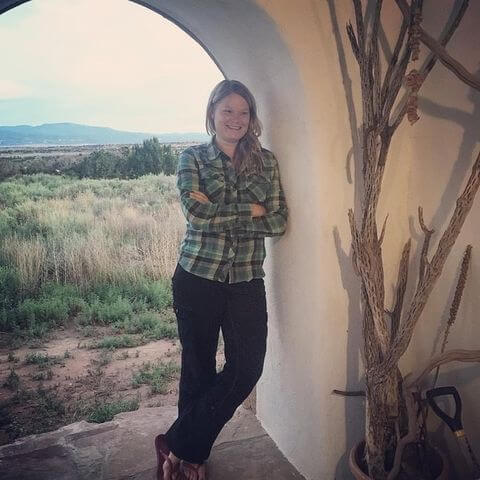
I'm introducing you to Elizabeth Bruckner,
Who,
When COVID hit,
Was at the grocery store and could find no fresh garlic.
You know,
The world was shutting down,
There was a lot of uncertainty,
Nobody knew what was going to happen,
And yeah,
She panicked like a lot of us did.
And then,
As she says,
She got busy.
She taught herself how to grow food in her tiny front yard,
And after that,
Her whole world changed.
So,
Elizabeth is a homesteader,
An acupuncturist,
And an author.
And also,
She's kind of,
Quite honestly,
A badass.
Through research and experimentation,
She taught herself to compost kitchen scraps,
Ferment like an alchemist,
Cook traditional food,
And live a life that is more connected than she ever thought possible.
Many people regard her as the fermentation maven,
And so,
You know what,
She's out in the world,
Speaking to crowds on topics such as healing herbs in the kitchen,
The life-changing power of habit creation for homesteaders,
And of course,
The art of lacto-fermentation.
But,
You know,
As always,
Here I am trying to summarize a dynamic and incredible human being with an intro that just really does not do it justice.
So,
Without further ado,
Let's get into my conversation with Elizabeth Bruckner.
Then the next part of my religious upbringing is I nearly drowned when I was about two,
Maybe one and a half,
Two.
I got away from my mom,
I fell into a pool,
They didn't find me until I was unconscious and not breathing,
And she just kept,
You know,
Giving me CPR and,
You know,
My uncle screaming,
It's too late,
It's too late,
And she just would not give up.
The first question I ask everybody is,
How do you self-describe?
And,
You know,
The example I give is,
If you were to go on a stage at a conference,
And you're meeting,
Let's say,
800 people you don't know,
How would you introduce yourself?
Great question.
I am Elizabeth Bruckner.
I am an author,
A homesteader,
Accidental homesteader,
And an acupuncturist.
Somewhere there has to be a t-shirt that says,
The accidental homesteader.
I'm an accidental a lot of things,
As we'll get into in the podcast,
And I think some of the accidents are one of the,
They're the best chord changes I could possibly have in my song.
Oh,
I'm,
Oh my gosh,
Yeah.
Sometimes you don't even know it's a happy accident until later.
Yes.
Then you're like,
Thank God that happened.
That's right.
Well,
You know,
When you were a kid,
This work you're doing now,
What did you dream of being?
An actress.
Really?
I think,
Yeah,
I think that from the age of three,
I would tell my parents I'm moving out to California to become an actress.
And I think that it was because I was drawn to California,
And being an actress was the only thing I knew that you could do here.
Like,
I didn't know about agriculture and all the other stuff.
I was three.
And so I was always looking to move to California,
Which is,
I was raised on the East Coast,
So it's very,
Very far away.
I didn't have family here.
None of that.
And then when I did actually do some theater and some things in the industry,
I was like,
Oh,
I don't,
I don't like people putting words in my mouth.
And that's,
That's what you are when you're an actress.
And so that got thrown out the table,
I mean,
Thrown out the window.
And then I started songwriting because I could,
I could put my own words in my own mouth.
And then eventually became a holistic health care practitioner and then started writing books.
Wow.
So,
You know,
One of the things I just want to say is you clearly do not have an issue being up in front of people if you're like,
You know,
Because I just think it takes a level of audacity to say,
I want to be an actress.
But then,
You know,
You actually went for it and you spoke other people's words in front of other people,
I presume.
Yes.
And so you're,
You're fine being up in front of people.
Yes.
I mean,
I'll still I'm,
I'm actually quite introverted.
So sometimes speaking to a crowd is easier than speaking at a cocktail party where there's a lot of noise because it's and also podcasting,
Like I can put my headset on and it's you and I speaking and we're kind of in our own little world.
So that's much nicer for someone that's highly sensitive.
And I've had some doozies.
I remember,
I think I was 12,
I went to a talent show in a mall and sang a song and forgot all of the words.
And at 12,
That's just,
You know,
Terrible.
So I've had the worst.
I've also attempted to play a song.
And like,
I wasn't a very good piano player at the time.
I'm still not a very good piano player.
And I moved my hands over to the wrong chord and suddenly playing the whole.
It was so bad that I was like,
I was the band leader.
I'm like,
I'm going to take a quick break.
And I went into the restroom and like splashed water on my face.
Like,
Did that just happen?
Like,
Did that?
So I've had some real some doozies,
Which I think once you've had incredible failures,
You have a less of a fear of failures because you just roll with the punches.
You laugh it off and then you move forward,
You know?
Yeah.
And I think sometimes,
At least for me,
This has been the case.
I mean,
So first of all,
I'm like a dog with a bone.
OK,
If I say I'm going to do something and I fail,
I just like kind of find another way to start it.
I'm like,
Nobody's going to tell me.
Then other times,
You know,
I I get tired and I'm like,
This is actually boring me.
And then I will actually drop a project or stop because I just don't feel passion or drive anymore to do it.
But it sounds like I mean,
Do you still do music?
Do you perform in front of people these days?
No,
For two reasons.
Number one,
I really don't like drunk people a lot.
Like when you're when you're singing live,
A lot of times you're in bars and restaurants where there are a lot of drunk people.
And I don't mind drunk people.
I just don't like singing in front of drunk people.
And then secondly,
I'm a morning person.
And like most musicians,
It's a late night gig and I'm tired at like eight thirty.
So I might go back and someday do a full album,
But it would be a passion project.
It definitely wouldn't be for money.
And I mean,
By the time I got to L.
A.
Proper and was living there and was actually doing some work in L.
A.
As a singer,
Songwriter,
I was old for L.
A.
I was twenty eight and I was a size eight.
And that's like a plus size model.
Like I just did not fit in in L.
A.
So I realized quickly,
Probably within the year that that industry wasn't for me.
There's a difference between creating art and connecting with your audience.
And then the business of Hollywood,
The business of the music industry,
Completely different.
And I think that when we get back to the roots of what true art is,
It can be remarkable and beautiful.
But when you add the glitter and the glam and the money behind it,
It can be quite tarnished.
Oh,
Oh,
My gosh.
Yes.
Yes.
I was just out with a friend earlier today who grew up in Hollywood.
And so she is a very special view of Hollywood and what it was like to grow up with parents that were pretty well known.
And she just loathes the industry and is like it is a it's like the biggest and most bottom feeders you've ever people who use other people are not very nice.
Whereas,
You know,
Here I am in Santa Fe and I'm like,
Everybody be nice to each other.
But some people didn't get that memo.
No,
No.
And it's yeah,
I just remember when I was there,
I was 28.
I was I was old enough to be safe,
But there were girls that were disappearing while I was there.
They were younger girls,
But they just didn't know any better.
You know,
They were 18.
They were told they were going to get an audition or whatever they were told.
And they just disappeared.
And this was happening on the regular.
It was hardcore.
And so and it's funny because I met my husband there.
He's he was a musician at the time.
He is a musician.
He's an incredible drummer.
And so you can meet amazing people.
But the culture is one of what can you do for me?
What can I get out of this?
And that's not a culture that I'm interested in.
I just my soul is it needs it needs more nourishment.
And I wasn't able to get it in Los Angeles.
Well,
Also,
Like I get the sense that if we live near each other,
We'd be BFFs.
If I can reach that boundary right now.
But,
You know,
I think what you're talking about is authentic reciprocity.
And what that means is for me,
You know,
I've reached an age where I'm like,
You know what?
If you as a friend,
You know,
Are not able to meet with me on a level that's authentic,
You know,
Where you can bring your real self,
Have a deep conversation,
Then,
You know,
You'll be an acquaintance very quickly.
And it's about connection.
Like,
I want real connection,
Deep connection now.
And,
You know,
I've certainly Santa Fe is L.
A.
Or Southern California in a different flavor,
A little more small town.
And there's a lot of actors and actresses here.
And,
You know,
Netflix is building a giant studio if they're not finished already.
So I've definitely run into and bumped into and met those people that it's like,
What can you do for me?
You know,
And once they find out that you are not able to connect them with,
They drop you.
Like,
You know,
Like you're some sort of weird,
Hot,
Scalded banana or something.
Like it's and I always,
You know,
It used to hurt my feelings.
But now I'm like good riddance because I just don't have time for that.
Though,
You know,
Be a parasite somewhere else.
But,
You know,
What I really love about what you said is that there ever since,
You know,
You had these dreams when you were young,
This vision of being in California.
Now you're in California,
Which I just think that's marvelous.
You're you're kind of like living into your child self's dreams.
Did your child self ever think about studying?
No,
I mean,
I watched Little House on the Prairie and I thought that when someone said the word homesteading,
That's what I thought it was,
Which it was.
That was traditional homesteading.
But modern homesteading,
I fell into this.
I let me just take you back to I was a latchkey kid.
My parents worked long hours.
So I was kind of raised myself by myself.
Lots of processed foods.
Are you Gen X?
I'm a Gen X.
OK.
Yes,
I am.
Are you a Gen X?
I am.
Yes.
And I was a sort of semi latchkey kid as well.
So I understand what you're saying.
Yeah,
You get it.
Well,
I think Little House on the Prairie probably lets people know I'm a Gen X too because like some people are like Little House on the what?
Just YouTube it,
You'll find it.
So in Little House on the Prairie,
They have they live on this large acreage of land and they built their own house and they make their own clothes and all that stuff.
And we were so far from that.
Now,
Since I've become a homesteader,
I've talked to my mom about the things that I do,
And she has absolutely no interest in it as a boomer.
She's like,
Whatever.
But she will often go,
Oh,
Grandma used to do that.
Grandma used to do that.
So I'm only one generation away from traditional skills.
And they were immigrants.
They were war refugees from Belarus.
So but it was completely erased in my generation and my parents generation.
And this is this is what surprised me.
Like I always had a little bit of discomfort with the way that my body was treated by the medical community doctors.
We were in an HMO.
I was given antibiotics like candy.
It made me very,
Very sick.
Up until I was 28,
Just constant illness.
And so I didn't think there was any other way.
And I thought that people that,
You know,
Lived off grid,
Which is what most people think homesteaders are,
Was something that was so far removed.
My husband is a Southern California boy.
I take him out to the park and he's like,
There are bees here.
I'm like,
I know,
Sweetie.
Like he thought we were all wild and crazy in Griffin Park in Los Angeles.
And I'm like,
Let's take our shoes off.
He's like,
Take our shoes off.
So I knew that we would I would not be partnering with this beautiful man and taking him out into into bear country or whatever.
So I but I love the rural area.
I love nature.
I love healing my body with natural things.
But it wasn't until the pandemic that I accidentally found out what homesteading was.
And that was kind of I you know,
You ask about miracles a lot.
And I think that this was one of those miracles that I was not interested in having.
Who wants a pandemic?
But the gold that came from it,
The spiritual,
Physical and emotional gold that came from it is quite remarkable.
Yeah,
Yeah.
A dear friend at the beginning of the pandemic said,
You can't even comprehend the world can't comprehend what kind of art and beauty is going to come from this period of enforced isolation.
You know,
Because those who can do art will and they'll maybe think of new ways to bring what they want to say to the world.
It's it's going to be a really ripe and fecund like period of time.
And that's that's certainly true.
I mean,
All sorts of incredible thought and art and paintings and poetry.
I mean,
You name it came out of the pandemic.
You know,
When I lived in Portland,
I love pickling things.
I love making jam,
All sorts of stuff like that.
As a matter of fact,
I'm going through my storage unit and I keep opening box after box.
And I'm like,
My God,
Another box of jars.
What was I thinking?
Like,
I'm like,
I gotta I gotta keep all these things,
You know,
Who knows someday.
But,
You know,
What does it look like?
Now,
I don't want to assume,
But I am going to assume that you are in a city.
Is that true?
Yes,
I'm in the suburbs of Los Angeles.
OK,
OK.
So when you talk about homesteading in a city.
I'm also going to assume it means your own plot of land,
Not like how they do in England,
Where you have your own like you have like a little patch in this community,
Like giant garden you are talking about on your property.
On my property and in the book,
I even talk about three different types of characters.
So there's stories based on these characters.
And one of them is in an urban setting because I have lived in Los Angeles and San Francisco and that's as urban as it can get.
And so I wanted to explain to people how you can homestead there,
Because a lot of people will be like,
Well,
You know,
You have a backyard.
First of all,
My backyard is a big,
Gigantic pool and it's surrounded by cement.
That is my backyard.
So when we first started and my husband was like,
Why don't we grow food?
Because I was really very,
Very intensely upset about the fact that there were no food on the shelves,
Like no garlic and no gingers.
Like,
Let's try growing.
I'm like,
That's have you met me?
Like,
Do you know what I kill?
And so I started there.
And a lot of times,
Actually,
I got a side eye recently from an old patient of mine came in.
I saw her at the farmer's market.
She's like,
Hey,
I saw you wrote a book on homesteading.
And then she paused and she looked at me kind of sideways and she's like,
I've been to your backyard.
I'm like,
I just started laughing.
I'm like,
Yes,
You have there.
You should come visit again because there's still a big,
Gigantic pool that's too big for the yard surrounded by cement.
And then in the planter,
Which is long,
It just borders the house and borders the yard.
It's only like two feet wide.
I probably at this moment and I have not gardened in probably a few months because I've been busy doing other stuff.
I probably have 30 to 50 different edible plants just doing their own thing because I've learned how to homestead.
So if you come to my house,
You won't know that all of my food,
All of my landscaping is edible,
But it is.
And it gives me such a sense of connection.
I think homesteading,
Which I'm sure we'll get into,
Is this mindful practice.
It's this intentional way of living.
It's a way to connect to our own innate resourcefulness.
And a lot of times people have been disempowered to think that they have to outsource.
And coming from the latchkey kid that didn't know how to cook until her 40s,
I can guarantee that you can be empowered at whatever stage of life,
Wherever you live.
Yeah.
Yeah.
I love that.
Thank God for that,
Right?
Well,
You know,
The second question I ask everybody and I'm intrigued.
I'm a panentheist,
Which means I'm kind of an animist.
You know,
I think everything sentient,
You know,
That plant over there probably wants to talk to me,
But I might be a little busy.
Rocks have souls.
I just believe I live in a really creative,
Really dynamic universe.
And it's,
You know,
It's our fault as humans that we can't slow down enough to talk to a waterfall or what have you.
But,
You know,
Did you grow up in a religious household?
And what does that look like as you've gotten older?
You know,
Has homesteading shaped or informed the way you,
You know,
You connect to that which we cannot explain that might be divine and outside of us?
I'm actually really curious about that.
Yeah,
I,
Well,
Did I grow up in a religious household?
I grew up in a very,
I grew up in a household that was touched by religion and war.
So my grandparents and my mom and my aunts immigrated here from Belarus.
They were running from Stalin.
He had stolen their farm as they had stolen many people's farms.
And then they popped around in refugee camps for a while in Europe and then ended up in Ohio.
They were,
They were sold tickets.
And I tell you this story because that was part of the religion.
Our religion was at any moment,
Things can go very badly.
Now,
I grew up in a very prosperous country.
There,
I've never been to a store and up until,
You know,
10 years ago where shelves were empty.
And I remember hearing these stories time and time again.
We had to go share,
You know,
We had sheets and we had to go try and trade them for potatoes and we were starving.
And I knew that they were real.
I knew they weren't lying.
But I didn't know what that meant to me until I went to a nearby mall.
And one of the,
One of the Macy's floors was empty.
This was before the pandemic.
And I was like,
That's not good.
That is not what's happening.
I'd never seen,
You know,
Just over,
There was just so much overproduction of commercial properties that,
You know,
The market wasn't sustaining.
There wasn't enough demand for the supply.
And now there's this empty storefront that's crazy.
And so when I talk about religion,
My family was then kind of indentured by a farmer in Ohio and they couldn't get out of debt,
Right?
They would,
They were doing the farming,
But then the farmer was charging them rent.
And so there was this constant debt that was being accrued.
So they were always going to be farmhands for the rest of their lives.
But my grandfather,
Probably where I get some of this kind of reverse engineering,
He's like,
I'm going to write a bunch of letters to a bunch of churches in America.
And so he wrote a letter to a Russian Orthodox church on the East Coast.
And the church members gathered and bought their freedom,
Bought my family's freedom.
Yes.
So this idea of war could happen at any moment.
Famine could happen at any moment.
And I'm getting goosebumps talking about it.
Like,
I'm just,
Because I,
I realized that one of the religions of our family was that community is powerful and you can,
You can change your entire life with the help of your community members.
And so a lot of my aunts and uncles came from different countries.
They were not blood related.
I think the one unifying factor that we had is that we were all Slavic of Slavic descent.
They all had really funny accents and they all spoke Russian.
Like some of them spoke other things to Ukrainian and,
But they all spoke Russian.
And so I was,
I thought for the longest time that I was Russian,
Not Belarusian.
I hadn't even heard of that because my aunt from Ukraine would just,
Oh,
You know,
We're part of the Russian American club.
So that was one part of the,
Of the religion in our family.
My grandfather then years later decided to go to the seminary.
Is that what it's called?
The seminary?
Yeah,
Absolutely.
Thank you.
And he became a Russian Orthodox priest.
Now,
Russian Orthodox can marry.
So he was already married.
He had kids.
And so I was raised in that church.
However,
It was in Russian,
Like all the masses.
And I don't speak Russian.
I,
I've learned in my adulthood for sheer pleasure,
French and I can,
I'm functional in Spanish,
But I've never spoken Russian.
My mom and her side of the family speak Russian.
My two siblings speak Russian,
But I did not.
And so I went to this church and I was constantly there hearing these hymns and looking at the icons and knowing that there was a presence that people were talking about,
But no one explained it to me.
And then the next part of my religious upbringing is I nearly drowned when I was about two,
Maybe one and a half,
Two.
I got away from my mom.
I fell into a pool.
They didn't find me until I was unconscious and not breathing.
And she just kept,
You know,
Giving me CPR and,
You know,
My uncle screaming,
It's too late,
It's too late.
And she just would not give up.
And so after several minutes,
I finally started breathing again,
Spent several days in the hospital.
I don't remember any of that.
But I think that that experience somehow brought me closer to the edge of the spirit world because I,
And I've heard this a lot with near death experiences.
I have no near death experience memory.
I just know that growing up from as long as I remember,
I've always like you say that,
You know,
You believe in the spirit of all things.
I would talk to my animals.
I would talk to stuffed animals.
I would talk to plants.
It was just what I did.
I was always looking for God.
And I got a bit of that in the smell of the incense in the beautiful hymns that they were singing,
But I was so far removed from anyone explaining it to me.
So does that answer your question in terms of is it a religious family?
In some ways,
Very much so.
In another ways,
I wasn't,
I wasn't taught anything.
I just experienced it.
Oh,
Yeah.
I mean,
What I was thinking was,
You know,
Did you call yourself an alternative health care practitioner?
Yes.
Yeah.
Okay.
That's what I thought.
I mean,
I just wish,
You know,
It wasn't an alternative.
Yes.
I wish those modalities weren't alternative.
Because it just doesn't sound,
It's just,
I don't know.
Anyway,
That's another podcast,
Right?
But I do think,
You know,
Having an experience like that at such a young age,
Being unconscious,
Or maybe even dead for a few minutes,
Like who knows,
You know,
Somatic work and the body.
And so here you are so little that memory is encoded in you somewhere.
And,
You know,
You might not consciously understand it,
But it's in there.
And,
You know,
Either like your child self already made peace with it,
Because children are so resilient,
And they can like brush things off.
You know,
They're like,
Whatever.
I don't know what let's go play again.
You know,
It's,
It's kind of like when you get older,
And you're like,
Oh,
That was that was really and you kind of internalize the trauma,
You know,
It finds a deeper foothold inside your body.
And then you're like,
I gotta see someone for somatic work.
But children are like,
What I just,
I was,
I was unconscious.
What?
Who cares?
Is that is that ice cream?
Let me have some.
Um,
You know,
I am a big believer in somatic work,
And a big believer in trauma or stories,
Or what have you.
I mean,
Little,
You know,
Cracks and crevices or muscles in the body in which to hide and kind of lurk.
So I suspect that probably that experience because you're a child and you're resilient,
You know,
It's,
It's probably not lurking the same way if an adult had the same experience.
But still,
It's still I think,
At a very innate level at a very deep level,
Created this form of resiliency inside of you that is possibly mind blowing.
I would absolutely agree with that,
Because it is surprising the amount of resilience that I have.
And I was terrified of water for a year or two,
I remember not having any memory of anything except being I used to always be terrified to take a bath or a shower.
And I constantly would ask my mom,
It's not going to go up my nose,
Is it it's not going to go up my nose.
So there was definitely something that I remembered.
And even now,
If I'm alone in a pool,
Like this is not the best place for me to be,
I'll still swim.
Because I think that resilience has come to me through like,
I'm still going to live.
And I think that maybe getting that close to death allowed me to go,
Well,
I'm here for a reason.
And so I might as well,
I might as well do it.
And so I have a bit more courage than I think I would have had had that not had that experience not existed for me.
Yeah,
And I think what I'm hearing you say as well,
Correct me if I'm wrong,
But I think you're saying also that this experience,
Maybe you know,
A lot of people,
As you said,
Have these experiences and they come back and they have psychic powers or they can see things or what have you.
It sounds like for you,
How that showed up is a real affinity for the world and the natural world and,
And,
And being open to the fact that you could have conversations with your stuffed animals,
Or a tree,
Because,
You know,
At some level,
You maybe remember that everything is unbelievably alive.
Which is I mean,
That's an incredible gift.
You know,
I think a lot of kids,
You know,
We're taught to like,
Shut that stuff down.
And you know,
Oh,
When you're a kid,
It's okay to talk to a tree.
But once you maybe get a little older,
10,
11,
People are like,
That kid over there is talking to a tree.
And I'm a little worried about that.
Whereas now I'm like,
I don't care what anybody thinks about me.
I grab my coffee in the morning and I sit outside and I'm like,
Hello,
Juniper.
Hello,
You know,
Stones and rocks.
I greet everyone.
I'm like,
I see you.
Because I think they do want to be seen.
I think that's really important.
You know,
This incident that you had when you were so young,
One and a half.
Do you think in any way that it shaped your career path with the health care that you provide?
I've never thought about it.
But I will say that.
It gave me.
I think it gave me an edge in that it made me slightly weird.
And you cannot buck a system unless you're just a little bit off.
And so I remember always being okay with being just seeing things at a slightly different angle than most people were seeing.
And when it came to,
I didn't get into holistic health as an acupuncturist and herbalist until my 30s.
So I was popping around from,
You know,
Career to career,
Trying to figure out what I wanted to do.
And I remember thinking,
I need something fulfilling and I need something stable.
And I think health care would be a good thing.
And so I considered a nurse practitioner.
I took a year and interviewed a bunch of different people that did different professions to find it.
And I was really looking for an intuitive hit.
And one of my friends who is a Hindu priest was like,
I think acupuncture would be really good for you because I don't think that you're going to do well in the Western medicine model.
And at the time,
I was like,
That's not true.
But it absolutely was true.
I think I would have gotten kicked out of Western medicine school,
Medical school very quickly.
And even in acupuncture school,
There was there was a lot of industry.
It was very eye opening because,
Again,
I was a grown up when I went in.
Right.
There was a lot of people that were going in in their 20s,
Late 20s.
They just got out of college and now they're going in to get their master's.
And I was like,
I'm tired.
I need to I need to just do what I need to do and not mess with them.
And I was also a little more skeptical because I was in my 30s.
And I remember going through our medical text,
Which cost us hundreds of dollars for one book.
You know,
It was super expensive.
And in it,
There were name brands for prescription meds.
Now,
Number one,
Why do we have prescription meds in our acupuncture?
Right.
And number two,
Why are you giving why are you why am I paying you money to have a commercial in my textbook?
And so that was the first chink in the in the armor.
I was like,
That doesn't make sense.
Why am I getting sold?
I'm not here for Western medicine.
Now,
A lot of acupuncturists in the school very much had this weird.
Kind of.
I want daddy to love me.
I want daddy to love me.
Mental issue.
So they were like,
Well,
I want to wear the white coat and I want to I want to be very connected to Western medicine,
Too.
And I want to speak like the doctors and I want to be able to communicate with them.
And I'm like,
What are you talking about?
If I can get rid of a migraine,
I don't need to talk about where the the veins are and the arteries in that particular to tell the doctor that his patient got better.
I just need to know my medicine.
But there was this weird like you want to be connected,
You want to be combined.
And I was always resistant to that because I do believe that the body is able to heal itself if we give it the right resources.
I really believe that.
I've seen it in myself from very chronic illnesses.
I've seen it in many patients.
And Western medicine has a place.
One hundred percent.
You break your arm.
Please do not come get acupuncture.
Go get it set and then come get acupuncture for the pain.
Or,
You know,
You are you are having a heart attack.
That might be a good time to go get Western medicine.
But if you're having a panic attack,
There's not much they can do for you in the ER.
And there's a lot of things that they can't do.
And so we're just told that this is the way to this is the way to heal.
And I feel like this experience kind of,
Again,
Just helped me look at everything from a different angle.
And luckily,
My husband,
Who also he followed me to Oriental Medicine School.
He was like,
I'll just take one class.
The next thing you know,
We both got masters.
But he you know,
He also looks at things differently from a different angle than I do.
But it's acceptable when I go,
I don't know that this is the best course of action.
I don't know that what this authority figure is telling me is an authority figure that I should follow.
For example,
You know,
There are doctors that are very good at what they do,
But they have the worst bedside manner.
I don't want to go to a doctor that makes me feel crappy.
Or there's a doctor that might have really good bedside manner,
But they do not look healthy.
They don't look like they're vibrant.
I don't want to get my advice from someone that that doesn't look well.
I'm a firm believer in we are the experts of ourselves.
And we use resources and we gather a team to become even better and more vibrant.
So I'd never thought about whether the near drowning incident did that.
But I do think it changed me.
I mean,
Seven days in the hospital,
Nine days in the hospital.
You know,
Something was,
I didn't have a lot of oxygen to my brain for a while.
And so it's going to change you.
It absolutely will change you.
Yeah,
Yeah.
I was thinking about,
You know,
I don't know,
Like,
How do I ask this question?
So this,
You know,
Talking to your stuffed animals,
Talking to the rocks,
You know,
Just saying hello to when you were a kid and as you grew up and now homesteading.
So when you are working with these plants or engaging in homesteading,
I don't want to go too far out on a limb here,
But are you talking to the plants?
Do you make sure to cultivate a relationship with them so that they know that you guys are co-creating?
Absolutely.
I'm sure you've heard of the work of the author that wrote Hidden Messages of Water.
Yes,
Yes.
Yeah,
This scientist that started freezing water and looking at the structure of it.
And so then he would give positive messages to some droplets and then freeze and give negative messages to other drops.
And then he would ignore others.
And he just did a number of studies on it.
And he noticed that the water that was blessed or loved or given positive emotions had much better structure.
So I know just from the physical scientific view,
Speaking to my to my plants that I'm gardening with,
They're mostly water,
Just like we are,
Is a really good way to create a stronger structure.
When I first started healing my gut microbiome,
I was having a lot of dreams about invaders.
And one in particular dream was someone,
This guy broke into my apartment.
He's like,
I live here now.
And this was just as I was starting to incorporate healthy microbes into my gut.
And I knew that this guy was like,
I'm not,
I'm an old microbe and I'm not leaving.
And it was a scary dream.
And so I started talking to the microbes.
I'm like,
Look,
I'm a host.
There's actually more microbes on your body per cell than there are human,
Human cells.
I mean,
That's crazy.
But when you're looking at someone,
You're looking at their microbes as well.
And I said to these microbes,
I'm your host.
If you want to have a healthy,
Happy life,
You need to keep me around.
I need to find some balance.
So I'm always doing that.
When I go out to the,
When I go out to make some Simplon,
Which is an old folk,
Folk way of,
Of going out to an American.
It was an American herbalist and I sadly never found out her name,
But she calls it Simplon.
You go out to the garden and you ask the herbs what you need that day.
And so I go out and now for those of you that are very Christian,
This sounds kind of scary.
You can ask God,
God,
What herbs do I need for today?
And I go out and I'm smelling the herbs.
And one of the best ways to learn how to cook is just smell herbs to see if they connect together.
Cause your nose is one of your best assets.
And so I'll go out and I'll pick three herbs that smell good to me that day.
I'll throw them in some water and I'll let them sit.
And then I have this infused water and that's a version of Simplon.
It's a way of getting plant medicine into your body.
A lot of the times when I'm gardening,
I do not have,
I'm not rude.
I don't have other conversations while I'm gardening.
So I won't typically have a podcast on,
Like I'm sitting there connecting with myself,
With the spirit,
With the plants.
And I'm just allowing myself to be present,
Which is really hard in this day and age.
We have been,
We have been completely sold up the river in terms of distraction.
And,
You know,
Everyone's got a podcast.
And I will sometimes like in their ear while they're doing something else.
And so I listen to podcasts while I'm washing dishes.
But in terms of gardening,
Unless I'm having a really hard time getting out there to do something,
Maybe I'll put something on distraction wise.
But most of the time I'm really working on being present with my plants because I know it's going to help my plants,
But I know it's also going to help me.
Yeah.
Yeah.
I,
Um,
I just love all of that.
I mean,
I just,
I'm a huge believer and proponent of flower essences.
So I've been using those for like a few decades,
You know,
Off and on.
So I absolutely believe in,
In the power of plants and the power or the ability to connect with them or,
Or,
You know,
It's such a beautiful image.
Collecting these three herbs and making an infusion,
You know,
Because,
You know,
They're stronger together versus.
And who knows what kind of magic you're brewing in that,
In that infusion.
And that's unbelievable.
Just for my own edification,
I am really curious being someone who likes to make jam and pickle beans and stuff.
What's one of your favorite things to make or to put up from your garden?
I'm just,
I need to know.
Well,
I think,
You know,
Remembering what,
How scared I was in 2020 when I didn't have any food in my backyard.
I'm really excited to see ginger in my backyard because it seems so exotic and so,
And it's still growing.
It's just growing under my tree.
It's got a lot of,
You need mulch and you need a lot of water because it's a tropical.
And so it's doing quite lovely.
So I love grabbing my ginger,
Bringing it in,
Washing it off,
Drying it a little bit,
And then slicing it into tiny,
Tiny little bits and putting it in honey and then letting the honey ferment it.
So I was really like,
What is happening?
Because what happens is you,
You just keep it in the honey.
You turn it every day and the honey gets more and more dark and the ginger gets more and more mild and sweet.
And so if I really want to wow a guest and because they're scared of fermentation and all that stuff,
What I will do is I'll take some 48 hour homemade kefir,
Which it's really pronounced kefir,
But most Americans say kefir.
And I will take a spoon of that,
Which can be quite sour because after 48 hours,
It's eaten up all the lactose and much of the casein,
Which is a protein that some people have a hard time digesting.
And then I'll put just a little dollop of the honey ginger that's been fermenting for months.
Oh yes.
And sometimes I'll put peppercorns in the fermentation.
It's so delicious.
And I was kind of confused because honey is used as a preservative.
Like you can see them a lot in like Egyptian tombs.
They'll have honey that's completely edible after thousands of years.
So how is it fermenting?
What happens is in the honey,
There are some inactive yeast.
And when you put something in it that has a little bit of liquid,
Like water,
Like ginger has water in it.
It's a plant or garlic.
I like putting garlic in it.
The water then wakes up that yeast.
And so now this honey ginger becomes this incredible antibiotic and antifungal that you can use.
So I'm secretly giving my friends medicine to help heal their gut.
And they're like,
This is absolutely delicious.
How did you give this to me?
And most people think that healthy food has to be yucky.
And that's absolutely not true.
True nutrient-dense food is fantastic.
Okay,
Like I have to ask the main question,
Which is I would love for you to share a story or stories.
You know,
You can share more than one.
Obviously,
You know,
In my mind,
That incident that happened when you were one and a half is a major miracle.
Yeah.
You know,
I think you also have a story about healing from chronic illness.
I think that would be a miracle story in anyone's book.
But if you'd like to share one story or two,
I'd like to hear whatever,
You know,
Speaks to you,
Speaks to your heart.
Thank you.
I love talking about miracles.
And I was thinking about,
I often ask,
Sometimes in the morning,
I'll just say,
Can you please give me a miracle today?
Can I have the eyes to see it?
Because there are miracles happening.
And I don't mean like every day is a miracle.
I mean,
There are full-on amazing miracles that happen often.
And so I can give you two that are kind of connected.
The first is in my 40s,
I decided that I was going to learn French.
I had attempted to learn languages 10 times before this.
And I got great grades in school and college and even grad school,
Did really well,
But could never speak any languages.
All the languages that I studied,
Mandarin,
Spanish,
French,
All of it,
I could not speak it,
Russian.
And so I was working in my clinic and owning a clinic,
Which is,
It was a high volume,
Low cost clinic.
So it took a lot of energy,
Both emotionally,
Mentally and physically.
And I thought,
You know what,
I'm going to start learning just five minutes a day.
I'm going to learn French.
And I happened upon this polyglot named Benny Lewis,
Just one of his blogs.
And he taught me how to learn languages with,
You know,
Just speaking from day one.
And so,
Yeah,
I mean,
It's amazing.
It's called Fluent in Three Months.
I highly recommend it.
I've actually written articles for him since then because I was such a big fan and someone that just wasn't,
You know,
Wasn't able to learn,
Wasn't able to speak.
So this opened up a new world and about,
I would say,
I don't know,
Because when I was sick,
A lot of the facts kind of get mushed because my brain,
I had incredible brain fog.
But right before I got sick is when I started learning just for pleasure.
And it was this light bulb moment that I had spent 40 years of my life doing things out of duty and tasks that needed to get done.
And there was no pleasure.
There was no pleasure.
And it wasn't a surprise that I had a sweet tooth because there was no sweetness in my life.
I was constantly trying.
I was craving sweetness because I didn't have joy like that kind of joy.
And so I did this and it was remarkable.
And then I got really,
Really sick.
And in my illness,
I was bedbound for weeks,
Nearly had bed sores because I just couldn't move.
I was very,
Very ill and then homebound for months and then unable to work for years.
And the one thing that I held on to,
So the miracle was I was learning how to have joy.
But the one thing I held on to was language learning.
I told my husband,
I'm just going to keep learning languages.
And I,
Again,
Accidentally decided I'm not going to tell anyone in the language world that I'm sick.
So my language exchange partners,
Those are people that you speak English for half an hour and you speak the other language for half an hour.
So they're learning and you're learning.
And then my teachers,
I would cancel a lot because I was very,
Very sick.
But no one knew.
And it was this place,
It was a safe,
Magical place where I could go and not be a sick person.
Whereas my family was terrified for me.
My husband,
You know,
Looked very,
Very worried.
My friends would come see me in bed and cry,
You know,
Just because I just didn't look good.
But yet this one place I could kind of get on Zoom and work up on a good day to,
You know,
Sitting in bed,
Speaking in a target language.
And then,
You know,
Studying for hours when I could,
When I could see without migraine pain and all that stuff.
So the miracle was I decided to do something for joy.
And it saved me from what could have been a debilitating depression because I did have a history of depression throughout my life.
So that's where my body goes.
If I'm not moving and I'm not seeing people,
Yeah,
And I'm not,
I don't have any purpose.
This little tiny side note that I had,
This little hobby kept me from circling the drain emotionally and was allowing me to help heal.
Now,
In terms of the illness,
The miracle there,
Because who like gets an illness and says it's a miracle,
Right?
Yeah.
And this happened.
I was already a holistic practitioner.
Like I knew that something was wrong,
But I kept working because I had been taught from my parents that you work until you drop and then you stop and you rest.
And so I still,
Even though I was preaching,
You know,
Taking care of yourself,
Self-care,
I had self-care,
But my self-care was very task oriented.
I'm going to walk today.
I'm going to drink water.
And so when everything hit the fan and I was,
My body,
What I considered at the time was betraying me.
I had to quit work.
I had to cancel a medical retreat that I was going to bring a bunch of patients on.
And that was terrible,
Right?
You know,
Once you promise something,
You're supposed to do it forever.
And so I learned during this time that this body was not betraying me.
It was holding up like the surrender flag,
Like,
Please,
You've got to help me.
Otherwise,
You're going to die.
And so I went to seven different doctors and got lots of diagnosis,
Fatty liver.
My brain and my thyroid weren't connecting.
And I was looking for a Western diagnosis so that I could translate it into acupuncture and traditional Chinese medicine and treat it that way.
And it wasn't happening.
I just kept getting more tests and more diagnosis.
And it's like,
This is ridiculous.
Lots of umbrella things,
Which like if you have 10 symptoms and you're this thing.
And so they just kept saying that I knew they didn't know what they were doing.
I knew they didn't know what was going on with this.
And so finally,
I went to a trusted Chinese herbalist that I've known for many,
Many years.
And he was feeling my tongue and my pulse.
And he's like,
Oh,
You have yin separating yang.
And I thought,
Uh-oh.
Because yin separating yang in Chinese medicine means you are one step away from coma or death.
Like you are on the edge.
And a lot of times we'll explain it.
Like I'm sure you've heard of a person that was really ill for a long time.
And they're not eating.
They're not talking.
They're kind of semi-conscious.
And suddenly they brighten up.
And they have this wonderful conversation.
And they eat a little pudding.
And the next day they're gone.
That is yin separating for yang.
It's kind of like a chance to get your affairs in order.
And I thought,
Oh,
I've got to make some decisions.
And so from there,
I started building from the bottom up.
So it started with I can't do anything.
I'm too ill to do anything.
I couldn't cross the street because I had such intense brain fog that I couldn't think about.
You have no idea how many decisions you have to make to cross the street.
You have to look both ways.
You have to make sure you don't fall off the curb.
Are there potholes?
Is there someone on the other side?
So I could only walk about five minutes when I was able to start walking before I got nauseous and too fatigued.
And I couldn't walk around the streets.
I would just walk around the block.
And then when my husband was with me,
He would help me cross the street.
It was hardcore.
And so I was starting at base zero.
And as often,
A lot of my epiphanies happen when I'm chatting with my husband or chatting with someone that I love in my community.
And I said to him,
I'm not fulfilling anything.
I'm not doing anything.
And he said,
Sweetie,
All you need to do,
If you need a to-do list,
This is what you need to do.
You need to eat,
Sleep,
And rest.
And I thought,
Well,
I can do that.
And so I focused on eat,
Sleep,
And rest.
And sometimes I didn't even get those out,
Right?
I definitely was sleeping,
But I didn't forget to eat because I was so ill.
And then I would add in another task.
And it started with how can I heal myself from this house?
How can I help my body heal?
And that's when I got interested in fermentation.
This is how I became the accidental homesteader.
I knew that fermentation was good.
I didn't know why.
Why do you put some vegetables in salt water,
Let it sit on your counter for a few days,
And suddenly it's better?
But as I looked into it,
Then my scientific mind started to kind of ignite,
Right?
It was like,
Oh,
This is really cool.
The bioavailability of the vitamins can increase the content of the vitamins in the food by like six times the food.
And it's also healing the gut,
And that's going to help with my brain.
And then on top of that,
Sometimes you can,
If you ferment garlic,
Which is very,
Very simple to do,
It's such a powerful antibiotic that it often kills antibiotic-resistant bacteria.
So stuff that the antibiotics can't get,
Fermented garlic can.
And so I started looking into YouTube and going,
What is this stuff?
How do you ferment?
How do you grow food in your garden?
Now,
At this point,
I'm getting healthier from my chronic illness,
And then the pandemic hits.
And I start looking,
And they keep talking about homesteading,
Homesteading,
Homesteading.
I'm like,
Well,
I just want to ferment vegetables and,
You know,
I just want to be a little more resilient and a little more resourceful.
I don't know what this homesteading is.
You know,
As you can tell,
I didn't crush berries to make my lipstick.
Like I used very good eco-friendly lipstick,
But I used real stuff.
I wasn't creating everything on my own.
And that is how,
From this miracle of learning French from pleasure to getting a chronic illness to starting to heal to the pandemic,
There's so many miracles that I explained.
And they seem bad.
Like,
That's not a miracle,
The pandemic.
It certainly is.
It certainly woke me up and said,
This is a broken food system.
And I already knew that the medical system was fairly broken.
And it's time for me to stop outsourcing my nourishment,
My spiritual nourishment,
My emotional nourishment,
And my physical nourishment.
And,
Yeah,
It's hard to tease out which miracle,
Right?
Because they just all mesh together.
Yeah.
And I don't,
You know,
Speaking about fermentation,
I don't think a lot of people,
I mean,
I don't know.
I'm going to make a blanket statement here.
I feel like a lot of people think fermentation.
Oh,
Sauerkraut.
You know,
There's,
Of course,
Yes,
It's sauerkraut.
Kombucha.
Interestingly enough,
My body,
I have so much heat in my body that I cannot tolerate fermented food.
I drink kombucha and my face turns into a red,
Like,
Little light bulb.
Oh.
Yeah,
I know.
And my father's lineage is Norwegian and Swedish.
So there's a lot of fermented,
You know,
I crave sauerkraut sometimes.
I mean,
I love fermented foods,
But my body's sometimes like too much,
Too much,
Too much.
So then I just look longingly at the sauerkraut on the,
You know,
Supermarket shelf.
And I fantasize about someday being able to eat it.
But if I had my druthers,
I'd put it on everything.
I'm like,
Yeah,
It should go on everything,
Personally,
Is my feeling.
But it's,
You know,
It's everybody's gut biome is different based on where you grew up,
The foods that you ate,
You know,
The exposure to other cultures or just what have you.
It's your life.
Your life has informed your gut biome.
And in some cases,
Your resilience and your ability to fight illness off or to be basically alive and thrive and radiant.
And which speaks to your,
You know,
If you have a doctor come in who does not look well,
You need to be really careful about that because you're right.
Our food system is broken to actually find food that's legit nourishing and something your body will be able to utilize is,
You know,
Getting harder and harder.
That's why it's always good to know where the farmer's market is.
But what I so appreciate about your story and what you've shared is that you started small.
And I think a lot of people think,
I need to start with a grand gesture.
You know,
This has to be,
But it really,
When you're in that kind of shape and you're engaging in that kind of,
I mean,
That kind of work,
You have to start small or you're not going to get anywhere.
No.
No,
A lot of people,
And I think that's why I wrote the book,
Quite honestly,
Because there were some pieces missing in my practice.
I noticed that patients were getting better with acupuncture,
But when I gave them homework,
They would have very low patient compliance.
They weren't really doing what they wanted to do.
They just,
They would often say,
I don't have time.
It's too complicated or I don't have money.
I don't have the money to do this.
And these were simple tasks.
And so when the pandemic happened,
I started noticing that we had a lot of time and it still felt too complicated.
And that was another secret of the language learning.
Like that makes no sense.
How does language learning have anything to do with homesteading?
Well,
I learned a lot of my habit formation and my routines and how to create massive change with tiny little incremental steps.
I learned that from language learning and then I translated it into homesteading.
So I will often say,
Start with a five minute project.
Whatever you heard today,
Like fermentation might not be your jam,
But maybe something else that's seeming traditional.
Like I'm looking over at my crocheted,
I'm crocheting a blanket for my niece's daughter.
And there's something so soothing.
Now she doesn't need a blanket for me,
But there's something about going back to that traditional skill and having my spirit be touching this blanket and filling it with love and thoughts of kindness and protection for this child.
That there's nothing that can compare to that.
So maybe there's something that you've been thinking about doing,
Talking about the listeners,
That is like,
I would really like to do this new project.
And this sounds like a really cool idea,
But I have no idea how to start.
Start with just a five minute increment and attach that to another habit.
It can be a habit that's bad.
Like,
Let's say every day after work,
You eat potato chips.
I'm not judging.
Potato chips are yummy.
But let's say every day after work,
You're like,
I don't want to eat the potato chips,
But I get home,
Sit down on the couch and I eat this bag of potato chips and I hate it.
And then I buy another one for the next day.
Well,
What if you said,
Okay,
I'm going to have those potato chips,
But I'm going to change something to it.
Before I have the potato chips,
I'm going to go online and I'm going to search garlic honey ferment because that lady mentioned it on that podcast.
And I just want to see how to make it.
And that's all I'm going to do.
And then I'm going to have my potato chips.
What you're doing is you're getting off the same old wheel.
Like,
First of all,
You're changing the neural pathways in your brain.
So a lot of times when I'm mentoring people that are on a spiritual path,
I will say,
Just make a telephone call before you do the bad habit.
So what's happening is typically it's the neural pathways.
It's kind of like Buddhism would say that it's a samsara.
It's a kind of like a trough or a well-tread path in your brain.
And so when you do something different,
You are suddenly you're walking out in the weeds.
You're making a new trail.
And all you have to do is one little thing to make it different.
So have the potato chips.
That's the neural pathway.
But bump it up with just one thing different.
I'm just going to look for five minutes on how to make honey ferment.
And now you've got at the end of your bag of potato chips.
Let's hope it's a small bag.
But let's say at the end of your bag of potato chips,
You're no longer the failure that never gets anything done.
And you do this every Friday.
And how could I be?
You're the,
Oh,
I'm the person that did five minutes of some healthy success.
And now I can build on that success later.
We need that.
Yeah.
We need that.
We need to feel like,
You know,
Because I think some things can just be so daunting.
And we kind of talk ourselves out of it before we even begin.
Yes.
I think it's helpful to know that we don't have to,
We can dip a toe in versus just diving in.
Yeah.
And we can do it badly.
We can do,
Like you are,
If you heard me speak French,
Actually,
I was speaking to someone in Spanish recently.
And her 11-year-old son was talking to her.
And I'm like,
Oh,
Do I have a Mexican accent?
Because my teacher is a Mexican.
And he goes,
No,
You talk like a gringo.
That was the funniest thing I've ever heard.
And I'm like,
I do have a white person accent because I don't work really hard on my pronunciation.
I just want to be understood and have a good conversation.
So do it badly.
Like make messy mud pies.
You have permission.
And let me tell you,
Life is so much better when you do.
Yeah.
And I just love this quotation from your book,
Badly done is better than well said.
So what does that mean?
What does that mean?
That is a take from it's kind of a spin on the quote by Ben Franklin,
Which is well done is better than well said.
And he's saying just do something.
Right.
But he's saying in this nice,
You know,
1800s or 1700s wording,
Like do it well.
Do it.
But do it well.
I'm saying don't even do it well.
Just do it messy.
Now,
Recently someone asked me a question like,
Is there ever a time when you shouldn't do it badly done?
And I kind of thought,
I'm like,
Yes,
If you're going skydiving,
Like definitely don't do that badly done.
Like you're going to end up as road pizza.
But in terms of just embarrassing yourself,
Like I speak French all the time.
And a lot of times I'll do a game where I won't tell people where I'm from.
They'll be like,
Where are you from?
And they never guess American because a lot of Americans don't speak French.
And I just let them guess.
And they know it's they never say,
Are you French?
Like they know because of my cute little foreign accent.
But I have learned to repurpose the embarrassment.
So it used to be,
Oh,
My gosh,
I'm such an idiot.
You know,
I'm a grown adult speaking like a toddler.
But my grandfather has had when he was alive a terribly thick accent,
Russian accent.
So much so that when I would talk to him and someone was nearby,
They'd be like,
You speak Russian?
I'm like,
No,
He's speaking English with a really thick accent.
And so I learned in,
Again,
That miracle of language learning,
I learned to do things badly and have fun with it and have humor with it.
So what if your fermented onions get slimy?
Big deal.
You throw them out,
You try again.
So what if you killed a few plants?
You have to fail.
You have to do it badly in order to learn how to live well.
All right,
Everyone,
I hope you enjoyed this conversation.
And I hope you enjoyed meeting Elizabeth Bruckner.
Quite honestly,
You know,
I have interviewed so many people,
As you all know.
And sometimes you just find a person that you just wish you could live next door to.
So you could hang out,
Borrow eggs,
Maybe share cups of tea and just,
You know,
Get to know a whole lot better.
So she lives in California.
I live in New Mexico.
So that's not happening anytime soon.
But truly,
I felt like I found a really good friend,
A new friend.
And I think we could all use a new friend every once in a while.
I want to thank everyone who listens.
I just would love ratings and reviews,
Everyone.
So whoever listens to this pod,
If you could press pause right now,
Press pause and give me a rating or review,
I would be ever so grateful.
Thank you for listening.
And here's my one request.
Be like Elizabeth.
You know,
She just kind of didn't know what she was doing when she started.
Everything was a mystery.
And she was basically like,
I'm just going to figure this out.
Trial and error.
I'm going to make some mistakes.
I'm going to mess things up.
But eventually,
I'm going to learn how to do this.
She was brave.
She was intrepid.
Another guest who didn't take no for an answer or let her fears rule her.
She just went and she did it.
And so I'm just going to urge you to all be like Elizabeth and just go out there and do something that scares you.
We need more people like that in the world.
Go out and be brave and change the world by doing things that maybe make you uncomfortable.
All right.
I'll see you next week for the very next episode.
And until then,
I hope your weekend is full of laughing uncontrollably,
Dancing while no one's watching,
And conversations with strangers like Elizabeth,
Who so very soon ultimately become dear friends.