And there was two sliding glass doors.
So you kind of have an atrium and then another atrium.
So there's two sets of sliding glass doors to this hospital.
As I walked out,
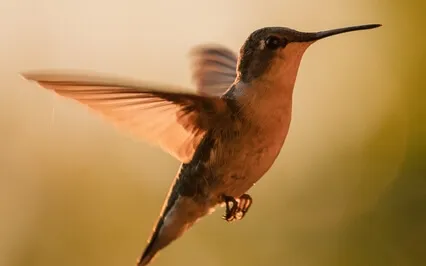
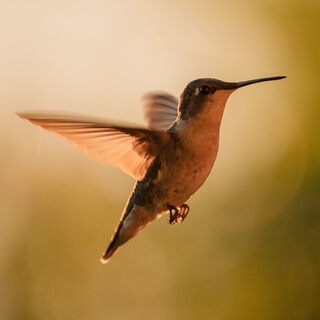
There was a hummingbird,
A dead hummingbird straight in front of me,
Kind of under this atrium roof.
And my mom loved hummingbirds.
And I knew,
I knew.
I mean,
Nobody thought this was happening.
Nobody thought this was death.
But when I saw that bird,
I knew.
I wanted to ask you a question just because I'm curious,
But if you don't want to answer,
I understand because it's a little personal,
But when your mother passed away,
Did you have an experience of knowing when she died?
Well,
I did have an experience with my mom that will,
I believe she had been ill a lot prior to me,
Prior to this happening.
She was hiding it.
There was no reason to suspect she was ill.
She got ill one night after dinner,
Had to go to the hospital that night,
Came home the next morning,
Stayed very,
Very ill.
I had to call the EMTs a couple of times following evening because twice,
Because she refused to go the first time,
She didn't want to go.
And she was quote unquote,
Cognizant.
They said,
Had to call him again because she,
She couldn't walk.
She couldn't breathe.
Anyway,
I knew what was going on,
Took her back to the hospital and I called my family from out of town and I tried calling her friends.
And so I'm at the hospital with her,
But I keep going outside.
I'm leaving her as she's in the hospital.
I keep going outside to make all the phone calls.
The first time I went outside on the second time she was in the hospital,
I walked out and there was two sliding glass doors.
So you kind of have an atrium and then another atrium.
So there's two sets of sliding glass doors to this hospital.
As I walked out,
There was a hummingbird,
A dead hummingbird straight in front of me,
Kind of under this atrium roof.
And my mom loved hummingbirds.
And I knew,
I knew,
I mean,
Nobody thought this was happening.
Nobody thought this was death.
They didn't know what it was.
They thought it might be a hard thing.
It might be a bowel thing.
You know,
Nobody knew.
But when I saw that bird,
I knew.
Yeah,
She did not live 12 hours after that.
It's not necessarily,
You know,
In this case it was her,
It was her spirit.
What she was attached to,
It was showing me I'm gone.
I just kind of took it as like,
I know she's dying.
Nobody's telling me she's dying.
Now you have to understand this.
That's how I was taking this.
And I think this is how the universe,
The things other than human were speaking.
Because I did not have a nurse,
A doctor,
Nor a family member at that moment in time,
Conferring with me and saying,
This looks bad.
Here's the thing.
We are not separate from nature.
We are not separate from the animals.
We are not separate from this blanket line of energy that is life.
We are not separate.
We take all of these other forms as being different than us,
But it's not.
They are just different expressions.
And when they talk,
We should listen.
These things actually,
When they,
When they happen in the moment of their happening,
They don't seem extraordinary.
It's,
It's,
It's upon reflection.
It's upon like,
Oh,
Whoa.
After you get the message,
But when it's happening,
It doesn't seem weird.
And that's kind of my question is like,
These things are actually,
I,
I think more normal,
They're more of this realm than we allow.
And I think that's my point.
For some weird reason,
Death has always been not frightening,
But fascinating.
And,
And as I grew up learning that there were traditions,
Particularly what started it for me was the Victorians.
When I started learning their history around death,
You know,
From having tear bottles,
There was a time for grieving and they literally wrote it out.
They gave me time to grieve and they gave you a costume to wear.
And that may sound very restrictive to us now.
And while it may have been restrictive back then,
I think there's something very beautiful of going,
Okay.
Now I'm wearing all black and nothing shiny or pretty,
And I've got an art,
Or if you're a man,
You know,
I've got the armband,
It,
It allows anybody else that you run into to know where you're at,
So they don't interfere.
There was such etiquette around how to approach and speak to and visit with somebody who had just lost someone.
There was etiquette around having the dead and they were still in your home.
Do you know that when we stopped doing funeral,
The wakes in the home,
We changed the name of the room into the living room.
That's literally why we call it a living room now,
Because it's no longer where we put the dead.
I fell in love with the fact that they really honored death.
I fell in love with realizing that they had ways to grieve.
They saw the dead,
They wrote about people seeing the dead.
They wrote about people grieving to death.
They wrote about having the,
It's why we have the night watch.
It's why we have the night shift.
There were bells that were strung on a gravestone that went down into the casket in case somebody was actually buried alive accidentally.
They woke up,
They could ring the bell.
That was the night watch.
When I started finding out that death was actually as real and alive as I'd always hoped,
You know,
Being a little kid in love with Halloween and ghosts,
I fell in love and also the fact that they had,
Even though it was still stodgy,
They allowed for grief.
They allowed for grieving.
They allowed for a space outside of being part of society and being part of your normal demands of the day.
They allowed for that.
And that is something that is so necessary.
And the grief is not just when someone dies.
Grief can be when,
I mean,
You know,
Obviously if you lose a child,
If you're pregnant or if you can't get pregnant,
But it's also when you lose a job or when you just get depressed,
There are times where we have to step outside of society.
And what I love about the Victorians is they gave a pageantry and a ritual around how to do that.
And I started that page on Facebook,
My memento mori,
Which means remember your death.
Literally what it means,
Remember death,
Remember you are going to die.
I started that after one of the school shootings and it was just two weeks after one of the school shootings and it was just trying to give the public place for grief because I feel like if we don't grieve,
We go crazy and we get weird and we start blaming people and blaming things that have nothing to do with anything.
We just take it out on each other or on ourselves.
I would love to have a,
I always wanted a death store that I was going to call memento mori,
You know,
Bringing death back to life because I think we need to bring death back to life.
We need to realize that death is not opposite of life.
It's a process of life and I think that we'd all be much better off if we could just have more ritual around it,
Have more peace around it,
Have more time away from time so that we could sit there in a sacred space and let all of the rest of us who we don't normally see and hear and feel,
Let it come in and let it be groovy.
This has been episode 35 of Bite-Sized Blessings.
We're just all about the magic and spirit that surrounds us.
If only we open our eyes to it and whether you choose to listen to our Bite-Sized offerings for that five to 10 minutes of freedom in your day or the longer interviews,
We're grateful you're here.
I'd love to thank my guest today,
Amy Adams,
For sharing her story as well as the creators of the music used.
Music L.
Files,
Alexander Nakarada,
Sasha End,
Brian Holtz Music,
Agniese Fomagia,
And Kevin MacLeod.
For complete attribution,
Please see the Bite-Sized Blessings website at bite-sized-blessings.
Com.
On the website,
You'll find links to other episodes,
Change makers,
Books,
And music I think will lift and inspire you.
Thank you for listening and here's my one request.
Be like Amy.
Sit back,
Be still,
And be open to the messages that are all around you.