Welcome to episode 69 of Bite-Sized Blessings,
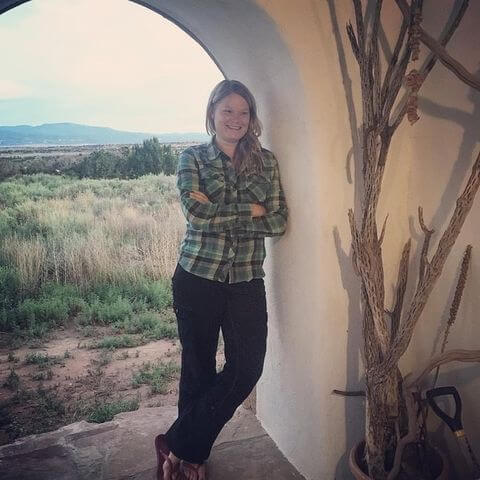
Where I get to interview Holly.
On her Facebook page,
She says she's involved in public health and community development,
As well as trying her best.
I like to think that all of us in this world are trying our best,
No matter what that looks like.
She and I had somewhat similar childhoods.
She grew up in a military family,
So moved many,
Many times as a child.
And like me,
Who grew up overseas,
You kind of learn how to be the new kid.
You learn how to welcome the stranger when you recognize that person that's moved somewhere and they don't know anyone.
You learn how to be comfortable in situations that are new,
That are unexpected.
When life throws you a curveball,
I kind of think that those of us who lived many places as kids,
We have a little more resilience,
Because we've had to.
At any rate,
Our conversation took a really welcoming and sweet turn,
As Holly told stories about what it's been like to work in her profession.
Whether it's having a conversation with someone that you truly don't agree with at the onset,
Sometimes you experience the miracle of understanding and compassion and welcoming where you least expect it.
And that's what this conversation is about.
So now,
Episode 69 of Bite Size Blessings.
I sit down with this one guy,
One on one.
OK,
It's women's studies.
And he's,
You know,
He's like,
You know,
Not going to engage.
And so I say,
OK,
Well,
Let's start out this way.
Let's let's define what a feminist is.
And he just sort of looks at me like a little unsure.
I say,
I'll start.
And I start.
We make a list.
I say,
I write man hating,
Hairy armpits,
You know,
And then he's like into it.
He's like,
Oh,
Yeah,
You know,
Lesbian,
You know,
Smelly,
You know,
Right.
I'm like,
Let's make this great list.
We make this list.
And I'm like,
OK,
Like,
Can we agree?
Like these are all the things like,
You know,
Feminists,
You've comfortable with this.
Yes.
OK,
Well,
Let's do.
Now we're going to do football player.
I'll start rapist,
Dumb jock.
You know,
Meathead.
And so what we did is we made an agreement right from the beginning.
Like,
I won't believe these things about you if you don't necessarily believe these things about me.
I usually professionally self identify as a scientist,
Which is true.
I have all of the pomp and circumstance to support myself as a scientist.
My Ph.
D.
Is in public health.
It's actually an international health and development.
And I have master's degrees in social work and public health.
The majority of my work has been in areas around using sciences to understand and support communities in good decision making and policy and programmatic structure to identify concerns.
I approach my work as a community partner.
I partner with communities at their request to work on issues that they identify and using science as a partner and a tool to help communities or systems reach their goals.
The only place I've ever thought of home is New Orleans.
So we lived in New Orleans essentially for 17 years.
I still feel that it's home.
I thought I always,
Always will.
New Orleans taught me how to be a person in the world,
Not a capitalist being in the world,
If that makes sense.
Taught me how to what community meant,
What community is.
I strongly believe that that community,
That city is maybe the best example of community in the United States.
So many of our lived systems in the US are very,
Very broken down and alone and isolated and remote and removed.
New Orleans has a way of remaining very connected,
Regardless of the dramatic and pervasive issues that the city faces.
It manages still to remain cohesive in its love for itself and the people within it.
So much of who I am is shaped by my experiences of living there and being a person there,
Particularly,
You know,
Before and through Hurricane Katrina and the federal flood and being a part of the rebuilding of the city.
I think that those experiences will always lock not just me,
But my entire family,
My husband,
My children to that city.
It makes me cry.
Well,
I've been to New Orleans once and was just enthralled by the architecture,
By the music,
By the food.
It just has this air of resiliency.
I'm not sure if it's in the land or the spirit of the people or combination,
But it is a beautiful city and there's a lot of joy there.
You know,
There it seems,
Of course,
There are a lot of challenges as with any city,
But I do think there's a lot of joy.
It feels the city feels like it celebrates itself.
If that makes any sense.
Actually,
So Southeast Louisiana,
So the city of New Orleans and the,
You know,
Southeast parishes,
The so-called Cajun country,
The bayou areas,
That is the happiest place in the United States.
So the people there per capita are happier there than anywhere else in the country,
Which is really interesting considering it is one of the most socially disadvantaged,
Economically disadvantaged,
Filled with inequities,
Severe problems,
Tremendously under-resourced,
Etc.
I mean,
You can go on and on,
But it is the happiest place to be.
And I have to agree living there.
Yeah,
It is a very,
Very joyous life.
There is something about,
There's this idea and this is,
Other people,
This isn't like my phrase,
That New Orleans is a place where if you,
The idea that life is precious and fleeting is in the air.
So if you are lucky enough to get yourself to the table,
You're going to enjoy whatever you eat and drink.
And if you live through that,
Then you're going to go dancing and you're going to hear music.
And the very next day,
If you're lucky enough to wake up and have an opportunity to get back to the table again,
You're going to do it again because that's what life is.
People do not miss an opportunity to connect.
So everything is a celebration there.
In other places,
You get up,
You get dressed,
You go out and you experience a cultural event.
In New Orleans,
You get up,
You get dressed,
You go out,
You are the cultural event.
So I grew up in a military family.
My father was in the Navy.
So I was born in Hawaii and when I was young,
We moved outside of the Boston area.
Then to South Carolina,
I spent the sort of the bulk of early,
Like kindergarten through fifth grade,
Coastal South Carolina,
And then Northern Virginia.
My parents were raised Lutheran.
However,
Our household was,
I would say,
Somewhere between agnostic and an atheist.
So as a kid,
You know,
My father would read Bible stories and things.
My grandmother,
Who was,
You know,
A practicing church-going person who lived,
I lived with,
My father's mother lived with us for most of my childhood into my adolescence.
I lived off and on with my maternal grandmother and moved in permanently with her during high school.
And I actually was confirmed in her Lutheran Church in the sixth grade,
Mostly as a social activity,
But also because this was something that was important to her.
But anyway,
As a kid,
You know,
We,
You know,
If you have your bookshelf and like the Bible and Greek myths and Norse mythology,
We're all kind of together and I don't think I ever differentiated those a ton.
I mean,
You know,
The the mythologies are all very similar.
You know,
Morality tales,
Right?
Like that's why you read them.
That's why you tell them.
And so in my mind,
You know,
Organized religion was one thing and belief systems were sort of something else.
No one ever expected me to believe anything.
I was expected to act in certain ways that I think people would regard as being,
You know,
Christian-motivated,
I guess.
But I organized religion was never really part of of something that my family participated in.
The most,
The core part of my belief system is that I believe that,
I believe in people,
You know,
People we can do really,
Really horrible things,
But we can also do really amazing,
Wonderful things.
And those things can be very small and those things can be very big.
I love experiencing moments of magic with,
You know,
With other people.
So many,
Many years ago,
This was like I was in college.
So I'm like 20.
I went to Virginia Tech.
My husband and I both went to Virginia Tech and I was a tutor for the women's studies program.
And this was right when the Christie Bruns-Caulo rape case involving a number of Virginia Tech football players.
It went all the way to the Supreme Court and actually overturned the Violence Against Women Act.
It was a big deal.
Football players of Virginia Tech went through a number of just sort of,
You know,
Like be better citizens of the world sort of training.
And several of them took and showed a women's studies.
The athletic program,
As they do with a lot of courses for their athletes,
Requested a tutor.
So I got sent to the football program to tutor football players in women's studies.
And in retrospect,
I know why they,
You know,
I have always looked kind of the way that I do and which is like very unassuming,
Right?
And even within sort of,
You know,
The women's studies clubs and things like that,
Like I'm a little bit of an outlier just in the way that I've always been a little mainstream.
I've never felt like my outside needed to be any different.
I don't know.
It's just not me.
Somehow I express myself.
So I'm cute as a button and I'm in with these football players and I sit down like,
You know,
Our first day and you can tell right off the bat,
Like these guys are doing this because they really think it's a joke.
So I sit down with this one guy one-on-one.
Okay,
It's women's studies and he's,
You know,
He's like,
You know,
Not going to engage.
And so I say,
Okay,
Well,
Let's start out this way.
Let's define what a feminist is.
And he just sort of looks at me like he's a little unsure.
I say,
I'll start.
And I start,
We make a list.
I say,
I write man-hating,
Hairy armpits,
You know,
And then he's like into it.
He's like,
Oh,
Yeah,
You know,
Lesbian,
You know,
Smelly,
You know,
Right?
I'm like,
Let's make this great list.
We make this list and I'm like,
Okay,
Like,
Can we agree?
Like these are all the things,
Like,
You know,
Feminist,
You're comfortable with this.
Yes.
Okay.
Well,
Let's do now we're going to do football player.
I'll start rapist,
Dumb jock,
You know,
Meathead.
And so what we did is we made an agreement right from the beginning.
Like I won't believe these things about you.
If you don't necessarily believe these things about me that maybe we exist a little differently and we can suspend these things.
And I think starting out that way,
We ended up forming a bit of a friendship and he talked about like,
You know,
The pills they make them take every morning before the gym and he has no idea what they are.
And so we were able to kind of break that down in a little gendered,
You know,
Like what we were able to have conversations and bring these things around.
So anyway,
One day he walks in and he's like,
Oh my gosh,
Holly.
So this this particular guy,
He had like three sisters.
He was the only boy and three sisters and he said I was driving here and there was a sign men at work.
And I realized my sister works in like municipal services where she goes to like work sites on,
You know,
Different construction areas.
And it says men at work as if only men do that work,
But my sister does it.
And I and I was like,
Yeah,
That's what a feminist lens is.
It's seeing something like that and then having that moment of like wait,
There's something gender going on.
And so I talked about those aha moments and stuff like that where this like little,
The little notice right of this sign put this light bulb in this guy's mind and made him sort of rethink how the world was ordered,
Like who was standing there.
Yeah,
And that's I think that's like the first experience I can think of that kind of aha,
But that was a really,
Really big one for me.
So yeah,
So people are magic,
Right?
Like we connect,
There is no universe.
The two of us would have ever connected in any way outside of this,
But we did and I gained empathy for who he was.
I really got to see like how football players at that environment are really used by the system and he got to see me and really start to think about women in the world a little differently.
Let me just tell you I haven't heard a story like it.
So there you go,
But I love that story because it really illustrates that kind of what we were talking about earlier in this conversation.
You know,
If you stay in your comfort zones,
If you don't move,
If you don't travel,
If you don't meet the other,
If you don't have conversation with someone that you have,
You might be scared of or you might feel threatened by or if you don't have interaction,
You're never going to learn about them and understand that they are so the same and it's that miracle of reaching out and getting to know someone and then both people affecting each other in hopefully positive ways.
Your story beautifully illustrates that point,
I think.
I could throw out one more.
It's totally different.
Perfect.
So I got married for a whole lot of reasons.
I got married at 24.
It's like a fetus basically.
Very,
Very young and I got pregnant at 27.
I had well,
I had Will at 27 and then I had Kate two and a half years later.
So I as a professional academic woman with graduate degrees and getting a PhD.
I was a parent and I was unlike the only one.
So I went to graduate school 24 and I was studying,
I was doing master's degrees in public health and social work at University of Michigan.
And I was studying women's health and 9-11 happened and it brought out of me this idea right after shortly after my great-grandfather passed and there was a lot of uncertainty about like what would happen after graduate school and I really began to think maybe we should have a baby.
Maybe this is a good time.
Like I'm healthy now.
And if you look,
If you look at like the public health science of women and babies,
If you were just making choices about having babies around health,
You should have babies when you're 20.
Society has these different ideas about what's appropriate,
But in terms of just this actual like health science earlier is better and I'm looking at these things and thinking like,
You know,
It's maybe this is,
You know,
I'm stronger,
I'm healthier.
I'm less likely to need bed rest.
Like this is the time.
So I go in and I talked to the director of the Women's Studies program at the time at the University.
And this is a woman whose own daughter is a little,
You know,
Older than me,
But you know,
10 years or so,
15 years older than me,
Going through significant infertility issues.
And I tell her like I'm thinking of having a baby.
She,
Oh my gosh,
She shushes me.
She closes the office door.
She looks at this whole thing and she's like,
I don't think anyone heard you.
Thank goodness.
Holly,
You cannot have a baby.
Like,
Oh,
You know,
She said,
You'll ruin your career.
You are way too smart.
No one will ever take you seriously.
You have,
You cannot have a baby.
I thought,
Oh my gosh,
Like I'm so glad to have heard that.
Like I can't do that.
What am I thinking,
You know?
And I walk out and I sort of let it sit.
And then I have this moment where I'm like,
Seriously?
That's what I have to like act like a man to be respected as a woman in this,
In like public health.
You know,
I guess I'm a little anti-establishment.
So that,
So like those were,
So when I got pregnant deliberately,
Well accidentally,
Deliberately with Will,
That was kind of the background,
Right?
So like you're never going to be able to take him seriously.
And it'll,
And I should say in retrospect,
She was 100% right.
Having a baby,
Being a professional woman,
Particularly in the Academy,
Is like not a good combination at all.
Anyway,
So I had Will.
And I ended up working in rural Honduras.
I worked there through my first pregnancy in a maternity clinic with wonderful colleagues of mine from the University of Michigan.
And then after Will was born in Michigan,
We went back with him.
The way the people in this tiny community of Morazan in the Yura District,
In the jungle mountains of rural Honduras,
When I walked on the street as a pregnant woman,
I was like every other pregnant woman.
I went and got the soba dora massages,
Which you know in the States,
Like a prenatal massage does everything but the belly.
There it's all about the belly and it's purposeful because a regular massage,
Someone is kind of assessing like is the baby growing,
Like how big is the baby relative to how long you've been pregnant.
There are these like indicators that come with it that are important in health.
And I was able to go through that and connect and be understood and be seen because the way that the majority of the world sees life are through these kind of like,
You know,
Life points.
You've partnered,
You're pregnant,
You have a baby.
And then I'm there with the baby and babies in those environments.
I'm not the only one doing a training with the baby,
Right?
Because women have babies.
If you work with women,
You have babies and it normalized all of that and beyond that.
So when I was there,
Everyone knew that I was working in the clinic.
So like in the morning,
You know,
6 a.
M.
5 30,
Whatever,
When you get up early because the clinic opens very,
Very early before it's hot,
It closes by noon.
So you wake up in the morning,
It's still kind of dark.
There's three women lined up outside the front door because they know that I have to work in the clinic and they're young or maybe unmarried or aren't pregnant or whatever.
So they're there for the baby.
So like I walk out,
I come out of the bedroom and they're right there waiting and take Will and it's part of the thing.
And that's just,
That's how the community has to run.
That's,
You know,
It's,
These are,
This is the way that people support each other.
And I remember like coming back to the US in the very first morning and waking up and thinking like,
How am I going to shower?
Where's my person who's going to hold Will?
Who at that point,
You know,
It was like held so much all the time that,
You know,
Like being in this,
Being in like the bouncy seat for 20 minutes while I got ready was like not going to work.
But I know the beauty of that struck me and the normalization of that,
That is what professional women look like,
Was so important to me.
And the way that it connected me to people and the way that they saw me and I saw them was fundamentally changed by the fact that I was a mother.
And that has driven my work considerably through my entire career.
That in the traditional Western academic sense,
Having a baby was the worst thing I could do for my career.
In the sense of being a social scientist and a person in the world and someone with the capacity to understand and be humble,
It was everything.
Thank you so much for listening to Episode 69 of Bite Sized Blessings,
Where I got to interview my dear friend Holly.
I hope you enjoyed the conversation and it was a good reminder for me that there are opportunities every day to welcome the stranger,
To be kind,
To reach out if someone needs something.
I want to take this moment to ask everyone if they'd consider going to Apple or Spotify,
Wherever you listen to your podcasts,
And consider writing a rating and a review.
Those ratings and reviews are so important and they help others find us.
I need to thank the creators of the music used for this episode.
Sasha End,
Alexander Nakarada,
Alex Productions,
Frank Schroeder,
And Brian Holt's music.
I'd also like to thank Holly for her time and her generosity of spirit in sharing her stories.
Thank you for listening.
And here's my one request.
Be like Holly.
Be open to the adventure.
Be open to creating partnerships,
Relationships,
Communities.
Because in the end,
I truly believe it's going to be community and those we share friendships with,
Those we create families with,
That's going to be what saves us.
And after all,
It's always good to have more friends.