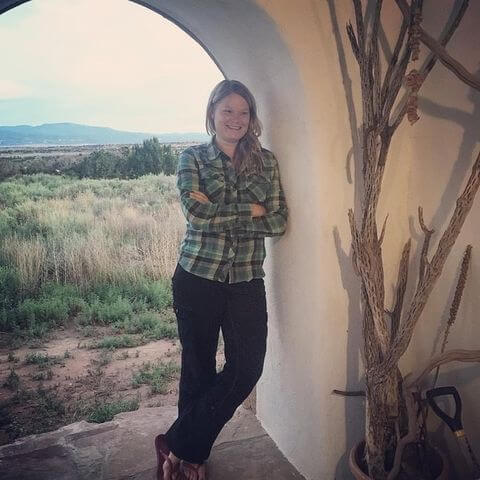
Welcome to Episode 71 of Bite-Sized Blessings.
In this episode,
I get to interview a good friend,
Chaplain Kurt Hodges,
Who describes himself as a father and husband,
Mountain sports athlete and educator,
And who encounters the sacred through adventure as well as stillness.
Kurt and I got to have a profound discussion about his work at a hospital in Kentucky.
In Kurt's job,
He attends to those who are possibly having their very worst day.
Whether it's the patient who's in the hospital or the family members and friends who have come to visit,
Kurt is there for all of them.
Kurt has found a way to bring the sacred into every interaction he has.
I hope you find the special stories that he shared with me as touching and important as I do.
Those of you who have been listening to the podcast for a while know that I'm intrigued and enchanted by that liminal space before death.
In this interview,
Kurt shares some of his experiences around that liminal space.
And now,
Episode 71 of Bite-Sized Blessings.
I just did what felt right and what felt right was to basically coach her through the experience of active dying.
Like,
Told her what a good job she was doing at different times while she was agonally breathing.
Like,
This is hard and you're doing great.
I hummed and sang to her,
Trying to just find comforting things that didn't necessarily have any specific religious overtones in any particular direction.
Because again,
I don't know her theology,
Her traditions.
And I described the setting sun and described the scene happening outside the window to her as she died.
And so,
The machines were withdrawn as the sun was just beginning to truly move into that colorful part of the sunset.
And just when it became dark was when her last breath happened and her last heartbeat.
Who am I in the world?
I am a deep lover of life.
I am a lover of the depth and breadth of life that there is so much to life to offer.
I told you I was getting ordained soon and I am and I will be ordained through the order of universal interfaith as an inter-spiritual minister.
As I was looking for resources,
Like if I was to put together readings and music and things for like,
What is my ordination look like?
Who am I as a minister in the world?
And one of the things I kept coming back to was this,
There's a clip from the movie American Beauty.
You remember that one?
There's this clip from that movie where the two young teenage lovers are sitting together in one of their bedrooms and the one is showing the other,
Like,
Do you want to see some of my videos?
And it shows her this video that he took of the dancing bag is the,
If you go look it up,
It's titled the dancing bag video.
And he just talks about this bag dancing around in the wind right before the storm,
Before a snowstorm hit.
And I find a way to include at least a quote or a clip or something from that scene in the way that I express who I am as a person and as a spiritual leader in the world for two reasons.
One,
Because at different times in my life,
I would see that bag and immediately go into a dark and critical place of like,
Oh,
This trash in the world.
Why does this trash even exist in the first place?
And we shouldn't,
We shouldn't even have plastic disposable anythings,
Let alone that it's out just in the world,
Get ready to get wrapped around an animal's neck or blah.
And then instead seeing it as beauty,
Seeing it as divine beauty.
And the quote in that,
In that scene,
It still just chokes me up as he says,
Sometimes there's so just so much beauty in the world.
I don't even think I could take it.
But it's just just witnessing instead of witnessing trash witnessing like overwhelming beauty.
That's who I at least try to be in the world.
It's tough though,
Right?
I mean,
When you're confronted every day with,
Especially in our news feeds,
What's going wrong.
And so for me,
I found,
You know,
Going on a walk and noticing something I hadn't noticed before.
And then I found that,
You know,
I was just,
I was just,
I was just,
I was just trying to get out of the way.
And I was just trying to get out of the way.
And then I found that,
You know,
I was just trying to get out of the way.
And then I found that,
You know,
I was just trying to get out of the way.
And noticing something I hadn't noticed before and just realizing how precious it is,
And that it's its own little miracle.
And that gives my heart a little bit of solace.
But still,
Our news feeds are filled with what's bad in the world.
And I think humans maybe are attracted to that,
For some reason,
That doom and celebrate our minds and our hearts.
So that we were drawn to beauty instead,
Because I know the exact scene you're talking about.
And that exact scene gave me another way to view the world and what's happening in it.
You know,
We can all stand in front of the Mona Lisa and say,
That is beauty.
But if you go to a river,
And maybe you see a floating cup or a piece of garbage,
And you think,
How do we see that as beauty?
It's tough,
It's tough to go there.
What I see is beauty is,
Oh,
Go down there and pick the garbage up out of that water.
To me,
Then I'm engaging in making something more beautiful.
It's difficult.
It's hard.
So something you just said reminded me too.
So in my story,
In my life,
I spent 12 years in the Pacific Northwest,
Right?
And one of the things that I miss so terribly about that place is that pristine beauty is so accessible,
Right?
Like,
Whether it's a rainforest or a desert or an alpine glacier,
Pristineity is all around you.
And I moved from there,
From Seattle,
Back to the Midwest,
Where I,
You know,
I'm in Louisville,
Kentucky now,
And Louisville is a river city.
We're right on the Ohio River.
And it's hard.
Like in my head,
I see the river and I see spoiled beauty.
I see like,
Like,
Is it even recoverable?
Like,
On any timeline,
I wonder sometimes.
It's,
It's so devastated.
We,
It's not a place to go swim after work or go fishing after work or on the weekend.
It's not a healthy place to do any of those things.
And,
And so I,
In my head,
I feel exactly feel in my head,
I think exactly the kinds of things you're thinking,
Right?
Like,
I need to go clean this,
I'm going to be the change.
And that's important.
But it's also important to locate,
Well,
Like,
Where's the beauty right now?
How can I feel this river right now?
Did you ever see the movie Spirited Away?
It's animation.
It's been a while.
It's really beautiful.
One of the things that really resonated for me,
Since we're on a movie theme,
Shall we say,
Remember when in the movie,
A great spirit comes to visit the bathhouse,
And they don't know who it is.
They don't know,
They just know it's potent and it's powerful.
And the spirit comes in,
Gets into the tub,
And it's her job to clean it.
And if you remember,
She slips and falls in and in the process,
Finds this piece of garbage,
This bicycle,
This trash,
And she starts pulling it out.
And she alerts everybody that she needs help.
And so all these people,
The workers in the bathhouse come and they start pulling and pulling and pulling.
And it's just it unleashes this torrent of garbage.
It just explodes out of the bathtub.
And in that moment,
As they're,
They're getting all this garbage out,
They realize that they have the spirit of this powerful,
Powerful river that has come to the bathhouse,
And it needs to be cleaned and all the garbage needs to be taken out.
And in that moment of releasing all the garbage,
This spirit,
The soul of the river is able to become itself and be recognized.
And so for me,
You know,
It reminds it made me think,
Oh,
Even rivers have souls,
Even rivers have spirits,
They have personalities,
They have characters,
They are these individual beings,
Sentient beings,
But they can be reclaimed.
If we go and we clean the garbage out,
If we take care of them,
If we minister to them,
They can become themselves again,
And be recognizable.
And so your story of finding the beauty and seeing the oil slick,
I understand that.
And it's so true to recenter ourselves in that beauty.
But it's also exciting to think that we have the power to foster and get rid of the garbage and these wild and potent things like rivers,
We can remind them who they are,
So that they're recognizable again.
It was a long time before I was before I even saw myself enough to name that I grew up in an interfaith household.
And I think the reason it took me a long time to really name that is because one of my parents was very devout to their faith.
My mom was very devout to her faith was Methodist.
The Methodist house is a big house.
There are a lot of ways for that faith to to be lived.
And she and her church lived the more evangelical variety.
My dad was always he,
He would self identify as agnostic.
I don't want to tell anybody their own truth.
I'll just say that the way that I've interpreted that word from him and from most other people I've ever encountered,
Who that's the word that they use for themselves,
It most often means I don't want to talk about it.
Cosmology and the universe and God and all the all the things the big picture stuff.
It's not just a way of saying like,
I'm comfortable with the mystery.
There are other ways of saying that but saying agnostic,
I think means like,
I'm cool.
We're out.
I had a lot of expectation to participate in a faith community that my nuclear family wasn't all doing together.
Most of the time that I was growing up,
I did,
As you know,
Nature in the natural world and wilderness and things are a huge part of my meaning making and spirituality and have been for basically my whole life.
And so my earliest influences on that were that my mom's family lived in the hills of the foothills of the Smoky Mountains in East Tennessee,
On a farm,
A small subsistence farm and I had a visceral relationship with that land from a very well throughout my growing up years,
Whether it was helping on the farm and getting my fingers in the dirt in that way,
Or whether it was going out and playing in the creek or exploring the forests and encountering wildlife and encountering mystery.
It was a place of belonging.
I was raised in a church community in a religious community,
But it for various reasons was not at any point a real strong place of belonging for me in my identity and in my heart,
But the forest was and always has been.
I was recalling my grandmother's funeral.
So I touched on having lived in Seattle and moving back to the Midwest and Southeast where I grew up.
And you know,
But your listeners might not,
That that was a very difficult move for me and that it was under financial hardship.
It was the rapid changes in the economy of Seattle and being displaced by not being able to afford to continue to living there was the reason we left.
So I was going through that grief.
And I was really still quite in the throes of that raw grief and loss of agency and feeling of displacement and all of this just like,
And just,
Just pissed off,
Just really mad all the time.
And it was in that context that my grandmother died.
I went to her funeral at the church where I was raised,
Which I shared was not a strong place of belonging for me growing up,
But it was for her.
There was a minister there who I was talking with,
We were just doing like,
You know,
Visitation style,
Chatting with each other in formal ways before the service.
And there's a minister there who's known me most of my life has always been a generous person to me.
And he was checking in with me about some things.
And he was talking about his own faith journey and experiences of grief and anger.
And I won't get into the details of his story because I don't think it's mine to tell,
Except to say the themes were that he was sharing about how he was so angry at God and that he reached this moment of saying to God,
Like,
If you're even there,
Show me a sign.
And that he did feel like there were things that came to him in that moment that,
That comforted him.
And the reason I'm sharing that story is I remember my internal monologue at the time,
I'm doing my like,
You know,
Theological acrobatics,
Right.
And I'm like,
Hey,
Well,
You know,
I can,
I can listen to this story,
But I can't connect with it because,
Well,
I don't believe in God and the way that he believes in God.
And,
You know,
I'm not,
That's,
That's not my way of experiencing the world.
I don't even,
This doesn't even compute for me.
So it's fine or whatever.
And suddenly I had this realization.
I don't use the word God in to describe my spirituality,
But I do have a universal sense of consciousness.
I experienced the world as we've shared about in this conversation as an animistic universe,
As being in relationship in,
In spiritual kinship with this person in front of me,
That rock beside me,
That river flowing by the rock,
The air,
The sky are all among my relations and relationships.
And I had this,
Ah,
Dammit realization in that moment.
And this conversation with this minister where I was like,
Wait a minute,
Kurt,
You can't be angry at God because you don't believe in God.
Well,
Wait,
For you,
The holy is everything.
And you're angry at everything right now.
All right.
Yeah,
I'm mad at God.
Just brought that one back full circle,
Didn't I?
But it helped.
It helped to realize that because it helped me to name a way of saying,
If I'm mad at everything and the sacred is everything,
Then where is the sacred?
Where are the things that bring me comfort?
If I truly am mad at everything.
It wasn't so much of an epiphany as it was a fork in the road or a milestone,
A cairn that sort of showed me a waypoint of like,
Okay,
From here on,
Let's acknowledge the anger as a spiritual experience.
Let's acknowledge the grief and the anger as having that gravity and needing that kind of balm.
There's this great meme that I just was looking at again recently that says one of the things in it is,
You know,
Who many people think I am.
And it's the grim reaper.
Like,
Absolutely.
Just today,
Just earlier today,
It wasn't even someone who was a patient of mine.
It was someone in a coworker who saw my badge and doesn't know me,
Saw my badge and was like,
Oh,
You're not the one people want to see.
And then she caught herself and was like,
Oh,
I'm sure you bring lots of comfort to people,
But they don't want to want to see you.
Right.
And I was like,
It's cool.
I get that all the time.
I get the Angel of Death reference.
I get that.
Or this same meme,
One of my favorite little zingers,
And it is who medical shows on TV say I am.
And it's just a picture of a question mark because I have yet to see a chaplain in any hospital show or med show or anything to say like,
I'm here to companion people to bring support to them,
To be with them in the terribleness.
I was working in the emergency department on a big holiday occasion where a lot of people were out and a lot of people were out drinking.
And I knew for that reason that it was likely that we would see violence in the emergency department.
And we did.
And a young adult was shot.
And it was a significant enough set of injuries that who knew what was going to happen or if he was going to live through it.
Right.
And I remember his father being one of the people that I was caring for.
And it's one of a handful of times that I was,
You know,
Especially being careful that I was not putting this person in my care between me and the door in case I needed to get out quick.
He was very upset,
Very understandably,
But it seemed possible that he might be directing that anger in my way and maybe in a physical way if I wasn't careful.
So I stuck with him though,
And found a way to do so without getting punched.
And we developed a beautiful relationship.
That young person did end up doing well and did end up healing.
But it was,
I remember it was the patient wasn't awake and oriented for maybe two weeks from the time of getting shot until the time when he was really like interacting with us in his room.
So I remember the first time that the patient was awake and oriented that I arrived and mom and dad were in the room.
And so the patient had no idea who I was.
And as soon as I walk in,
Both of his parents are like,
Oh,
Kurt!
And his dad comes up and gives me a big hug and how you doing,
Buddy?
And I'm watching the patient go like,
Who's this guy?
Early,
Early in my chaplain education,
I was supporting a patient and family.
My patient had was,
Again,
A young person,
Young adult,
Young man who had been in a terrible car crash.
And at no point did I ever get to know my patient in that case in cognitive and rational way in this life,
Right?
We never talked because by the time I the reason I met him was because he was very,
Very sick.
There were I don't remember maybe two weeks,
Let's say,
Of time from the time of his accident until the time that he actually died.
And I was very closely supporting his spouse and family through that time.
And there was a day I mentioned this was young early in my time as a chaplain,
I was still in education.
I was an intern actually at the time.
And so I had education days where I was in classes,
I had this and that going on.
I wasn't just working at bedside.
I finished a day of classroom stuff and was like,
You know what,
I'm going to go round on some of the patients that I'm following long term today.
Didn't have a plan to do that.
But I just on a whim was like,
I don't have anywhere I need to be this afternoon.
I'm going to go ahead and do some rounding.
I went to his room.
And that was the day he died.
And if you had asked me the day before that,
Do you?
What are your beliefs around a dying person waiting for someone before they got before they let go and before they die?
I might have given you a really long answer probably would have given you a long answer,
Let's be honest.
And talk about all the different thoughts and influences on where I might find on that.
And in that moment,
All of that rationalizing fell away.
Because in that moment,
I had developed a close care relationship,
Professional relationship with his spouse.
And it was just his spouse and me with him at the moment that he took his last breath.
And the last exhale that his body ever took.
He,
His head turned and his eyes rolled up and he looked right into my eyes.
In his last breath.
Did I cognitively believe that he waited for me to be there with his spouse?
In the moment that he let go?
I don't know.
But it's what I experienced.
It's what I experienced happened.
I remember the very first death I attended as a chaplain.
Very,
Very clearly remember that.
And by that,
What I mean is the technical term,
One of the technical terms for it would be terminal extubation.
Like this is someone whose body is not going to keep going when they're not on a ventilator.
And so we are going to compassionately remove the tube and remove this light,
The those machines,
And allow that person and make them as comfortable as we can while they die.
And sometimes we have a pretty good idea.
Sometimes medical colleagues have a pretty good idea that it's going to happen fast or that it's going to maybe take days or longer.
In this case,
It was expected to be fast.
It was a terribly tragic situation for a variety of reasons that I'm not going to go into at the moment.
It was a profound experience,
Both what was happening in the room and for me,
How it hooked parts of my story and ways that I was like,
Oh,
Wow,
This is touching on some sensitive spots.
I went out at the end of that shift,
It was profoundly affected by it.
Again,
First time I'd ever done it,
I went out to my car.
And when I just happened to turn it on,
What came on the music that I had left playing that morning before shift,
I guess,
Was a song by Death Cab for Cutie.
What Sarah said,
That's all about the experience of being in an ICU with someone whose life is in the scales.
And I'm getting choked up just talking about this.
At the climax of the song,
Ben Gibbard sings,
Remembering what Sarah said,
Love is watching someone die.
And so then they go on in the song and becomes like this climactic peak in the song of repeating,
So who's going to watch you die?
So who's going to watch you die?
And it really hit me in like what motivates me to do this beautiful,
But sometimes terrible work that I do in healthcare,
Spiritual care.
And it's that love is watching someone die.
And if I'm an instrument of love,
As I named part of my identity in that sense,
Like,
Well,
Yeah,
I'm here to watch you die,
Because I love you,
Even if I don't know you,
Because I love you.
Because you're a part of my human family.
Because,
Because we're here together.
And because we're connected,
I will watch you die.
I had I was on the pager for the hospital.
So whatever was happening that was critical,
If they call it called the chaplain,
I was the one that was going to pick up.
It was in one of those moments,
I got a call about an older woman who again,
This was a terminal extubation.
She was totally alone.
And all I got from the situation.
I had no history with her.
She was not responsive.
When I met her that day,
Just got told like,
Hey,
And I could see that the staff was distressed,
Too,
Because they're like,
We can't do anything more to keep her alive.
The best thing we can do is compassionately extubate,
We expect that she'll die pretty quickly.
She has one living relative and that person is in a different state.
They're not able to be here.
So she's going to die alone.
Will you come?
And I was like,
Well,
Of course,
I'll be right there.
And it was my experience of her death was so beautiful.
I got called up to her bedside shortly before sunset,
On a sunny day,
In a room that had windows facing to the west,
That was up kind of high in the building.
And I got there and the TV was on.
And the room just felt very sterile and clinical.
And I knew nothing about this woman and her spirituality.
So I said,
Well,
I'm going to make this as comfortable as I can.
And so when I was there,
The machines were already taken away.
And it was just her there.
And I went and I turned off the TV.
And I opened the blinds.
And I got to where we could just see out the window.
And I just did what felt right.
And what felt right was to basically coach her through the experience of active dying,
Like pulled her what a good job she was doing at different times while she was agonally breathing like this is hard and you're doing great.
I hummed and sang to her,
Trying to just find comforting things that didn't necessarily have any specific religious overtones in any particular direction.
Because again,
I don't know her theology,
Her traditions.
And I described the setting sun and described the scene happening outside the window to her as she died.
And so the machines were withdrawn,
As the sun was just beginning to truly move into that colorful part of the sunset.
And just when it became dark was when her last breath happened,
And her last heartbeat.
And I just stuck with her and held her hand throughout that process,
Singing,
Describing the sunset.
And just being a connection point between life and death,
Standing literally standing in the gap in the bridge,
And saying,
Here's the beauty of life,
As you go through the beauty of death.
I hope it's a beautiful death.
My experience of her death was beautiful.
I hope hers was too.
Thank you for listening to Episode 71 of By the Way.
I wish you could have seen me make this episode this week.
In between my throat being sore from all the smoke that's in the air from the wildfires.
While I was trying to record this,
There are two giant flies in the room.
After a while spent jumping around and trying to catch them,
I finally gave up.
So I'm considering those flies as guest speakers.
So if you hear them,
That's what's going on.
I need to thank my guest,
My very good friend,
Chaplain Kurt Hodges,
For sharing all of his precious stories with me.
I also need to thank the creators of the music used,
Sasha End and Music L.
Files.
For complete attribution,
Please see the Bite Sized Blessings website at bite-sized-blessings.
Com.
On the website,
You'll find links to change makers,
Artists,
Music,
Also a link to the clip from that film,
American Beauty,
As well as other items discussed in this podcast.
You can find all of that on the Treasures page of the website.
All that groovy stuff is sure to lighten and brighten your day.
Thank you for listening.
And here's my one request.
Be like Kurt.
But you don't have to be a chaplain.
Every single day,
You're surrounded by people who are in need of something,
Whether it's a compliment,
A listening ear,
A cup of coffee,
Or help carrying their groceries to their car.
Be of service.
Find the sacred and the mundane,
In the adventure,
In the stillness.
So be like Kurt.
Be groovy.