Welcome to episode 99 of Bite-sized Blessings.
This episode,
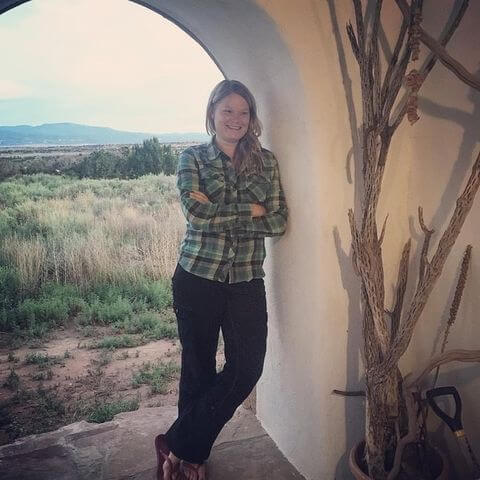
I interview the author Kurt Caswell.
And I discovered Kurt at a local bookstore here in Santa Fe,
New Mexico.
Specifically,
It's his book,
In the Son's House,
My year teaching on the Navajo reservation.
And on Amazon,
The summary,
Here's a little bit of a summary of the book.
In the year he spent teaching at Borrego Pass,
A remote Navajo community in northwest New Mexico,
Kurt Caswell found himself shunned as persona non grata.
His cultural missteps,
Status as an interloper,
And white skin earned him no respect in the classroom or the community.
Those on the reservation assumed he would come and go like so many teachers had before.
But as Caswell attempts to bridge the gap between himself and those who surround him,
He finds his calling as a teacher and develops a love for the rich landscape of New Mexico and manages a hard-won truce between his failings and successes.
And this book does take place before the advent of cell phones.
You know,
The ease with which you can just go down to the local store and buy a cell phone.
This book happens way before all of that.
So when we talk about Kurt being really isolated,
And in fact the community being really isolated,
It's so isolated.
I don't think any of us can really comprehend what that looked like at this point.
In this episode,
Kurt discusses a couple of different miracles.
One of them is so charming and so full of joy that it kind of made my week,
Maybe even my month.
The second is the kind of experience that I think most of us wish we could have.
Those kind of experiences where you go out to the wilderness and you expect a revelation,
Some sort of shift in your reality,
In your perception of the world.
And so Kurt shared that miracle with me as well.
So now,
Episode 99 of Byte-Sized Blessings.
But later she asked me,
You know,
Can I have like dessert?
Can I have like a something sweet I want?
You know,
Apple pie is what she was wanting.
And I said,
Well,
No,
You can't order that yet because after a little while,
The waitress will bring the food,
You'll eat,
Then she'll come back,
She'll ask you if you want anything else,
And then you can say you want dessert and you can order that.
So anyway,
As the evening proceeded,
Everything I told Judy would happen,
Happened just the way I had explained it to her.
And at some point,
She looked over at this other teacher,
Whose name is Lauren Sidnick,
And said and whispered,
You know,
Mrs.
Sidnick,
How does Mr.
Caswell know what's going to happen?
You know,
There's this Navajo story of the sun as father who sends these hero twins down to the earth to vanquish the monsters on the planet,
You know,
To make room for the people.
And so there's this idea of place itself being the house of the sun,
You know,
And so in some respects,
The like the Navajo reservation,
Or let's say the ancestral land that the Navajo claim as this is this is where we're from,
That that place itself is the house of the sun or where the where the sun is made a home.
So that's where the title came from.
Okay,
Fabulous.
Thank you.
Thank you for explaining that.
Of course,
I've read a little bit about you.
But I also try to not read too much so that I can have authentic surprise during the podcast interview.
And I'm,
I really am intrigued because I did read a little bit and I was like,
I want to hear more.
If you were to go to a conference or go to a party or a gathering or introduce yourself to someone that you've never met before.
How do you self describe?
Like,
How do you define yourself?
Or as you know,
It could be in your work life or as a human in general?
Who are you?
Well,
In a,
You know,
Real party situation,
I'd probably be very brief.
But if I was going to need to give a bit more detail,
You know,
So I described myself first as a,
As a writer,
And then secondly,
As a teacher,
Those are professional roles,
But I grew up in rural parts of Oregon,
You know,
My dad was a Forest Service employee.
And so we lived in these,
Especially when he was younger,
And earlier in his career,
We lived in remote parts of Oregon on national or adjacent to national forest land,
Really,
Where there was no town or store,
It was just almost like a small village,
You know,
A collection of Forest Service families living around a ranger station,
Or work center,
Who all walked into the to the station in the morning,
And all walked home to their houses at the end of the day,
All government houses.
So in many ways,
It felt a bit like,
You know,
Being on a military base,
Only much smaller and wilder.
So I have this background in public lands,
In wild places.
And I discovered at some point in my life that for some reason,
I always wanted to go into bookstores.
And I was reading all the time and collecting books.
And eventually,
That came to the realization,
I came to the realization that I was a writer,
And I just started doing that work.
First of all,
I lived in Portland for 20 years.
So I'm so curious,
Where were you in Oregon?
So we lived in a number of places,
Because,
You know,
With the Forest Service,
You get a new job,
You go to a new place.
So we were up in the northeast corner of Oregon near Pendleton for a while,
Down near Roseburg,
Southwestern corner.
For quite a while,
We lived on the Mackenzie River,
Up east of Eugene on Highway 126.
That just sounds like such an,
At least for me,
Kind of this idyllic childhood out in the trees,
In the woods.
It just sounds so beautiful.
All of those places,
Roseburg has that gorgeous river,
Pendleton up there,
It can be wild and woolly back there.
And,
You know,
It just seems like what an unusual childhood,
How wonderful.
I mean,
Would you describe your childhood,
You know,
Growing up in the wilds,
I guess,
As idyllic?
Yeah,
You know,
Only later did I start to see that it was,
At least for me,
Maybe idyllic and also pretty,
Pretty,
It's pretty rare experience these days when you talk to people about how and where they grew up.
Looking back on it,
I feel like it was this very nice introduction or say graded introduction to what we call the busyness of,
You know,
Urban life or suburban life.
Because when I was really young,
You know,
We didn't have things like radio,
We didn't have much television reception.
We had a party line as a telephone,
You know,
So we weren't really connected to the outside world.
It was an hour drive through the mountains into a grocery store,
Which we did once a month,
You know,
As a family,
Bought all the food for the month and came out to the house.
And I did not know that milk came in a jug,
You know,
That you would purchase fresh.
We couldn't really keep fresh milk.
So like I grew up with powdered milk as a child,
You know,
Something you had to mix up and then put in the refrigerator.
And I don't mean that's because it was long ago so much as because it was rural.
You know,
This this place that we lived.
And I do remember a day when we moved up onto the Mackenzie River,
I would have been in the fourth grade and I discovered what a radio was,
You know,
Because we didn't get radio reception and therefore I'd never heard one,
You know.
In general,
I did not grow up in a religious household.
I lived near people who were churchgoers of various denominations.
So I knew a good friend of mine who was,
You know,
Whose father was a colleague of my dad's down at the at the office.
It was a Catholic family.
When I lived on the Mackenzie,
Many of my friends in that relatively small community were some denomination of Christian.
And I at certain times went to what we would call the like release Bible study on Friday afternoons where it mostly because my friends were going to this thing and I attended to not because I was necessarily a Christian or a believer.
And in fact,
Some of those sessions were alarming to me,
You know,
Some of the subjects that came up.
But I'd say my my religious training was not really formalized in a community,
But much more being free to roam the woods and creeks of Western Oregon.
Yes,
I was going to ask if I try not to project things onto other people.
I fail all the time.
But the wildness of the woods and just the wildness of where you grew up and all of these different places and spaces.
Has it do you still do you have a love for it when you were a kid?
And has that continued on as you've gotten older?
Yes,
Certainly.
I had a love for it.
You know,
It was really just my life at the time when I was a child,
I didn't really was not able to distinguish it necessarily from another person's life was not aware or thinking about while this is very different from somebody who might live in New York City or something.
I was just doing what was in front of me.
But later I came to understand that part of the way that I would probably navigate the world was as somebody attracted to wild places where I could interact with,
You know,
Landscapes and animals and experiences,
Let's say,
With much more solitude than,
You know,
Somebody who's living in an urban center.
I never say early on did not associate those feelings with some kind of spirituality,
But I certainly felt like I was being brought into this great mystery.
So I got an English degree,
My plan was to leave the country as quickly as I could,
Because I thought I needed some experiences outside of my own,
You know,
Kind of world to train myself and develop as a writer.
And the first job I was able to find overseas was a teaching job in northern Japan in Hokkaido.
And Hokkaido is a little bit like the western part of the United States is to the rest of the country.
So,
You know,
Most of the population center is in the southern part of Japan,
Honshu,
The big island,
And Hokkaido is a little bit like the Wild West,
You know,
With with a much more recent history.
And it also has a very similar story with the way the Japanese came north and displaced an indigenous culture called the Ainu took the island over and assimilated people and,
You know,
Very similar story.
So when I went to Japan,
And I started teaching,
Heard about a master's degree program in Vermont,
And in particular,
It's called the Bread Loaf School of English at Middlebury College.
When I was at Bread Loaf,
I felt like this is the education that I didn't get as an undergrad.
Because I grew up traveling,
Moving quite a bit,
You know,
As a as a child.
And before I was one year old,
I had lived in four different places.
And I had been living in Japan,
And I'd been traveling in China and Korea and,
You know,
Europe and other places.
And so when I went to northwestern New Mexico,
I thought,
Well,
This is just another journey I'm making.
I'm here for a year or so whatever it's going to be,
I don't know.
But to me,
It was a another adventure when I first started out.
And then,
You know,
I land in this community of people and,
And was completely unprepared for,
You know,
The kind of,
Let's say,
Environment I would be working in.
Because I had been in Japan,
Where I was a celebrity.
Right.
So I was one of the few Westerners or Americans living in this small town in Hokkaido,
Which meant the moment I stepped into town,
Everybody in town knew there was a new American in town.
Let's take this person out and treat them well.
Let's feed them and buy them drinks and make sure they're happy.
And,
You know,
You meet the mayor and you meet all the wealthy people in town want to hang out with you and that sort of thing.
So I went from being a celebrity for almost three years to going to northwestern New Mexico,
Where suddenly,
I was this person from the outside,
Who was not trustworthy.
In many ways,
I initially built up an antagonism towards people who I felt didn't trust me.
And this,
Of course,
Doesn't work out usually when somebody distrusts you,
And then you distrust them back.
You know,
It was a,
It was a difficult time there.
But by the time we get into like the spring,
I started to realize that now I've gained a little credibility with some people.
I'm still here.
And things started to go better.
One of the things that probably is most memorable besides,
You know,
The many people that I worked with,
The students I worked with and the people at the school,
Just that,
That very wild,
Remote,
Detached,
In many respects,
Place or landscape.
It's almost like,
I mean,
I know that people living around where I lived in Borrego Pass and Gallup and such,
Are certainly more connected to the outside world or the rest of the world,
You know,
In 2022 than they were when I was living there.
But it just seemed like a place that I was completely unfamiliar with.
It seemed very foreign,
Like a foreign country,
Not just the high desert landscape,
I was up at like close to 8,
000 feet,
But also the way people were relying on themselves and each other and this kind of small community as opposed to it being a place that people have reached out to the rest of the world.
Some of your stories about driving,
It's like,
Oh my God.
Wow.
I don't think I fully appreciated what happens when there's a thunderstorm and Arroyo gets full very quickly until I witnessed it myself.
And that it is actually dangerous.
So I really,
Really appreciated your,
Your descriptions about the landscape.
It's so beautiful.
And I think I'm lucky because I live here.
And so,
You know,
In my mind,
I can visualize,
But for people who don't live here or will never live here,
It's also lovely.
It's you really give a great sense.
And I also love that you went on so many hikes,
Like you went walking all the time.
And I thought that's what I would do if I lived in that area.
Probably so much to explore and,
You know,
Adventures and new things and probably so much history.
I love the landscape here.
It is,
It is otherworldly at times.
You know,
Those walks or hikes that you're,
You're mentioning,
It was a daily practice really for me to say,
Finish the work day or on a weekend,
If I was going to stay put there on the pass or on the school campus,
Because I lived on the school campus.
There wasn't much else for me to do.
There was no,
There was no radio,
There was no television.
There was no,
I had no phone service up there at the place.
So if I wanted to be in connection with people,
I did,
I did get my first cell phone when I lived there and it was a bag phone,
You know,
With a big handset and a cord and it probably weighed about four or five pounds,
You know,
And you,
I would set it up on the dash of my truck and plug it into the cigarette lighter and off I'd go.
And if I was driving Gallup or towards Albuquerque or something,
Once I got down on I-40,
I could get some reception and I could call family or friends or whatever.
But otherwise I was very isolated.
I was just thinking to myself,
How very interesting that your,
It,
It just,
Your experience out there reminds me of your childhood experience of not having a radio or a phone.
And I thought,
Oh my goodness,
That kind of prepared you for this other experience.
And that's so fascinating to me.
We're so connected these days.
I mean,
Cell phones,
You know,
Computers,
All that stuff.
And just,
It's fascinating that you grew up in this way,
But then it happens again later in your life when you teach at the school.
And it just,
I think that's really,
Really interesting because,
You know,
Certainly I might know a few people who would be able to do that without feeling undue suffering.
But I think that a lot of people would feel so isolated and lonely and that kind of solitude sometimes forces a dark night of the soul,
A reckoning.
And I don't know if you experienced that,
But sometimes people don't go into those spaces and those places because those things might happen.
It's too scary to live in that solitude in that place.
So I commend you.
I would have done it,
But then I wouldn't have thought about what I was doing before.
And then in the middle,
I would have been like,
What was I thinking?
So I could tell you.
So here's a story that's much more maybe grounded in place and time.
And it's much more about the place I was living,
You know,
In New Mexico.
This was in the spring semester.
I was charged with leading a group of students in practicing for a spelling bee.
And so the students would go and compete,
You know,
At various schools in these spelling bees.
And there was an Eastern Agency,
Navajo Agency spelling bee.
So it was a collection of many schools.
And we went out to this place,
Chinle,
Arizona,
To go to the big spelling bee,
Which meant,
You know,
You put all the students on the bus.
There were several other teachers and myself and the bus driver.
And we had some money from the school and we'd stay in a hotel and eat in restaurants and stuff.
And,
You know,
So I went to,
Because these kids were,
You know,
They were sixth,
Seventh and eighth graders.
And because they were living in such a rural community and they didn't necessarily have great means,
You know,
Many of them didn't have running water or electricity at that time.
And so they'd grown up in even much more rural situation than I did.
And so we went into town and we went into this restaurant and there was a third grader with us because her older sister was on the trip and she needed to be with her older sister.
So she comes along,
Her name was Judy.
And I was sitting next to Judy.
And she says,
You know,
Like,
Well,
How do I do this?
What do I do?
And I pointed out the menu to her and told her how to look at the options on the menu and that she needed to figure out what she wanted to have for dinner because we're all at this restaurant.
And then I said,
The waitress will come over and she'll ask you what you want and then you tell her.
And Judy was like,
Okay,
I'll do that.
So she looks at the menu and she didn't really understand even what she was reading.
So I kind of went through it with her.
And she finally figures out what she wants.
And the waitress comes over and asks what she wants and she orders it.
And then the waitress went away.
You know,
Everything worked just like I had said it would.
And then a little bit later,
She asked me,
You know,
Can I have like dessert?
Can I have like a something sweet?
I want,
You know,
Apple pie is what she was wanting.
And I said,
Well,
No,
You can't order that yet.
Because after a little while,
The waitress will bring the food,
You'll eat,
Then she'll come back.
She'll ask you if you want anything else.
And then you can say you want dessert and you can order that.
So anyway,
As the evening proceeded,
Everything I told Judy would happen,
Happened just the way I had explained it to her.
And at some point,
She looked over at this other teacher,
Whose name is Lauren Sidnick,
And said,
And whispered,
You know,
Mrs.
Sidnick,
How does Mr.
Caswell know what's going to happen?
Because she thought I was like projecting the future or something.
So I found that a very delightful moment.
You know,
It's the mind of a child,
Certainly,
But it's also the mind of a child who does not spend a lot of time in cities and towns,
You know.
I have to say that that whole story of that trip,
I loved it.
It was so,
It was so,
It made me just reexamine my own privilege and what I take for granted.
Absolutely,
You know,
Something which to me is so simple,
Like you go into a restaurant,
You sit down,
The waitress comes,
You know,
Is like this revelatory experience for a lot of these kids.
And,
I mean,
The ordering of the cheeseburgers and I just,
That whole adventure that you went on really arrested me and made me stop and think,
Holy cow.
I mean,
I take a lot for granted.
I really take a lot for granted.
But also,
It made me realize that just how much joy they all had and wonder and excitement at being able to buy candy bars or,
You know,
Having all these experiences.
And it was an adventure for them.
The whole thing.
Yeah.
And while,
You know,
That trip was certainly an expansion of their worldview,
You know,
They were with other Navajo kids out because it was all Navajo spelling bee in Chinle,
Arizona.
But those kids in Chinle,
Arizona and from other parts of Arizona had a bigger world to live in.
They had much more connection with,
You know,
Towns and cities.
And,
You know,
We're going to places like Phoenix and Flagstaff occasionally,
Whereas those kids up at Borrego Pass just did not have the tools to get out to those places very often.
So,
This was a real expansion of their worldview.
And while I suppose that's as an adult,
You know,
That later,
Hopefully that would become a useful memory for them and experience.
But at the same time,
You know,
You're introducing them to this world that may not be as full of the kind of,
Let's say,
Simplicity and focus and joy as the world they were currently living in.
That I don't know if it's always good,
You know,
To show somebody that the bigger world is a can also be a dark and cruel place,
You know.
But there was that also delightful moment when we're coming back on the bus to Borrego Pass and Judy sees a road sign and it says Gallop.
And there's an arrow that points straight up,
You know,
To indicate the ramp going onto the freeway back to Gallop.
And she looked over at me and she said,
Mr.
Caswell,
Gallop's in heaven.
Because she could see that arrow pointing up at the sky.
I taught for four years at a therapeutic boarding school in Northern California.
And when I was there,
We had a practice of,
We had a summer program in which we put students out on solo.
And they would have these periods of time,
Anywhere from two to three days where they were alone sitting in a wilderness setting,
You know,
So often it was a designated wilderness.
And then the trip leaders would kind of hang out at the base camp and we would just hold the space for them.
They went out with a journal and such.
When I came to Texas Tech,
I decided I was going to run this course with a backpacking trip and I was going to set my group out on solo for 36 hours.
So I went out and did a fast in Death Valley over New Year's.
So it's a four day fast.
You know,
I had this experience out there just before I had moved to Texas.
I was in Wyoming.
And I ended up,
You know,
And I was walking out behind this ranch where I was renting a house on this big Hereford ranch.
It's the Wyoming Hereford ranch.
And I discovered one evening as I was out walking,
You know,
Across this part of this ranch,
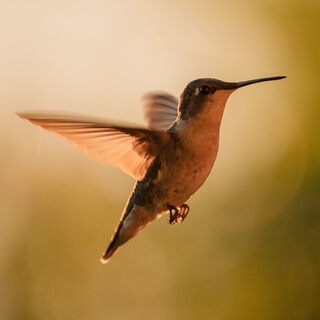
There's some kind of a constrictor that was wrapped around a red tail hawk.
And the hawk was alive and the constrictor was killing it.
What happened there?
I don't know,
You know,
Did the this red tail swoop down and think it's going to grab this constrictor and then the constrictor got the better of it.
And basically that hawk's lying there,
You know,
Being squeezed to death.
So I kind of started to get involved in this and I didn't really know.
First I thought I'll just leave him alone because this is nature doing what it does.
You know,
This is this is what right do I have to interfere?
But I did interfere a little bit and ended up separating them.
And I was in some way trying to save,
You know,
This hawk.
And I didn't necessarily know why.
And then I tried to get this hawk to take off and it was just not really mobile.
Maybe it was damaged,
You know,
Or injured beyond recovery.
So I left.
I just left it there.
I came back the next morning.
The hawk was gone and there was just a string of kind of bloody bones that was the snake.
So that was a very interesting moment.
I wrote a course about that in my journal,
Recorded all those details,
That kind of thing.
And then I went out on this fast.
This is several years later.
I went out on this fast.
And that story stuck with me and I told it to the group in greater detail because I had a dog with me.
And just around the time after that incident with the hawk,
My dog was killed,
You know,
In this kind of accident that I was not there.
She was staying with some friends.
The dog was killed and I associated that dog with that moment and the loss of that and all of this.
So the people in the group I was going out to fast with,
You know,
Said,
Oh,
There's something really important about this hawk and the red tail and blah,
Blah,
Blah,
Blah,
Blah.
And I thought,
Yeah,
Whatever,
You know,
The sure,
I'm sure a random accidental moment is significant.
So I go out on my fast and,
You know,
You're out there for 24 hours or something.
The next day I get up,
It's New Year's Day.
So you go out on the 31st and your first morning is New Year's Day.
So I get up on New Year's Day and I decide I'm going to go for a hike up the canyon.
I'm just going to walk because I'm bored.
You know,
What else do you do?
You have no food.
You have just water and a little shelter and a journal and you're just sitting there.
So I decided to walk up the canyon.
And as I was walking up the canyon,
I got to some point where I thought,
Okay,
I'm going to turn around.
And I heard this commotion behind me.
And I turned around and there was this big red tail perched on the side of this rock face,
Kind of,
You know,
Sitting up there and it's looking at me.
So I just looked back at this bird for a while.
And of course,
I thought about that moment with the bird in Wyoming and these stories coming together.
And then the hawk took off and it flew back down the canyon right to where my camp was.
And I thought,
Okay,
This hawk is telling me to go back to my spot,
You know.
So I went back to the spot and that's where I stayed until this big storm came in.
That storm kind of moved me.
I got up in the middle of the night in this horrendous wind and rainstorm and basically packed everything up and tried,
I was looking for some kind of shelter and I found this little kind of slot in the ground.
And I just put my sleeping bag in it because it was a little lower than the rest of the ground.
And I slept in there all night trying to hide from the wind a bit.
You know,
In my associations,
It was a bit like kind of crawling into a burial site or something like a,
You know,
Almost a place where you would put a body and cover it up,
A grave.
And so there was this experience there,
I suppose,
Of burying something and coming out in the morning and the storm was over and the sun was out and it was this glorious like 70 degree day and a kind of rebirth.
But that was a very spiritual is the right word,
But you know,
Spiritual moment for me where things came together in a way.
And I thought,
Yeah,
Maybe there is something that we call spirit.
First of all,
I can't believe that you would approach a constrictor,
Let alone try to separate.
I'm just,
I'm like,
What is he talking about?
What is he saying?
What is he saying?
Yeah.
I mean,
That's like one of those snakes where I feel like if it gets on your arm,
It's like never coming off and it's like,
It's all over.
Everything's over.
So kudos to you.
Because that's totally crazy.
Never catch me approaching a viper or a constrictor,
Any kind of snake.
I just want to allay everyone's fears in case you're concerned about that.
I actually can't believe Kurt did it.
And it's kind of an astonishing story.
I'd like to take this time to ask everyone who listens to the podcast and who appreciates it,
Please consider writing a review or leaving a rating wherever you listen to the podcast.
Those ratings and reviews help others find us.
I'd like to thank my guest,
The snake wrangler,
Author Kurt Caswell.
I'd like to thank him for agreeing to appear on the show and for sharing both his sweet and his profound experiences.
I need to thank the creators of the music used in this episode.
Raphael Crux,
Chilled Music,
John Bartman,
Sasha End,
Alexander Naccarata,
Music L Files and Frank Schroeder.
For complete attribution,
Please see the Bite-Sized Blessings website at Bite-SizedBlessings.
Com.
On the website,
You'll find links to creators,
Artists,
Music and playlists I think will lift and inspire you.
You'll also find a link to the book discussed in this episode,
Kurt's book,
Under the episode show notes.
Thank you for listening.
And here's my one request.
Be like Kurt.
Try situations that are challenging,
That are unknown,
That might be scary.
Have a brave heart and walk towards those experiences.
Those experiences,
They'll test you,
They'll challenge you and then they'll craft you and shape you into someone braver and more beautiful than you could have ever imagined.