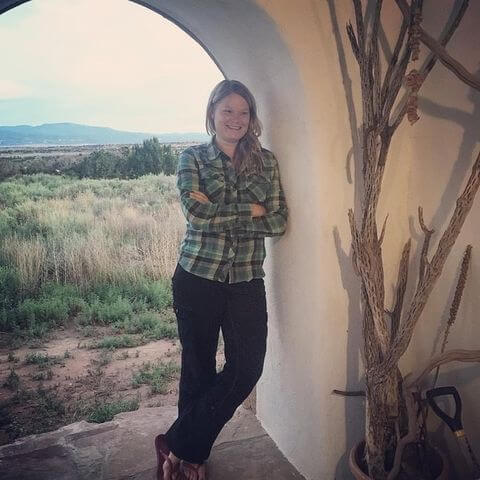
Being in that moment to facilitate or open a door for somebody to have the experience of the divine and to really experience divine love,
That for me is what my counseling work really means.
I identify as a Lutheran pastor and a pastoral counselor.
My roots are in the Midwest where I grew up in a blue-collar family.
My father wasn't home a lot because he was an over-the-road truck driver and I was the oldest in the family of four kids,
So I took on a lot of responsibility at a young age and navigated my way through high school,
College,
And seminary.
That was kind of my track,
But that's kind of my identity even in retirement that I still think of myself as pastor,
Pastoral counselor,
Family therapist,
And still stay active in some of those roles.
My mother took us to church,
But at a young age,
I want to say third grade,
Fourth grade,
I was pretty much taking the initiative to either walk,
We were close enough to walk in some houses that I lived in,
Or ride a bike,
But didn't get a lot of encouragement from my family.
I only remember my father being in church one time.
I suspect he was in church more than that,
But the fact that I remember one time suggests to me that it wasn't very often that he was there.
My mother was involved in some of the support services,
You know,
If there was an event at church,
He would help with meal prep,
So it wasn't like they were totally apart from the church,
They just weren't very involved.
They didn't have a strong encouragement about church,
So I kind of made my own way there.
And it was in the early 90s when I was serving a parish part-time and doing part-time counseling and doing part-time counseling,
And I was the youth and education pastor,
And I discovered Matthew Fox and began reading his work,
And particularly the women mystics,
He opened my eyes to this whole tradition that in the Lutheran circles and Lutheran seminary,
That wasn't even taught.
And so I think in the Lutheran church we kind of lost touch with a very important tradition,
And during that same era in the early 90s,
I was studying native traditions.
I had made a point of studying creation stories from different religious traditions,
Different cultural traditions,
So I was kind of getting immersed in other spiritual traditions,
Including the tradition of the mystics,
Native traditions,
Buddhist tradition,
So that really expanded my understanding of my tradition or going even beyond Lutheran or even beyond the Christian tradition.
In my third parish,
I decided to take another degree in pastoral counseling because I wanted to understand better how to help people who came to me and did an STM,
A Master of Sacred Theology,
And pastoral counseling,
And then a two-year clinical residency in pastoral counseling.
And it was after that that I did a part-time parish call and then did some interim work,
So I was bringing some of my pastoral counseling and organizational consulting skills to parishes that were in distress or having conflict,
And the story I'm going to share with you comes out of the Utah time.
My wife and I were in Utah for 20 years.
She had taken a position at Utah State University.
She is a professor of marriage and family therapy,
So her career and mine have paralleled when it came to the counseling traditions,
And I was going to start a pastoral counseling center in Logan,
Utah,
And so I talked to church leaders and basically the Mormon church,
And I met with leaders of the Mormon church,
And they were very polite,
Very gracious,
And after making my presentation about pastoral counseling and having a counseling center,
They said very respectfully,
Well,
Mr.
Nelson,
This is a very good idea,
But you must understand we have our own counselors for our members.
And so it was like,
Uh,
I don't think they get pastoral counseling,
And so I started a counseling center that was just a community center.
It didn't have a spiritual or religious orientation,
And what happened in the 10 years that I was the director of the agency is people in the community began to hear about me,
Learn about me,
And so most of our clients were LDS.
Some people from the LDS tradition wanted to work with me because I wasn't LDS.
Others would refuse to work with me because I wasn't LDS,
And the counseling center became a service provider for the treatment of violent offenders.
So we had programs for domestic violence offenders,
For their victims.
We created these programs,
And we also innovated a program for children who had witnessed violence in their families.
So the story I'm going to share is just,
It'll probably bring me back to tears again because it was so potent.
A man who had gone through our DV treatment program twice,
He went through it,
Re-offended,
Came back,
Went through it again.
I had,
And then he finished the program and was fine.
He moved out of the community,
And then I got a call from him probably three years later,
And he asked if I was doing any counseling in Ogden,
Utah,
An hour away from Logan where I was working.
I said,
It was a matter of fact I'm working part-time for a company in Ogden,
But I don't have an office.
And he said,
Well,
We could meet in the park.
So we did.
We met in the park,
And we had a session,
And the problem was his girlfriend with whom he had had these problem relationships,
The two of them were on such good footing.
They had really made remarkable changes,
Mostly thanks to his changes,
But he was suspicious that she was having an affair.
And he had followed her,
Her car was in another guy's house,
And so he just like,
I don't want to get violent,
I don't want to get angry,
But I don't know what to do.
And I said,
Well,
How much do you love her?
And he said,
Well,
I love her.
I said,
No,
How much do you love her?
And he said,
Well,
What do you mean?
I said,
When I asked you that question,
Do you love her enough that you would want the very best in her life?
And he said,
Well,
Of course.
I said,
Even if the very best in her life might mean she would find that with another person.
And he goes,
Oh,
Shit,
I hadn't thought about that.
So a week goes by,
We come back to the park.
He said,
That was the hardest question anybody's ever asked.
And he said,
I thought about this and I decided I do love her enough that if she's going to be happy with somebody else,
I want to support that.
I said,
Okay.
So we talked about how he would do that.
The next week he comes,
He goes,
Vic,
You've got to help me.
I said,
What's going on?
He said,
I grew up in the Mormon church.
I've never been religious,
But I am having this experience of God's presence that I have never had in my life.
I have visitations at night where I actually see angels.
They're around my bed.
And that led us to a conversation about what happens when we truly open ourselves to being loving.
That was probably the most dynamic,
The most impactful moment that I've had in that realm where counseling and spirituality intersect.
What was amazing is he ended up talking to her and gave her a blessing to,
If you really need to be with this guy,
I want to support you.
And this went on for six weeks.
And then he continued to be supportive,
Connect with her.
And after six weeks,
He called me and said,
We need to meet again.
She wants to come back because she has seen a change in me.
And they developed such a different relationship based on that kind of commitment to each other.
And then fast forward,
About two or three years,
I get another call from him.
He said,
I'm going to go back to California.
He had been in the movie business.
He said,
I'm going back to California.
And you know what?
My girlfriend said to me,
I love you.
And I'll do whatever I can to support you.
And if that's what you need to do,
You go with my blessing.
So she took that same attitude that he had nurtured with her.
And then after two years,
He came back to Utah,
They came back together.
And he spent the rest of his life there with her.
He passed away,
I think about six or seven years ago.
But just that being in that role,
Being in that moment to facilitate or open a door for somebody to have the experience of the divine,
And to really experience divine love.
That for me,
Is what my counseling work really means.
That's such a sacred role,
Right?
Yeah.
Being the witness is such a great thing.
Yeah.
Being the witness is such a sacred role.
It's difficult because as the witness,
You might not want to get involved,
You're really just there to provide,
You know,
An outward and outer reality for that person so that they can share their experience.
And also to go from being someone who had to go through the domestic violence program twice.
Yeah.
Twice.
And then you were witnessing grace being given to this gentleman.
You know,
Exactly.
And it's not an easy journey.
Oh,
Yeah.
No,
I mean,
It was,
It had totally flipped him upside down.
He just had no idea what was going on.
He just knew what was happening.
But he couldn't explain because he wasn't religious.
He wasn't spiritual.
And here we got angels in my bedroom.
What's going on?
That is amazing.
That is kind of an astounding story,
Because what greater affirmation do you need than angels visiting you at night?
I mean,
I think he sounds like he was broken open into a new way of seeing the world in a new way of being.
Well put.
Yep.
So did this long relationship with this gentleman or this experience of being the witness change or alter your way of interpreting God or how God works in the world?
I think for me,
It was a reminder that any of us may play a role that we have no idea how our presence or our influence may impact another human being.
And so for me,
It was like raising the awareness level that every interaction I have may be an opportunity for someone to have a new experience,
A divine experience.
I remember when our church,
The Evangelical Lutheran Church in America,
In 2009,
I was at the church-wide assembly,
At which time our church voted to ordain gay and lesbian clergy.
And I had the chance to speak on the floor.
There's a couple thousand delegates,
So a number of people spoke.
And for me,
The emphasis was that in our tradition,
We believe in an incarnational theology,
That God became flesh.
And in my pastoral counseling work and training,
I brought that same perspective.
And I remember being interviewed by the membership committee of the American Association for Pastoral Counselors.
And I mentioned incarnational presence.
And one of the interviewers who wasn't Lutheran said,
Well,
What does that mean?
And I said,
Well,
What it means to me is that I may embody something of Christ to my client,
You know,
That God might work through me in a counseling process.
And he said,
That's really interesting.
Is it also true that your client might embody something of Christ to you?
And I said,
Well,
That's really something of Christ to you.
We're like,
Oh,
Crap,
I hadn't thought about it that way.
And so going back to this man in Utah,
I think his experience was an incarnational reminder to me,
You know,
That his experience could educate,
Instruct,
Inspire me to be even more aware.
So on the church assembly floor,
I was saying,
If we are really Lutherans,
If we really believe in an incarnational theology where God can speak through people to transform lives,
How do we dare limit God to say,
Oh,
God would only speak through heterosexual clergy.
And up until 1974,
Only heterosexual men.
But I think that that experience was a reminder that every conversation,
Every encounter may be an opportunity to bring something of a Christ presence or a God presence to someone else.
Now,
I don't make that overt.
If I'm doing mediation or a consultation,
Doing therapy or supervision,
That's not overt unless the client is interested in more of a spiritual journey.
But I can still have that in my awareness.
So it sounded like there was some grace in that experience with that gentleman for you,
Too.
Yes,
Exactly.
There was a little extra on the side for you.
That's right.
That's the frosting.
Yeah,
The frosting.
Yum.
Everybody loves the frosting.
You see a wall hanging behind me.
This is from Madagascar.
So I had an opportunity to be on a church trip to Madagascar back in about 1996.
And many of the homes of the Malagasy people would feature a print like this.
And there would be a proverb attached to it.
So this one says,
Aitsa mamali niratsi niratsi.
That's Malagasy.
It's a proverb reminding people,
Do not return evil for evil.
So I brought this home.
And during this era,
When I was studying other traditions,
Other cultures,
I also began studying traditions of hospitality.
So in Madagascar,
One of the hosts that we stayed with was a seminary professor.
And it was a very modest cement block home with two bedrooms,
One for him and his wife,
One for his two children.
And they parked me and a colleague in the children's room.
And they served us dinner two nights in a row.
And then we left and went and went to the group to another community.
And on the bus,
We were talking about our experiences with our host families.
So there are about 11 of us in this group.
And my friend and I were saying,
Well,
We had chicken dinner the first night.
And it was terrible.
It was tough.
It was stringy.
It was like,
Oh,
The worst chicken we ever had.
But we,
We ate our chicken.
We had a nice conversation the second night.
Guess what they served us chicken.
And it was just as bad.
So we're kind of laughing about this with our friends on the bus.
And our guide who had been a missionary there for,
Gosh,
15 or 20 years,
He said,
Victor,
A chicken is worth about a day's wage.
Would you and your family spend a day of your wages hosting somebody two nights in a row?
Yeah.
So that was another experience of,
Wow,
That's grace.
When somebody can be that hospitable,
That generous.
And then we in our privileged way can criticize it.
Come on.
That's really beautiful.
I think,
You know,
It's interesting because we're talking about being a witness.
There's so many different ways as human beings to be a conduit for grace.
And I think hospitality is absolutely one of those ways.
Yes.
You know,
I love that phrase.
I want you to enshrine that.
Conduits of grace.
I will give you credit if I use that phrase.
That's that's a powerful phrase.
Yeah,
It's I just actually came up with it.
Maybe we should make a t-shirt of that.
There you go.
I am a conduit of grace.
Yeah.
That would be that's in an ideal world.
We should all be that.
So however,
I discovered that for me to become a conduit of grace,
Several years of therapy have been needed and they I have engaged with them those years of therapy,
Sometimes reluctantly,
Sometimes with relief and sometimes with joy.
Yes.
Yep.
Yep.
Yep.
There's nothing quite like getting your heart kind of scraped open and,
You know,
Cleaned out to kind of change your attitude about the world.
It may make room for something else.
Absolutely.
Yeah,
Absolutely.
This has been episode four of Bite-Sized Blessings,
The podcast all about the magic and spirit that surrounds us.
If only we open our eyes to it.
And whether you choose to listen to our Bite-Sized offerings for that five minutes of freedom in your day or the longer interviews,
We're grateful you're here.
I need to thank Victor Nelson for sharing his story today,
As well as the creators of the music used.
Dream Heaven,
Raphael Crux,
Sasha End,
Lilo Sound,
Music L.
Files,
And Frank Stuhr.
For complete attribution,
Please see the Bite-Sized Blessings website at bite-sized-blessings.
Com.
And remember,
That's bite spelled B-Y-T-E.
On the website,
You can find links to other episodes,
As well as to books and music I think will brighten and bless your day.
Thank you for listening,
And here's my one request.
Be like Victor and be a witness to the magic and the miracles in the world.
So,
You