And I remember one time talking to a minister in the Methodist Church,
And I remember asking him about,
You know,
In your sermons,
You know,
You always are talking about all these problems and things that are wrong and how we need to fix things.
And,
You know,
It's always just kind of dark.
And I,
You know,
Sometimes I wish you could just talk about,
It's so pretty outside and it's beautiful.
We have all these things to be grateful for.
And he just sort of looked at me like he didn't understand that.
And another time I was in a disciple group with,
And he was in that group too.
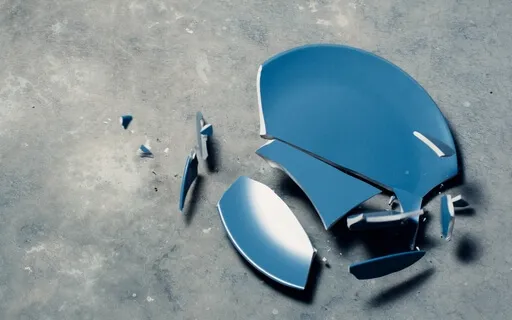
And we were talking about the whole concept of brokenness,
Which is always a hard one for me.
And I said to him at one point,
I just have so much trouble with this because I don't feel like I'm broken.
Are there things I'd like to change about myself?
Are there things I wish I hadn't done and I would do differently?
I mean,
Yeah,
I mean,
That's all true,
But broken,
I don't think I'm broken.
And he said,
Well,
You just don't realize that you are.
All the different labels and they aren't really who you are,
But that's what we go to are those labels.
And I remember telling Alan one time,
I'm so tired of just being so boring.
And he was like,
What are you talking about?
And I said,
Well,
Really,
Who am I?
I am a mom and I am a professional.
I work.
I'm your wife.
And I had a whole I mean,
I don't remember,
But it was just kind of all those labels.
And I said,
But none of those are those are just parts of me,
But they aren't me.
But that's how then people recognize you,
How they identify you.
You know,
I like to think that I am first and foremost,
A person who really cares about other people,
That that's really important to me and something that I try to make clear to people when I speak with them,
That I really do care about who they are.
I'm spiritual.
I sometimes think I'm religious more than spiritual,
But most of the time I think I'm more spiritual than religious.
But then at the same time,
I don't really know that that matters because I have a relationship with the divine.
And that's part of who I am.
I work as a chaplain.
I think I've been a chaplain for longer than I've worked as a chaplain.
And the church internship I did for my life was in a very socially active church,
A Presbyterian church.
That's a sanctuary church and that is very,
Very active in social justice issues.
And and I learned a lot.
The minister there,
Jim Rigby,
Is amazing.
And I was so glad to be part of that throughout that whole thing.
I was grappling with that.
What am I going to do with social justice?
And in the end,
I decided that social justice isn't something that I do,
But I think it's part of who I am.
Part of that has I think that that was part of how I was raised.
I have laughingly said and all the all the good parts of like Father Knows Best and Leave It To Beaver,
The good nuclear family parts of that,
Not the crazy 19 whatevers about it.
I had that kind of childhood.
Two parents who were together who deeply loved each other,
Big extended families on both sides,
Very close knit,
I think just all the way around.
So my parents were very,
Very clear with us always that we accepted people.
You know,
We didn't you know,
There was not going to be any any talk about race or poverty or I mean,
In terms of discounting people who might come from a different background from ours.
So that was a very strong part of my upbringing,
I think.
But it became even much more personal when my first grandchild was born,
Who is a biracial child.
So suddenly that idea that I was a white privileged woman who had ideas about how I thought the world should operate and my place in that became a lot more personal because of I now have two biracial grandchildren.
And I can remember Cameron when he was about two and he would spend a weekend with his dad and he would come back from that and he was really little.
He talked early,
You know,
Precocious guy.
But he would be,
You know,
Between the ages of two and three and I would be holding him and he would be talking about,
You know,
We did this and we did that,
Blah,
Blah,
Blah,
And just talking real fast.
And he would say and she was brown like me or and he was brown like me.
And then just go on in that stream of conversation.
And it kind of surprised me that at that age,
He was looking at color and he would talk about,
You know,
Well,
You're not brown like me and you're pink and that's not as pretty,
Which I kind of loved.
But all of those things and all the things that have happened that have been happening forever,
But have been so much more in the media around injustice towards people who are brown and black,
All of that is just so much more personal as I look at these two little people I love so dearly.
And yet I'm also real clear that it is not only for them that I want things to be more just,
That we I feel like we have to keep fighting for that.
So that's,
I think,
A big part of who I am as well.
We grew up in a church,
We attended a congregationalist church.
It was in Lawrence,
Kansas,
A fairly liberal church.
So we always went to church.
And I my memory is that I was more interested in and participated more in youth group.
But I was involved in youth group stuff all the way through high school and really did like it and then was in college.
And when I graduated from college and was living in Kansas City and I was looking for a church and I realized much later that I was really church was an avenue for community.
And I was really looking for community.
And I remember one time talking to a minister in the Methodist Church and I remember asking him about,
You know,
In your sermons,
You know,
You always are talking about all these problems and things that are wrong and how we need to fix things.
And,
You know,
It's always just kind of dark.
And I,
You know,
Sometimes I wish you could just talk about it's so pretty outside and it's beautiful.
We have all these things to be grateful for.
And he just sort of looked at me like he didn't understand that.
And another time I was in a disciple group with and he was in that group,
Too.
And we were talking about the whole concept of brokenness,
Which is always a hard one for me.
And I said to him at one point,
I just have so much trouble with this because I don't feel like I'm broken.
Are there things I'd like to change about myself or the things I wish I hadn't done and I would do differently?
I mean,
Yeah,
I mean,
That's all true.
But broken,
I don't think I'm broken.
And he said,
Well,
You just don't realize that you are.
You know,
And I just looked at him and said,
OK,
I still don't feel like I am and I don't think God thinks I am either.
And we didn't go to that church anymore.
We moved up to the north part of Austin and we kept driving by this church every day because it was on the way to different things.
And they had a little billboard thing out there that where they had sayings on the on the board.
And I always really liked him.
And I found that I was even I could go a different way,
But I would go that way because I wanted to read whatever their little message was.
Well,
It was a unity church.
And sometimes it was the daily word.
Sometimes it was just something else that they put up there that was inspirational.
And then I looked on their website and I found out that they did things like Reiki and other kinds of real holistic things.
So I was like,
Wow,
A church that does Reiki.
And so we started going to that church.
And it was that message about what look at what we have to be grateful for.
Look at look at this beautiful sky and these trees and that each one of us in this room is a beloved child of God.
And that to me was it was just remarkable to me.
The opportunity came up to apply to work in the children's hospital.
I'm not one who normally makes deals with God.
I kind of I don't think that way.
It doesn't resonate with me.
And yet the very first day that I was driving up to I hadn't even started doing patient visits yet in my internship.
But I was going that was the day that I was going to shadow a chaplain during the day and part of the overnight.
And so I remember driving up and I was like,
OK,
God,
You know,
The deal is no dead babies.
I think I can do anything that infants,
You know,
Nick,
You don't want to get a call.
Don't want to do that.
Don't want to observe that.
Don't want that to be part of the situation.
And of course,
It was that night to a fetal demise and a an infant.
Thirty six,
Thirty eight weeks car accident.
I wanted to just bring up your conversation with the pastor about brokenness.
And I think one of the things I distinctly remember about our first 10 days orientation at ILEF is the discussion around,
You know,
When Jesus has the cuts in his body,
He has in his wrists,
In his ankles,
He has the marks from where the nails were put in,
And then he has the cut in his side from the spear.
And I think a lot of people think of Jesus when he comes back,
That he's perfection.
Yet he appears with these these cuts.
And and so we had a really interesting and I thought lively discussion about what is perfection look like and is he disabled?
Because his hands,
His wrists,
You know,
His feet,
His ankles.
And what does it mean to be someone with a disability?
You know,
Because a lot of people look down on people with disabilities and we'll call them broken.
Oh,
You know,
Like they're not worthy.
They're broken.
They're less than.
And so I just think I was fascinated by the work that you were doing.
And it,
You know,
My conversations with you really made me think about that reality in a totally different way.
Yeah,
I know that part of my strong reaction to brokenness is the 30 years I worked with people with disabilities who will,
They're the first to tell you that there's nothing broken about them and that they don't need to be fixed.
And so,
Yeah,
That but yeah,
Brokenness,
I think we are I think we use that word so much to describe human characteristics.
And it's not brokenness.
It's I mean,
I've kind of come to terms with using that word and I don't use the word,
But understanding it just as,
You know,
Something that I might want to make different about myself,
That I might want to to change or.
But it's not even that,
I mean,
Because the word really is used,
As you said,
Just to totally devalue people.
You know,
I can't do that.
I just can't do that because I think every person has value.
Every being has value.
You know,
You hear things about people who are nonverbal,
Can't communicate nonverbal.
People communicate if you're willing to take the time to understand how they communicate and to communicate with them.
I mean,
All people have value.
And that was one of the things during CPE,
Because I would I got pushback because I don't believe in brokenness,
You know,
Because it's kind of so much a part of so many traditional theologies.
And,
You know,
It's not mine.
I think one of the things that has really helped to shape me over the long haul for the last,
I guess it's close to I guess it's close to 20 years now that I've known some of these women who we fondly call ourselves the goddesses.
The first woman in this group I met was somebody I worked with and and actually hired into the center I was directing.
And she would talk a lot about going to utopia.
And I knew that she and her husband had land somewhere,
And I thought that they called their place utopia because I didn't know yet that there was a utopia Texas,
Which there is.
And so she goes to utopia because I have this house there.
And but she introduced me to a woman who became my Reiki master.
And I did Reiki with her and gradually started meeting more women in this group.
So utopia is in the Texas Hill Country took me a while to learn the beauty of Texas Hill Country.
I mean,
The beauty of Texas in general,
Because I was not used to what Texas looked like.
But utopia,
It's it's gentle hills.
Two friends have adjacent land,
30,
30 acres each.
So 60 acres altogether in this area that we love as utopia.
And so the one one family has almost like a compound.
They have their house and then they have at this point have several small little outbuildings.
It's pretty.
There's wildflowers,
There's trees.
Part of it's cleared off.
Part of it's wild.
I mean,
It's just it's lovely porches.
Everything has a porch.
Quiet because there's no highway noise.
Stars.
You know,
It's just gorgeous.
If you can't sleep,
You get up in the middle of the night and go just plonk down on one of those porches and look at all those stars.
And it's just astonishing.
I still remember my first invitation to go to utopia.
And there were I don't remember how many of us there were who were there that weekend.
But I remember I was nervous about going.
And I knew just from talking with my friends who would be there about,
You know,
That there's ritual that we do in utopia and and we eat really great food.
And,
You know,
We talk and we laugh and,
You know,
We have Reiki table,
You know,
We get on massage tables and we do healing.
And,
You know,
Just all these things,
Lots of ritual,
Lots of healing,
Lots of all that.
And so I was nervous about going and felt very strongly that I had to bring something miraculous to eat because that was a big part.
So I became somewhat famous for my for this chocolate mahogany cake that I grew up with,
A chocolate mahogany cake for my birthday every year.
You know,
And so I you know,
I brought the cake.
And but I was still I was real I think I had been so long without having a group of women that I was really afraid that something about this might not work because I was so excited about this group of women.
It's so interesting because I never thought of myself as a creative person.
That was part of what happened as a result of being with these women is that we all quilt,
Embroider and do all these things.
But I didn't do any of that.
But it was like,
Oh,
Maybe I could try that.
And then I started making quilts and this capacity of this group of people,
Women to look.
We look at each other and just kind of witnessed,
You know,
There was that whole piece about no fixing,
No suggesting,
No changing.
You're not broken.
But just to sit,
You know,
When any of us had anything that we're going through to just be able to voice it and have it received.
And then people responding with such love.
And it you know,
It's that way that I think I've really changed because of these women,
Because of that acceptance and that love and seeing things of myself that I didn't see in myself,
But being able to kind of own some parts of myself that,
Oh,
I'm not that.
Because we know each other and love each other,
We can gently call each other on things when we see them and know that if it's not well received,
If the person doesn't want to hear it,
Then they just say,
No,
That's not and that's fine,
You know,
But just that level of acceptance.
I also learned that I didn't have to bring chocolate cake and I could still come.
I wanted to just interject that I think it's so important because we all have our own ideas of who we are as human beings.
And I discovered that most people are way harder on themselves than they really need to be.
And so it is so important to have others that you trust,
Who love you,
Who can witness you and see you as you truly are and then tell you so that you can take that on and embody it.
Because,
You know,
I know myself,
I'm running around all the time and I'm always thinking that I'm failing and not doing enough and I'm not doing as well as I could.
I'm not doing everything I should.
I'm not as good of a person as I should be.
But,
You know,
Having people outside say,
No,
Here,
I'm witnessing you as this,
Right,
I'm seeing you as this,
It can change someone's life.
Absolutely.
I think that's so true.
And that's really what this group has done for me and what we do for each other.
It is magic to see that happen.
Thanks so much for listening to Episode 49 of Bite Sized Blessings,
The podcast all about the magic and spirit that surrounds us,
If only we open our eyes to it.
And whether you choose to listen to our Bite Sized offerings for that five to ten minutes of freedom in your day or the longer interviews,
We're grateful you're here.
I need to thank my amazing guest today,
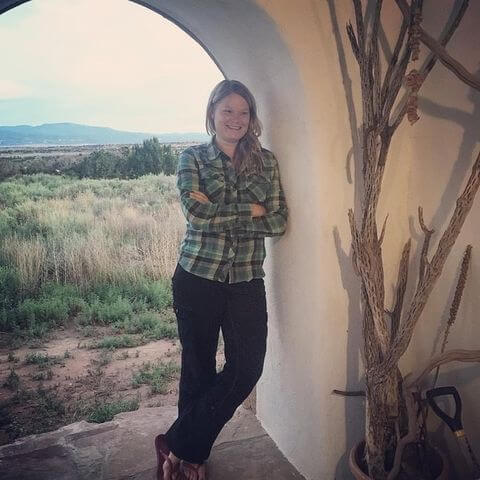
Penny Cruz Seay for sharing her story with me,
As well as the creators of the music used,
Winnie the Moog,
Raphael Crux,
Music L.
Files,
Brian Holt's music,
Lilo Sound and Alexander Nakarada.
For complete attribution,
Please see the Bite Sized Blessings website at bite-sized-blessings.
Com.
On the website,
You'll find links to other episodes,
Music,
Books and artists I think will lift and inspire you.
You'll also find the newly designed podcast T-shirts worn by some of the guests I've had on my show.
Click on the link,
Send me information and the T-shirt is yours.
Thank you for listening.
And here's my one request.
Be like Penny.
Are you really broken or is that what society is telling you?
Find your community,
Make deep friendships,
Love yourself for who you are and love those around you in exactly the same way.