Welcome to episode 80 of Bite Sized Blessings.
And yes,
Once again,
I'm in a hotel,
Traveling across the US to Portland,
Oregon.
Right now,
I'm in Omaha,
Nebraska.
I'm on the third floor of the Hampton Inn,
And I'm using my time this evening to finish the podcast for this week.
This week's interview is a little different.
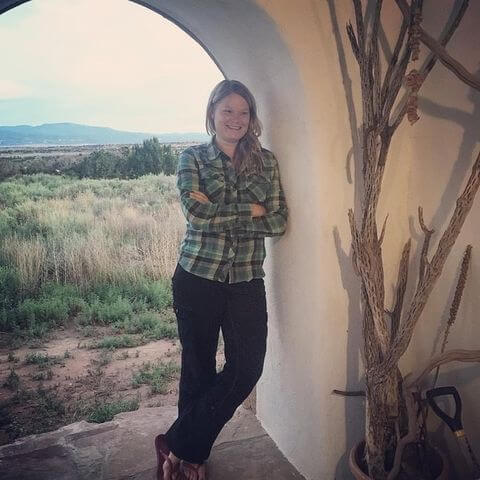
I get to interview my friend,
Chase Stafford,
Who,
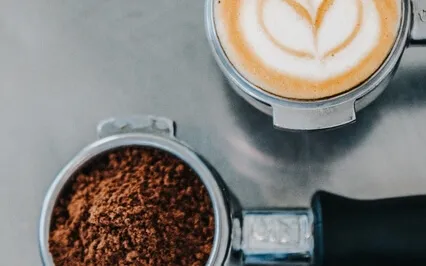
In addition to being a very accomplished coffee barista,
Coffee taster,
And coffee importer from countries all over the world,
Is also an artist and an art teacher at NMSA here in Santa Fe,
New Mexico.
As you'll hear in the interview,
There have been a couple miracles in Chase's life.
One,
I think,
Pertains to those people that are in our lives who become mentors,
Who change the course of our lives with something they say.
Maybe we don't take it in at the moment that they say it,
But maybe a few years down the road,
Those words come back.
They come back to us,
And they change the direction of our life.
Chase is in the same position now as a teacher at his school,
And this interview has me wondering just what he's saying to those kids,
His students,
That will affect their lives in the coming years.
He also tells some wonderful tales of his coffee adventures and travels,
Some of which include miracles as well.
So now,
Without further ado,
Episode 80 of Bite-Sized Blessings.
We have the hostel guy,
The guy that's running the hostel.
He talks on the phone,
And he says,
Okay,
She's gonna come here and pick you up in a taxi in 10 minutes,
And she's gonna take you to a bus stop where she's gonna buy you tickets to the farm.
Right before we get out of the taxi,
Though,
Right before we get on the bus,
She says,
You're gonna go up to this kind of gas station restaurant and convenience store in the middle of nowhere,
Oaxaca,
Called El Mirador.
It's called El Mirador.
This is the Wi-Fi password.
We write down the Wi-Fi password.
You get on the Wi-Fi,
And you're gonna text Alejandro,
My son,
And Alejandro's gonna come pick you up.
So Dylan puts in the phone number,
And I put in the phone number into our WhatsApp,
So we both have the number,
But in WhatsApp,
The number's format,
And there's a format that as soon as you put in the number,
It formats to its proper formatting,
But the number is not formatting at all.
So I look at her,
And in Spanish,
I say something like,
You know,
I don't think the number's correct.
Can you repeat it?
And she repeats the number,
And Dylan goes,
No,
It's correct.
I'm looking at his phone and my phone,
And the format's wrong,
And I was like,
It's not.
It's not the right number.
We're about to drive six hours into the middle of the jungle,
And we have the wrong number,
And I'm like,
Dylan,
Please believe this is not,
And so he asks again.
And she goes,
No,
Yeah,
That's correct,
And he's like,
See?
And I was like,
We're screwed.
This is it.
I'm gonna be eaten by a panther or something.
["The The The The The The The The The The The The The The The The The The The The The The The The The The The The The The The The The The The The The The The The The The The The The The The The We've been to different farms.
We've sent people to Colombia,
Costa Rica,
But then I've traveled other places on my own with other things for other reasons as well that also ended up being something coffee.
I don't think I can travel without it being somehow pointed back toward coffee for me,
Which is either really,
Really awesome or really,
Really sad sometimes.
Like what if I went on vacation and didn't do anything coffee?
It's impossible.
Okay,
So did you grow up in a religious household?
What did that look like in Texas while you were tipping cows?
I didn't grow up in a religious household.
I did grow up in a religious family.
My immediate sisters,
They were,
Or Jordan at least,
Was very religious.
My parents weren't.
They tried.
There were some Christmases.
I remember my dad reading the Bible to us.
My grandmother was very religious.
We would go and we would bake Jesus shaped cookies and things like that.
Easter was really big for us.
We would always dress up.
We would participate in all of the events.
But my parents really gave us the autonomy to move forward with religion or hang back from it.
But the community I was involved in,
In small town Texas,
And I live in a very small town now,
Santa Fe.
It's 90,
000 people now or 95,
000 people or something like that.
I forget,
87,
000.
I live in a small town now and I'm a high school arts teacher.
When I talk to those kids about their graduating class,
I tell them that,
Oh,
I graduated a really small class,
About 250 students.
Their graduating class is like 100.
So they're smaller almost by a third.
So they're like,
That's not small.
That's huge.
I'm from Texas.
Everything's huge in Texas.
So 250 students is very tiny.
That entire community was very,
Very religious.
It was very,
Very apparent.
Big part of my life for over a decade.
Did you ever feel,
Or did your family ever feel any sort of pressure from the community because you didn't attend church regularly or you weren't part of that extended community there?
I can't really speak to my parents' experience on it because they were so good at hiding everything.
But I definitely felt it.
I felt like when I had a car and I had the autonomy to move through whatever I needed to move through the city,
Go anywhere I could go,
I didn't really have as much excuses for my friends as to why I wasn't going to church.
Before I was like,
Oh,
My parents probably won't take me.
Or they'll probably be sleeping or something.
Then when I had a car,
I was like,
Oh no,
Now I got to go to church so I could show up and be liked in the community.
It was a really rough time because being religious in that community was the social scene.
You had to be religious or else you were a major outcast.
I was already outcast enough.
I think my nickname in high school was Tall and Awkward.
I didn't have much going for me there.
I had to be religious in that way so I could make sure that people would be nice to me and like me.
Well,
You're still tall but you're no longer awkward,
Just so you know.
I might be tall for saying that.
This is the shortest of all my friends,
Second to shortest.
Were you really?
Mm-hmm.
It's like everything in Texas is big,
Even the kids.
Yeah,
The kids are.
Texas is building little super soldiers at my school.
I didn't really realize this.
This is where a lot of my confidence issues came into play.
When I was in high school,
I had zero confidence,
None at all.
I remember my art teacher,
Bryce McCaslin,
At one point.
I didn't really realize what I was doing but I think I was trying to get Bryce to make my art for me so that way it would be good.
I don't think I really realized I was doing that probably until sometime in college.
I remember we were leaving for break and I look at Bryce and we have this big project due and it's advanced placement art.
It's really rigorous,
Nerve-wracking.
I'd be sitting at a dining room table that was covered in a tarp to protect my mom's expensive table from all the art making.
It'd be three in the morning before class and I'd be crying and drawing.
Bryce,
I remember right before break,
I came up to Bryce and I was trying to figure out what I was going to do for this project because I didn't know because I thought the canvas or the substrate was the most perfect it would ever be before I actually touched it.
Once I touched it,
It would fall apart.
It'd be ruined.
I remember looking at Bryce and thinking,
I don't know what to do.
I don't know.
He just out of fatherly frustration in a way was just like,
You got to get some sort of confidence.
I can't do that for you.
You got to find the confidence.
You can't.
I'm not there to make it.
I'm not there to hold your hand through everything.
I'm not going to be around forever.
You're either going to do it on your own or you're not.
That's where we're at.
That conversation was really hard.
I think I cried probably because I'm a big crier,
But it really started to transform things.
It planted the seed that I could do something.
It didn't change anything that year.
It didn't change anything for quite a while.
I don't think it changed anything until I got to college.
I was in a town where I was completely alone and I was out of all the social scenes that I've ever been in realizing that I don't have Bryce McCaslin to help me.
I don't have my mom to lay me down when I'm sick and give me medicines.
I don't have my mom to figure out where the laundromat is for me or put away my shoes.
I had to learn how to be on my own and I was totally on my own.
I was the worst,
Kind of the best worst moment of my life.
I think the best realization I ever had for sure.
Going to college and moving away was one of the best things that ever happened to me.
I had that epiphany that I wasn't able to play video games for the rest of my life.
I needed to do something.
My parents wanted me to do something.
They always pushed me toward graphic design.
And then I didn't really have a direction.
I really wanted to be good at something.
All my friends were really good at something and I just kind of wasn't.
Other than the video games,
I just wasn't really good at anything.
And I started doing art and I started making good art.
And it wasn't conventional good art.
It wasn't photorealistic faces,
Which I still at that time,
Even though I was making really good work,
So at that time I thought,
Oh,
Like I'll be a good artist when I can draw a face really well or something photorealistic.
And when I got to college,
I was dating this girl who's incredible and we were supposed to get married.
Well,
I thought we were supposed to get married,
But I think she did too.
We talked about it all the time.
So I was supposed to move back home from Dallas and we were supposed to get married.
And when I got to school and art school at Santa Fe University of Art Design,
I had this epiphany of like,
Oh crap,
If I'm not great,
If I'm not best,
Then I'm not going to be able to do anything or provide for the people I want to provide for.
So I have to be the best.
Like I have to,
I have to get it in gear.
I can't skate by like I did in high school,
But everything I have to be best.
So I put all that pressure on myself to be the best artist possible.
And I made my first photorealistic drawing of the Santa Fe ski basin.
It was a graphite and charcoal,
And it looked like a black and white photo.
And it took me weeks and weeks and weeks and weeks and tiny,
Tiny tons of effort.
And I put on the wall at this big show that we have at the end of every semester.
And we all took a step back and we looked at it and I was like,
Wow,
I'm never going to do that again.
I hated it.
The most important thing about being an artist,
And I will say I'm an artist.
I used to think it was not really deserved or,
But I think confidently I can say an artist,
The most important thing that you do as an artist,
I preach this to my kids all the time,
Is that people think it's just about the pretty picture or the drawing,
But it's all about the problem solving.
I think that's what I love about coffee too.
I mean,
Coffee is such big uncharted territory.
And like I mentioned earlier,
United States,
Specifically Americans,
Don't really have a care about the product the way I have a care for it,
Which is fine.
It's not their problem,
But I'm able to continue in this field of art and this field of coffee because there's so many problems that need to be solved.
And it's interesting and it's fun and it hasn't stopped.
It's not stagnant.
I love this quote by Barack Obama that he said something like,
Running the country is a lot like steering a ship.
And if you just take the ship immediately in the direction you want to go,
It capsizes.
So you have to slowly over time point the ship direction.
I think about looking at the person that I was 10 years ago,
15 years ago,
Two years ago,
Three years ago.
And sometimes it doesn't really feel like a whole lot's changed,
But it is that,
And especially from the outside looking in,
People probably see more about me than I see about myself.
Sometimes you're too close to know what's actually happening,
But I feel like all my experiences have always been something that I took in to make changes through every way I moved through life.
I remember creating these analogies for myself when I make work,
Which would then help me create analogies on how I would go out and operate in the world.
I had this professor one time say,
We're doing figure drawing.
She wants to draw the entire space.
It wasn't just about the figure because the figure exists in the space.
So she had us walk in a circle around the room and around the model.
We had to walk in this big circle and we had to put our hands on things.
As we're moving,
She said,
I want you to imagine that the entire room is filled with oatmeal and that as you get closer,
That oatmeal is pushing up against other objects and you can actually physically feel the space all of a sudden between the interstitial spaces.
You can feel them between.
So we're doing that.
We're walking in circles and some people are like,
This is hokey and weird and I'm sitting there soaking it up.
But through that ability to create analogies or to think of the world in a different way,
Maybe it roots back to the problem solving.
Prior to going to this Panama,
Mexico,
Guatemala trip,
I thought I'd had some pretty major memory loss issues.
I couldn't remember,
A lot of us talk about this,
So this isn't too shocking for people.
I can't remember what I ate for breakfast and was like,
Oh yeah,
That's just me.
But I couldn't remember what had been said to me seconds ago,
Tasks.
I couldn't hold on to anything in my brain.
So we're in Mexico and we're having this cup of coffee from Finca Chilene.
As I was saying,
It was tasting really borderline effervescent as if it had been carbonated,
Kind of like a white wine and like a floral red fruit.
I really loved it.
It turns out it was a carbonic coffee.
Finca Chilene,
He's a fermentation expert and he taught adding yeasts and different fermentation methods to the coffees to farmers and shoppers for years.
And him and his son broke off and did their own farm in Oaxaca.
So we're hearing about this farm and I was like,
This is the farm we want to go to.
We got to be there.
So Dylan books a flight to Oaxaca.
The next 40 minutes,
We're sitting on a plane from Mexico City,
Getting to Oaxaca and we make it,
We're trying to figure out how we're going to get to the farm,
How we're going to get to the farm.
And we're looking around and remember,
We don't know anybody.
We don't have any connections.
We get a connection to a girl named Kate and Kate and I have a different connection today,
But we've never actually talked or met because we couldn't find Kate.
We just misconnect the entire time.
And Kate has an amazing roastery and cafe and Oaxaca,
Synthrow.
If you ever go,
You can find Kate's roastery.
I remember the name because never got connected,
But we get there and we misconnect with Kate,
And we wake up the next morning and Dylan is frantic.
Dylan,
We're not super frantic,
But he's a little upset.
He's like,
We're here on a job.
We have a mission and we're kind of failing and we can't fail.
We can't show up empty handed.
We need to prove that this travel program is worthwhile to our boss.
So he continues to create a travel program to send baristas to buy coffee.
So we sit there,
We sit there,
We sit there and I have this stroke of brilliance.
I'm like,
We could Google it.
So I just search on Google Finca Chellin and it shows up with a cafe across the other side of Oaxaca,
Synthrow,
So five,
Six blocks away where it was a hotel and Finca Chellin had their coffee at this hotel in bags and that's where they sold it.
So we went over to the hotel and we sit down.
We're having this really bad cup of coffee.
It's just made out of like a Mr.
Coffee.
So it's really watered down,
Just tastes like paper.
And we're sitting there drinking this coffee and we talked to the hostess and we're like,
Do you know how to get in touch with this farmer?
And she's like,
No,
Like,
Oh crap.
And he's like,
But his wife is going to be here in about an hour dropping off the coffee.
And I was like,
Okay,
That's it.
That's you do know how.
Okay.
So we kind of walk around for a little bit.
We make it back.
His wife had already left.
So we start to panic and she's like,
But don't worry.
I got her number and she wants you to call her.
And so I'm kind of with the hostess.
Like what's with all this push and pull?
Like,
No,
I don't know how to get in touch.
She's gone.
So,
Oh,
But we can get this all sorted out.
So we get in touch with the farmer's wife.
Dylan had been in a Spanish intensive and spoke better Spanish than me,
But in Dylan's words,
He has to close his eyes and he had turned all the lights off and no one can be moving in the room and he could speak Spanish really well.
But so we have the hostel guide,
The guy that's running the hostel.
He talks on the phone and he says,
Okay,
She's going to come here and pick you up in a taxi and 10 minutes.
And she's going to take you to a bus stop where she's going to buy you tickets to the farm.
So now we're on this bus right before we get out of the taxi though,
Right before we get on the bus.
So you're going to go up to this kind of gas station restaurant and convenience store in the middle of nowhere,
Oaxaca called El Mirador.
This is in Luxaca.
It's called El Mirador.
This is the wifi password.
We write down the wifi password,
Get on the wifi and you're going to text Alejandro,
My son and Alejandro is going to come pick you up.
So Dylan puts in the phone number and I put in the phone number into our WhatsApp.
So we both have the number,
But in WhatsApp,
The numbers format and there's a format that as soon as you put in the number of formats to its proper formatting,
But the number is not formatting at all.
So I look at her and in Spanish,
I say something like,
You know,
I don't think the number is correct.
Can you repeat it?
And she repeats the number and Dylan goes,
No,
That's correct.
I'm looking at his phone and my phone and the format's wrong.
And I was like,
It's not,
It's not the right number.
We're about to drive six hours in the middle of the jungle and we have the wrong number.
And I'm like,
Dylan,
Please believe this is not.
And so he asks again,
She goes,
No,
Yeah,
That's correct.
And he's like,
See,
And I was like,
We're screwed.
This is it.
I'm going to be eaten by a panther or something.
This is it.
So we make our way up this mountain and we're in this kind of small,
Like,
Like a charter bus.
It's like a quarter size bus.
And they're playing some delisted movie that stars meatloaf,
The lead singer of meatloaf as the antagonist.
I think it's Patrick Swayze or somebody and it's essentially just a bunch of trucks that are driving into each other and exploding and they're transporting illegal weapons.
But Patrick Swayze,
If it was Patrick Swayze,
I don't remember Patrick Swayze had no idea that he was transporting illegal weapons.
And he,
He's gotten out of this life,
But they pulled him back in type moment.
So I'm sitting there and we're driving through this really sick fog and these tiny roads and we're swerving out of the way of rocks and cars.
And I'm sitting there watching these trucks,
Like driving off cliffs and exploding.
And I was like,
This is probably my fate.
And I'm starting to get a little car sick.
And the movie is obnoxiously loud.
It was one of the most loud.
It didn't need to be that loud.
There's three of us in the car in the bus.
So we finally make it up to El Mirador and it's golden hour on the side of a giant mountain in Oaxaca.
And the sunset is absolutely gorgeous.
Standing in a forest,
Looking out over tons of mountains and we type in the wifi password and Dylan's like,
Okay,
Now it's time to text Alejandro.
And I'm sitting there going,
Well,
At least I have a sleeping bag.
So Dylan goes to text and Dylan goes,
Huh?
The number is not right.
And I was like,
No freaking way.
Like,
Oh my gosh.
So upset.
And so Dylan is like,
Oh no,
What do we do?
And I just sat there and in a different language,
I had to recall and piece together this number back.
And I realized that they had added a one in the middle of the phone number and that one needed to be moved to the beginning.
And I somehow put it together and the number formatted correctly.
And then at this point you're thinking like,
Well,
God,
I hope this is Alejandro.
And so we text Alejandro three minutes,
Four minutes go by,
Five minutes go by.
I'm sitting there sweating.
Like we're sleeping in there,
We're camping tonight.
And Alejandro texts back and he says,
Oh yeah,
On my way,
Be there in five minutes.
And we make it to Finca Chilene and we get to stay at the farmer's house there and have some of the most incredible Mexican coffee that I've ever had in my life.
But the point of that story is,
And this actually got my teaching job.
That story got me the teaching job at NMSA here in Santa Fe.
The point of the story was the artist's brain,
The idea of problem solving.
I think a lot of the times we arrive at something that's really difficult in our life and you're confronted with dealing with it or shying away.
A lot of us don't really realize what we're capable of doing.
Being an artist,
I would run into problems all the time that nobody's ever solved because no one's ever thought to create what I'm creating.
There's really not a whole lot of solutions to find on Google or to read in a book.
You have to work through it.
I think that was one of those moments where it was kind of sink or swim and we swam and it was great.
You swam,
Dylan was over there slightly drowning and you knocked.
I guess part of the miracle is making it work because I would be terrified.
I would seriously be terrified.
In terms of solving problems,
I talk a lot about this idea that I refer to as fixed parameters.
When you're operating,
You move through life with a bunch of fixed parameters.
There's things that you can't change.
For instance,
In the roasting world,
There's a lot of roasters and you can look this up that try to capitalize on the idea of high altitude roasting.
Iconic is one of the highest altitude roasters in the nation.
I think we're like one of 10 and we're definitely up there at 7100 feet above sea level.
They all sell this high altitude roasting as some sort of gimmicky positive.
Whereas I can never see why it would ever be positive.
It makes no sense.
In fact,
I would probably argue that it's more negative,
But even if it is negative or positive,
When people ask me about this situation,
Like,
Oh,
What are the challenges?
What are the benefits?
My answer is just it's neither or.
It's just something that we work with.
I never think about it anymore because it's something I can't change.
If I can't change it,
It's not really worth my time and energy to figure out what it is about it that makes it inherently.
I don't know why it's analogous to that previous story,
But maybe it just comes along with trying to be,
A,
Understanding of people.
I probably could have lost my mind at Dylan and been like,
You're going to kill us if we don't get the right number,
But keeping calm and kind of working through it and knowing that Dylan is his own fixed parameter.
I love Dylan,
By the way.
Tell me one of the funniest stories that you've had traveling in another country with coffee.
That has to do with coffee.
Yeah,
So we're in Guatemala for the first time.
This is 2016 and we're in Guatemala with,
It's an iconic crew.
There's Rachel and Morgan,
And then there's Sean and myself.
We're at the end of our trip.
Sean is really trying to budget everything out,
Teach us that we can go to these other countries and live off of essentially nothing.
We're staying in these hostels and Rachel,
Who's a woman of a certain age,
And Morgan,
Who's about my age,
Rachel did not want to stay in the hostels at all.
She's lived her life.
She's done.
She doesn't want to do these crappy hostels,
So she's getting hotel rooms.
Every single time we'd pass by these beautiful hotels,
I'd be like,
Oh,
Rachel,
Look at this hostel.
Sean would be like,
No,
That is not a hostel.
Stop.
Toward the end of the trip,
Sean finagled this beautiful hotel room because they didn't want to stay in a hostel.
Sean went in and finagled a two bedroom spot for the price of two people and all four of us stayed.
Rachel and Morgan had a bed and Sean and I had a bed.
It's in a smaller room.
It's not like everyone had their own room.
It's a pretty typical hotel,
But when you walk in,
You had this accordion style door that was the toilet and you had a large vanity for a sink and mirrors.
Then the bed was immediately next to the vanity,
A little coffee table or a bed stand table,
And then the other bed.
Sean and I are in one bed and Rachel and Morgan in the other bed.
I am a really polite sleeper and a light sleeper.
If someone else is in the bed next to me,
I am trying not to move all night.
I'm trying to stay very still so I don't wake them up.
I'm at the very edge of the bed sleeping and I feel like I'm aggravating Sean.
I slowly move over to the edge where I'm almost falling off the bed.
I move over to the edge to make sure Sean's comfortable.
All of a sudden,
Sean just starts violently kicking and freaking out and he's just kicking and kicking.
I'm like,
Oh no,
I've irritated him somehow.
I slowly,
The kicking just stops.
I quietly and slowly turn over to see what was happening.
Sean is sitting straight up in the bed,
Staring out into pitch black nothingness and just sitting there staring.
My heart just starts pounding.
I was like,
This is it.
He's lost it.
He's going to kill us all.
I immediately turn over and I'm sitting there and I'm like,
Okay,
Just go to sleep.
Go to sleep.
Sean probably gets up.
We didn't let Sean shave the entire trip.
He had this massive beard.
We weren't slapping a razor out of his hand,
But we were like,
You can't do that.
Sean gets up about three in the morning,
Turns on the vanity,
Which is right in the room and shaves his entire beard,
3 a.
M.
It's Sean.
I roll my eyes.
I roll over.
Sean's also a fixed parameter.
I roll my eyes.
I roll over.
Morning comes about 8 a.
M.
That classic thing of everybody at the sleepover wakes up at the same time.
Morgan,
Rachel,
And I are in the room.
Rachel looks at me and she's like,
Where's Sean?
I said,
I don't know.
He left at three in the morning in Guatemala,
In Atitlan,
Guatemala,
Or sorry,
In Tigo,
Guatemala.
He left at three in the morning.
Where's he going?
No idea.
She was like,
Did he shave his beard?
I was like,
Yeah,
He did.
It was really rude.
We're all trying to sleep.
She was like,
So rude.
Right at that moment,
Sean opens the door,
Full beard.
Rachel and I look at each other.
We look at Sean.
I was like,
What?
I thought you shaved your beard.
He goes,
No,
But did you feel that earthquake last night?
I was like,
Oh my God.
Sean wasn't kicking.
There was this massive earthquake.
A volcano had erupted.
It set up this massive earthquake.
I turned over to find Sean staring out into the darkness.
Sean was counting the seconds to feel for another earthquake because at that point,
Had he felt it,
He would have woken us up and made us jump off the balcony into the pool below,
To which I said,
Rachel wouldn't have made that.
He goes,
Not everyone always makes a chase.
Oh,
Gosh.
Thank you.
Thank you.
Thank you for listening to episode 80 of Bite Sized Blessings.
I need to thank my wonderful and hilarious guests,
Chase Stafford,
For sharing all the stories of his travels,
His adventures.
I'm very grateful he didn't end up having to jump off that balcony into the pool below.
I need to thank the creators of the music used as well.
John Bartman,
Taiga Sound Production,
Chilled Music,
And Frank Schroeder.
For complete attribution,
Please see the Bite Sized Blessings website at bite-sized-blessings.
Com.
On the website,
You'll find links to other artists,
Musicians,
Change makers,
And books I hope will lighten and brighten your day.
Thank you for listening,
And here's my one request.
Rate and review the podcast.
No,
Seriously,
Go ahead.
Ratings and reviews help other people find us.
But I'm just kidding.
That's not my only request.
I have another one as well.
Be like Chase.
Cultivate an artist's mind.
Try to see the world in all its permutations from every single angle.
And maybe one of those angles will help you solve a problem when you absolutely need it too.