Hello,
Everyone,
And welcome to another episode of the podcast,
Bite-Sized Blessings.
This is episode 104,
Where I get to interview the insanely talented and also unequivocally nice Tiago Ahais.
I first met this incredible songwriter,
Performer,
During my internship at the Interfaith Leadership Alliance.
Tiago is now the co-president,
Along with another podcast guest,
Reverend Tiffany Curtis.
I ran into him at my place of work and asked him if he'd like to be on the podcast,
And because he's such a wonderful human being,
He said yes.
Tiago's story is fascinating.
One of the stories that he tells in this episode is about how he and his brother were discovered by Sony Music.
That alone is quite a magical event.
At the time,
Tiago and his brother could have had no idea what was coming for them.
Their success,
Touring in Europe,
And a YouTube channel with over 360,
000 followers.
Their music is beautiful,
And at the end of this episode,
The song,
The 17th of January,
Is included.
I'll make sure to put a link to his YouTube page under the episode's show notes.
Now,
Tiago did grow up in Brazil,
So the album titles and song titles are indeed in Portuguese.
I don't think I'm brave enough to pronounce the names on this show,
But I trust you,
Dear listener,
To click on that link and listen to Tiago and his brother's music.
So now,
Without further ado,
Episode 104 of Bite-Sized Blessings.
I'm going to climb my tree and contemplate from the top.
So I went up there,
Climbed my way up,
But as I was getting to the heights there,
Fairly high,
I stepped on a sort of a dry little twig there,
And it broke,
And then in a matter of like seconds,
I found myself like falling headfirst,
Like deliberately,
Literally falling headfirst in a bunch of construction stuff.
Whoa,
Where to start?
So I'm originally,
I guess geographically,
I was born in Brazil,
Sao Paulo,
That's where I'm from.
So that sort of says a few things about who I am,
Where I grew up,
Latin American human being living in Santa Fe,
New Mexico.
I am a son,
I am a brother,
I am married to Paula,
I have two kids,
A boy and a girl,
So I'm a father too.
And then I guess,
I mean,
Who we are as human beings is basically like what we do or what we think we do,
At least in my head.
So apart from the things that we can't control,
Like where we're born or who's going to be our sibling or if we're going to have any.
I am an artist,
I write songs and I sing them.
I am a reader,
I like to read a lot in my downtime.
I'm an introvert,
So I enjoy deep conversations and hanging out with people and then a lot of time alone after that.
And here in Santa Fe,
I'm clergy,
And there are many words to describe that.
I think people call me pastor,
Which in the United States,
That can be interpreted in many,
Many ways.
So I always have to give broad explanations as to what that does not mean.
But basically in my head,
The word or clergy being,
You know,
Whatever,
A priest,
A pastor,
In my head is just a way of being present in the world.
And I think that applies to other areas of my life or just the artistic side.
Everything else I do is reading and writing songs.
It's all about being present in the world,
Looking into the world in a particular way.
And as clergy,
You look at need in a particular way and you hope that need sees you as well in a particular way.
So I guess that sort of describes a little bit who I am.
I am all those things and more and a lot of mystery.
But that's what I got,
At least not to take up too much time talking about who I am as a human being.
No,
No,
I think that's really beautiful.
I've never heard it quite expressed in that way so that the need sees you.
That's really lovely.
Yeah.
I mean,
You have,
I think what constitutes the whole gig or the whole way of being,
You know,
In the world in a clergy or pastoral role is that gaze into the world,
That you're sensitive to need in a way or to suffering or to areas that others are not,
Sort of like artists in a way.
And that need sees you too,
That you're recognized by that.
So that's sort of what makes sense to me and why I keep doing it.
It's,
In my head,
A beautiful way to be in the world and be open to more than the things that we see,
You know,
The things that we buy,
The things that we eat,
The people we hang out with.
There's a lot of room for mystery and I enjoy that too.
I was going to ask,
How did you feel?
Were you compelled to study music or was it kind of just something to fool around with?
Was it a deep passion when you were a child?
How did that evolve?
No,
I never studied music.
I had,
My mom plays the piano.
So she always like tried to get my brother and I to study instruments and we did study like instruments when we were kids.
We played in school bands and things like that.
But later on in high school,
I realized that,
You know,
Playing the flute wasn't exciting.
I remember a particular story that sounds awful,
But I'll tell it anyway.
I'll count on the generosity and the mercy of the listeners.
But you're a teenager and you're trying to figure out who you are,
Right,
In the world.
In my head,
It was sort of blossoming into,
You know,
That area of sort of looking at girls and trying to see,
You know,
Am I going to be an insecure person?
Am I going to be secure?
I mean,
Who am I in this whole dynamic?
So I was very insecure about all of it.
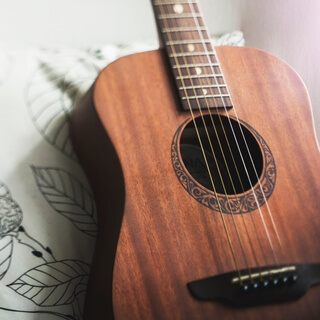
So I went to this camp and then I saw that around the fireplace,
These two guys are playing guitar,
Acoustic guitar,
And everybody was singing and the girls were singing.
And I went back home from camp and I said,
Dad,
I need a guitar immediately.
So he took me out and bought me like the cheapest guitar.
So I went into it for the dumbest reasons,
You know,
Just to be seen,
I guess,
Out of my insecurity,
Just to pull the attention.
Which is the opposite,
I think,
Of where I am in life right now,
Is music is sort of a way to serve,
A way to connect with people,
A way to point outwardly to others so that they can find areas of their life that they're not conscious of or sensitive to.
So yeah,
That was a full circle there.
But originally,
That's what it was.
I just picked up a little guitar,
Tried to play a few tunes,
Never studied it.
I do not consider myself a musician in the sense of having artistic or being a phenomenal professional guitar player.
I'm a singer songwriter.
So I write songs,
I play them.
And that's sort of what I do now.
So years later,
Then we got signed,
My brother and I,
We had a band in Brazil,
Got signed by Sony Music.
We did that for several years.
We toured the country several times,
Went to Europe once.
And that was nice.
But now,
All these years here in Santa Fe,
I started a solo career,
So without the band anymore.
And I put out a record last year called The Trail Back,
At Trilhe de Falta in Portuguese.
So I'm still with Sony Music,
But now I'm sort of in a solo deal,
You know?
I'm sure when you were sitting around that fire,
Noticing the boys playing the guitar,
You never thought it would take you on this path.
No,
I did not.
And I mean,
Like,
You don't think in those categories,
Right?
It's like,
Okay,
I'm going to pick up a guitar,
Maybe to get a girlfriend down the line,
You know?
But you don't think career,
You don't think of writing songs.
That was not in the picture,
For sure.
And then I think it ended up happening.
I mean,
I was older,
I was in my mid-20s,
Maybe,
In graduate school in Michigan,
In the winter,
Writing songs by myself.
And then in Brazil,
The song,
Then we got,
It's a long story,
We got signed by Sony in the most unexpected way.
We didn't go after it.
A friend of ours took songs to the guy at Sony,
And the guy said,
Hey,
We want to sign you.
And I said,
Sure,
Whatever.
I was in Michigan studying.
I mean,
You know how that goes.
You're in a little student apartment,
Writing songs and singing to,
You know,
Washing machines at the washing machine room,
You know,
Because it has nice acoustics.
And then I just know that a few months later,
We just started getting a bunch of emails,
My brother and I,
To go down to Brazil and play shows.
And I was like,
I think something's happened.
This was before,
Like,
Social media,
You know,
Was a thing,
And streaming services were a thing.
So we're like,
This is weird.
So we went down to Brazil and discovered that we had a bunch of people were listening to our album after Sony signed us and,
Like,
Put the CD all over the place.
So it was in a moment in life which I think it needed to happen.
If ever it had to happen,
It wasn't a good moment in life where I wasn't taking myself as seriously as back in the day when I was trying to play guitars to get a girlfriend.
So I was,
I guess,
More down-to-earth,
More balanced,
More conscious of the role of music and going through so many difficult things in Michigan,
In graduate school,
In my marriage at the time,
And writing about them.
So I just felt at that time that if songs are connecting to people in that meaningful way,
I mean,
What a beautiful thing.
So the sense was not like vanity or pride,
It was more just gratitude,
You know,
For being put in a position where you're able to help people.
And yeah,
So I'm very grateful for the whole journey.
I was going to ask,
Are you and your brother still working together?
No.
So we had a band for several years.
We put out four albums.
One live one.
I think that was the fifth one.
Yeah.
So a live one.
A big one.
We did a long season of albums and tours with a live recording in Sao Paulo that you can find on YouTube.
So if you put our band name there,
Os Ahais,
O-S,
Space,
A-R-R-A-I-S,
Which is my last name or our last name,
V-A-H-A-I-S,
Os Ahais in Portuguese.
You'll find it there.
Yeah.
Us playing for some people in Sao Paulo to sort of celebrate the career that we had no idea was going to happen.
And that was 2018,
17,
18.
And then we moved here,
Or I moved here to Santa Fe around that time.
And then he moved.
He was in Albuquerque.
He moved to Maryland.
And then we sort of took our different paths.
He's working in music in his context there,
And then I'm writing songs here on my end.
And then I just decided to go back to Nashville,
Where I normally go to record albums and do a solo one.
So that was last year.
It went well.
And I think now in March,
I'll go back to Nashville to do a second one,
Solo one.
So yeah.
To find our music,
Just go to any streaming service that you like,
Apple Music,
Spotify.
Yeah.
And type in my name,
And you'll find my music.
I was going to ask,
My second question is always,
Did you grow up in a religious household?
And I'd love to add on to that question and say,
Was that very important in you deciding to follow this path of becoming clergy?
Yeah,
100%,
Kirsten.
I'll just put it this way.
My grandfather is a pastor.
My father is a pastor.
And I sort of grew up in that context,
You know,
Going to church,
A Protestant Christian.
And yeah,
I think I'm very similar to my grandfather,
Who was not a pastor,
Was a very kind man.
So I had from my mother's side,
He was a pastor,
My father's side,
He was religious,
But he was an honest man.
He was a kind man.
He was a man who sought,
In my mind,
He was the reference,
Apart from my parents,
Of what a pastor should be like.
Somebody who's present in the world,
Seeing need and being seen by need.
So I think I had in me a sense of,
I'm in this world,
Even if it was a very naive at the time when I was young,
But I'm in this world and I want to serve,
I want to be there for people.
That's sort of what I want to do.
So because of my upbringing,
The reference of how to do that was found in ministry,
Right?
Because I saw my parents going into the slums of Brazil to help people,
To be my mom helping women who were abused and they do that to this day.
So that was the reference to me.
So it wasn't a toxic money,
Power,
There was none of that in my upbringing.
And they protected us.
I think my brother and I from a lot of the toxic stuff that we find in religion altogether.
So yeah,
I grew up in a religious home,
A loving home.
I never had any issues,
But unconsciously legalistic homes in a sense of,
Hey,
This is the will of the gods and this is what we have to do.
And this is how we need to,
You know,
This is the appropriate thing.
This is not appropriate.
So very,
Very strict ways of living,
Very narrow way of looking at the world of who is a sinner,
Of who is not a sinner,
Of who is in and who is out,
That kind of structure.
And it takes a while for you to get out of that,
You know?
So today I am grateful for not only the home I grew up in,
My parents,
My grandparents,
The tradition I found myself in,
The Seventh-day Adventist church tradition that I grew up in.
But it comes a moment in time where you have to recognize or realize or choose either to stay within the boundaries of that reality or to recognize,
Like I was saying before,
That there's more,
That maybe there's more.
There's a broader spirituality,
There are more questions than there are answers.
And I think that's sort of where I am today.
So I'm grateful for the journey thus far.
Had to undo and deconstruct a lot of the stuff I learned in my upbringing,
Religious stuff that I learned.
I live now,
I think,
In a season of my life where I try to keep the religious aspects of what I believe in and what I'm about to myself sort of as a private matter of the hidden life of the heart,
If that makes any sense.
So instead of trying to divide and conquer,
Going to neighborhoods,
You know,
When I was growing up,
You know,
And teach the truth to people or whatever,
Just recognize,
You know,
That if there is a God out there,
That maybe he knows what is best for humanity and is doing more things than we realize.
And we get to marvel at that,
You know,
At all the little miracles that happen around us and all the beautiful faith traditions,
Christian and non-Christian,
That we have around us.
I mean,
We're in Santa Fe,
Native land,
So much rich religious culture,
You know,
That we,
I just sit back in awe of the things that we can learn if we only choose to listen.
So here in Santa Fe,
I'm part of the Interfaith Leadership Alliance too,
And we have common friends who are in that too.
So that's sort of another exercise in listening and caring for people and recognizing the beauty of being open to that mystery that we call God or religion.
And in the meantime,
Until we figure that out,
You know,
Just helping other people here in town,
You know,
Those who are suffering,
Those who are experiencing poverty and cold and hunger and doing things together for them.
So all of those things make sense to me.
They're beautiful to me,
The mystery and the service.
But trying to force truth on people,
Which is sort of how I grew up,
That is not interesting to me anymore.
And yeah,
I guess that's sort of an answer to the question,
Yes,
To religious home.
And that's sort of a little bit of the journey since then.
First of all,
I was listening to your story about your friend just handing your music over to some executive.
And what I thought was interesting there is that goes back to,
You know,
Someone seeing a need and your friend saw a need that your music should be in the right hands and kind of just transported it into the right hands.
And that launched this whole other adventure.
But I would love to hear any stories you'd like to share of where you feel like you've experienced or witnessed something miraculous or magical.
Sure.
I mean,
Yeah,
I mean,
I was thinking about how to answer this question as you were phrasing it.
It's hard.
I mean,
I've seen so little miracles that happen day to day,
You know,
Seeing my children being born.
You know,
That's wild.
You know,
That's one thing that you'll never fully recover from.
It's just a miraculous thing,
A renewed respect for my wife and all women who go through that.
The strength,
The stamina,
It's a magical,
Beautiful thing to witness.
But I don't know.
I mean,
I grew up asking for many miracles as a religious kid that never happened.
So I have a lot of stories of miracles not happening.
So there is that angle.
But there is one story that I remember that when it's funny about miracles that I always I don't know why my body,
My brain just takes me back there every time I hear the word miracle.
And it's a simple little story.
So,
I mean,
I was my dad was a pastor,
As I said before,
I was in church and got bored.
Everybody was doing whatever singing songs to the gods.
And I said,
I'm going to walk outside.
So I walked outside by myself.
And there was some construction happening beside the church.
And there was a tree I like to climb there.
I said,
I'm going to go climb a tree.
I was,
I think,
Eight,
Something like eight or nine.
I'm going to climb my tree and contemplate from the top.
So I went up there,
Climb my way up.
But as I was getting to the heights there,
Fairly high,
I stepped on a sort of a dry little twig there and it broke.
And then in a matter of like seconds,
I found myself like falling headfirst,
Like deliberately literally falling headfirst in a bunch of construction stuff.
This is very high,
You know.
So it was quick,
But then it slowed down because you have time to like think,
I'm falling right now.
And I don't think this is going to end well.
I thought,
Did we have a good run?
You know,
Eight,
Nine years old.
I don't know.
Could have lived a little more,
You know,
You're thinking as you're falling down to your demise.
And then what happened was that I just something just stuck,
My foot just got stuck.
And then I looked up and literally as I was coming down,
By some means,
My foot got stuck in the middle of two little branches.
And I just was literally like dangling head down,
I don't know,
Maybe two feet from the middle thing that I was going to hit my head on.
So I'm dangling and saying,
Wow,
Sort of like Ron Burgundy,
That escalated quickly.
I don't know if we can do Ron Burgundy quotes here in any way.
So as I was dangling there,
You know,
I try to get up again,
Got down and in my childhood innocence,
I said,
Oh,
This is a magical,
Miraculous thing.
Maybe the gods have a purpose for this life.
But then I think by the time I was 12,
That faded away.
I said,
No,
There's no purpose.
We're all going to our deaths.
And we always try to make a good life out of it.
No,
I miss it.
But anyway,
That's sort of the story I go to,
To think about the miraculous and I'm grateful.
I guess I was grateful,
Got out of there,
Hugged my mom,
You know,
Said what happened?
I said,
No,
It's all good.
Just hugging people right now that I'm grateful,
Just survived.
But anyway,
Yeah,
That's a little miracle,
Little childhood miracle that happened.
That's so interesting because I have a somewhat similar miracle.
I grew up overseas.
And so we were living,
I lived in Guyana in South America and then in Pakistan for four years.
So,
Yeah.
So when I was in Pakistan,
My parents said,
Hey,
Let's go on a one or two week vacation to Kashmir because,
You know,
The fighting had abated a little bit.
So we went and stayed on this houseboat.
And I had two siblings,
Two other siblings,
But they left them behind.
And we went and we stayed on this houseboat and it was,
I mean,
It's in the most beautiful place,
Srinagar.
It's just absolutely magical on this lake.
It's it's indescribably lovely,
Tons of gardens everywhere that you you hire someone in a little boat to take you to all these places.
But of course,
For a kid,
It was so boring,
So bored.
And I was there's a picture of me when I was five years old and.
The adults,
We had a gentleman staying on the boat who was kind of like the boat's caretaker,
But also fixed us meals and and took care of things,
So it's a pretty big houseboat.
And I'm five and I'm bored.
And I discovered that all around the exterior of the boat was this kind of like one to two inch little like ledge.
I don't know what it was there for,
But it was there.
And several times I had gone around the outside of the boat hanging on to various things.
And keep in mind that this was a lake with alligators or crocodiles,
Whatever's over there.
There was like it was not it was not chlorinated and animal free.
And so I was,
You know,
Clambering around and all of a sudden my I lost my grip.
And I remember this because I remember falling and time does slow down.
Yeah,
It totally slows down.
So I was falling off this houseboat.
And with the slowing down of me falling,
I saw the ledge that I'd been standing on and I somehow grabbed it.
And was half in and half out of the water.
Screaming my head off.
Screaming,
And the poor man who was staying on the houseboat had to somehow climb out and get me before the crocodiles got me.
Oh,
So I think I was too young to think.
Maybe this means I have a purpose,
But I think all of us,
All of us,
But five,
Though,
Having that that that grabbing moment that the skills,
I mean,
How you're not a marine right now is the surprising part of this story,
I think.
But.
Well,
It's because I grew up in the Midwest and I like nachos and hot dogs.
Well,
Who didn't?
Yeah.
And Michael Jordan and Michael Jordan.
Yes.
Yes.
We did in the nineties.
And yes,
Sure.
Yeah.
There is something to that phenomenon of when you're in those kind of situations that are perceived to be life threatening,
That your your brain does something and slows everything down.
I know science is trying to figure that out.
I just read another article last night about how they think consciousness as is.
Consciousness is created by quantum entanglement,
And what that means is we are still trying to figure things out.
But if that's true,
You know,
Quantum processes are so mysterious and maybe in those life and death situations.
It's something within that quantum world that happens to slow everything down and slower our thought processes down so that we can potentially escape those situations.
Yeah,
It is.
It is fascinating.
I love it.
They also think that photosynthesis and plants occurs at a quantum level,
Too.
So I was like,
We're all connected.
Everything's connected.
Yeah.
Thank goodness for the scientists,
You know,
Who are giving us giving us some good ideas to think about as we journey on.
But I like that,
That idea of quantum entanglement and slowing down of things.
And yeah,
It's interesting because,
Well,
It's wonderful because it means there's way more mystery going on that we still have to figure out.
But I've always been intrigued with,
You know,
Spirituality,
Religion,
Let's say,
And science.
And I've always thought that those two,
You know,
Somewhat perceived separate disciplines are really kind of trying to figure out the same thing.
Yeah,
In ways,
For sure.
I mean,
What what is right?
What is this?
The great philosophical question.
Absolutely.
Religious question,
Scientific question,
You know,
What is this thing we call world life consciousness?
And how do we move around?
Yeah,
I think there's a lot of overlap.
And yeah,
And in the embracing of mystery and not knowing,
I mean,
I love how good science,
Good science,
Good religion always has a healthy relationship with mystery instead of trying to force truth or force clarity where where sometimes there isn't or we need more time to process things or figure things out.
So,
Yeah,
I like that.
So that's a good thermometer to see if you're in a good situation or not.
Do we leave?
Do we have a healthy relationship with mystery or are we trying to force truth and clarity into things,
Which is a great portion of my life and maybe yours as well?
And it's it's nice to move away from that and just marvel at the stuff we do not know.
Thank you so much for listening to this episode of Bitesized Blessings and my interview with the talented and thoughtful Tiago Ahais.
As I said before,
There will be a link to their music under the episode's show notes.
I also need to thank the creators of the music used for this episode,
Alexander Nakarada,
Winnie the Moon,
Frank Schroeder,
Otis Galloway,
And of course,
Osa Ahais.
For complete attribution,
Please see the Bitesized Blessings website at BitesizedBlessings.
Com.
On the website,
You'll find a list of books,
Changemakers and music that I hope lightens and brightens your day.
Thank you for listening.
And here's my one request.
Be like Tiago.
Live for the mystery.
Live in the mystery and wake up every day excited,
Never knowing what could happen.
Look in your grace,
Only the cross will hide who you are not.
I looked sadness in the eyes and smiled.