Welcome to this introduction to meditation.
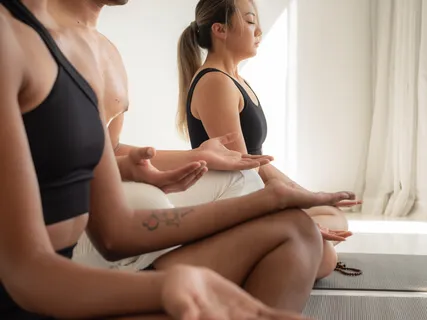
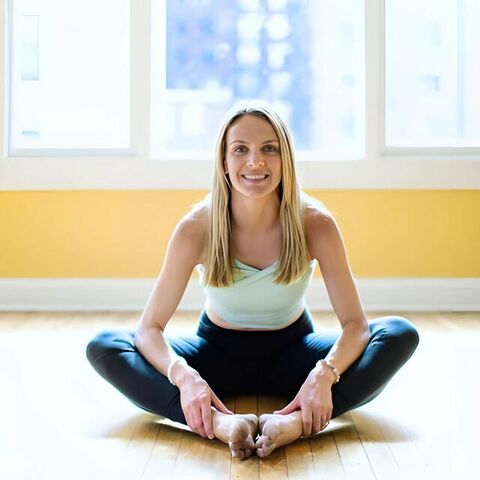
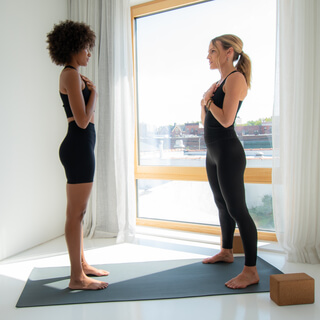
We'll find a comfortable seat.
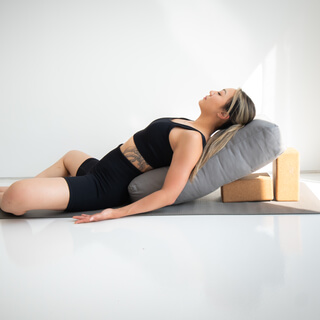
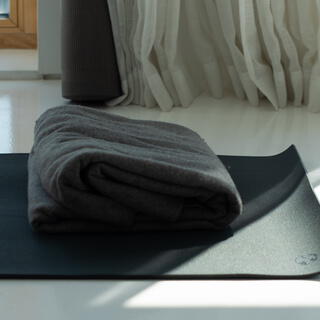
And you may sit up on a block or a blanket or a pillow,
Anything that's comfortable to you.
So take a moment to settle in and find a position in which you can stay seated for 10 to 12 minutes.
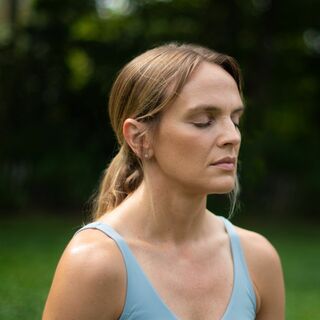
We'll close our eyes or lower our gaze down towards the earth and just find our breath.
So take a nice full deep inhale through the nose and exhale through the mouth.
Again,
Full breath in and full breath out.
One more time,
Inhale and let it go.
Good,
Now resuming normal breath,
Draw your awareness into your sit bones,
Which are connected to the seat below.
And just feel them press down and into the surface or the earth below.
And then from your sit bones,
Begin to draw awareness up your spine,
Lengthening your spine,
Relaxing your shoulders down the back,
Letting your chin tuck in ever so slightly,
Letting the forehead fall soft and the jaw fall soft.
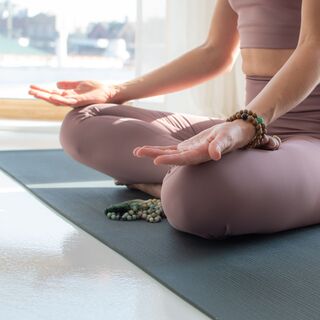
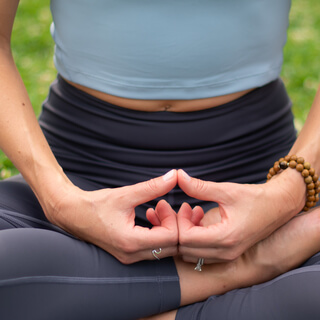
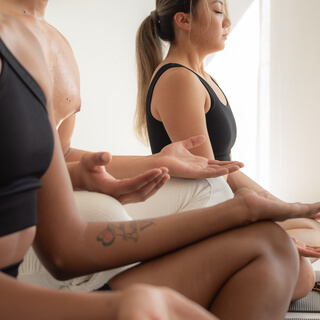
The hands are relaxed somewhere in the lap,
Palms up or palms down,
You decide.
Just notice how you feel in the space.
If you don't feel,
You can stay in the seat or this posture for probably another seven to 10 minutes.
Just feel free to move,
To adjust yourself so that you're comfortable.
And while there is no right or wrong in meditation,
I do often like to think of the posture of the Buddha,
Even though meditation isn't exclusively a Buddhist practice.
If you think about the Buddha who sits comfortably in his seat or her seat with the spine long,
The shoulders relaxed,
The chin tucked,
As if they could sit there all day.
So that's the posture we're looking for as we settle in.
But find what works for you.
What we're working toward is a concept of sthira and sukha,
Or establishing the firm foundation for our meditation practice and the ability to move flexibly within that foundation.
So by now you've found what works for you.
Let's begin our meditation.
Coming back to your breath and feeling that air draw in through the nose,
Pass through the back of your throat,
Filling your lungs,
Expanding the diaphragm so much that it fills the belly.
And as the air makes its way back out,
The same reverse direction,
Expanding and then releasing belly,
Releasing lungs through the throat and through the nose.
So let that be your point of concentration or focus.
Inhaling,
The air comes in through the nose,
Fills lungs,
Fills belly.
And exhale,
Belly,
Lungs,
Release,
And then air out through the nose.
Continuing on your own,
Breathing in,
Just noticing the breath,
And breathing out,
Releasing the breath.
Continuing on your own,
Just noticing that rise and fall of chest and belly with every inhale and every exhale.
Perhaps you're already noticing how quickly the mind begins to wander,
Taking you away from your breath,
Taking you away from your practice,
Tuning in to the dramas of life,
The problems,
The disagreements,
The discords or the plans,
The thoughts,
The feelings,
The anxieties,
The anticipations.
Know that all of these feelings or thoughts that you're having are totally normal.
When the mind isn't conditioned to quiet itself,
It takes a bit more practice to come into that space.
It takes a bit more practice to silence the mind,
To hone your focus,
And allow your awareness just to be within,
Without noise from external influences or circumstances.
So we start to look for very short,
Brief opportunities of silence,
Of quiet,
Of turning off the drama.
And maybe that's just at the top of your next inhale,
Or at the bottom of your next exhale.
Continuing to look for those opportunities when the mind quiets,
Knowing there may not be many of them in the beginning.
But as you start to expand your practice,
You'll notice that these opportunities so too expand.
Just working to train the mind on coming back to your inhale and your exhale,
Knowing that those external influences will still be there at the end of your practice.
They'll still be there waiting for you when you're done.
So latching onto them right now serves us no purpose.
Work on releasing one single thought,
Concern,
Worry,
Idea,
Whatever it is,
At a time.
So perhaps you notice that thought running through your mind,
And you just place it on a mental shelf and say to yourself,
I'll pick you up later.
And then work to do that with each successive thought until all the thoughts have been placed on the shelf.
And all you are left with is that internal silence,
That inner wisdom of knowing yourself,
Of letting go,
And just simply being.
And when you're ready to come out of your practice,
Begin to deepen your breath,
Feeling the inhales get a little longer and the exhales a little shorter.
And when you're ready,
You can slowly open the eyes or lift the gaze,
Beginning to take in the sensory stimulus that surrounds you.
If you decide you want to stay here in meditation,
You can follow your breath again.
If you're ready to come out,
Do so slowly,
And in such a way that you carry the benefits of this meditation practice with you throughout your day.