Welcome to the Mind Body Spirit podcast.
I'm your host,
Kim Shepherd,
Combining science and intuition to support your mind,
Body,
Soul wellness journey.
So today's podcast is continuing on from episode three.
We'll be talking about how your gut health impacts your mental health.
So I thought it'd be really useful to be able to give you some tips on how to support your gut health,
Which then also supports you in looking after your mental health as well,
In ways that you can implement food into your diet to be able to support the healing process.
And so I'm gonna let you know on what type of foods you can easily work with and how they're actually gonna support you as well,
Because one food does not suit all types of gut healing,
And you've also gotta take into account the individual as well.
So from a naturopathic perspective,
We look at the patient holistically and uniquely.
So what I do when I go into a consultation with a patient is I ask a whole bunch of different questions to determine what is the unique treatment plan we're gonna do for that particular patient,
Because what suits this particular person is not gonna suit the next person.
So what you can do in order to be able to start working on supporting your gut health today is even working with chamomile.
So chamomile is something that I supported my daughter from a very young age as well,
Because she was a pukey bubba and up until about the age of six months.
So what I would do for her is I would use a chamomile tea bag and I would just put it in a little bit of hot water and allow it to cool down,
And then add that into a little sippy cup for her,
Or into a little syringe,
And just syringe tiny amounts of chamomile tea in just to be able to support soothing her gut health.
So when it comes to chamomile,
Chamomile is fantastic for gastrointestinal spasms.
So when your gut's feeling unwell,
It's really good at reducing inflammation,
And for IBS,
Irritable bowel syndrome,
It's good for flatulence,
Bloating,
Diarrhea,
Particularly when there's a nervous diarrhea,
Because stress affects our bowels in different way.
For some people,
They will get diarrhea.
Other people,
When they're feeling nervous and anxious,
They're actually gonna become constipated.
So those who have that nervous predisposition,
Chamomile is fantastic.
It's also good at soothing anxiety as well.
So when there's that really strong connection between the gut and the brain,
Chamomile helps at soothing the gut,
As well as soothing the nervous system,
Which encourages in reducing anxiety.
It's also good for travel sickness,
Dysmenorrhea.
So that is painful periods and amenorrheas,
And we've got those absence of periods when we're not getting them regularly enough.
It's also good when we're feeling restless and great for teething in children as well.
Topically,
You can even use eczema to support wound healing and reducing inflammation within the skin,
And also bacterial skin diseases as well.
So chamomile's something that you can regularly buy from your supermarket.
It's something you can grow in the garden.
When it comes to growing certain plants,
So you wanna make sure that they're safe to consume directly from the garden.
From a naturopathic perspective,
We don't always use the whole part of a plant for the medicine.
So we might,
For some plants,
We do use the whole plant,
But for other ones,
It might be that we just use the flowers or we might just use the roots or the leaves.
So every plant is different.
So if you're choosing to grow your own plants and you wanna harvest them from your garden,
Just make sure you do your research to ensure that you're not going to poison yourself or cause any harm in the process as well.
Chamomile is also very cooling.
So every plant is either gonna cool us down or warm us up.
So if someone is already running really hot,
So someone's got really high blood pressure,
Hyperthyroidism,
So someone's got a thyroid that's working too hard,
And they've already got this aversion to heat,
We wanna give them more of these cooling plants.
And so of course,
Then if someone is already too cold,
They've got the cold hands and feet,
Then we wanna give them something that's gonna warm them up.
So the next plant you could work with is peppermint.
So peppermint is brilliant for digestive complaints,
But we need to make sure that there's no stomach ulcers,
Because if there's a stomach ulcer there,
It could potentially flare that up.
So it's good for bloating,
And it can also be beneficial for flatulence when we combine it with fennel and caraway.
So you can often get fennel and caraway seeds from your supermarket within the spice aisle.
It's good for gallbladder issues,
Gastritis,
The inflammation of the gastrointestinal tract and enteritis,
That's inflammation of the intestines.
You could also work with peppermint when you've got a cough or the common cold or that respiratory tract catar as well.
So you wanna be able to remove that phlegm from the lungs.
It's good for nausea and vomiting,
Morning sickness,
Painful periods,
And topically you can use it for headaches as well.
When it comes to peppermint,
You just wanna make sure that it's suited for you.
So if you've got reflux,
You're gonna want to avoid peppermint.
But if you're low in iron,
You're also gonna wanna make sure that you're not taking peppermint or having like peppermint tea with your meals because peppermint is gonna reduce the absorption of iron and reduce your iron levels even more as well.
So just being mindful of your iron levels and having peppermint away from your meals.
And ideally you'd wanna do it at least two hours away from your meals as well.
So it allows your food to be digested before then you go and have your peppermint tea or allow your peppermint tea to be digested and absorbed before eating your food.
So peppermint is very cooling,
Which you can probably imagine as well.
Even think about when you had that cool sensation through your mouth when you're eating a peppermint lolly,
For instance.
So when it comes to a warming herb or warming plant,
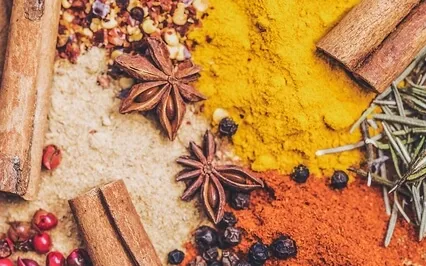
You can work with cinnamon.
Pardon me,
So cinnamon is great when we have a loss of appetite and we need to be able to,
Because when you get up in the morning,
You wanna feel hungry.
It doesn't have to be immediately on rising,
But at least within that hour,
Usually 20 minutes is a fantastic amount of time.
So if you're not feeling hungry in the morning,
Cinnamon can help to stimulate the appetite.
It's also good when we've got those gastrointestinal complaints like bloating,
Flatulence,
And some mild spasms that might be happening within the gut as well.
Also good for nausea and vomiting,
Diarrhea.
And like I was talking about earlier,
Being a warming herb,
It's for those conditions that require some warmth.
So if someone has got cold hands and feet,
If someone's got an underactive thyroid and they've got the aversion to the cold and they need to be warmed up,
Rainids is another condition where if someone doesn't have that really great circulation happening and they get the cold hands and feet,
Then cinnamon can help to warm up the body.
Other benefits of cinnamon is that it can be used in the instance when someone's had a uterine hemorrhage or menorrhage,
Which is when we've got heavy or long periods as well.
Another plant you can work with is turmeric.
So turmeric is fantastic.
It's a great anti-inflammatory,
Antifungal,
Antiviral,
Antibacterial,
Anti-cancer,
All of the beautiful antis.
So with turmeric,
I like to use it when someone's got rheumatoid arthritis as well,
But if we're gonna talk about the digestive system,
It's great if there is a stomach ulcer.
So peppermint,
We want to avoid having it when there's a stomach ulcer,
But turmeric is beneficial for it because it's got that really great anti-inflammatory properties.
It's good for precancerous conditions.
Rheumatoid arthritis,
Like I mentioned,
It's a really great antioxidant.
It's good when the liver's not functioning at its best.
If you,
Like I mentioned,
With each plant,
We've got to work with the individual.
So we need to align the right person with the right plant for them.
So if someone is on any anti-platelet or anti-coagulant drugs,
They're gonna want to avoid turmeric because it naturally will thin your blood.
So you need to be really mindful that,
Again,
You talk to a healthcare professional to ensure that you're taking the right medicine for you.
But even if you're taking turmeric and you're just adding it into your meals and stuff,
You need to be mindful that if you are taking your anti-coagulant medication,
If you're,
When you cut yourself,
If you start to bleed more,
You want to make sure that you're reducing any potential foods as well as any vitamins that you might just be self-prescribing to make sure that you're not causing more harm to yourself.
Other instances where you want to avoid turmeric is if,
Say,
Females have a complaining of hair loss,
We don't need to take turmeric in those instances.
And if you are applying it topically to your body,
So some people might choose to apply it topically when they have got rheumatoid arthritis and applying it to those areas of the skin,
You want to avoid excessive sun exposure in that instance.
If you are applying sun plants,
They can stain the skin.
So turmeric is one to known to stain the skin.
But if it is something that you choose to use topically,
Just be mindful that you're not out in the sun for long periods of time.
And making sure that when you,
When you enjoy your foods,
If your body is feeling drawn to it,
It's often drawn to it for a reason,
Particularly if it's a healthy food,
But there are some instances where you're drawn to food and it's something that you don't need.
And that could come down to bacterial imbalances within the gut,
Or if you've got anything else foreign within the gut that should not be in there,
It might also be craving foods as well.
So when it comes to other things that could crave foods within your gut,
Parasites are an example.
So quite often,
If someone has got parasites within the gut or even certain bacterial imbalances,
You might find that you're craving sugars or carbohydrates.
So those are simplex carbohydrates like white bread,
White pasta,
White rice.
So it might not be your own cravings,
But it's just the imbalance within your gut that we need to work with in order to bring it back to balance.
So sometimes we need to reduce foods for a certain period of time whilst we're restoring function and helping to eradicate what needs to be removed or going in and doing the healing as well.
So I hope you enjoy learning about how you can just work with everyday plants to support your gut health and your mental health.
When your gut is feeling healthy and you're not feeling like it's heavy or it's blah or it's bloated or it's in pain,
Your brain is gonna feel better.
So if your mental health is struggling,
Really take the time to connect in with your gut health.
And even from that spiritual perspective,
Thinking about your intuition and your solar plexus and your gut health.
We want to make sure that everything is functioning at its best.
So we need to learn to align the mind,
The body,
And the soul so we can become more in tune and more aware of how our body is feeling.
So many people are at times disconnected from themselves because the mind is so busy.
But once we learn to,
It's embarking on that journey of self-care.
And in the last podcast episode four,
We talked about self-care is the journey to discovering your purpose.
If we allow ourselves to look after ourselves,
We get to feel better from it.
We benefit from it physically,
Mentally,
Emotionally,
But also spiritually,
And it guides you on that journey of discovering your purpose or aligning you with a different purpose that you weren't even aware of.
And it can also help to clear those energetic blockages that have been stopping you from pursuing your dreams because your energy has not been in that right space as well.
So anything that we're dealing with on a physical level has started off as an energetic imbalance first.
And it's once we've held and stored that energy for a period of time,
That's when it manifests into the physical,
Which then ties it all the back to our emotions again as well.
So emotional wellbeing is really important.
So if you're feeling stressed,
Exhausted,
Overwhelmed,
Angry,
Frustrated,
All of these emotions are assigned from your body to let you know that something is not in balance with you.
The liver and the gallbladder store the emotions of anger and frustration.
So if we're feeling angry and frustrated,
We often need to perhaps start eating foods to support the function of your liver and your gallbladder.
The other thing you need to be mindful of when it comes to supporting your liver is if you are taking medications,
You need to be mindful that your medications are still effectively doing their job.
So when you go in to support the function of your liver,
It's naturally going to work faster.
It's going to be working more efficiently.
And what that means from your medication perspective is that the half-life of your medication is going to be reduced.
So if you're taking a medication that is meant to last for six hours or 12 hours,
Or if it's long acting for the whole day,
If your liver is functioning better,
Your drugs are going to be metabolized faster,
Which means they're going to be leaving your system or leaving your body sooner.
So if you do choose to support your liver,
You need to make sure that you're doing that away from your medication,
Again,
At least two hours,
To ensure that your medication is doing its job and you're not actually putting your health or yourself at risk.
If you take thyroid medicine,
You need to be mindful of taking medicines at least five hours away from your thyroxine.
So thyroxine is very easily impacted by a lot of vitamins and medications,
And not many of my patients are even aware that you need to take your vitamins away from it.
So if you're taking thyroxine,
Make sure there's a five hour gap between that and anything else that you take.
And if there's anything that you're concerned about,
Then please get in contact with your healthcare professional to make sure that you're doing this in a safe and effective way for your unique physiology and what your body needs.
If you need any support,
Please get in touch.
I hope you have learned something about how you can support your gut health and your mental health.
And I hope that you enjoy this journey of self-care and continue to look after yourself.
And until next time,
Bye for now.