Hi Kerik.
Hi Phoebe.
Today we are answering the question,
What is yoga?
I think it's a great question to explore and really as we embark on the next few podcasts we're looking at defining yoga terms that we use all the time and we use them so much that we assume that people know what we mean by these terms and so we're just starting with the broadest term yoga.
I think that most people have some idea of what yoga is in their heads and we all probably have different definitions of yoga or different ideas about yoga.
This podcast is about unpacking really what is yoga,
What is historically what is yoga and probably more importantly just you and I chatting about how we personally view yoga,
What we think yoga is as yoga teachers.
I'm so happy we're talking about this because before we decided to do this episode I realized if someone had asked me what is yoga I'm not quite sure I would have known how to answer and I don't want to project but I think that maybe a lot of yoga teachers can get swept up in teaching and practicing and not taking the time to consider really what is it that we do.
So with that,
Keric,
What is your definition of yoga?
So I have a couple of different definitions that I really like and I agree with you that it is very important for us to know what our own definition of yoga is because the way that we define yoga in our heads is going to impact the way that we practice and it's going to also influence the way that we teach.
So I think it's good to have a clear idea of what we think that yoga is.
So my favorite definition is sort of a modification of an Anusara definition.
Yoga is the art and science of exploring the body,
Mind and spirit.
It's really simple.
I love this definition because I like the art and science part.
The science really is the technology and the precision,
The alignment,
The physical alignment,
The philosophy that's been handed down over the ages and the art is really each individual working with the technology,
Working with the science and personalizing it,
Making it their own and there's no right or wrong way to do yoga just as there's no right or wrong way to create art to sing or dance or paint or take a photograph.
And then the latter half of my definition,
Body,
Mind and spirit,
It really is to me a practice of exploring ourselves on those three levels and to me if you're missing one of the three then it's not really yoga.
I love that definition.
Do you feel like your teaching tends to be more art or more science?
You know what initially drew me to the practice was the science.
So as we talk about yoga,
Originally for me yoga was very much the physical practice of yoga,
Asana,
Poses and I was drawn to yoga at the gym and I never really intended to,
I had no desire to learn the philosophy or chant or any of those other yoga things.
I just wanted to do the poses because I wanted to feel better in my body.
So it started out very much being technical.
The teacher that I had was really good at the technical aspects and I love that and it was at the gym so there really was no philosophy and but you know that first teacher was very creative so there was some art to it but I was drawn to the technical side and so I think I tend to lean towards the technical side but ideally I want a balance of both the art and the science so I really challenge myself to be creative in the way that I teach whether that means including a theme that goes along with the physical sequence or it's being creative with the physical sequence itself.
It's funny you say that because when I first took your class I was definitely more drawn to the art of it because I'd been practicing a pretty intense,
Another style that was pretty intense science,
Pretty intense poses and it was when I first took your class and experienced AnuSara that I thought oh wow you can do these challenging poses and have there be this sort of artistic philosophical component to it so maybe you're a little bit more balanced than you think.
So how do you define yoga?
For me the definition is pretty simple.
It's just the practice of turning inward and that is broad and I think that there is really a yoga in a traditional sense of doing poses in a room with a teacher for a certain amount of time and there is a yoga of conducting your life,
Of your professional work,
Your relationships,
Your creativity and yoga is the practice of really paying attention to your own systems,
Your own opinions on things versus letting things externally sort of guide you and so the practice of yoga for me is really just this huge metaphor of paying attention to your breath and paying attention to your body so that when you are in a situation you are still paying attention to breath and body in deciding how to navigate it versus letting another person or versus letting the sort of societal status quo lean you a particular way so that's a pretty broad definition and I know that for some people yoga seems like just stretching and wearing leggings but for me it is a process of introspection.
I love the definition because it does,
It's so clearly,
It so clearly takes you beyond just the physical and yoga,
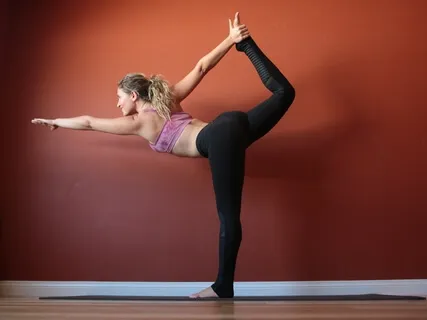
You know I think in culturally we maybe think of yoga as the yoga poses,
What we see in a magazine,
You know Lululemon and you know Triangle Pose,
Things like that but there is so much more.
Traditionally yoga asana was just one part of a much broader practice so there are meditation practices that are yoga,
There are practices of chanting,
There are many other ways to do yoga other than to do a yoga pose.
I love your definition because yoga can be anything that turns a person's attention inwards and helps them to explore who they are on those various levels.
In addition to our personal definitions there's some other pretty well known definitions.
One that we hear quite a bit is that yoga is skill in action.
Where is that definition from originally?
That one's from the Bhagavad Gita which is a very widely used text in yoga.
It's one of the most famous,
Bhagavad Gita means the song of God and it is the story of Arjuna who's a general,
The leader of an army and on the eve before a great battle,
Basically a civil war,
He stops and asks his charioteer what he should do and the charioteer is Krishna who is,
The symbolism is that Krishna is God and Krishna offers Arjuna advice and the advice is basically yoga.
If you are seeking the highest at all times then you are doing yoga and you're following your dharma,
Your path,
Your right path and then yoga is defined in a couple of different ways in the text and probably the most famous is yoga is skill in action.
I'm going to back up just a little bit.
So yoga,
Very often you'll hear yoga teachers say that yoga means to connect or yoga is about connection and I agree it is but there's a really simple way of putting it.
Yoga doesn't necessarily mean to connect.
Historically yoga wasn't used as you yoga the ox to the cart.
That's not how it was used.
The root word of yoga is yuj which does mean to connect but yoga traditionally was used in context as a means of connection or a practice of connection and so it was more than just connect.
It's a process.
It's a practice.
It's the means of connection.
So when we say yoga is skill in action then yoga is this process of creating and refining our skills and then putting them into action,
Doing something with them.
I have read the Bhagavad Gita a few times and analyzed it and never really made the connection until now that Krishna's advice was yoga.
That kind of summed it all up for me.
Exactly.
So then you go back to your definition,
Right?
So Krishna says,
So Arjuna is like,
What do I do?
I don't want to fight my family on the other side of the battleground and then he is asking Krishna for advice and then Krishna is saying,
Okay my advice is yoga.
And then if you go back to your definition,
Yoga is turning inwards.
So really Krishna is saying,
Okay,
Just turn inwards for the answers to explore.
And so that's such a beautiful way of looking at it,
Right?
So then yoga becomes this moment of turning inwards before a great battle and that's the advice.
And then we can think of skill and action.
So now taking,
You know,
Refining those skills and then doing something with them,
Really putting them into setting things in motion.
There's like actual fireworks in my head right now.
I love that.
Okay,
So yoga as skill and action.
There's also the definition of yoga as connection,
Which we talked a little bit about before,
But the connection implied is one between body and mind.
And so yoga is this practice of unifying body and mind.
And the belief is that when body and mind are separate,
We suffer and that when body and mind are connected through yoga that we have this more unified experience.
And I would even take that one step further.
So in my definition of yoga,
Yoga is the art and science of exploring body,
Mind and spirit.
So I would add spirit to that list.
So connecting body,
Mind and spirit.
And traditionally for yoga,
Body and mind are,
Well,
Actually,
It's more mind and emotion is thought of as being very similar.
So really,
The third connection then I think would be spirit.
So then the process of yoga is connecting body,
Mind and spirit through this practice through skill and action through turning inward.
And I might also add yoga is also circulation.
So yoga is this process of observing the breath and observing it circulating in and out.
And if you're not breathing,
You are not doing yoga.
And we see that sometimes with students who are doing the postures,
They're they're listening to the teachers cues,
They are doing what they're told.
But when they're holding their breath,
They're just doing movement.
And the breath is really the the unifying force between mind,
Body and spirit.
And that's where it gets a little bit.
That's where yoga becomes a little bit more specific.
So it's not just movement.
It's not just spirit.
It's all of these things coming together.
And then coming back to this idea of circulation,
It's this process of of turning inward.
And then also with every exhale,
Kind of like releasing anything that doesn't support you as you are executing your skill and action.
So then,
We also have Patanjali's definition.
Patanjali wrote the yoga sutras,
Which is a text that almost every yoga teacher reads in training.
And he defines yoga as the cessation of stirrings of the mind.
How do you interpret that definition?
I think that definition is,
It's a great way to think about yoga.
It's to me,
It's very similar to your definition of turning inside.
So it's this very,
Very not physical definition,
Turning inside,
Stopping the mind,
Really,
To say nothing of of the body.
I think that it's also very difficult to stop or completely make the mind stop.
And so we might reinterpret and reimagine the definition and refine the definition a little bit to something that is more personal or more applicable.
So sometimes I'll define yoga as yoga is the slowing or the refining of the stirrings of the mind,
Which seems much more achievable to slow down our thoughts or to quiet our thoughts or to refine our thoughts,
Rather than to completely stop them.
Tends to be pretty difficult.
Yeah.
So with all of these definitions in mind,
What are some of the,
I don't want to say wrong,
But maybe some definitions that you've heard from people where you've gotten the sense that they've kind of misunderstood what yoga is or misinterpreted it.
Um,
I don't know.
For example,
I know some of some people I know,
Some friends who don't,
Who've never taken yoga,
They're like,
It's just stretching,
Right?
Oh,
Sure.
And I think a lot of people who've never taken a yoga class think it's just stretching,
Right?
What you're just stretching.
So why is yoga not just stretching?
Yeah,
I think by both of our definitions,
It quote unquote just stretching does not fit into really any of the definitions that we've talked about.
Right?
So it's,
It's more than just physical.
Both of our definitions imply that turning inside is more than just stretching or just being physical.
Exploring the mind and the spirit is more than just the physical.
So yeah,
I think that maybe some of the misconceptions or misperceived definitions of yoga,
They might just be missing one or two elements.
So certainly we do a lot of stretching and yoga and we can be very physical and yoga,
But to to miss a big part of the of the practice is to miss identify or have a definition that's incomplete.
Sure,
Sure.
Have you ever had people come to you with interesting other interpretations of it or I think that the main one is the one that you mentioned is like,
Many people think that yoga is just poses or it's just stretching.
Curiously,
I think that sometimes people think that if you do yoga,
You have to be a vegan.
Or if you do yoga,
I don't know,
Like there,
There are some assumptions that you know,
You're a tree hugger or whatever,
We really fit.
You have to be really fit.
Yeah,
You you have to look a certain way.
Yeah.
You're not a Prius not allowed to drink alcohol,
Right?
You know,
You have to try.
And so and many of all of those things are not true.
So I think that there are maybe some I don't know if that's really related to the definition of yoga,
Or just kind of this perception that yoga and yogis have to do certain things and be a certain way.
That just aren't true.
I'm glad you bring that up.
Because I think if you were I mean,
I haven't googled yoga recently,
But if you were to Google yoga,
Probably all of those things would pop up vegan recipes and electric cars,
And really expensive clothing.
And it's not to write off any of those things.
Well,
And the funny thing is almost to the opposite of the really expensive clothing,
Like,
Yeah,
We think of expensive yoga leggings or whatever.
But then the other on the opposite side of that is so to me,
This stereotypical yogi,
Like I think of almost a cartoon in my head of this yogi on the top of the mountain,
Sitting on a bed of nails,
Bound up in a pretzel like pose,
With a beard that goes down to the ground,
And the yogis in pain,
And distanced himself from the world,
The yogi is on top of a mountain in a cave.
And,
You know,
So yogis don't have to get rid of all their worldly possessions,
Or somehow live with pain,
Or somehow make themselves suffer.
So that's maybe one way of turning inwards.
But it's certainly not the only way,
And it's not necessarily our way.
So we're not trying to somehow make ourselves suffer or separate ourselves from the world.
As a matter of fact,
We can turn inwards and still be a very big part of the world.
And I think that's really important.
Very true.
And,
You know,
Before we started recording,
We were talking a little bit about how in LA yoga has turned into a very experiential type of thing,
Where it's not just about the yoga class,
But it's about the decor of the studio,
It's about the food that they offer,
It's about the music that they're playing,
And again,
You can do yoga in a really fancy studio with special heat settings and scented candles,
And you can do yoga on top of a mountain on a bed of nails.
And the point is that by our definitions,
It doesn't really matter as long as you are turning inward,
Or observing the art and science of unifying body,
Mind and spirit.
And so we we bring all of these different elements up because they they're just different.
One isn't better than another.
Another thing that comes up quite a bit is that yogis or yoga teachers have to be poor,
Because accepting too much money is somehow sort of counter to the belief system.
And I personally believe that yoga teachers deserve massive compensation,
Because what we do is transformational.
And and so that's one one stereotype that I definitely pay attention to and think,
You know,
Am I somehow being less of a yogi by accepting good compensation for teaching?
So are there any other stereotypes about yoga?
I think the other thing that I see quite a bit is where people try to define what yoga is not.
So I'll say this on Instagram a lot where someone will post a photo,
A yoga teacher,
Or a yoga practitioner will post a photo of them doing whatever a yoga pose or something.
And someone else will comment,
Well,
That's not yoga.
And they're really making this judgment on the person that hey,
What you're doing is not yoga because of what you're wearing or not wearing.
Because of what you're doing is like that's not yoga because it's acrobatics or that's not yoga because it's gymnastics.
That's and to me,
By our definitions,
It's all yoga as long as you are putting your skills in action in a mindful way that turns you inward.
That is an exploration of body,
Mind and spirit.
It can all be yoga.
So it really kind of it,
It rubs me the wrong way when people make a judgment over whatever my my yoga or someone else's yoga and says,
You know that to make a statement like that,
That that is not yoga.
I feel like that's not really fair to me.
It can all be yoga.
I'm not saying it's all yoga,
But it can all it can be yoga.
It really comes down to attitude.
And if you're being conscious,
And you're you're,
That's what you consider yoga,
Then then that is yoga.
What you're saying is huge.
And I'm kind of just having this brain explosion right now.
You can never tell whether it's yoga by a photo.
Because by our definition,
Yoga is something that happens internally.
So someone could if you look at a photo of someone painting,
Then that's yoga if they are turning inward and painting something that's in their heads.
But we can never ever know whether someone is doing yoga beside ourselves,
Which is a pretty important thing.
And by that same logic,
You could have someone wearing head to toe Lululemon in a studio doing physical movements,
But not breathing and not paying attention to themselves looking at the person next to them.
And that would not be yoga.
So we're kind of back where we started.
I think,
You know,
We were also talking about the differences between doing yoga on the mountaintop versus doing yoga in the fancy studio.
And again,
No judgment on the fancy studio or the mountaintop or anything in between.
It all can be yoga.
So as long as as long as there's that participation in that act of turning inwards and being very conscious,
Then to me,
That's yoga.
And again,
That's just our definition of yoga.
Someone else's definition might be very different.
Right.
And as yoga teachers and yogis,
I,
I hope that people have their own definition of yoga,
Because yoga is different to people.
It's different and the same.
And it does something a little bit different for each of us.
And each of us has this inexplicable inner experience of it that we can attempt to articulate and sometimes can't.
Yes,
I think that the way that we define yoga is going to color the way that we practice,
It's going to color the way that we teach,
It's going to color the way that we really maybe even live our lives.
So if your definition of yoga is yoga is just stretching,
Then when you're in class,
The way that you do,
The way that you practice is going to be very different from someone else who's maybe sitting right next to you.
And their definition is yoga is the practice of turning inward,
Right?
You're gonna have two different experiences based on just on definition.
So the definitions are so powerful.
And,
And that's really why we're approaching the podcast in this way where each week we're kind of picking big,
Broad topics,
Maybe even one word.
And we're,
We're just exploring like how we can define those words.
Because the way that we conceptualize those words,
These concepts can be so powerful over how we practice.
So true.
And to take it one step further,
The highest intentions for our style of yoga,
Which is Anusarā yoga,
Are two Sanskrit words,
Chit and ananda.
That's chit.
And chit means consciousness and Ananda means bliss.
So really,
By the Anusarā definition,
Yoga is the anything that brings us closer to consciousness and or bliss.
So by power of example,
Us recording this podcast right now and being engaged in conversation and being in the moment is yoga.
When you are reading something or having another conversation or creating something and you are fully in the moment and getting a little bit closer to consciousness and bliss that too is yoga.
So as Kerik said,
It's not all yoga,
But it all can be yoga.
And no one else can tell you whether it's yoga or not.
It's really it's an inward experience.
So keep that in mind as you practice in more traditional settings and as you go throughout your life.
We'll be back next week with an exploration of another very common term in the yoga practice and until then.