Welcome to Yoga Chit Chat.
I'm Phoebe Schiff,
Yoga teacher,
Scorpio,
And Millennial.
And I'm Carrick Morinaga,
Yoga teacher,
Sagittarius,
And Gen-Xer.
Every week we meet virtually for an informal discussion on a common yoga principle,
Teaching,
Or theme.
This week's topic is Shiva and Shakti.
I'm not going to try and explain those in one word because the truth is there are dozens,
Maybe even hundreds of ways of translating and understanding them.
So I'm going to let you kick off this conversation.
The tantric philosophy of Anusara Yoga,
We used to call it Shiva Shakti Tantra.
And I'm not sure if we still use that term or not,
But I really love it because Shiva and Shakti represent the balance between energies that we all have and work with in our daily lives.
There are energies that can sometimes get out of balance and we can sometimes lose touch with.
And so yoga is this practice of being conscious of Shiva and Shakti and then cultivating Shiva and Shakti to a point where the two energies are in balance and our existence is in balance and life is better.
So we can interpret Shiva and Shakti in a number of different ways.
One of the ways that we've already talked about previously in the podcast,
We've talked about Shiva and Shakti as the unmanifest and the manifest.
So Shiva is the unmanifest.
Shiva is absolute consciousness or supreme consciousness.
Shiva is the void.
Shiva is the emptiness of space.
And Shakti is the opposite.
She is the manifest becoming real,
The manifest stepping down and creating everything in the universe.
Shakti is the manifest world.
Shakti is the universe,
The power of the universe as well as the universe itself.
She is the form and shape and energy of the universe.
She is the power of Shiva.
Everything in our experience comes from the dance of Shiva and Shakti and another way of understanding them is to look at them as the divine masculine and feminine energies.
So Shiva is the divine masculine.
Shakti is the divine feminine and everything in our experience is this movement between masculine and feminine energies.
There's many different ways of understanding them and also it's important to note that while the pursuit of balancing them is important,
That perfect balance in between them in the human experience,
I think we can say is impossible.
It's something that we're constantly striving to keep in balance.
We might,
Maybe we'll find balance for a moment,
But then I think we'll find ourselves out of balance almost immediately.
So yes,
It's very elusive and it's something that we continue to seek,
I think,
Throughout our lives,
At least for most of us.
Perfect balance between those energies might be a really transcendent moment in meditation or a moment out in your life where you feel ultra connected to everything and the experience of balancing those is fleeting.
And we move in and out of balance as a way of experiencing the bliss of connecting to both of them and then also the lack of bliss when they are out of connection.
To put Shiva and Shakti into a very everyday framework,
I like to think of Shiva as that initial moment when I'm waking up and getting out of bed and I have the whole day ahead of me.
Nothing has manifested itself.
The day is pure potential.
It could go a number of different ways.
And then as I get out of bed,
I'm already creating my day and the energy of Shakti is now manifesting everything from what I have for breakfast to what I do during the day,
Which classes I teach,
What I choose to do as my form of exercise,
What I choose to study that day,
Who I choose to hang out with.
All of those are Shakti taking form from that pure potential at the beginning of the morning.
Yeah,
I love the idea of Shiva as potential and Shakti as what comes from that potential.
So for me,
I think about it as sitting down in front of your computer with the intention of writing something or creating something.
And then sitting down and having a blank Word document open,
It's pure potential.
You can put anything onto that blank document.
And then Shakti is the contraction of ideas into words or pictures or whatever it is that you are pulling from the immaterial world of your ideas and imagination and then into the material world by converting that into words or images or whatever it is that then becomes manifest on your computer screen.
Shiva is the blank screen and then Shakti is whatever is cast upon that screen,
Whether it's text or a movie or your favorite TV show.
That is the manifestation,
The living sort of shifting,
Moving embodiment of Shiva.
And this has helped me as I have honed and refined my creative process over the years is that you need a balance.
So if my desk is messy and my computer isn't charged,
Then my Shiva is out of balance and I don't have the structure and potential to create because my space isn't tidy and my computer isn't charged.
Or if my computer is where it needs to be and everything is as it should be,
But I haven't meditated or I'm really distracted,
Then I'm out of balance with my feminine energy.
So in order to be able to sit down and create something,
You need both the structure of your computer and also the creativity and contraction of ideas.
In your example,
Shiva and Shakti now start to take on different qualities.
So Shiva is the structure.
We give Shiva different heart qualities,
Things like steadiness,
Stillness,
Patience,
Silence.
And these to me are the clean desk,
The structured workspace.
And then Shakti is the contraction of that pure potential into one manifestation.
And we give Shakti different qualities like creativity,
Joy,
And celebration,
Everything from beauty to freedom.
And we can then start to frame Shiva and Shakti as different,
All different types of energy that have not polar opposites,
But have different characteristics that would take us in one direction versus another.
And one of the ways that we can think about it is,
And you've already mentioned,
Masculine versus feminine.
And we all have masculine qualities and feminine qualities.
One of the challenges,
At least from a yoga standpoint,
Is to cultivate both.
So if we fall on one side of the scale and tip the scales to one side or the other too much,
We can find ourselves out of balance.
For example,
In some of the qualities that I gave,
Something like stillness,
If we find that there's too much stillness in our lives,
Then we're out of balance somewhere where we're not moving enough,
We're not creating enough,
We're not being in the flow enough,
We're just stagnant.
And so stillness can be a good thing,
But it needs to be balanced with something else,
Motion and fluidity,
Etc.
So let's take this to the mat for a second.
And there's a few different ways of conceptualizing Shiva and Shakti in a yoga pose.
The way that I see it,
Which is my perspective,
And there's dozens of other ways of interpreting it,
Is that the shape and the structure of the pose is Shiva.
That is its potential.
There's infinite possibilities when you've set up the structure of the pose,
Kind of in the same way that you set up the structure of your desk to create.
And then Shakti is your breath in the pose.
It's the energy that you are then allowing into the structure and potential of the pose of Shiva.
So a successful pose,
A balanced pose,
Is one where you are equally committed to alignment and structure and the quality and intensity of breath and energy.
How do you see it?
One of the ways I think about it is that Shiva could be the moment before you even do the pose,
Before you even get into the pose.
So let's say we're talking about something that most of us know,
A Warrior II pose.
As soon as I say Warrior II,
Many of us already have in our heads,
We can picture that pose and we know the shape of the pose.
We might even be able to almost feel that in our minds.
And that to me is the unmanifest pose.
Before you even do the pose,
It's just something in your head.
It hasn't been created yet.
And then when you step one foot forward and you bend that knee and you stretch your arms towards the front and back of the mat,
Then you're starting to take shape.
You're starting to move into your version of the pose.
And that to me is Shakti.
When the pose is just in your head,
It's pure potential.
It hasn't manifested itself yet.
And then when you take the shape of the pose,
You condense or contract the pure potential into just one reality,
Into just one pose,
Into the manifest world of Warrior II.
So it's just another way to think about it.
And neither of those two perspectives is right or wrong.
They're just different ways to look at qualities of our existence and framing this dichotomy of the unmanifest versus the manifest.
And that's really more applicable to,
I feel like,
My view of the pose,
The yoga pose.
And your view of the yoga pose,
I feel like,
Was maybe a little less about teaching the unmanifest versus the manifest.
But it was more about teaching something more like steadiness and stillness versus movement and life and creation.
Because for you,
Shiva was the form and the steadiness and the stability of the pose contracting.
And then Shakti was the movement of the breath,
The movement of the energy within the body.
And that's a great way to think about it.
It's that balance between the two energies.
So then to zoom all the way out into the universe and beyond,
Shiva is the potential for a universe to exist,
Just the pure infinite possibility.
And then Shakti is the universe manifest.
And that,
To me,
Is the biggest macro way of conceptualizing these ideas.
And then everything in this reality is just a smaller version of potential and manifest,
The unmanifest and the manifest.
And then to pull it all the way back down into this denser human experience,
Really any problem that you have in your life,
You can look at from the framework of the dance of these two energies and ask yourself,
Does this need more Shiva or does this need more Shakti?
And every day we strive for balance.
And then if you get to the end of the day and you think I'm really tired or I have so much energy,
It then becomes a really interesting framework of how to structure your days in ways that feel balanced.
Shiva and Shakti represent everything in the universe.
So there's really nothing more than Shiva and Shakti.
You mentioned Shiva as the unmanifest,
The formless and then Shakti as the universe and everything in it.
So the other terms I like to overlay on Shiva and Shakti are spirit and matter.
Shiva is spirit,
The unmanifest,
The pure consciousness.
And then Shakti is that pure consciousness or that spirit taking form as you and me,
As our physical bodies.
And you could even think of our thoughts and feelings,
Our emotions as being more Shakti.
And then Shiva is more spirit,
Everything that's not of this world.
And that too becomes part of the balance in our daily lives.
So going back to finding or seeking balance in everything,
I think that for many of us,
If not most of us,
It's really easy to get caught up in the day to day in the stress of our jobs and the busyness of our lives,
Our daily lives,
Because we're physical beings.
We sense the world through our five senses.
We are used to experiencing the world with our bodies.
We're used to experiencing the thoughts in our heads.
And we,
Of course,
Experience emotion,
Feelings all the time.
That can lead us down a road where we are very oriented towards experiencing life in this one way,
In this very physical human way.
And then we forget about this whole other aspect of ourselves,
Spirit or consciousness or Shiva or whatever you want to call it,
Soul,
If you will.
And yoga is,
To me,
A big part of the yoga practice is now seeking spirit,
Is reminding ourselves that,
Oh,
Yeah,
I am all these things,
My physical body,
My thoughts,
My feelings.
But then there's this whole other side of the equation that for me is really hard to remember.
And that's spirit,
That I have a facet of myself that is untapped,
Untapped potential,
Pure consciousness.
And yoga and life is about seeking that balance.
Yoga is a practice of bringing these energies back together.
And yoga feels good because these energies are sort of being reunited.
So may we continue to honor both Shiva and Shakti on and off our mats.
Another thing I wanted to talk about was the idea of Shiva limits himself to expand experience and knowledge.
And there's a paradox in that idea.
So Shiva contracts with the intention of expansion.
And what that means in a practical sense is choosing one thing to focus on.
So let's say you're hiking on a particular trail.
That's the limitation.
So by choosing that trail,
You limit yourself to that experience with the intention of expanding by getting stronger,
By seeing the view,
By acquiring more knowledge about the process of hiking.
So each of the energies kind of contains the other as well.
So in Shiva acting in his sort of highest expression,
It also contains the energy of Shakti.
One of the ways that we characterize Shiva and Shakti is not just as energies,
But we can personify them as Shiva and Shakti,
This divine couple.
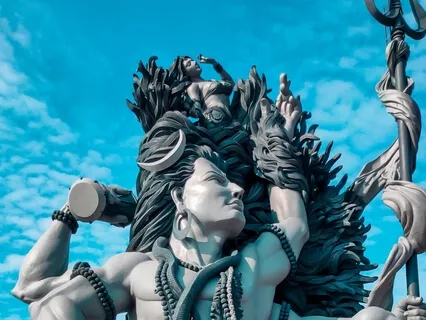
Many of you are familiar with the Shiva Nataraja,
Which is a statue of Shiva,
A dancing Shiva,
And he's framed by a ring of fire.
It's one of the most common statues produced,
I think,
In the world.
Shiva is the Hindu god that represents.
He's the destroyer.
Also within that,
Shiva also creates.
Shiva creates and maintains and conceals and reveals and destroys the universe.
And this cycle happens over and over constantly.
Things are coming in and out of existence,
Whole galaxies and stars and even people,
Right?
There's a cycle.
Shakti is part of that cycle.
We even already discussed Shakti as being this power of creation,
The creator.
And so she's part of Shiva.
She is Shiva.
You really can't have one without the other.
Shiva and Shakti represent everything in the universe and you can't separate them.
They're like two halves of the same coin.
You can't have a coin with only a side with heads.
You have to have that same coin has to have a tail side.
You can't have Shiva without Shakti.
So there's this constant dance between the two.
In the Hindu tradition,
Shiva's wife,
The main goddess that he's associated with is Parvati.
And Parvati is associated with Shakti.
I'm not sure why we don't usually hear the term Shakti in terms of the Hindu gods and goddesses tradition.
I think it's because in the Tathric tradition,
We took things to Shiva and Shakti where Shiva no longer just represents that Hindu god or that statue.
Shiva and Shakti are abstracted to these concepts that we're talking about.
So even as we talk about Shiva and Shakti,
Many of us will recognize Shiva as being this Hindu god.
But we abstract the whole thing a little bit to make the whole concept bigger to connect us to the whole universe.
And we can get away from the,
I guess,
More limited concept of the Hindu god.
We can abstract it one level.
What you were saying before about Shiva being creation and destruction,
I realized going back to our discussion about work habits.
So Shiva is the ability for your computer to turn on and for it to turn off.
And then Shakti is the project that's on the computer.
And you need the computer to hold the project,
But without the ideas then it doesn't exist.
But then Shiva is the ability for the ideas to be manifest by virtue of the computer being on or off.
And you need both.
If everything that we're talking about is now getting a little bit out there,
As we abstract Shiva and Shakti to be the unmanifest and the manifest or even spirit and matter,
We can take Shiva and Shakti down to a more practical level for daily life and in the yoga practice.
And Shiva to me is more stuff of the mind and then Shakti would be more things of the body in that balance of mind and body.
That's often brought up in yoga,
That yoga is this balance of the mind and body.
And then Shiva would be more associated with mind and then Shakti with body.
And then we're seeking this balance between being peaceful and calm and steady in the mind and then being able to move our bodies,
Be more free and flowing and active with the physical body.
That's a constant balance in almost any yoga practice,
No matter what type of yoga you're doing,
Is balancing the activity of the mind and the activity of the body to dance with each other and create consciousness and joy within the practice.
May we continue to practice yoga with the intention of reuniting Shiva and Shakti on our mats and in our lives.
And may we just play with these concepts,
Not looking at them as absolutes or even as a Hindu god and goddess,
But rather taking these very abstract concepts and overlaying them onto our lives,
Overlaying Shiva and Shakti onto different characteristics that we have and then finding balance in all of the different aspects of our lives.
We would love to hear your thoughts about this episode and others.
Please leave us a review.
Thanks,
Everyone.
See you next time.