Welcome friends,
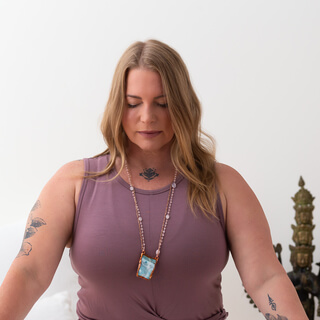
This is Kendall.
As a Yogini and nature witch,
I have long felt the power of connection to the energy in the world around me.
In this series,
Magical Tools 101,
I take you on a journey to discover the mysterious powers and energies that live within accessible tools.
During this series,
I'll share some of the fascinating meanings behind various tools used to connect with or transform energy,
And I'll share teachings on how to work with them in rituals and yogic practices.
As seekers,
We're bound together by a passion for growth and transformation,
And we can all benefit from beginning to see the extraordinary in what might otherwise be perceived as the ordinary.
There's no better place to gather than for us to gather here,
So let's begin on a journey of incredible discovery.
Welcome to Magical Tools 101.
I'm so happy to share this time together.
Today we're talking about smudging ritual basics.
In this chat,
I want to share what smudging is,
A little bit about the history of smudging,
And then spend most of the time talking about the tools that are utilized in smudging rituals,
Because they're very symbolic.
And once you have an understanding of the symbolism behind the tools,
You're really able to incorporate smudging in your very own unique ways.
So let's dive right in.
So what is smudging?
Many people might have heard of smudging,
Also called saging,
But it's a little bit more than saging,
Because that would imply that we're using only sage.
So smudging is the ceremonial burning of herbs or resins.
So it can really be summarized by saying that smudging is a ritual that involves the use of smoke.
And there are many ways to smudge.
Each tradition,
Each culture has its own sort of specific way of doing it.
They might have a very specific order or herbs that are really specific to that culture.
So there are many,
Many ways,
But to really distill it down,
It's using smoke in a ritual.
So this can be done for a couple of reasons.
So why do people smudge?
Why is this something that has been utilized throughout cultures and over places in time?
So people smudge most frequently to cleanse and clear.
So you can think of it as purifying spaces or also purifying people.
So this can be done to yourself or it can be done to others.
But it is using these herbs and the smoke that's released from the herbs to cleanse and clear,
Mostly in terms of energy work.
So cleaning stagnant energy.
They can also be used for calling or drawing in.
So thinking of this in terms of manifestation.
So some things like flowers have a natural sweetness to them.
And when we burn the petals,
When we burn herbs that have a little bit of a sweetness to them,
It is like saying,
Come here,
Come sit with me,
Come be with me in this very special sacred time.
So in this way,
We can utilize smudging as a way of calling in or drawing something nearer to us.
So those are the two basic reasons that people will generally incorporate smudging into rituals.
So when is this done?
So there are many times that it can be done.
And I really invite you to think about when we give the reasons,
The places where it can fit in your life,
Because there isn't one right way or reason or time.
So I'm going to share with you some very typical times,
But please feel free to take this and make it yours.
So people will smudge,
Let's say looking at first themselves.
So if you are looking to smudge yourself,
This would be done at times when perhaps you're feeling like there are things that are a little bit stuck or not moving,
Or perhaps you've had a really difficult day or a negative interaction with somebody.
You can choose to smudge at this time to create sort of a blank slate,
A cleansing and clearing.
You can smudge others.
So you'll find that many teachers or people who are leading ceremonies or rituals may begin this process,
May begin this meeting or ceremony by smudging.
It's a way that helps people become centered,
Present,
As well as cleansing and clearing the space for the collective work that's about to begin.
You can also clear rooms,
You can clear objects,
So physical things can be smudged.
I think of a space when you're purchasing a new home,
For example,
Or bringing a new object into the home,
Especially objects that have been previously used.
So smudging these objects allows any of the energy that was carried with it from previous owners or previous things that might have occurred in that space,
Smudging creates the space to cleanse and clear so that you walk in and start to create this relationship with your energy.
So creating that space of cleansing and clearing in the physical space.
You can also smudge the instruments that you might be using in your ritual practices.
So you might incorporate crystals or other oils or any tools,
Talisman,
Mala beads,
All of these items,
All of these objects,
These sacred objects can be smudged so that they can be cleansed and cleared as well.
Especially if you are first obtaining these,
Much like we just chatted about the house or an object that was brought in that was used by someone else in the past,
Even if these are being brought to you in new condition,
If we'll call it that,
They have had the hands of others that they've passed through to arrive to you.
So smudging them to cleanse and clear them so that you can begin this relationship,
This energetic exchange with a very clean and very intentional purpose.
You can also begin to smudge.
I love when we're approaching spring and thinking about planting seeds,
I love smudging the seeds before they're placed in the soil.
It's a way of offering these seeds a clean slate to enter the earth.
And it's also a way to symbolically give my energy into what is going to be this process of growth and renewal.
So these are just some examples.
And as I said,
You may find so many more,
But I want you to really think about ways that it might work for you and the ways that you can incorporate it into your practices.
So let's shift gears just a little bit and talk about the history of smudging.
And this is going to be brief because I really want to talk about the symbolism of the tools that are used.
But I think it's fascinating that looking at the history of smudging,
That the practice of burning fragrant herbs and resins has been around for a really,
Really long time.
Incense burners have been found that date back to Egypt's fifth dynasty.
That's about the 25th and 24th centuries BC,
Or in other terms,
About 4,
500 years ago.
So there's been these artifacts and relics that have been found from really,
Really long ago.
Palo Santo wood is still being used today by Amazonian tribes for healing and in shamanic practices.
And people who are Catholic or if you've ever visited a Catholic church,
You're probably very familiar with the scents of the burnings of frankincense and myrrh.
And then almost everybody is probably familiar with the Native American and shaman's use of sage and pine and tobacco and sweetgrass and ceremonies.
So these are all practices that involve the use of burning smoke,
Of smudging,
That we can find throughout cross cultures,
Throughout history.
So it's been an important practice.
So whenever we find that something that is cross cultural like this,
And certainly throughout time,
It's something to take pause and really observe and examine.
So let's now talk about the tools.
So as you gather your tools for smudging,
And perhaps you already have some,
Or this might be completely new to you,
But I think that regardless of where you're at in the practice,
Looking at the symbolisms of the tools is so,
So fascinating and interesting.
So let's look at the tools themselves as a whole.
So I want you to begin to shift the mindset of looking at these tools as just things.
Because when you're smudging,
You're using these objects in a very sacred way.
You're entering into this relationship with them.
This is becoming spiritual medicine.
And as we're looking at it as spiritual medicine,
The tools that are being used should be honored and treated with great care and respect.
So when these tools were brought into someone's home in the past,
They would be honored and treated as if they were now family.
They would be treated with great respect.
So as we're looking at the tools,
If you can find a place that is specific and special for the tools,
I really encourage this.
This just helps to create that relationship and also it starts to take you from the moment you begin to use them,
That they are not just objects,
That they are not just things,
That they are something that transports you from a state of the ordinary and stepping into the place of the extraordinary.
So in my studio,
I have a small altar where the tools that I use to smudge live.
So if you have something like that available,
Using this space to keep them in a very sacred way.
I understand,
Of course,
That this space might not be something that you have or feel comfortable creating.
So bundling them in a cloth and keeping them in a space gathered together so that they have their own special space is also one way that you can create that sacred container for your tools,
Your sacred tools,
Your magical tools.
So let's dive into what these tools are.
So the first tool that is going to be an important part of a smudging ritual is the vessel.
The vessel is a bowl type vessel and abalone shells are frequently used.
So it's wonderful to source this naturally if you can.
And remembering that if you are using an abalone shell,
Remembering that it was the home to a living creature at some point.
So honoring and acknowledging its gifts.
The shell represents the water element and water is cleansing.
It reminds you of the fluidity of life.
It represents emotions and moving with fluidity through feelings,
This ebb and flow.
And it represents the waters of the world and in turn the waters of our own bodies.
And with this,
The connection with Grandmother Moon and she is the one who wields the power over the tides of the oceans.
So recognizing that the vessel is the representation of the element of water.
Now please know that you don't have to have an abalone shell to be the vessel.
Ceramic can be used.
I have a little tiny metal bowl that can be used.
The one thing I caution is that whatever vessel you're using,
The herbs burn hot.
So when you are doing your rituals,
Making sure that you have protection for the surface that the vessel might be placed on or if you're choosing to carry it in your hand,
Being really mindful that whatever vessel you're using is likely to burn very hot.
Now the herbs.
So each herb has its own properties and should be used with care and respect.
This is a huge topic and could be something that you study for years.
So we're literally just touching on the symbolic meaning.
But please know that every herb has its own properties.
Every herb is going to have its own essence.
So this isn't going to be diving into each of those.
So all of them,
All of the herbs represent the earth element as they absorb the energy and nutrients of the earth.
So just think of that as the herbs are growing,
How they're really taking in everything through that root system.
The plant people,
They provide us our food and medicine and it is the foundation for the structures that we call home.
They are living and breathing and they provide us with oxygen and working with them with the knowledge that they all represent Mother Earth,
The sweet Pachamama that supports and nourishes us.
Now although I don't plan to talk right now about the different herbs,
I do feel it's really important that we have a short conversation about sage because as I opened,
I said that sometimes people refer to smudging as saging because it has become so ubiquitous that they are one when in fact smudging holds the burning of many herbs or resins or potentially very different herbs or resins.
Now it's important to talk about sage because when we're looking at the herbs that we're using to burn,
We have to look at the plant that it's being sourced from.
And sage is a plant that is very much at risk.
It's an extremely finicky grower so it's very hard to cultivate indoors and it has a very specific climate that it grows in.
So as the popularity of saging has soared,
The overharvesting of sage has happened.
And now the people who have been using sage,
The indigenous people who have been incorporating it into ceremonies,
Religious practices for a very,
Very long time are now at risk of not having this herb available.
So if you're using sage,
I really,
Really ask that you take a look and think about where it's being sourced from.
There is also another component of this and I think this is important regardless of which herb that you're choosing.
There is this concept of aini and aini means being in right relation.
So whenever you're using these living plants,
Whenever you're taking something from the earth,
We have to find a way to be in right relation.
So traditionally,
Offering prayers,
Offering gratitude,
And asking the plant for permission so that as we're sourcing the plant,
We are offering this sincere gratitude,
Perhaps even sprinkling offerings of some type.
And this is very often in the form of words,
Although you may see some other practices being done as well.
But being in right relation,
So this is something that's really meaningful.
So in the harvesting of sage in the past,
Prayers would be sung as the sage was cultivated,
As the sage was harvested.
So this brought a space of right relation with the plant.
So I have now switched to rosemary as my primary herb for cleansing and clearing because I even here,
I live in the Midwest,
So we have a short growing season,
But I can grow rosemary at home inside in potted plants.
And then in the summer,
I can grow it prolifically outside.
So I have chosen to switch primarily to rosemary as my herb of choice for cleansing and clearing.
You can also use many pine needles as these are often very,
Very abundant in various locations.
So look at what's available around you and sourcing locally,
What is abundant is a really beautiful practice.
So there's so many and I really want this talk to have you thinking about what it is that you can do and ways that you can source that create a sustainable way to move into your rituals.
All right,
Next is fire.
So fire is the great transformer.
It's fascinating because nothing fire touches can ever remain the same.
So when touched by fire,
The life force of an object is released in its smoke.
So think about what we just said regarding the herbs,
That they draw in the nourishment,
They draw in the energy and nutrients of the earth.
So as we touch the herb with the fire,
This is released in its smoke.
So this is what we're offering in the way of smudging.
So fire is the catalyst for change.
Grandfather sun is the main source for this precious element.
And in your practice,
You're likely to use a lighter or matches for your fire.
So as you use these,
Again,
These two,
Just because it might be providing the sensation of like,
Oh,
This is an everyday object when you're using it in your ritual,
Keeping in mind that it now becomes a sacred object.
So if it's possible,
Keeping the matches or keeping the lighter with the tools,
With the sacred objects,
I like to keep my lighter that I use for smudging and ritual purposes on my altar as well.
So it just lives there with the other magical tools.
Now finally,
The feather.
So when smudging,
You can move the sacred smoke around you or the object or room in which you're smudging in one of two ways.
You can move it around with your hands.
So if you were working along yourself,
Imagine the movement that you might make when you're rinsing your face with water.
Or you can move the smoke around with a feather or a wing or a fan of feathers.
And this movement represents the element of air.
It's the sacred space of father sky,
The movement of the feather or your hands over the burning herbs brings in extra oxygen,
So it feeds the fire that smolders them into smoke.
And it is this sacred breath.
It is this breathing in the world around you.
So breathing in,
You are in me and breathing out,
I am in you.
It is this sacred exchange.
Again,
This is another object when we're looking at feathers that really requires close introspection about where it's being sourced.
So as the ethical sourcing is absolutely essential,
It is illegal to own birds or parts of birds.
So really being cautious of where you obtain any feathers.
I tend to look for feathers while I'm on walk.
So finding them on the earth,
Knowing that they have just been softly landing in the path.
Another way that you can source feathers in a very legal manner is asking farmers or hunters for feathers or wings of domestic fowl as these are legal to own.
Again,
With feathers,
You may choose to simply use your hands so that you're not using something that was once this living creature.
I am sharing what was tradition.
So as you choose what you are going to use,
If you work with feathers or wings,
Recognizing that a small piece or an entire life was sacrificed and really honoring that in your ritual at each time you utilize this magical tool.
I hope that this has been interesting.
I said I absolutely love learning about the symbolism behind the practices as sometimes you might be going through the motions and utilizing a practice and never dive into the meaning behind the tools or the deeper symbology.
So I look forward to sharing more with you and look forward to our next Magical Tools 101.
Thank you so,
So much.