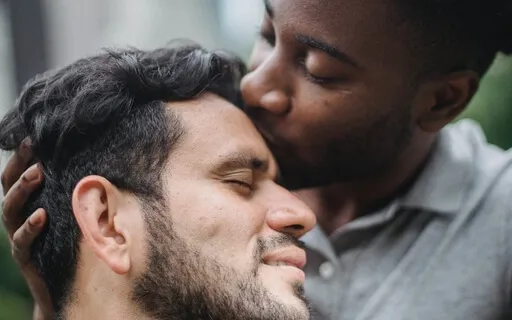
So today we're continuing our journey on our thriving as an empath series.
Today we're talking about being empathic in relationships.
You know,
So the first question is why we want to talk about this.
Why do we want to talk about empathy in relationships?
The number one reason we want to talk about this is because this is the point of being an empath.
The point of being an empath is to have deeper connections with each other.
As our abilities to be empathic rise in this really dark world,
In this world where there's real cruelty and separation and the desire to overpower each other and to confuse each other and lie to each other,
There's a lot of that out there.
So as these abilities to be empathic rise,
It's very confusing and it tends to make us separate even more.
And it specifically makes us separate from the people we're closest to because they are our most intimate other.
Who is the guy that wrote the book By the River He Wept?
Anyway,
But he talked about how there's self and there's other in the world.
And as we walk through the world,
There's self and other and the people who are closest to us in our lives,
They are our most intimate other.
And so because we are developing this ability to be empathic,
This ability to actually connect with each other emotionally and communicate emotionally,
The people who we are most impacted by are our most intimate others.
So that could be our children,
It could be our parents,
It could be our lovers,
It could be our very close friends,
Anybody that we have an emotional attachment to.
These ones can be the most challenging.
And one of the reasons that this whole series is called Thriving as an Empath is how do we look at this and actually make it nourishing?
How do we actually develop these empathic abilities in the way they're designed to?
We weren't given the gift of empathy to drive us crazy,
And to make us all just want to stay home and read a book and avoid all the humans.
It's actually a natural thing.
We are all one on some level.
So to disconnect from each other is never the right answer.
So the question is,
And don't get me wrong,
Disconnecting from narcissists,
Disconnecting from abusive situations,
All those sort of things,
Of course,
We're going to walk away from those things.
But to disconnect from society as a whole,
That's not the answer.
So then the question is,
We go deeper and we ask,
Okay,
What's going on here?
If the true desire or the true desire of connection is this beautiful merging,
How do we do that?
How do we be an empath in relationship?
Because ideally,
Imagine the ideal thriving as an empath in relationship.
What does that look like?
Like to even sit in our own mind and say,
What does that feel like?
My walls are down.
It's safe.
I can just be me.
I can openly feel whatever I feel.
I can openly feel whatever you feel.
I'm not afraid of what your feelings might be.
I'm not afraid of you knowing what my feelings are.
So I'm wide open.
My heart is wide open.
All my chakras are wide open in their healthy way.
This is by design.
We talk about,
Oh,
This part is blocked or whether we talk about the interface between the chakras in the world have issues.
Imagine they're all gone and we're wide open.
And now imagine in an intimate relationship that you make love in this state.
You make love with wide open chakras.
There's no tricks.
There's no nothing.
The sheer energy alone is so intoxicating.
And then every time we actually interact with another person,
We are truly nourished.
It is a beautiful energy exchange.
I've always believed that,
Especially ever since I started really discovering tantra and really experiencing it and experiencing tantric lovemaking,
That every time you would come together,
It felt like the Borg.
And obviously not some aspects of the Borg,
But if you ever watch Star Trek,
The next generation,
There was this one character,
Seven of Nine.
And when she was living on the – what do you call it?
The Enterprise or whatever it was.
It's been a while since I watched Star Trek.
But when she was on the Enterprise,
Every night,
She would have to go to her recharging station or her energizing station or whatever it was called.
And so she would go there at night,
Plug in,
And she would be re-energized for the next day.
That's to me what tantric intimacy feels like and that's really what we're talking about here,
Right?
How to be tantric with each other,
Fully open,
Fully merging,
Fully connected,
Fully connected within and therefore fully connected with each other.
You have this beautiful lovemaking and you leave a little high on life.
Your feet don't really hit the ground for a while.
Imagine that is the potential of empathy in relationships.
So of course the first thing we have to talk about is why doesn't this happen?
Because the reality is it's our nature.
It's our nature to be like that.
So what stands in our way of just having this wide open,
Empathic connection with each other?
So one of the number one things is – and I've talked about this before – Marlo Morgan once wrote a book called Mutant Message Down Under and she talked about telepathy.
And so the story goes is she was a New York writer.
She went down to Australia to do a story about the Aborigines there and she just wanted to kind of get the story,
Get back to work,
Do the ringer story and get back to her life.
And of course they ended up taking her on a six-month walkabout through the outback.
And as they did that she experienced the life of an Aboriginal person.
But not just what they did and what they ate but how they walked through the world.
And one of the ways was with full telepathy with each other,
Full empathy with each other.
All those guards were down.
They could fully know what each other were thinking,
Feeling,
Everything at all times.
Imagine the power in a tribe where all those walls are down and everything is wide open.
And of course the first thought when I say that even for me I think,
Oh my God,
The chaos,
Like how could you ever read?
That would be madness.
Of course we wouldn't have all the complexity that we have.
The reason we have so much complexity in our minds and in our emotional bodies is because most of it is not real because we're repressing so much.
We're repressing our true emotions and so false stories are rising which then have false emotions attached to them.
And half the time what's going on inside of us is completely fabricated by us.
It's fabricated.
It's stuff that we don't want other people to see.
We don't want other people to know.
I don't want you to know I'm feeling this way.
So my brain creates a story that I want to tell myself that has different emotions so hopefully you pick up the false emotions,
The fictional emotions and not my true emotions.
This is why we're so complicated because of this one thing and the one thing is judgment.
And that's the one thing that the Aboriginals told Marlo Morgan is the reason that you guys are not telepathic and that empathy for example would be so difficult is because we live in a society that is based on judgment.
So you imagine that.
Let's say you and I are sitting here and we are fully empathic and we are fully telepathic.
Are you okay with knowing what I'm really thinking?
What if I think something that I disagree with something about you?
What if I'm not really comfortable sitting with you right now?
What if I'm actually kind of angry or I'm sad or I'm actually really uncomfortable?
Are you okay with that?
Or do we take it personally?
Do we get all like,
Oh my god,
They don't like me.
Oh my god,
You know,
This is what they think.
This is all like based in judgment that there's a right and a wrong.
That there's something,
There's a good way to feel and a bad way to feel and a good thing to think and a bad thing to think.
And because of that,
We actually block our telepathy.
I don't want you to think,
I don't want you to know what I'm thinking and God knows I can't handle what you're thinking.
Well,
Imagine we're doing the same thing with empathy.
I don't really want to know what you're feeling.
I'm telling myself a story about what I hope you're feeling and I can't handle any other reality.
So this is one big piece that we have to look at in our relationships.
If in our relationships it's hard to be close and we are an empath,
We have to ask ourselves,
Are we lying to ourselves about this relationship?
Are we trying to tell ourselves that it's something it's not?
Are we actually staying in the relationship for economic reasons but there's really no love in it?
Are we actually in love with someone else?
Is our partner in love with someone else?
Like these are really painful truths or thoughts or ideas.
So we bury them,
We oppress them inside of us because I don't want to look at that truth.
I don't want to look at that.
And if we're lying to ourself about the relationship and don't.
.
.
And this isn't like something bad that oh,
It's a character flaw because we're in a relationship that you know isn't quite right.
We get into relationships for curious reasons.
Very often we get into relationships because the other person actually does complete us in some way.
You know,
We're hurting.
We haven't come out of some utopia.
Maybe we've come out of generations of difficulty and trauma and pain.
Maybe we've simply had many relationships in this life.
Maybe we had a difficult childhood.
And all we really want is security and this person's secure.
Or maybe we really just want someone who feels like a mother,
Male or female.
And we go into this relationship with that idea.
Who knows why?
And it's not wrong.
It's just that's what we needed at the time.
So we went into the relationship with this.
But then all of a sudden,
Maybe we heal.
Maybe we get the medicine that we needed.
Maybe we start to feel secure.
Maybe we start to feel loved.
Maybe we start to feel seen.
And then we realize maybe there's nothing else in this relationship.
What if that's true?
Well then all of a sudden,
You don't really want your partner to know how you're feeling.
So we start telling stories and we start creating fictional stories that kind of convince ourselves that,
No,
No,
No,
No,
It's good.
And you know,
There's all this good thing and we do that.
And maybe deep down,
They're not happy either.
So the truth is here we are this like massive empath.
But we don't really want to feel their truth either.
It's a really big deal.
And it's just a challenge.
It's not something that we have to fix right away.
It's just something that we have to be honest about with ourselves to say,
If being an empath is hard in the relationship,
Is this a factor?
Are there things I just can't look at?
Therefore,
My emotional gauge is off.
If we're going to be thriving empaths,
We have to be able to be honest.
Because energy doesn't lie.
Feelings don't lie.
Our brains can lie.
But feelings don't lie.
So it's quite a journey to kind of start to unpack those complex programs that kind of try to keep us safe,
But actually really screw with our emotional barometer,
Which really screws with our empathy.
So of course that leads into another really interesting fear within us is this fear of being alone.
Because part of the goal,
And I actually believe that this age of Aquarius,
This time that we're moving into the new world,
Whatever we want to call it,
I don't mean like new world order stuff.
I mean,
There's a new consciousness,
An ascension or something that's happening.
I mean,
All the words don't mean anything.
But whatever that is,
I believe as humans,
We really are becoming fully self-actualized.
That we don't require the codependent relationships that we had to have 100 years ago to survive.
Like a codependent relationship was part of surviving when we first came to North America and were farming.
Like we needed that.
Today's a different world and we actually can be whole unto ourselves.
So now you imagine you're actually this whole person.
So you actually bring this empathy within you deeply listen within to your own truth.
You manifest from that truth and you live this very interesting creative life within your own being.
And then maybe you see another being and there's some kind of interesting attraction between you.
And you think,
Hmm,
We could do something here.
We could have an interesting interaction here.
It's a complete choice because you're already whole unto yourself.
So then all of a sudden,
Let's say you get into a relationship with that person.
But you're both two fully complete independent beings.
But you choose to be in relationship.
Well,
Then all of a sudden,
If the other person has an emotion,
You're intrigued by it.
If they're angry,
If they're sad,
If they're happy,
You easily read them.
You easily accept whatever that emotion is.
If they're sad,
You can honestly say,
Hey,
What's going on?
I say,
Ah,
Just and it could be anything.
It could be,
You know,
That thing you said that really hit me wrong.
Like I really that kind of really got me in my core.
And instead of me saying,
Oh,
What do you mean?
That's not what I meant.
Instead of me being all defensive about it,
I can honestly say,
Really?
Oh,
Let me look at that.
You know what?
You're right.
I shouldn't have said that.
That was just something left over from my childhood or something.
Or maybe I'm like,
I don't know,
It doesn't really land for me.
Are you sure it's me?
And I don't mean gaslighting someone.
It's just like you sort of say,
Huh?
And then the other person says,
Yeah,
Maybe you're right.
Maybe this is my trigger.
That's interesting.
And all of a sudden,
This emotional interplay is just clear.
Because there's no dependence on the other person acting a certain way,
Feeling a certain way,
Responding a certain way.
Because you're both already whole.
And this is a really big deal.
Like you imagine as an empath being whole and not requiring anyone,
Anything of anyone else.
It's a huge deal.
This allows us to be really clear.
And this leads into this idea of even like sometimes we truly believe that there are positive and negative emotions.
Right?
We believe that in an ideal world,
You always are happy.
And you are always elated or you're always in ecstasy or you're always feeling joy.
And so if someone's sad,
The point is to make them not sad anymore.
How do I make them not sad?
Well,
You imagine being in a relationship with someone and something really deep has sort of landed in you.
And you're really feeling the sadness of that thing.
And your partner,
For some reason,
Is really uncomfortable with what they would feel to be negative emotions,
Really uncomfortable with sadness.
So what are they going to do?
Well,
They're not going to let you feel it.
They're not going to let you go deeply into that emotion because they're going to,
OK,
Well,
What can I do?
What can I you know,
What's going on?
Let's talk about it.
Let's figure it out.
Let's make sure you're not sad anymore.
But maybe you just need to dive deep for a while.
Maybe you just need to dive into that deep feminine truth in all of us,
All gender.
Maybe we just need to go into that space.
I would not try to pull the person out of this sadness.
If I have issues with my tailbone or if I have issues in my body and my partner wants to help me kind of get to the bottom of it.
The point is to feel the sadness.
The point is to feel whatever emotion is locked up in there.
And the key is to go as deep as you can to get right into all the corners of it,
To just get it all out.
This is a huge part of the healing path.
Well,
If we're an empath and our partner is sad or angry or grieving or feeling shame or guilt or something like that.
And we won't let them feel it because we're personally uncomfortable with that feeling.
That's going to drive us crazy and it's going to drive them crazy and then they're going to sort of try to,
They're going to energetically disappear and we're going to feel abandoned and we're going to have all these issues.
And then of course,
What if this other person we're with is stuck in an emotion?
What if it's not that they're feeling an emotion?
What if they're stuck in sadness?
And they're struggling with depression and they're sort of stuck in that space.
And this is what's really interesting is when we really allow everybody to just be themselves,
Then we all have choice.
That person has choice.
You have choice.
Is this relationship right,
Wrong?
Is it something we want to do,
Don't want to do?
It's just an interesting thing.
And this is where one of the things about being an empath is communication is so important.
Because if somebody says to you,
Let's say we're learning,
We're learning about our empathy,
We're learning about what are we really feeling?
Because if there's anything I've learned in the last couple of years is I have no idea what people are thinking.
I used to think I knew how people thought or how their brains worked and stuff,
But I have no idea.
So I don't assume that anymore.
So I actually depend on often verbal communication initially before I can actually get a clear reading of what might be going on emotionally with them.
So if someone says to you,
How are you doing right now?
The worst thing we can say is I'm fine.
I'm fine.
Don't worry about it.
Because that's the only communication we're getting.
It's like,
Oh,
Really?
I don't feel fine coming off of you.
I feel something else.
Like I'm fine.
Leave it alone.
There's something like that.
And you think,
Well,
This isn't helpful.
Like if we're going to actually be empathic in relationship,
We have to be able to find the words to actually express our emotions to be able to say,
I'm actually feeling sad right now.
I'm feeling really low or I'm feeling really blah.
I don't know why.
I don't think I really want to talk about it right now.
It's not about you.
But wow,
I'm just really feeling really blah.
And then the other person can take that information,
Match it with what they're picking up from the other person.
And now we've learned something about how to communicate with this other person.
We've actually matched words to the feeling.
But if we don't communicate with each other,
We're kind of done for.
And then each person just sort of swirls in their own emotional chaos.
This is another dynamic that we often get caught in,
Which really messes with us when we're in empath.
And it's when we are in a relationship that actually has a parent-child dynamic.
Sometimes we go into a relationship because we are seeking a mother.
Again,
All genders,
Doesn't matter who we are.
Or we're seeking a father figure.
So what happens is we go into it unconsciously.
I don't think it's something conscious unless,
I don't know,
You're actually looking for a sugar daddy or something,
Visiting a website or something.
But most of the times it's very unconscious.
It's just coming from a place of true emotional need.
But one of the interesting things about the parent-child dynamic is for a lot of us,
We were taught to not have emotions as children.
Not what we would call air quote negative emotions.
So if we were unhappy or we were angry or we were frustrated,
We would be sent to our rooms or we'd be spanked or we'd be punished in some way.
So we've learned quickly to not express these emotions.
Well then what do we do?
Well as a child we repress them but they still come out.
We actually emote.
We allow the emotions to come out of our aura and unconsciously hope that our mother,
Normally the mum,
Will pick it up.
There are some men that are sensitive this way and there are some women who aren't but generally whoever is sort of that mother figure will pick up those emotions coming through the ethers.
And they'll kind of look at the child,
All ages,
And say,
Hey what's going on?
And what's really interesting about the dynamic of when we're unhappy is if a parent asks us if we're okay,
We're then allowed to share our frustration.
We're allowed to be sad then.
We're allowed to be angry because a parent asked us.
So what happens is we often learn this and then we grow up and we get into a relationship and instead of expressing our emotions we just emote,
We get quiet and we just send it out there.
And unconsciously we have a program that says if you love me you will feel how unhappy I am and you will ask what's wrong.
And this very,
Very often happens in a heterosexual relationship or not just heterosexual but whoever is in the male or the masculine role in the relationship.
Because very often whether you're same sex or male female there's one person that will polarize to the masculine,
One will polarize to the feminine.
Whoever polarizes to the masculine often is the one who will emote the most and depend on the one who's in the feminine to pick it up.
Because historically,
And maybe this is changing now,
But historically boys were not allowed to cry.
Boys are not allowed to feel emotions.
Girls,
Well maybe they're allowed to cry in some houses you aren't.
So for a lot of that anyone who kind of polarizes to the masculine they're not going to express emotions in relationships but they will get quiet,
Turtle and emote and expect you to pick it up.
And they don't mean to do it.
So it's a very interesting thing to actually say are you okay?
And the answer is actually I'm not.
I'm really struggling.
And you sort of start to create this new dynamic where talking about our emotions is okay.
And eventually the emoting can stop.
It's not necessary anymore.
We can all just verbally talk about it.
Because I mean half the reason we emote is because we don't know what to do with the emotions ourselves.
Like ideally if I'm feeling sad as an adult I deal with it.
I'm not expecting a parent figure or a partner to deal with my sadness.
This is the codependent thing.
So if I'm sad then I'm going to really look at it.
Maybe I'm going to journal.
Maybe I'll go for a run.
Maybe I'll go to the gym.
Or I'll talk to a counselor.
Or I'll do something and I will take action here.
But if I don't have that ability to take action I'm going to depend on my partner to do it.
And we can be gentle with it.
We can actually go hey you know let's keep talking about this.
Let's figure it out.
And then eventually we figure out how to do it on our own and we don't have to depend on the other person.
But it's a very interesting thing to be careful about this emoting based on childhood depression of emotions when we're empaths.
Because what can happen then is as soon as we know that the other person will pick up on my emotions.
The emotion this emoting can be used very passive aggressively against us.
Then all of a sudden the other person it isn't just sadness.
It could be anger.
The other person starts to emote anger.
The other partner who is receiving this who's kind of picking up on it will actually start to change their actions based on that.
The person will actually start to edit their behavior based on that.
And the person who's emoting the anger is like what I didn't even say anything and you're like yeah but I could feel something like a tsunami swelling in the room.
And I know it's you so I'm going to edit my behavior to keep you happy.
Like we learn this as children too right especially if anyone has explosive tempers or there's alcohol or things like that in our upbringing.
We learn how to keep the temperature down in the room and that is through the emotional explosions of our parents or our siblings.
We know how to do this.
It's like I remember a friend of mine she used to say that one of the great challenges is of us people pleasers is we always walk in and we take the emotional temperature of the room.
And the worst thing is is we think that we are responsible for taking that down by keeping the peace by doing something to just quiet it down.
That is not our job.
That's where empaths start to stay home.
Because these are all independent sovereign beings sitting in the room.
Every single one of them has a choice whether they want to be angry whether they want to oppress their feelings whether they want to be passive aggressive whether they want to cause trouble.
It's all up to them.
And if we feel like it's up to us to fix them fix the situation save Christmas dinner.
We're going to go crazy.
And then we're going to go home and we're just going to have all these other people's emotions flowing through our system.
And it's just crazy.
And so in the same way like this is where our own personal journey,
Our own personal journey of.
And when I say sovereignty what I mean is,
We each have a seventh chakra,
A sixth chakra,
A fifth chakra,
Where we hear guidance from the universe to guide us in our lives.
We each have lower chakras which is our definition of self and what I meant to do here on the planet.
So on some level,
I am an entire universe unto myself.
I have a path to take I have a mountain to climb I have a journey to take.
I don't know how many more,
You know,
Silly metaphors I've got,
But this is our path.
There's nothing to do with all these people in the room.
And the more we actually understand that the less we take on of their emotions.
And if people are really wild and you know that wow,
There's going to be a real battle here.
Then we can walk away.
You remember,
My sisters.
They were kind of oil and water ever since they were little right from birth,
I don't know whether they have past lives together or whether there's three of us there's three sisters.
And I'm the oldest.
I ran interference between them my whole life.
Like,
I mean,
Right from the time I was five years old,
And I had a three year old sister and a one year old sister,
And I was seemed to be perpetually in charge of them.
It's like,
Trina,
What's wrong with your sisters?
Why are they fighting?
Go figure,
You know,
Like,
You know,
You're five years old and you're already being trained to keep the peace between people.
This continued all the way through our lives.
And then when my mom died,
I think something in me really rose like some unwritten contract really rose that I had to keep the peace in the family.
I had to make sure everybody was okay.
And then,
You know,
In 2018,
I gave away everything I own and I just started traveling and doing what I did.
And I went through a lot,
Like a lot of difficult times,
A lot of amazing times,
But it was a real wrenching of my soul,
Like a real rendering kind of of who I really was.
And one of this was this people pleasing,
Which is why I wrote my book,
You Don't Have to Eat the Eyeballs.
There's a chapter of it here on Insight Timer called Who You Are Really Matters or something like that.
But that book is from this massive rendering of I am not here to fix anybody.
I am here to live my life.
I am here to actually discover what's inside of this being.
It has nothing to do with anyone else.
They're on their own path.
And I mean,
It came through a lot of tears and difficulty.
So after all these experiences had happened and I'd sort of been,
You know,
My Irish friend,
She used to say,
My God,
Darling,
You look like a well-chewed chip.
When you've just been through an emotional ringer.
And well,
By the time I got back at one point,
I came back to Canada and I was a well-chewed chip.
I was pretty exhausted by people and stuff.
So my sisters and I decided to rent a cottage up north and have a girls weekend.
And it was beautiful.
It was just beautiful.
And so this would have been four years ago.
So I would have been about forty nine.
So we would have been forty nine,
Forty seven and forty five.
And we're up there and it's all good.
But all of a sudden something started and my sisters had sort of buried the hatchet when my mom died.
But it still was there and it hadn't really been rising in the last few years,
Whatever that initial animosity that their souls have for each other.
We were sitting on the porch and one of my sisters said something and then the other sister said something and they started to battle.
Like it was like you could almost see them energetically rising like titans just taking each other.
And I sat there.
I started to do what I always do.
And oh,
Well,
I think what I hear you saying is probably this.
I'm trying to sort of run interference between them to try to de-escalate it.
But then I realized that they weren't paying attention to me and they were just locked on each other.
And I just sat there and for the first time in my life,
I just stood up and I just walked into the cottage.
Kind of like kind of as gentle as if I was just going to the bathroom.
And I just left.
And I just went for a walk.
And I thought,
You know what?
Two big grown ups who I love,
Both of them.
They've got to figure this out.
And I am only prolonging it.
I am not helping.
So I went for a walk.
And by the time I was on my way back walking,
My one sister met me on the road in the car.
And she was like,
I'm so sorry,
Katrina.
I just can't do it.
I'm done.
And she left.
And my sisters didn't talk for the next two years.
And I'm telling you,
There was so much peace inside of me.
And not that,
You know,
I think it's good when people aren't talking,
But what was going on was real.
They have unresolved issues and I don't know what they are because it's none of my business.
But there is something deep going on between those two.
And I think the only way for them to sort it out is through truth.
Not through me throwing up distraction things between them.
So there's something really wild about being empathic and knowing what's your battle and what you're meant to do and what you're not meant to do.
And just to be equally able to walk away as to stay and help.
Maybe I would have been called to stay and help,
But I wasn't.
I was called to leave.
The other really interesting,
Important thing that I want to say.
Last is this is about relating with other people.
But again,
The number one thing we have to do is being able to hear our own emotions.
We really have to be able to honor that if I am angry,
Then I will do something about it.
We don't have emotions for no reason.
We don't just have emotions to torment us.
We're not empaths so that the world drives us crazy.
Right?
We have emotions for good reason.
And if we're not able to communicate with ourselves,
Right?
Imagine if I have an emotion and I'm angry and my masculine self.
Imagine your emotions are your feminine truth,
Right?
This is what's real.
This is your manifest self.
And this mental part comes down and says,
Well,
You don't deserve to be angry.
You shouldn't feel this way.
You should be looking for the silver lining.
If that's going on inside of us,
That's going to go on with other people.
So if we can sort that out between us,
Inside of us,
If we can sort that out and say,
My emotions matter and I'm going to be in full communication with my emotions.
I will have such an easier time communicating with you emotionally.
Being an empath,
We must have clear communication inside.
We must have a strong masculine feminine balance inside of us that we honor the emotions and that we take action for them.
And that means that if we are sad and it's just a fleeting emotion and when I mean fleeting,
I mean it's a passing emotion.
It's a response to a situation.
It's a healthy,
Natural response.
Then we allow it.
We dive deep into it and it will flow on.
If that sadness continues,
Then our masculine self rises and says,
OK,
Let's go deeper into this.
We need help.
We're stuck.
Let's sort it.
Let's figure it out.
If I'm angry,
Then I need to look at that and say,
What am I angry about?
Is this something I can do?
Is it a philosophy I can shift?
What can I do?
How can this inform me?
Because as soon as I believe that my emotions inform me for change,
That's how we're going to interpret it in intimate relationships.
If our intimate other is feeling something and it's hard,
It's not necessarily what you want.
When we're used to listening inside and realizing that no,
Even difficult emotions really bring about important change,
Then we really want to,
We will open the channels to feel everything going on.
And we'll say,
OK,
What's going on here?
Or maybe if the other person does something and we feel deeply,
We're going to really take that seriously.
We're going to really make some changes.
And of course,
As a complete being that's not codependent on the relationship and all that kind of thing.
We can really,
With real objectivity almost,
Make good choices for ourselves.
It really does begin in sigh.
If you have any questions,
I'd love to answer them.
What's the best way to cultivate the relationship between the feminine and masculine in empaths?
I was just writing about this yesterday because I'm writing a book called The Union of the Masculine and Feminine.
So let's imagine that all interactions are masculine and feminine,
Regardless of gender,
All interactions.
If I say something,
I'm in the masculine.
And if you receive it,
You're in the feminine.
It doesn't matter.
Well,
If I say something and it hurts you or you are triggered by it or it causes an emotion in you,
For the feminine to listen inside and say,
Wow,
That really bothered me.
The masculine can say,
Here's what I feel.
I'm really feeling this way.
Two things could be,
Many things could be happening here.
But the first thing is the person in the masculine doesn't just start to explain to the feminine.
Oh,
No,
No.
But here's your misunderstanding.
You're misinterpreting.
You're,
You know,
Don't do that.
We have to listen,
We have to honour the emotion and say,
Really?
OK,
Hold on a minute.
Let's look at this.
Then the masculine person,
The person in the masculine in that instance,
Feels into it themselves and says,
OK,
Hold on a minute.
Is this about me?
And you think,
You know what?
You're right.
I was a bit snippy there.
That's just I think I might have sounded like my mom there.
Or I think I'm tired and I shouldn't have said that.
I'm really sorry.
You're right.
Totally right.
Thank you for this correction.
Or maybe it's not that fast and it takes hours and hours and hours of conversation.
And you finally get to something underneath all of it.
This is something that I'm blissfully experiencing in my current relationship where,
You know,
Something happens and something in me just says,
This isn't OK.
I don't know what this is.
And my partner would kind of do the normal societal thing that says,
Well,
You just have to understand.
I'd say,
No,
I don't have to understand.
We have to look at this interaction that just happened here.
And inevitably we end up talking for hours and hours and hours and unearthing something really valuable.
Which then brings us closer.
And that's where we realize that this response of the feminine was really important.
It was really important for the person in the masculine and it was important for the relationship.
So that's one scenario.
Or maybe the person in the masculine in that moment says something.
The person in the feminine receives it and it massively triggers them.
Person in the masculine says,
OK,
Let me think about this.
It's like,
I don't know.
Doesn't really land for me.
I'm not sure this is a real,
You know,
This isn't really my thing.
And then the person in the feminine then goes inside and says,
OK,
Hold on.
Maybe this is a trigger.
Maybe it has nothing to do with you.
You know what?
I think you're right.
I think this is my stuff.
And then you get to kind of have a chit chat about it and unearth it.
Like this is the real key is to not take it all personally.
Like we have a really strange thing in our society that nobody wants to be the one in the wrong.
Nobody wants to be the one who said the thing or is the messed up one or is the unconscious one or whatever.
But what if the whole journey as we interact with each other is just helping each other grow and even helping us expand.
So even forget about even healing stuff.
What about once you're pretty happy,
But now you want to expand even more.
You want to actually become more creative.
You want to become even bigger.
Well,
Then the other person,
You know,
You might say something and they might say,
Really?
Like,
Is that true?
And you're like,
Oh,
Hold on a minute.
You're right.
That's not true.
This is beautiful masculine feminine interaction.
One says one thing.
This receives it.
How does it land?
But we have to really honor it.
We have to imagine that all of this is in purpose.
The number one problem in the masculine feminine dynamic is just when we don't honor each other.
We don't listen.
We don't assume that each other is what our feelings are important.
And don't get me wrong.
Just because I'm triggered,
I also have to be open enough to know,
No,
This isn't mine.
And I get how sensitive this is in a world of gaslighting when you're like super triggered.
The other person is like,
Now this is your stuff.
This also requires us to be sovereign whole beings to sit there and say,
No,
It's not mine.
This is yours or what you did did matter.
Nope,
Didn't.
And then you sit there and you kind of go away and you meditate on it for a while and you ponder and you think,
Hmm.
Maybe we're not compatible because for some reason we can't bridge this.
That's interesting that for some reason,
Communication is impossible on this topic.
Maybe the relationship is complete.
Like we have to be able to be open to that.
Like this whole till death do you part thing really got into us,
Which makes us continue in relationships long after they're healthy.
And then we'd start doing all this gaslighting and taking everything personally.
And instead of just understanding that these relationships are for our growth and our joy and our nourishment and our pleasure.
Why in the world would we be in a relationship that wasn't joyful and nourishing and wonderful?
And if we are,
Then we really have to look at why are we not a complete being unto ourselves?
It's really important personal questions.
Thank you so much for being here.
And I hope you have a wonderful day.