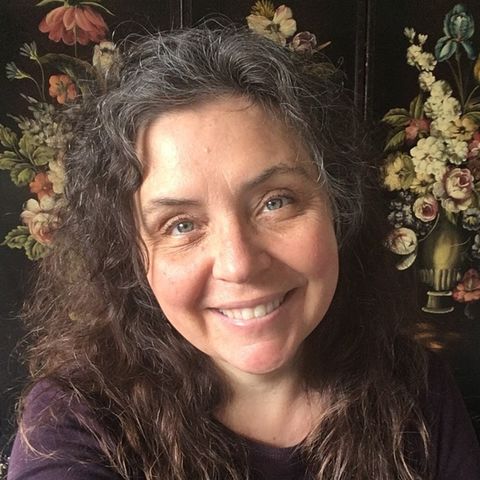
Today we're talking about how to wisely educate our children.
This is a huge passion for me.
I have two children.
They are turning 28 next weekend and my daughter's 25.
And when they were in school,
I was not an easy parent to have because I did not like a lot of what was going on in the school.
And I love education and I love learning.
I went to university.
I was one of those kids that easily did well in school only because my brain fit the program.
I genuinely believe that everyone's intelligent but there's different ways or different ways of expressing intelligence.
There's different ways of learning and because the education system as it stands was created by people who have brains like me,
I come off as the A student.
But I don't think it's interesting.
My son for example,
School didn't fit his brain at all.
It was almost like school was coming this way and his brain was coming in from the side.
So it didn't make sense to him.
It wasn't presented in a way that made sense to him.
So if he created a school system,
Perhaps I wouldn't get an A in that system.
So it's just interesting to be aware of who's creating the system that we're learning within and if our learning style and our interests don't line up,
We could be pigeonholed into believing we are less intelligent or sometimes even worse believing that we are most intelligent which also creates all kinds of issues on its own.
This is where the first thing I want to say before I talk about how to wisely educate our children is to understand that this topic is extremely subjective.
This talk is based on how I see the world.
If each one of us here was to say,
I believe this is how we should educate our children,
Then that will be based on what you believe our meaning in life is.
If you were to imagine that,
Let's say we live for a hundred years here on planet earth and let's imagine that our education system is designed to help us thrive for those hundred years.
The first question each one of us has to ask is what do I believe the reason is that human beings are here and that's going to be different for every one of us and there's no right answer but theoretically our education system in an ideal world would support whatever a human being's mission is on earth.
So the first thing I have to share before I talk about how I think children should be educated is I have to share with you my bias and my bias is what I believe the purposes of being human is and I genuinely believe that each one of us has a mission.
Each one of us has some kind of purpose and this mission isn't altruistic.
It isn't to save the world and all that stuff.
We can't,
We have to get that out of our heads or else we're going to miss why we're really here.
I believe that each one of us is designed in perfection,
That we each have this beautiful third chakra that comes in with everything we need to know.
All the experiences whether they're past lives or past experience or ancestral inheritances or whatever,
I believe everything we have is all within us.
Kind of like an acorn has the blueprint for the mighty oak tree.
All we need to do is create an environment where that acorn can blossom and grow.
So this is my bias.
So everything I'm going to say is based on that and if you have a different belief about what the human being is,
You're going to have an entirely different model for education and that's great.
So just understand that everything we're going to talk about is based within my bias as to what it is to be human.
So the first thing I want to talk about are the challenges in our current education system.
Then we're going to finish off with what my ideal education system would look like.
The education I'm talking about right now is generalized education in North America because this is really all I know.
I know that there's many very interesting education systems in Europe.
I don't know anything about Asia or South America or even Australia but what I can speak to is what I understand is generalized education in North America.
There are alternative schools like the Waldorf schools based out of Rudolf Steiner's work who take an entirely different tack.
I'm certainly more in alignment down the Steiner philosophies but that's what I'm really talking about and I'm talking about general education all the way into university because in many ways the university models follow the early education models.
They just continue in different subjects and different depths.
So the first thing that I think is an issue in our current education model is there's a Latin phrase tabula rasa t-a-b-u-l-a-r-a-s-a two words and it means blank slate and our current education system assumes that children are blank slates.
It assumes that we need to fill them with information.
We need to teach them how to be human.
We need to teach them how to be air quote good citizens.
So you can see this the children don't matter.
The individual natures of the children aren't important.
What's important is that they all simply are filled with what we want to fill them with.
So of course and why do I think this is an issue?
Because it's directly opposite what I believe humans are.
So again understanding my bias here.
So if you have an education system based on the idea that children are tabula rasa that's it.
Feed them information.
Hopefully they can retain it and the ones that retain it the best win.
They're the smart kids.
But now you can imagine the challenges.
Imagine a child is born again within my belief that we all come in very interestingly loaded and ready to have a human experience and you have a child whose mission has absolutely nothing to do with what's being taught and this child's mission has absolutely nothing to do with the way it's being taught.
What's going to happen to that child?
They're going to hate school.
They're not going to be able to listen.
I don't know if you guys ever have this experience.
If someone's talking about something and for whatever reason it's not interesting to you or the way they're telling the story isn't complete or it's not complete in a way that makes sense to you it doesn't stick in your mind.
At least it doesn't stick in mind.
Mine at all.
Well so now a child is sitting in class and they're trying to listen and it's not sticking in their mind because it's not for them.
This information is not part of their journey and then what does that child start to think at a very formative age?
At age six?
At age seven?
Well I must not be very smart.
That kid over there they can repeat it all back.
They understand everything the teacher's saying.
They must be smarter than I am.
They must be better than I am.
You know like we've done a lot of talks here on Insight Timer about self-worth,
Self-love,
Confidence,
Courage,
The I am moment,
Listening to our truth.
What if some of those issues begin there?
Simply being presented with information that is not on our journey.
We can't really hear it.
We certainly can't digest it or process it or remember it.
So obviously there's something wrong with me.
It causes a lot of deep problems.
So the second thing we have to look at in the current education system is what's the intention?
What's the intention behind the learning?
Now I genuinely believe that there was a time when people put children in school for really good reasons so that children could have an equal opportunity in the world.
It's that whole they taught the three R's and the three R's were reading,
Writing and arithmetic.
That's interesting.
If you can read and you can write and you can count,
Multiply,
Divide,
These are very important things in life.
This does create an equal playing field that says if I can read out in the world,
I can learn.
And if I can write,
I can share my thoughts.
And if I can add,
Subtract,
Multiply,
I can do commerce,
I can build a house.
These are really valuable tools and if you can do these things,
That creates an equal playing field for everyone.
So I can understand the foundation of education being that,
That all children must have at least this foundation.
And the next few things I'm going to say are pretty negative.
So I just have to kind of warn you,
This is what I really believe.
And again,
It's not necessarily true.
It's just how I see it.
Something curious happened in the education system where it became almost the tool of capitalism,
Where the goal seems to be to learn how to slot children into the workforce.
And this sort of feeds off of this tabula rasa idea.
All right,
Here is the next workforce coming through.
Where will we use them?
Where will we put them?
Again,
The people themselves aren't that important.
The important thing is where are they going to go?
So again,
It's all about if I feed them this information,
How good are they at spitting that information back?
How good are they at memorizing it?
Oh well,
These guys are excellent at memorizing it.
So we'll make them the doctors and the lawyers because they have to memorize all these massive amounts of information and be able to regurgitate them when needed.
I've got all this information in me.
Aha,
I see these symptoms.
Here's what I know.
So these are the people that,
Okay,
So we're going to put you guys in this level based on your ability to memorize,
Retain information,
And spit it back at appropriate moments.
And then there's people in this level who,
Oh well,
They can kind of do it sometimes but not other times.
Okay,
Well we're going to put them in this category of jobs.
These ones,
Well,
They're no good at it,
So we're going to put them in manual labor.
And so now what this did is it started to replicate the caste system.
The caste system isn't just in India.
This idea that there is the elite or the priest class or however you want to,
Whether it's financial or spiritual,
Whatever.
Then there's the government,
The militia,
There's the white collar workers,
The manual workers,
And then everyone that doesn't fit.
The untouchables,
The wounded,
The broken,
The old,
Whatever.
And so the education system in many ways simply places you in the appropriate level of the caste system.
And again,
I recognize this is very negative.
We'll get more positive in a minute.
But this leveling of people based on your ability to regurgitate information and understand,
I'm good at regurgitating.
This isn't like sour grapes.
I can do the education system,
But it's not valuable.
It's not interesting.
It's all I can do to release all the junk I memorized and have an original thought.
It's so interesting right now there's all this talk about chat GPT.
And chat GPT is an artificial intelligence program that you can just ask it to just anything you want.
3,
000 word essays,
Books,
Courses,
Anything.
And it'll just take everything in the world that's ever been written,
Chew it all up,
Put it into a document,
And kick it out.
And everyone's up in arms about it,
You know,
Like,
Oh my god,
Everything's going to be written by a computer.
But that's what we were trained to be in school.
We were trained to be nothing more than chat GPT.
Take everything you've ever learned and maybe move the pieces around a little,
But you're not allowed to have original thought.
You can't have a thought of your own that you didn't read.
Well,
Who said that?
Cite your resources,
Cite your.
.
.
And it's like,
We were never taught to have original thought.
We were never taught to actually have critical thought.
So I think it'll be an interesting journey with chat GPT and AI to really start looking at ourselves as humans and say,
Wait a minute,
I'm more than a computer.
I'm more than something that can just spit out stuff I've learned.
Wait a minute,
I've got to access that.
You know,
We did a talk earlier about how to be smarter than artificial intelligence.
What is my human self,
Not my robot self?
Where is my human self in there?
Where is my intuition?
Where is my insight?
Where is my gut instinct,
The gut hunches that say I'm going to do this and then a miracle appears?
Chat GPT can't do that and neither can regurgitating things we learn from books.
And again,
I'm a heavy read.
I love reading.
I am an eternal student.
This is my bag.
But if it doesn't,
To me,
All of the things we've ever read justify the interesting things we believe or the interesting things we want to follow.
They can't be the driving force and that's the problem with this system is that if that's the only thing is to get the A by regurgitating what we've been told,
What are we really being judged on?
Is it really intelligence?
Like really?
And then I'm going to say something even more negative because there are times that I wonder if there actually is quite a nefarious intention in our education system because on a social level,
If you look at beyond the educate,
Well beyond the the data we might learn or the history,
Air quote history,
We might learn what we're really trained in is obedience.
We're trained to never question authority.
We're trained that our opinion doesn't matter.
We're trained that we are not allowed to move.
You have to sit still.
Listen.
Do as you're told.
Stand up when the bell rings.
Don't do this.
Don't do that.
And it's like and we're trained in this sometimes as early as age four,
Age five,
And we're in that system for potentially the next 12 years.
The most formative years of our life being trained in heavy submission.
That's very concerning to me.
That's very concerning to me as a humanity because we believe that we are nothing.
At a very young age we believe that there are people above us and I just don't mean the students that theoretically are air quote smarter than us.
I mean the teachers,
The administration,
Potential bosses,
Partners,
Parents,
That all these people have the right to tell us what we can or can't do.
And the number of times here in our community we've talked about our difficulty in standing up and saying I am.
I exist.
I am someone.
And my opinion matters.
And I am not bound by your rules or your opinions or your perceptions of me.
I don't accept your grading of me.
Nobody can do that.
Nobody can sit in judgment of us.
No one can ring a bell and make us jump.
And yet that's what we were trained to do.
And don't get me wrong.
I have been super obedient in my life to a fault.
I mean it feeds into all of our people pleasing and everything.
So that's a very curious thing about the education system right now.
And the hard thing is between the tabula rasa idea,
Between the idea that we can be ranked based on what we can regurgitate and that that somehow has something to do with our intelligence and then the requirement of blind obedience from age four on.
Think of what that does to our psyche.
Think of how many people grow up with real depression.
That they don't matter.
You aren't important.
You have nothing to share that I haven't taught you.
You have nothing to share except your obedience to me.
It's no wonder we have such a problem with teenagers and rebellion.
There's no wonder that we're 50 years old and we're still rebelling.
And we're still struggling with authority.
And we're still fighting to have our own voice heard.
So there's something very strange.
Now my last really weird thing to say,
And then we're going to get on to happier things,
Is in today's school system,
Again the intention can only be nefarious in my mind.
It's either nefarious or they've just literally lost the plot on what education is.
Because today I feel like the children are literally being intentionally dumbed down.
And I know there's lots of books that say that our modern education systems have been dumbing us down for decades and I don't disagree with that.
But if we circle back to our discussion about leveling the playing field with the three R's,
Reading,
Writing and arithmetic,
They're not learning that anymore.
Arithmetic.
I have a bachelor in mathematics.
I have a five-year degree in mathematics.
And my kids would come home with math questions and I would look at it and I would say,
I mean in grade four,
And I would say I have no idea what they're talking about.
Like my brain loves math.
I do calculus for fun.
I love math.
And I stared at their homework for years and I would literally write essays on the program going,
I don't know what this is,
But I'll tell you right now it's not math and I'm not even going to help my children with it because whatever it is I don't even want them to learn it.
I was that parent.
Because if we as an adult,
Whether you were good in math in school or not,
If you don't understand your kids' homework,
I think there's something wrong with the homework.
So I don't know what in the head,
And the kids aren't learning how to multiply.
They're not learning how to add.
They're not learning how to do anything.
So they're not learning arithmetic.
They're not reading much.
A lot of kids graduate high school without knowing how to read,
And they don't write anymore.
So what the heck?
So I kind of see the whole system crumbling to be honest and something brilliant's going to rise out of it.
That's what I actually genuinely see.
It may take some time and I'm glad I don't have children in the system right now because that'll be a very interesting adventure to stand beside our children as that old system crumbles.
Because I do believe we're in an ascension.
I do believe that a new consciousness is rising,
And that will include the education system being completely changed with an entirely new intention.
So how do we do it?
How do we wisely educate our children?
The first shift in our thoughts is instead of imagining a child as tabula rasa,
We imagine that a child is actually a soul.
And although they are an infant,
They are still a fully developed soul with connections to the galaxy,
God,
The angels,
Who knows,
However you see the world.
They may be more connected than we are as adults.
The first question,
If I were king and I was creating an education system,
The first assumption is that every child is perfect.
Every child has a very specific path to take.
How do we as an education system help them do that?
And again,
The three R's are pretty brilliant.
Learning to read and write and be able to do basic math,
That's pretty awesome.
But beyond that,
What do we do?
The second thing is,
How do we fan the flame of their passion for learning?
So my son was,
My daughter,
She was really,
Really,
School was easy for her.
It doesn't matter what she did,
What teacher she had,
What subject it was.
It didn't affect her.
For whatever reason,
She was like,
Yeah,
Whatever,
I'll just do it,
It doesn't matter.
My son really struggled in school.
He struggled with printing,
He struggled with listening,
He couldn't listen,
He was bullied at school,
So emotionally he wasn't quite there even to be able to listen.
He's very physical,
So he had trouble sitting still that much.
And in grade seven,
I was sitting helping Aaron,
My son,
With his homework.
And he was just starting grade seven.
He finally just looked at me and he said,
Mom,
I'm not smart like you.
There's no point.
Just forget it.
And that was it.
Like,
My heart dropped because the school had broken his passion for learning.
He didn't want to learn anymore.
He didn't even want to try anymore.
So I pulled him out of school.
I'm not a homeschooler.
I'm too entertained by my own passions and stuff to.
.
.
I've never wanted to homeschool.
But for one year,
I brought Aaron home.
And I just thought he needs a break from the social life.
He needs just to get those three R's down.
He just needs to be able to read,
Write,
And do the arithmetic because he couldn't do any of it.
He was struggling to read,
He was struggling to write,
And he couldn't do the math.
So everything was crashing and burning.
And he spent a year at home.
And we were on the farm,
So it was really easy for him to be home.
And he worked on the farm,
And I worked with him in the house,
And all that kind of thing.
And I actually got his grade eight textbooks.
And I taught him based on the grade eight textbook,
So that when he went back to school,
He already knew it.
So he'd kind of have a leg up.
And so when he was sitting in class,
He'd feel smart.
That was my idea.
But one really weird thing I learned,
Because again,
I like education.
So okay,
I'm going to homeschool my son.
So I downloaded the curriculum.
But the curriculum was so weird.
There were all of these subjects.
But all you ever did was learn the headlines.
Like you never actually went into any depth into any of the topics.
And it was so interesting,
Because beyond reading,
Writing,
And arithmetic,
It was all stuff you would just forget by next year anyway.
Because you never went into any depth.
So actually,
We didn't do any of that stuff.
We just did the basics.
And so that's actually one of the things that I realized about children learning,
Is they actually don't need to learn a million subjects.
What they need is to take one subject they're passionate about,
And dive into it.
Let go all the way in.
If they are interested in frogs,
They've always loved frogs,
Let them study everything about frogs.
Every kind of frog.
Where the frogs are in the world.
What do frogs eat?
What kind of temperature do frogs like to live in?
How do they mate?
How do they live in community?
Do they live in community?
What eats frogs?
Where do they belong in the ecosystem?
You can do all this stuff.
You can learn the anatomy of a frog.
So suddenly,
Based on this singular interest about frogs,
You've learned about anatomy,
Chemistry,
Geography,
Family dynamics,
Like everything.
There's so many places you can go.
But it's all grounded in an interest in frogs.
So for the rest of your life,
You remember this.
It's valuable information.
And it doesn't matter.
Like they don't have to study this other thing they're not interested in.
They just need to study the things that they are passionate about.
So what's really interesting is,
One of the things,
If we want to create an education system,
Every one of us here,
The question we have to ask ourself is,
What would you have liked in an education system for you?
What would have prepared you better to have a happy life today?
And this is one of the great challenges we have as adults.
Because many,
Many,
Many of us lost the passion for learning.
We lost the desire to take a subject and dive deeply into it.
Learn everything there is to learn about it.
It doesn't matter whether it's gardening or hockey or astronomy.
But to just take that subject and study it.
Because it's interesting.
You imagine as adults,
If we continually were learning about this world we live in,
Maybe we suddenly see some program about,
Someone was telling me that the jellyfish are really expanding all over the world because the oceans are warmer or something.
So we hear this headline.
But if that's interesting to us,
What if we went and actually and we had the training inside of us that said,
Isn't that interesting?
I'm going to go get some books on jellyfish.
I'm going to learn more about jellyfish.
How does that work?
Where do they live in the world?
Why do they enjoy warmer water?
What happens then?
What are the.
.
.
And we actually,
When we heard something interesting,
Our default was to,
I'm going to go do research on that.
Can you imagine how interesting we would all be if every single thing we heard in the news,
On tv or whatever,
We went,
Whoa,
That's fascinating.
I'm going to go and study that.
There's no right way to study it.
No one's testing you.
No one's grading you.
Whether you like to learn through audio or you like to learn visual or you like to read or whether you need to go and you know what,
I need to go work with those jellies.
That's what I need to do because I'm a more tactile person.
I like to learn with my visceral experience.
Imagine how different our lives would be right now as adults if that was our wiring.
We would never be bored.
We wouldn't want to watch Netflix.
We wouldn't care about all that stuff.
I mean we would once in a while,
But we would be so selective because we have this passion we're so interested in.
Maybe we pick up a guitar and we start to play the guitar and we start to study the great guitarists in the world and suddenly we find this amazing composer and then we find this interesting person over there and then suddenly we're going to concerts and we're performing at concerts and we're doing all these things because we still have the passion for learning.
We still have the passion for exploring this world.
This is Sophia,
The Greek,
The passion of learning.
Mathematics,
Ironically,
Is just simply means to study.
Mathematics is mapping the universe,
Understanding this amazing place we live in.
That's what we want as adults.
If we can get children doing that all the way through school,
Can you imagine the muscle they would have,
The default they would have,
That no matter what they're passionate about,
Go for it.
Learn about it,
Try it,
Build it,
Figure it out.
It's not about your career,
It's not about what job you're going to get,
No one has to grade you on it,
But the teachers are there to help you learn.
Not teach you what to learn,
But to help you learn.
So then what kind of people are going to be the teachers?
These teachers are going to be interesting,
Juicy people who are perpetually learning,
Who have interesting hobbies and are always off studying something else and are always learning something new.
It doesn't matter what the teacher knows,
But if that teacher knows how to explore interesting topics,
That is what they're going to teach the children.
The kids are going to go,
I don't know,
I have this one interest,
But I'm not sure how to go about it.
And that teacher,
Because they're so wired for that expansive learning experience,
They're going to go,
Aha,
You know what,
What if we went down the road and we found that guy who builds wooden things out of whatever,
I'll bet he knows and he would know how to do the even ground work to be able to do the research to begin with.
And what's interesting is even in our education system right now,
There are people in there that are teachers that are those people.
They are juicy,
Interesting,
Passionate people and they inspire the kids.
They inspire the kids to play instruments and learn new things and have critical thought.
My daughter,
She had this one teacher,
He's so funny,
Ironically,
He's one of the guys I sold my train station to.
Can you imagine?
But anyway,
He was a one of her teachers and one of the assignments that they had to have,
And it was in high school,
One of their assignments was write an essay about why I am a horrible teacher.
And he said,
I want to hear some critical thought.
This is not about you getting an A because you like me.
I want you to do this thing.
And it was so funny because the kids' brains literally turned inside out,
Because it was,
First of all,
They had to come up with original thought,
Second,
They had to write something negative about their teacher.
Anyway,
So cool.
But that man stuck in her head for the rest of her life.
I'm still talking about it.
These teachers exist.
Interesting folks are in the system right now,
And there's lots of folks in there that really,
They're just part of the system.
But they're part of the system all the time.
They're part of the system at home,
They're part of the system at school.
They're just teaching what they know,
They know how to regurgitate information they hear,
And they're going to teach you how to do that,
And they're going to grade you on it.
It's not that they're bad people.
They went to the same schools we did,
And they were good at it,
And they went home,
And they're obedient to whatever authority,
And or they are the authority,
Or whatever.
So as the education system shifts,
I believe very different people will feel called to become teachers also.
Another really interesting part about if I was going to be prepared to become an adult,
To become a full-grown adult.
This is the journey of self-actualization.
But the thing is,
To self-actualize,
We first have to actually be a child,
And we have to be a teenager.
And part of being a teenager is of course exploring who we really are.
That's when our third chakra comes online,
And we start really going,
Okay who am I?
Well if we don't get to explore it,
Hence an entire generation of frustrated teenagers going,
This isn't what we're supposed to be doing right now.
This isn't preparing me for my life.
Screw this.
So instead,
You imagine the self-actualization process beginning in the teenage years.
And we start talking about life's purpose,
And we start talking about joy.
They're going through puberty,
So of course it's extremely important to start talking about emotional intelligence.
It's important to start talking about human relationships.
I'm not talking about sex,
I'm talking about relationships,
Kindness,
Love,
Human qualities.
So again,
You can feel the difference,
Right?
The idea that this education system is just about becoming human.
The other education system is about,
Yeah,
But how's that going to help you get a job?
Well the bottom line is,
If you are a passionate,
Happy,
Self-fulfilled person,
No matter what job is out there,
You'll figure it out,
You'll learn it,
And you'll do it.
Like it's no big deal.
You just do it.
So what do we do?
What if,
Well first of all,
If we're adults and we struggled in school,
And in any way that made us believe that we were less than someone else,
We really need to look at that.
Because it's just not true.
We each have our own wheelhouse,
We each have the things that we're good at.
Just because they weren't seen when we were children doesn't mean they aren't there.
Now we just have to go and uncover them.
But let's say we have children in school now.
Maybe we have grandchildren in school,
Or we have nieces or nephews,
Or kids we care about that are in the school system.
Do we have to pull them out?
Do we have to homeschool them?
Do we have to find alternative schools that are more soul- centered?
Or what if they do stay in the system?
What do we do?
For me,
When my kids were young,
The best thing I could do was be really real with them.
For whatever we do,
Don't take the role of the school and bring that home.
My kids would come home with homework when they were like seven years old,
And I would basically just sign it and tell the teacher to not send any more homework home.
Because I genuinely believed that my children were on a bus for an hour each way,
And they were at school for how long?
Eight hours?
So of their 16 waking hours,
10 of them were at the school.
The other six are not going to be about school.
And that's it.
I was raised by teachers.
Both my parents were teachers.
I know that teachers work all the time.
They go to school and at night they grade papers.
It is like literally their entire life.
Which is also,
I really do understand a lot about teaching,
Because children are two teachers,
And all their friends are teachers too.
But to really be clear as a parent what you want for your child.
So I would never act as the teacher.
If the teacher said,
You need to make sure your kids do this homework,
I'm like,
No I don't.
You had them for eight hours.
Now they're going to play.
Now they're going to cook with me.
Now they're going to go to the barn with their dad.
Now they're going to play with dogs.
Now they're going to color.
They're not going to do any more schoolwork.
And it's also interesting if they're in school right now,
And the school is crashing,
Or they're learning weird math,
Or they're learning all kinds of stuff.
There was a book called 1984 by George Orwell,
And there's this huge thing in there all about two plus two is five.
That if people are taught incorrect things long enough,
They actually can't think straight anymore.
And so if things are being taught in the school that you really disapprove of,
Or you don't agree with,
Or you don't even believe are real,
Or true,
Or like even this math that my kids were forced to do,
I was like,
And I would just be really real,
I'd say,
Honey,
I don't know why they're teaching you this.
This isn't math.
They don't teach long division.
Kids don't learn how to multiply.
My nephew runs a,
He has a house building business,
And he's got 20 year olds,
And he'd say,
Well,
Can you just measure four feet up there?
And he'd say,
What do you mean?
He goes,
Well,
There's 12 inches in a foot,
And so four times 12.
And the guy couldn't,
He didn't know what four times 12 was.
25 year old young guy.
How do you build a house if you can't do multiplication?
So it's really interesting to have open conversations,
And it wasn't like I was like constantly bashing the school either,
Because realize,
I love learning.
Like it's not something I want to give a real negative thing for them,
But how interesting is it to be able to discuss the contrast with your children?
And the kids say that we were learning this in school today,
And we don't have to get all crazy about it.
We can just go,
Really?
That's interesting.
I wonder why you're learning that.
I wonder where that's coming from.
I wonder why they teach math this way.
I wonder why they teach this that way.
Isn't that interesting?
And to be able to have open dialogue about it,
Because the best thing we can teach our children is how to have open dialogue.
Like it doesn't matter what the end result of the open dialogue is.
Just to be able to have it,
Well,
Of sober mind,
That's what's valuable.
The most important thing we can do for our children is be a role model for education,
But not school education,
But a role model for learning.
If we are people who are always learning,
If every time you're intrigued by something,
And you actually go and start to learn about it,
And you're really passionate about it,
Your kids will do it too.
You know,
Whether they do it in school or not,
I don't know.
Right now school is part of the system,
But just really we have to find that passion ourselves,
And it's really been beaten out of a lot of us.
To even believe that I can do the research,
That I can do that without someone else telling me how to do it.
The last thing I want to say is to help our kids know that there's a long game here.
Our school time is just a very short time of their life.
They have this entire life ahead of them,
And yet school becomes a history point,
Like a point in the book of our life.
And when we always consider the long game with our children,
None of it becomes that important anymore.
So if we always kind of imagine,
Okay,
10 years from now,
How do we want to look at this?
20 years from now,
How do we want to look at this?
It's really,
Really valuable to just sort of put it in proper perspective.
Let me put my glasses on.
If you have any questions,
I would be happy to answer them.
I didn't think I needed to hear this today,
Because I don't have kids,
But I really needed to hear it.
There's a healing in realizing that there was nothing wrong with me as a child,
That it was the system.
But you know what a beautiful thing is?
I apologize because I'm going to sound really cliche here.
I think this is why we're all supposed to start now.
We're really supposed to rediscover ourselves now.
This is why we're studying spirituality.
This is why we're studying different philosophies.
Because life is really interesting.
There was another great Einstein quote.
He said something like,
Live like there's no tomorrow,
But learn like you're going to live forever.
Imagine you just perpetually were learning,
Perpetually growing.
I remember there was a guy,
Earl Nightingale,
Used to do talks.
I don't know if it was him that said this,
But anyway,
In one of his talks he talked about how when you work for a company that you should never be actually downsized,
Because you should always be learning.
Because at that time,
It was like back in the 70s,
He said,
You know,
If you take the three hours that you watch tv at night after work,
After dinner,
You take one hour and you learn something.
And maybe you work for an international company and you learn Spanish,
Or you learn French,
Or if you live in another country you learn English or whatever.
But you actually learn this and you spend one hour a day after dinner doing it.
At the end of the year you've got 365 hours of this new skill under your belt.
Imagine if we just always learned one hour a day,
Whatever we're interested in.
It could be dance,
It could be music,
It could be calculus,
It could be Spanish.
This is the other thing,
We have this idea that only maths and sciences and stuff are something that are worth learning,
Or something,
Or that that's the intelligent learning.
That's not an intelligent learning,
That's just academic.
But to actually really just be passionate about life and learn,
That's awesome.
We teach social emotional learning,
Meditation,
Tapping,
Breathing,
Lots of guided meditation.
Amazing!
Because I think that's how it's going to happen.
There's going to be all of these interesting classrooms that are going to be doing interesting things and it's just going to gently become mainstream.
Or it's going to have lots of experience doing great things and something amazing is going to grow out of it.
Well thank you so much for being here.
I hope you have a wonderful day.