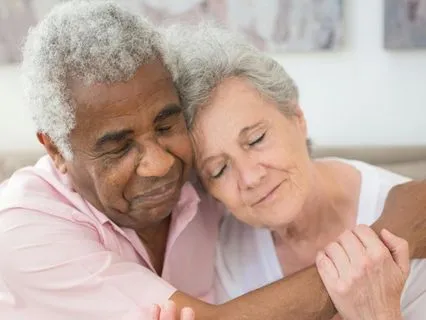
So today we're talking about emotional regulation and how important this is to have truly healthy and stable relationships with others.
And this could be romantic relationships,
But also friends and children and family and everything.
It's sometimes easier to focus on intimate relationships because besides our family,
Which are different,
Our intimate relationships tend to be the most loaded.
They're the places we'll get the most emotionally dysregulated,
But there's actually also the most chance of resolution.
Whereas in our family of origin,
Sometimes there's a chance of resolution.
Sometimes people are just the way they are.
Whereas in an intimate relationship,
You could leave or you can stay.
And so it's actually a choice.
So it's a nice opportunity.
This is so important because there is something intrinsically important as a human to be able to connect through the heart to another person.
It's just so important.
And very often we think about emotions as being part of the heart.
We think that my heart is broken.
I'm so angry.
And we think about it all being caught up in the heart area.
We think it's all caught up in love.
But what if that's not exactly true?
What if it's sort of true,
But not actually true,
Especially in the times that we get in trouble?
You can actually deeply love someone and have really challenging emotions around them,
But it doesn't actually change your love for them.
It's actually the fact that you love them so much that the emotional responses are so confusing and frustrating and difficult.
For example,
If you were imagining,
If you're familiar with the chakras,
This is our heart chakra.
This is our divine self.
And when we can connect that spark of our own divinity with another person,
Something lights up inside of us.
And it could be anybody.
It could be a friend.
It could be a child.
It could be a partner.
It could be a parent.
It could be anybody.
But there's something so important as a human that we have this heart connection with others.
But when we think of the emotions that dysregulate us,
That challenge our relationships,
It's not actually this.
We have to go down a little.
We have to go down maybe into the first chakra.
And the first chakra is all about security,
Community,
You know,
That kind of thing.
So sometimes we get emotionally dysregulated because we're afraid.
Like we're actually worried or we're afraid of pain.
We're afraid of loss.
We're afraid of a loss of security.
We're afraid of something.
But there's a real almost primal fear that gets engaged and we get into fight or flight.
And now we're completely dysregulated.
This isn't the heart.
This is the first chakra.
And that's an interesting discernment inside of us to be aware,
Like to improve our emotional intelligence,
To deeply know where is this emotion coming from because it will help us figure out what's really going on.
And to not mess it up with the heart because it's really important,
Especially if this is someone you really love.
You really do want to foster this relationship.
It's important to know,
OK,
I do love you.
This is a cord of truth.
Now,
What is going on here?
So we can go down into the first chakra and go,
I am freaked out from the core of my being.
I am like terrified.
I actually have fear inside of me.
What is that?
You know,
And it helps us stop blaming the other person because,
Of course,
We have this heart cord.
So we we tend to like to think it's the other person.
It's one of the most annoying things about getting divorced.
I was married for 20 years and after I got divorced,
I remember it was about a year after and I was living by myself in Toronto.
I had moved away from the community that we lived in and I was all alone.
I had no friends,
Nobody around,
But I really felt called to go to Toronto.
And I remember having all these struggles and issues and emotional things going on.
And I sat with them and all of a sudden one day I realized,
Wow,
I totally would have blamed all of this on my husband.
All of it.
And it was the most shocking thing to realize,
Darn it.
It was me all along.
It's like this reckoning that you have in your heart that,
Oh,
Not everything.
Don't get me wrong.
Not everything,
But a lot.
And so there's a tendency to assume this other person is harming you.
Sometimes they are,
Which we're going to talk about too.
And then we move up into the second chakra and the second chakra is just below the belly button.
And this is if you imagine your sexual organs,
Your kidneys,
Bladder,
All that kind of area in the organs.
But this is how we flow with other people.
This is the interaction with others.
That's the second chakra.
The first chakra is security.
Do I have shelter?
Do I have safety?
Am I okay?
Is there food?
You know,
That kind of thing.
Second chakra is how am I interacting with other people in the village?
All the people in the village,
Not love interests,
Children,
All the people.
Do people freak me out?
Am I a little afraid of people?
Do I love people?
Am I attracted to that person?
Am I repulsed by that person?
Does that person make me angry?
Does that person make me laugh?
This is second chakra emotions.
And what's interesting is a lot of that is actually what comes up in intimate relationships.
It's not actually about do I love this person.
It's something that's happened in that second chakra in an interaction with others that no longer lets you trust people or makes you afraid of people or makes you angry.
That's the interesting thing.
It doesn't necessarily mean that it happened in a love relationship in the past.
It could have been with a parent.
It could have been with a teacher.
It could have been with some kid down the road that was bullying you.
It could be all kinds of things because it's a second chakra emotion.
And the wonderful thing is intimate relationships of any kind,
Lovers,
Partners,
Or friends,
These are the emotions that we get to heal.
If we can be regulated,
And this is why this talk is called emotional regulation,
It's not about ignoring emotions.
It's not about suppressing emotions,
But it's about understanding them in the whole and how important they are.
And so just to be clear about where some of these emotions are coming from,
Because it's the heart center,
The love that actually helps us regulate.
It's almost like when you're so angry and you have to kind of take a deep breath and say,
I really love this person.
I really don't want to damage this.
I don't,
I really want us to find a resolution.
That becomes like a lifeline to sort and heal the second chakra or first chakra stuff.
So we need to go back into our history as people.
Now our education system in a lot of the world,
And this may not be yours depending on where you are in the world,
But here in North America,
The education system was very diversified originally.
It was,
You know,
It was taught in churches so people could read the Bible and things like that.
But then when it finally became,
They called it the common school act or something like that,
And it was designed by industrialists who wanted to create people who would be great factory workers.
And it was designed in a very particular way,
And this is why there were bells and punctuality and compliance and all that kind of thing.
And they were basically,
They wanted to teach you a technology.
They wanted to be able to make you be able to work,
But there was no room for emotions.
There was no room for the human experience.
And this is really significant because if you are in a school from the age of five,
And it doesn't matter whether or not you liked school,
Didn't like school,
Did well in school,
It doesn't matter.
Everybody had to sit and kind of be good little soldiers.
You weren't allowed to cry.
You weren't allowed to get mad.
If even a teacher,
If the system wasn't fair,
You weren't allowed to fight back.
You would be punished.
So for generations,
We've been punished for having emotions.
And this is really,
Really important because this is where our parents got it.
And this is where their parents got it.
And by the time we were children,
Sometimes people had really awesome parents that emotions were healthy and that,
But that's not the general case.
And probably if that was you,
You might not need this talk.
This might not be interesting to you.
But for a lot of us growing up,
You had to be have it together.
And if you had an emotional outburst,
Or if you were upset or whatever,
You'd be sent to your room until you're good enough company to be with others.
And this was kind of normal.
And it was very normalized.
Like if a child is losing their mind in the grocery store,
Historically,
Anyway,
Today people might be a bit more open-minded,
But 20,
30,
40 years ago,
Child's freaking out in the grocery store,
You're probably going to wrap the kid up and take them into the car and drive them home.
And you know,
They'd likely be punished and whatever,
Like emotions were punished.
And again,
This isn't demonizing our parents because they came out of the same system.
And then we all went to school where emotions were punished or definitely not allowed because this ruined the efficiency of the room and you're disturbing people and all that.
But emotions are real.
Emotions are our human interaction with the world around us.
Like it's not a small thing.
It's like putting your hand on a hot element and it's hot.
And we have this reaction to take our hand off the element.
Or if it's cold outside and we don't have a coat,
We feel cold.
We have to go inside and put a coat on so we don't die of hypothermia.
If we are walking down the street and all of a sudden you see a tiger coming your way,
You have to have an emotional response of fear to run and get to safety.
But we were taught to keep our hand on the element.
We were taught to risk and stay with the tiger,
Even if it harmed you.
We were taught to suffer and don't put a coat on.
We were taught to not honor those emotions.
That energy has to go somewhere.
It doesn't just disappear.
It's such a powerful,
Life-affirming,
Protective thing.
It's got to go somewhere.
And it goes inside and it gets all twisted.
And this is where we get into trouble.
Later on,
We're trying to have an adult,
Healthy,
Loving relationship and we have all of these pockets of twisted fury inside of us for all the times that we weren't allowed to run.
We weren't allowed to take our hand off the element.
We weren't allowed to do that.
This is where we end up.
So emotionally dysregulated.
And that experience has become so twisted over the decades inside of us.
We lash out at this person we love the most.
We are utterly dysregulated.
We are not even in our own mind.
And this is where it's so,
So important to kind of reframe the whole thing.
Because it's kind of like your psyche is dying to be heard.
It's just dying to be witnessed.
It's like,
I can't hide this anymore.
I have to share this reality.
I can't live with this any longer.
And this is why it's always interesting in intimate relationships.
Because very often,
This stuff doesn't come up right away.
This is kind of that honeymoon period that people talk about,
That everything's fine,
Because it's almost like you're unconsciously creating the foundation of safety.
We need that safety.
Why?
Sure,
We want love.
Maybe we want to build a life together,
Blah,
Blah,
Blah.
It's possible and very likely.
But also,
Our psyche wants to heal.
Our deepest soul needs wholeness.
We've had this fragmentation happen to us over our lifetime.
And if we can find a solid base inside,
Then we have a chance at healing.
And this is just one aspect,
But it's an important one.
So now all of a sudden,
Maybe you're together for six months or a year,
Or maybe you end up moving in together,
And you're starting to feel comfortable.
And this is often when we might say things like,
This is when the,
Quote,
Bad behavior begins.
This is when weird things start happening.
But this is when we have to be most villagent.
Maybe that's like a Freudian slip,
More village consciousness.
We need to be vigilant and villagent.
So now imagine here we are as adults,
And something has happened.
Our partner has done something,
And it has,
Quote,
Triggered us.
It has now opened up one of those crazy twists that is lying dormant inside of us.
Well,
The hard thing is,
If we don't understand the importance of emotions and how it fits into our entire world,
That's going to go right into our little box of triggers,
And we're going to either explode back at them,
Or we're going to withdraw.
You know,
We all respond to stress and conflict differently.
And that's interesting.
Like,
It's an interesting thing to recognize that when this happens,
Wow,
My response is to go hide in my room.
Metaphorically,
Physically,
Whatever.
Maybe we withdraw emotionally.
Maybe we literally leave the room.
But that's important too,
Because if that's our response,
That also comes from a previous time.
So at this point in the relationship,
Both of you are actually time traveling to another point in time.
You are no longer the two adults that are in love.
You are both hurt children responding in whatever way we can.
So this is where the regulation is so interesting.
That we actually,
And this is why,
You know,
Being on Insight Timer,
Or having a meditation practice,
Or some kind of mind-body connection practice,
That in this moment,
We know to take a breath.
Even like 30 years ago,
I remember they used to teach for if you have anger issues to take 10 breaths before you do anything,
You know,
Ironically.
So you take a breath,
And you realize that,
Okay,
I am overwhelmed right now.
And maybe our partner is also overwhelmed.
And so both of you kind of have to sit there and say,
Okay,
We have opened a can of worms right now.
Like,
It's almost like your rational side has to go,
Okay.
And this is like,
I love the masculine and feminine dynamic,
Right?
So the masculine side is now holding space for our feminine side,
And allowing clarity.
Because the emotion will overwhelm us.
The emotion will take our rational mind offline.
Why?
Why are we designed to be taken offline when we're emotional?
Because if you put your hand on the hot element,
There's no time to think about it.
You don't want to think about it.
If you see the tiger,
You don't want to think about it.
If you're outside freezing to death,
Don't spend any time wondering whether or not you should go get a coat on.
Go get a coat on.
It's intentionally taking your rational mind offline.
So now here you are in this difficult conversation,
You are offline.
If you're feeling a genuine emotion,
It will take us offline.
And it's okay.
Once you sort of dance with this with your partner a few times,
We start to recognize it.
You know,
Imagine that just imagine for a moment,
You know,
Your partner responds or reacts to something really aggressively.
And you have the wherewithal within you to realize,
Wow,
That was a really extreme response.
Then deep in your heart,
You know,
That they are tapping into some old pain.
You know that.
Because you have this emotional intelligence,
You know this.
So you don't,
You don't react back to them.
You don't do anything.
You let them say what they're saying and do what they're doing.
And you wait.
And then it's like,
Do you want to talk?
Like,
Let's,
Let's talk or let's do whatever.
Let's go for a walk.
Like not everybody is good at sitting when they're emotionally dysregulated.
Sometimes the best thing is to go and do something active,
Walk,
Do something,
Get that energy flowing through your system.
It's not always the right idea to sit on a couch and cry.
Sometimes you got to get it out.
But one person has to have the ability to allow it.
This is really,
Really important.
Because if we don't sort of allow ourselves to go deep into that emotion,
We won't get to the of it.
And we have to get to the bottom of it.
What is the pain that the psyche is experiencing?
What is it?
And how many layers are there?
So that person,
They can't be like diving down 20 feet and then coming back up for air and then going down 21 feet and coming up for air.
They're almost always only going to end up going 20 feet down.
This truly is where we quote,
Hold space for our partner.
Because we are connected.
We care.
Our heart is,
We're not just like,
Don't worry,
Man,
I'm holding space for you.
I'm totally cool.
Like I'm good.
No,
You're not separate from this.
Your heart is feeling.
You're an empath.
You can feel the pain of your partner.
You're not experiencing it,
But you can feel it empathically through the heart.
And we're all empaths.
We can do it.
We're feeling it.
So we are in,
We are holding that lifeline.
We are holding them while they sort this out.
This is really,
Really powerful.
And this is where when we can do this for each other,
Amazing bonds of trust form.
You know that this person is actually,
They love me enough to hold that space.
You know,
It's,
It's no small thing.
Now,
This is also where ahead of time,
Before you have an emotional reaction or emotional trigger,
Is that it's very,
Very important to have already established in your heart,
The importance of kindness.
You know,
This is something we need to philosophize about,
Be clear about in our minds before we get triggered.
Because if you don't believe in kindness,
In an intimate relationship,
We know far too much about the other person to be emotionally dysregulated in their presence.
And if we are angry at someone in our past,
The chances of grabbing something painful in your partner and wrapping it all up in your fury and throwing it back at them is high.
And this is where it is so,
So important to be very clear ahead of time,
That 100% kindness is always necessary.
And that way,
When you are in that deep emotional state,
You will be kind,
You will not attack your partner in any way.
But we need you need to have that deep foundation to begin with.
And very often we have to cultivate it because it wasn't modeled for us.
Very often people would lash out parents,
Siblings,
Friends,
Partners.
I mean,
That was their power.
That was their way of feeling powerful.
Because if they could grab something painful in you and knock you down emotionally,
They feel better about themselves.
But now you're damaged and damaged.
It's real.
And we don't want to do that to our partners.
That is what ends relationships.
You do something like that,
Then all of a sudden they're afraid to be vulnerable.
Because if you can't trust yourself to be kind all the time,
Then you're not trustworthy for them to be vulnerable with.
So this is really the kindness piece is really important.
The other thing to be really clear about is that just because someone is being emotional doesn't mean it's real.
A lot of us have childhood patterns,
Like temper tantrums.
A temper tantrum is not an emotion.
A temper tantrum is a very intentional behavioral pattern to get our way.
So if you're with someone and they're suddenly freaking out and slamming doors and yelling and getting all like,
You know,
Trying to make themselves as big and loud as possible,
This isn't emotion.
This is a plan.
And it may be an unconscious plan or whatever.
But this is a way of controlling you.
And that's different.
And again,
It's just important,
In the world of emotional intelligence,
To recognize that,
To be able to recognize,
Is this a genuine emotion?
Are they actually sad?
Are they actually angry?
Are they actually lonely?
Are they actually grieving?
What's really going on here?
Or are they trying to change my mind about something?
Are they trying to get their way about something?
And you can ask yourself this question,
Because if you say something,
Or change your mind,
Will they stop the tantrum?
Will they stop?
Will that fix their emotional problem?
And that can be often a sign that no,
No,
No,
This is a manipulative tantrum.
They're just trying to get their way.
A genuine emotion is all about them.
And you are simply their partner,
To hold them,
To help them,
To,
You might have triggered it.
You might have done something that triggered it.
But the emotion is theirs to sort.
The other thing to watch out for is drama.
Drama is something different.
Drama is when there's an emotional something going on.
And over time,
Over the decades,
You have taken a story,
An intellectual story,
And added it to the emotion.
And now there's a looping going on inside of us.
Well,
Everybody,
Every guy I've ever been with has cheated on me.
And I just knew you were going to too.
And I just knew this.
And so when you're not here,
And I'm,
You know,
And I just do,
This isn't an emotion.
This isn't an emotionally charged,
Dramatic story in our head.
This is not real.
Or if someone does something,
And you're like,
I knew you didn't love me,
Or I knew you think I'm fat,
Or I knew you didn't think,
You know,
That is,
That is drama.
That is something else.
And you can tell because it literally kind of pushes you away.
Like you're like,
You suddenly feel like you need to put hands up.
Like,
Who are you mad at?
Like,
Why are you yelling at me?
There's no holding space for that.
Because this is a mental loop.
This is not emotions at all.
And it's just so it's just important to just watch for this,
That when I'm talking about emotional regulation,
It's not a tantrum.
And it's not drama,
Because both of these are intentional.
Both of them have a very intentional reason why they are bringing this out.
And it doesn't mean they're bad people.
It doesn't mean anything.
It's a pattern.
It's a habit.
Maybe it's all they've ever known.
Maybe everyone's been tantruming around them for their whole lives.
And that's how people get attention.
And they don't know any better.
Or maybe they're just really manipulative.
You never know.
And drama.
We are surrounded by drama.
I mean,
Social media is drama.
Everything's about drama.
Oh,
And this bad person and this and that,
Everything.
That's,
That's,
That's what we hear about.
It's in the movies,
It's everywhere.
And that's a pattern.
And it's interesting to find our direct way through life and not be circling in these dramas.
But again,
Let's say your partner has a habit of drama,
Maybe,
Or tantrums.
What do you do?
Well,
You can't engage.
You can't do anything.
But I always think of like,
So I have two children,
They are 30 and 28 now.
And I'll never forget when my son was born.
And when he got into those terrible twos,
You know,
We call them.
And,
And I remember him getting so angry because he didn't get the cookie before supper or something.
And he would just flail and scream and,
You know,
And I would look at him and think,
Wow,
There's actually nothing wrong.
You just want the cookie.
But I could feel this horrible angst in him,
This horrible fury inside of him.
And I would just sit with him.
I would just sit with him while he screamed and yelled and punched and kicked and did whatever he did.
Until he just tuckered out.
And then he just,
He'd look at me,
I remember we'd be sitting on the stairs,
You know,
Because he'd be he'd been sent there for a timeout or something.
And then I would just go and sit on the stairs with him if he was crying.
And then eventually he'd tuck her out.
And he just like lean against me.
And he'd just cry and he'd say,
Mom,
I just really want the cookie.
And it would just be like,
I know,
Honey,
But you know,
We're going to eat soon.
But you had to almost get all the energy out.
So it's interesting sometimes if you really love someone and they're having a tantrum,
To kind of just sit with them and say,
You know,
I love you.
And I want to talk to you about this.
This can't happen.
This.
But I do want to talk to you about it.
And I'll wait it out.
But whatever we do,
It just can't work.
And it's the same with drama.
The only way that drama works is if you play.
They're like,
Oh,
And I just knew that you this and this is like,
Oh,
I didn't do that.
I knew you like you have to if you don't play,
It'll tucker out also.
It'll just dissipate because it's not real.
It's something fabricated in the mind.
Now,
All that being said,
If we stay with it and allow each one,
The tantrum or the drama to tucker out.
Now,
Underneath there,
There might be real emotion.
And it's worth waiting for.
Like it's worth waiting for that.
And if you get there,
Wow,
Like big change could happen.
But you just can't play in the surface game.
This is where if you imagine each of us as a masculine feminine yin yang symbol,
Every one of us,
The feminine within us is our manifest reality.
All of us doesn't matter about gender or anything like that.
This is who we are.
This is our actual experience.
This is touching the hot element and it's it's hot or it's cold or it's this or it's pleasurable.
It's pain.
This is the feminine and this is real and this is wisdom and this is important feedback from the world.
Our masculine is like the witness of that.
The masculine is the one that pulls your hand off the burner.
The masculine is the one that gets you to safety because we listened to the feminine.
If you don't listen to the feminine,
If you don't trust your instincts,
The masculine is not doing anything.
So there is a really important journey within each of us to realize how important the feminine is,
How important our emotions are.
Everybody,
All genders,
In some societies it's especially hard on men because men were only allowed to get angry,
No other emotions.
Women,
You know,
We cycle,
We have emotions,
We literally are chemically different every day of the month.
We can't really avoid those emotions sometimes,
But even then we repress them.
We repress them with all kinds of things.
And so the first step is recognizing the importance of the emotions.
Because once we honor the importance of our own emotions,
Then our masculine will rise to that need and hold space for us when we're highly emotional.
And our masculine will say,
I think we need to take a long bath,
Or I think we need to go for a run,
Or I think we need to journal,
Or I need to make an appointment with our therapist,
Or I need to call a friend.
This is where the masculine responds to the emotion because it's so important.
And when we do that for ourselves,
We can't help but do it for our partner.
And as soon as our partner is having an emotional reaction or emotional response to something,
Even if it's uncomfortable,
We've done it enough ourselves that we can stay with them and say,
Wow,
This is a painful one.
You know,
Small thing.
But we first have to develop that responsive masculine that loves their feminine.
I keep having this picture of a submarine,
Like a military submarine,
Which is probably not the right example,
That has all these sensors to,
You know,
Sense danger,
Sense,
You know,
I don't know,
Land masses underwater,
And enemy ships,
And changes of temperature,
And all this,
All these sensors.
Well,
The submarine,
The people who run the submarine know that those sensors are really important.
They're like,
Listening like crazy.
Can you imagine if we listen to our feminine like that?
And it's two pronged,
Because on the one hand,
First of all,
Our masculine would actually be able to respond.
And secondly,
Our feminine,
The response wouldn't be twisted.
It wouldn't have the twists that happen when we oppress them.
The feelings would come up,
We would feel them,
We would express them,
And then they pass.
Emotions are not meant to stick around for decades,
Or even hours.
There are things like grieving that actually takes longer.
If we lose someone,
I remember when my mom died a long,
Long time ago,
Somebody said that it takes at least a year,
Because you have to live through all the holidays,
And the birthdays,
And the anniversaries,
And you have to live through a whole series of seasons before that is complete.
But again,
How important is it that you actually feel all the emotions through all those seasons?
Because if we don't,
What's going to happen?
They just get locked,
And they get locked into stories,
And they get locked and oppressed,
And then they get twisty.
This is also where it's so important to always come back to the heart chakra.
At the beginning of our talk,
We talked about that,
How the love we have for someone is different than the second chakra and the first chakra.
Fears,
Anger,
Frustration,
Disappointment,
Attraction,
Repulsion,
That is a different part of us.
And that's interesting.
I know for me,
If my partner and I are having a tete-a-tete about something,
And one of us is triggered,
Because we're all human,
Everybody has a past,
Everybody has something that,
Man,
If you get close enough,
Stuff's going to come up.
And I'll sit with them,
And I will be so emotionally triggered that the thoughts in my mind are just like,
This isn't even worth it,
I can't believe it.
You've just got these really horrible thoughts in your head.
And then I take a breath,
And I remember how much I love him.
And I'm like,
No,
You actually really love this man.
And then it's like a whole other thing opens.
It's like,
It is like your heart opens,
Which gives you the strength and the inspiration to just hold on for a minute.
And the last thing I want to mention is,
So imagine now you're in this deep dive.
One of you is having a really hard time.
The other person's helping.
And don't get me wrong,
Because very often,
Especially if in a match like that,
We will have matching triggers.
And so one person will get angry,
And then the other person will kind of trigger back for a minute.
And you sort of have to really,
Both people have to breathe for a minute,
Until you kind of figure out who's going to do the deep dive.
And then you realize,
Oh,
Okay,
No,
Actually,
Let's go this way.
So you do this deep dive,
And maybe they're crying,
Or maybe they're frustrated,
Or maybe they're whatever.
So the question is often,
How do you know when we're done?
How do you know when you've gotten to the bottom of it?
What's interesting is,
It's like the psyche stops telling the story.
The psyche relaxes,
Something inside of you goes,
It just relaxes.
And the emotion dissipates.
And that's when you know,
You got to the bottom of it.
There's no charge left in it.
And you can kind of rest,
You can cuddle,
Or you can do whatever.
But you get to rest.
And if you're still wound about it,
It may not be finished.
And it's okay.
You know,
I understand the teaching of not going to bed angry.
But sometimes you do.
As long as you pick it up the next day.
Don't go to bed angry,
And then go to bed angry,
And then go to bed angry,
And then go to bed angry.
Because after 20 years,
That's a lot of unresolved anger.
But it's okay to allow time to heal things.
Sometimes you just need a whole day of life to give yourself some distance and space to be able to come back into it and say,
Okay,
Can we go back there now?
And can we talk about it more?
Because what's also interesting is we have to be able to discern between when we're being emotionally triggered into a past that needs to be healed.
And when we're actually angry about something happening right now.
Sometimes we get an emotional,
You know,
An angry reaction.
Because maybe our partner has actually done something wrong.
And I'm going to say wrong.
But we do have bad behavior.
We do have antisocial behavior.
And antisocial behavior is anything that pushes other people away.
Antisocial behavior is anything that does not work if you want to live with other people.
I remember when my kids were little,
And they would do something or not want to clean the house or not want to help or not want to do or they'd be mean to each other or whatever.
And one,
I mean,
I must have said this 100 times in different circumstances.
And it was like,
You have a decision to make.
In your life,
You get to either live alone,
Or you get to live in community.
Whether it's a partner or a family or friends doesn't matter.
When you live alone,
You can do anything you want.
You have all the freedom in the world.
You can live in the house the way you want.
You can act the way you want.
You can pay the bills on your own.
You can do everything all on your own.
There are pros and cons.
But if you choose to live in community,
There are benefits to living with others.
And love and support and help and presence.
But you have to actually act in ways that support the community.
You're now part of something.
And a lot of us have not had good training in how to be healthy and social.
So it's very possible that we're in a relationship where our partner actually has antisocial behavior.
And I don't mean some psychological disorder.
I mean,
They've just simply learned a lot of bad habits in their family of origin,
Past relationships,
Who knows.
And it could be lashing out,
It could be not contributing,
It could be withdrawing,
It could be all kinds of things.
And when those things happen,
You will have an emotional response.
You will suddenly feel abandoned,
Or you will suddenly feel angry,
Or you will suddenly feel sad.
These are not triggers.
These are moments in this moment when you honor your emotion.
And you're like,
Why do I feel so abandoned right now?
And you look at your partner and you're like,
We need to talk.
Because I am feeling so distant from you right now.
And I don't like it.
And maybe they are,
Oh,
You're just being overreactive,
Or you're being sensitive,
Or you're being this,
Or you're being that.
It doesn't matter.
Because a feeling is a feeling.
And all you know is,
Why am I suddenly alone here?
Or if something has happened,
And you get angry,
Because this is a overstep,
This is not okay,
You're not being treated properly,
And anger comes up to protect you,
Then that's important,
That we honor that emotion.
And we're like,
Okay,
I don't know why you're justifying what you did.
But whatever you just did,
Just threw me back five feet.
And I don't want to be around you.
I don't know why,
Whether you're emotionally dysregulated right now from work or something.
But right now,
I don't want to be close to you.
It gets like,
As soon as we honor the emotions,
Whether it is a correction of behavior in this moment,
Or whether it is a trigger from something in the past,
It doesn't matter.
The important thing is that we honor the emotion in the time.
Because it's often a balance of both things.
You know,
It's a balance of,
Sometimes we really do have to fix our behavior.
Sometimes we do have to be kind,
And we do have to consider,
And we do have to stay in the arena of the relationship,
And sort it,
And not run.
Because when any of those things happen,
We have such an opportunity.
If it's a trigger,
We have an opportunity to heal a thorn that is inside of us,
That's been digging at us for our whole lives.
If it's a correction of antisocial behavior,
We have a chance to learn how to live in loving community,
And not end up isolated.
This is a massive opportunity that is really worthwhile.
And the great thing is,
In the end,
We have this renewed connection.
Like a connection that's so much deeper.
If you imagine your own connection with your masculine and feminine,
Your own connection to the rational mind,
And the emotional mind,
That the rational mind supports,
And loves,
And reacts,
And responds to that emotional mind in positive,
Wonderful,
Growing ways.
And then you have a partner who also loves your emotional self,
And you love their emotional self.
This is such a loving,
Wonderful bond.
So lots of amazing opportunity when we honor our emotions.
Okay,
I'm going to put my glasses on.
If you have a question,
I'm going to go back through the chat,
But if you have a question,
Feel free to rewrite it.
And I'm more than happy to answer it.
What if we are open,
And try to communicate our emotions to our partner,
But they didn't understand our emotions,
And started fighting us back?
What do we do in this case?
So,
It's different with every relationship.
It depends so much on why everybody's in the relationship.
So,
Your partner might be in the relationship because they just want to relax,
And they don't want to have to try,
And they don't want to have to do any work.
They just want to have a companion.
They just want to have sex.
They just want to have that,
But they don't want to actually evolve together.
And so then it becomes very hard,
Because they don't,
Like what you desire isn't what they desire.
You desire a depth of connection that they don't want.
They actually don't want that kind of depth.
And so very often,
You are just stuck,
Like that is the ceiling of the relationship.
And it's one of the number one mismatches in relationships,
That one person wants a real depth and connection,
And the other person really just wants comfort.
And whatever,
It's just a mismatch.
On the flip side,
Maybe they actually do want a deeper relationship.
And this is where we have to make sure we're not telling ourselves stories,
Because we can easily make things up.
Oh no,
I know they really want it,
But we're really just projecting what we want onto them,
And hoping that that's what they want.
So,
That could be it.
So,
We have to be very clear.
Is there anything they've ever done,
Any action they've ever taken that's showing us that they do want a deeper relationship?
Or are all their actions showing us that they don't?
Like,
This is really important for us to be clear about.
But maybe they do.
Maybe there are times that they really do want to be connected,
And you have an idea that,
No,
I think they actually really want it.
Well,
Then,
If you share your emotions,
And they fight back,
Then you actually have to go into the masculine,
Because it's them that's actually dysregulated now.
It's them that's having an emotional reaction to whatever is going on.
And so,
Then you have to hold space for them to freak out,
And do whatever they're going to do,
And then be able to open the conversation,
And say,
Why is this so frightening?
Why are emotions so hard?
Is this from your childhood?
Is this from what?
Was there a time that you got punished for being emotional?
Was there a time that someone used it against you?
Why are you afraid of intimacy?
Why are you afraid of being connected?
Or maybe you just don't desire it.
It opens up a conversation for you,
The very fact that they freaked out.
And then maybe,
You know,
Miracles happen sometimes.
And all of a sudden,
Someone's like,
No one's ever cared.
No one's ever stopped.
No one's ever,
You know,
Or maybe they say,
I actually have huge trust issues.
Or maybe my last partner used tears to emotionally manipulate me.
Or maybe my mother was super emotionally unhealthy.
A lot of people were raised with parents that had real emotional,
And mental,
And psychological issues.
And so,
Anything close emotional is terrifying.
So,
It is possible,
If there's hope for the relationship,
That it's your turn.
You'll have to be in the masculine for a little while,
Until they can actually get underneath their junk,
And even be a trustworthy partner for you and your emotions.
If someone,
Ex-husband cannot learn or go inside,
Is it okay to just walk away?
Totally.
Because again,
You know,
It's funny,
Like,
I was married for 20 years to a really lovely man.
And we are really still good friends,
Like,
Really,
Really good friends.
But what I realized,
By the end of the marriage,
Is that we actually wanted different things in life.
And that was okay.
We had 20 years,
And we farmed together,
We ran businesses together,
We raised kids,
We did all the things.
We struggled,
We got married when we were 23 and 24.
Or,
You know,
We went through death,
And life,
And illness,
And all kinds of stuff together.
And when the dust settled,
We actually,
He wanted a different kind of relationship than I did.
And one day it became really clear.
And that's how it ended.
It was just,
I don't think we want the same things.
It was still hard,
It was still emotional,
But it was real.
And that's okay.
I think this is one of the biggest problems with the whole teaching of Till Death Do You Part.
That,
What if one day you wake up and you realize,
We don't even want the same thing.
And that we're actually harming each other.
Because that's what I realized,
Is I was actually,
On some level,
Beating up my husband for not being what I wanted,
Or for not wanting out of life what I wanted out of life.
And so I was actually limiting his experience in the same way that he was limiting mine.
Why would I do that to someone I loved?
So I think it's really important for us to be clear as to what we want in relationships.
And there's no right answer.
There's no perfect,
Ideal thing.
If you want to have a lovely,
Comfortable companion that you get to have sex with once in a while,
And go on trips together,
And take stuff to pot roast,
Or to potlucks and stuff,
Brilliant!
If you want to have an amazing,
Sensual,
Loving,
Deep dive in a tantric intimacy,
Awesome!
And everything in between.
If you want to have someone that you want to fight with all the time,
Because you just love the battle,
You just love a sparring partner,
And you want someone who can match wits with you,
And then you're going to have great makeup sex,
Maybe that's what you want.
There's no judge and jury as to the ideal relationship.
All that matters is that we're with the right person,
Because we both want the same thing.
People can live their whole life,
They could be married for 60 years,
Battling,
And love each other to death.
Well,
No one else would put up with me,
But he just,
He meets me every time.
Like there's no right answer.
There's no righteous relationship.
And so it's,
I think it's so important to walk away for their sake.
If there's someone you've always loved,
And they suddenly ghosted you for three years,
And then eventually admitted they couldn't handle any of the things they promised they could,
And didn't know what to do with it,
And they were now in counseling and learning how to be there for you,
But then forgot about their next commitment with you,
Do you need to maintain emotional distance for a while till you can feel trust again?
So,
Maybe,
On the one hand,
You already know the answer.
You already know that they're not where you are.
And for whatever reason,
A lot of people have this,
Where their mind really wants something.
Their mind really does desire this.
But a lot of us live in fantasy.
A lot of us live in our heads,
And we put all the perfect players in there.
It's kind of like,
Oh,
I'm going to get in trouble if I talk about this.
But I'm just going to do the PG version,
Okay?
So you guys just insert any kinkiness you want to do.
But if you've ever had fantasy in the bedroom,
It's always interesting how hard it is to actually,
If you've ever wanted to play it out,
It seldom works exactly as you wanted it to work.
Because in your mind,
You get to control all the players.
And everyone says exactly the right thing,
In exactly the right time,
In exactly the right way.
And then you decide you want to play it out,
And it just falls flat.
This is how a lot of us live.
We live in our minds,
And we just have these fantasies in our head,
That here's how this is going to turn out,
And here's how that's going to turn out,
And then they're going to say this,
And then I'm going to say this,
And then we're going to live happily ever after,
And then I'm going to make a million dollars,
And then this is going to happen,
And then everyone's going to think.
And we have this whole fantasy all laid out ahead of time.
But the problem is,
It's a fantasy.
None of it's real.
And then all of a sudden,
They're actually in relationship with a real person,
And they aren't using their lines.
That isn't what they were supposed to say.
You know,
That's not how they were supposed to act,
And that's not how they're supposed to,
It's just like,
But it's not,
You're not in the real world.
And so it's very possible that your friend isn't actually playing in the real world,
Even though they may promise,
And desire,
And genuinely desire.
Their feet aren't on the ground,
And they may have to hit a wall or two before they get there.
So in that case,
You might want to keep some distance.
But then there's this other twisted part of being human,
That for some reason,
Sometimes we just get dirty.
Sometimes we just need to roll in the mud,
Be hurt again,
Be frustrated,
Be annoyed.
Like we don't learn this stuff philosophically.
You know,
We don't learn this sitting with our journal.
Sometimes we actually have to get on the tennis court and play.
Even if we suck,
Even if the other person isn't fair,
Sometimes we just play.
But if we do,
You have to go in with this kind of emotional intelligence.
You have to watch yourself,
You have to watch with that witness mind inside and say,
Hmm,
I'm feeling drawn in again.
What's that?
What is this karmic pattern I'm playing out?
Forget about the other person.
The most interesting thing is why am I still holding tight?
What is going on inside of me?
Forget about their behavior and just watch yours.
So it's not an easy answer or question for sure.
My partner and I are completely transparent and tell each other everything.
And it's worked really well for us.
But sometimes it feels like things said in the past are still attached to the narratives we hold.
Wondering if there's such a thing as too much honesty.
We try to be kind in owning our truth.
I think it's a really good question because I think I've done that in my life,
In my relationship for sure.
I think I've maybe shared too much not realizing.
Like my partner,
For example,
He will brave through anything.
He'll put on a brave face and no matter what I say,
He'll say,
Well,
You know,
Maybe I just needed to hear that today.
Maybe it's,
You know,
I didn't like hearing that.
And I'm not talking about things between us,
I'm talking about,
Like you're saying,
Kind of stories from the past or whatever.
And afterwards I have had to really sit with it and say,
Just because he's putting up a brave face,
Maybe he didn't need to hear that.
He didn't need the visual.
You know how sometimes you hear a story about a partner and now you have a visual in your mind that you probably shouldn't have had.
So all I know is I can totally relate to your struggle because I have this struggle too,
Right now.
This is a,
I think it's a really worthy thing because it's almost like the pendulum goes so far the opposite direction that maybe it's too much.
And so I think it's a really worthy awareness to have.
And that's what I kind of play with now.
It's like,
Is this really a visual that he needs to have rolling around in his mind?
Even he's told me things about,
Because he was married for 23 years,
He's got five kids and,
You know,
He's got a whole life before me.
We came together very late in life because I was not very late,
But I was 52 when we got together,
He was 59.
So we've got a whole life before that.
And every so often he's told me a story in the context of something and man,
It replays in my head.
Not really to any value.
So that's the best I can say is I'm with you on the concern that I think it's an important thing to ponder.
I think it's,
Too much honesty is maybe better than withdrawal,
But there,
I think there is a,
And I tend to be a heart of my sleeve person anyway,
Like I'll tell you guys everything,
You know.
But even then,
Sometimes it's okay to have an inner world that nobody knows about.
Sometimes it's okay to have an inner compendium of memories that aren't shareable.
With everyone.
It's a wonderful,
A wonderful question and a wonderful balance to the open honesty question.
I'm so sorry we didn't have the conversation in the two years we were dating.
When I was four to five months pregnant,
He told me during an argument that he never wanted children.
Wow.
Why does this happen?
I don't think I really ever got over that.
You know what I honestly know about that,
Leslie?
I hear you that it's good.
It'd be nice to have the conversation ahead of time.
This is just what I think or what I feel,
I guess,
To be true,
Which isn't necessarily right.
Sometimes I just think that children choose the genetics or whatever it is that they need.
We're brought together with someone.
We have a child.
But maybe they just,
That wasn't the point.
But that that child needed to be born.
You know,
That that child,
There was some purpose.
You know,
I think of that,
Especially if sometimes even we can be married and have a bunch of kids and stuff,
And the marriage breaks apart,
Or the relationship is toxic,
Or there's narcissism,
Or there's abuse or whatever.
And you just think,
Oh my,
Like,
Why did this happen?
And now we've got kids together and,
Oh,
You know,
But what if those kids needed this particular mix of DNA and ancestral history?
Like,
What if?
And that's it.
And that the absolute best thing was that you guys weren't a partner.
You weren't partners through it.
It's,
That's what I always think.
Is it an agreement of the heart and mind to reach the final decision to end the relationship?
Mm-hmm.
Well,
I'm kind of of two minds of it.
There's a time to leave.
There's a time to kind of stop the bleeding,
To kind of just get out and try to heal.
But sometimes it's interesting,
Like,
I remember one time I was partway through my marriage,
And I was so mad at my husband about something,
Or I was so frustrated with the situation we were in.
Yeah,
I was just beside myself.
And my mother-in-law,
No,
My mother-in-law,
My stepmother was visiting,
And she was a very wise woman.
And she said to me,
Darling,
There will come a day when that man can neither make you angry nor make you happy.
And that is the day that your marriage is over.
Until then,
You're still bound to him.
And that was interesting to me because that is how it happened.
And it was 10 years later.
I'm not saying that's everybody's idea,
A good idea.
I'm just saying 10 years later,
That moment came,
Something happened,
And the final thread was cut.
And I was like,
Huh,
That time is here.
He didn't make me mad,
And he didn't make me happy.
It was over.
And it was so clear.
And I often wonder if what happens is if we leave before that moment,
We then do have to then find someone similar to our partner because we still have to work out our junk.
I can definitely say that was true for me that there were issues that I had in the relationship that I did have to play out later in other relationships.
And so for years in my marriage,
It was like,
I would pray for guidance.
Should I stay?
Should I go?
What should I do?
And the answer was stay.
So I just assumed that there was something else I was supposed to learn.
There was a muscle I had to flex.
There was something inside of me I had to strengthen and I had to become clear about,
Or a philosophy that I had to shift.
And then eventually,
After 20 years,
I was complete.
I was complete with that relationship as a lover,
As a married couple.
But to your point,
I think it is definitely an agreement of heart and mind,
For sure.
Well,
Thank you,
Everybody,
For being here.
This was a wonderful time,
Wonderful chat.
See you guys later.