Welcome to Dreambirds,
Drawn from The Bird Study Book,
A book first published in the early 1900s.
As you listen,
Make sure you're comfortable.
Nestle into your bed,
Feel the warmth of your blankets,
And allow yourself to relax.
This is your time to let go of the day,
To leave behind any lingering thoughts,
And to focus on nothing but the calm that surrounds you.
Picture evening falling over a tranquil meadow,
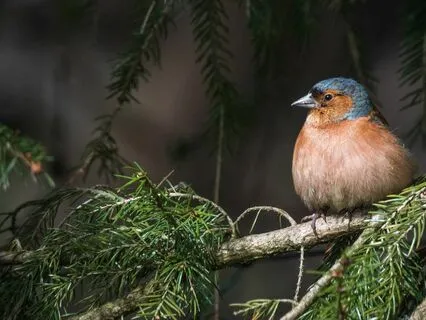
Where the soft light of dusk cloaks the delicate silhouettes of birds perched on shadowed branches.
The only sounds are the quiet rustle of leaves and the gentle call of the birds as they sing each other to sleep.
Let these images guide you as you drift off to sleep.
This book is not intended so much for the advanced student in ornithology as for the beginner.
Its purpose is to answer many of the questions that students in this charming field of outdoor study are constantly asking of those more advanced in bird lore.
In conformity with the custom employed during many years of college and summer school teaching,
The author has discussed numerous details of field observation,
The importance of which is so often overlooked by writers on the subject.
If one can,
In the recounting of some experience that he has found interesting,
Awaken in the mind of a sympathetic hearer a desire to go forth and acquire a similar experience,
Then indeed may he regard himself as a worthy disciple of the immortal Pestiloxy.
Let the teacher who would instruct pupils in bird study first acquire,
Therefore,
That love for the subject which is sure to come when one begins to learn the birds and observe their movements.
This book,
It is hoped,
Will aid such seekers after truth by the simple means of pointing out some of the interesting things that may be sought and readily found in the field and by the open road.
In the preparation of this volume,
Much valuable aid has been received from Messrs.
E.
W.
Nelson,
F.
E.
L.
Beale,
Wells W.
Cook,
Omer,
H.
C.
Oberholzer,
And others of the United States Biological Survey,
For which the author desires to make grateful acknowledgement.
Parts of some of the chapters have previously appeared in The Craftsman Magazine and Country Life in America,
And are here reproduced by the courtesy of the editors.
Chapter 1.
First Acquaintance with the Birds.
It is in spring that wild birds make their strongest appeal to the human mind.
In fact,
The words birds and spring seem almost synonymous.
So accustomed are we to associate one with the other.
All the wild,
Riotous singing,
All the brave flashing of wings and tail,
All the mad dashing in and out among the thickets or soaring upward above the treetops,
Are impelled by the perfectly natural instinct of mating and rearing young.
Where,
Pray,
Dwells the soul so poor that it does not thrill in response to the appeals of the ardent lover,
Even if it be a bird,
Or feel sympathy upon beholding expressions of parental love and solicitude.
Most people,
Therefore,
Are interested in such spring bird life as comes to their notice,
The extent of this interest depending,
In part,
On their opportunity for observation,
But more especially,
Perhaps,
On their individual taste and liking for things out of doors.
It would seem safe to assume that there is hardly anyone who does not know by sight at least a few birds.
Nearly everyone in the eastern United States and Canada knows the robin,
Crow,
And English sparrow.
In the south,
Most people are acquainted with the mockingbird and turkey buzzard.
In California,
The house finch is abundant about the towns and cities,
And to the dwellers in the prairie states,
The meadowlark is very familiar.
Taking such knowledge,
However slight,
As a basis,
There is no reason why anyone,
If he so desires,
Should not,
With a little effort,
Get on neighborly terms with a large number of birds of the region,
And spring is a most favorable time to begin such an effort.
One may learn more about a bird's habits by closely observing its movements for a few hours at this season than by watching it for a month later on.
The life that centers about the nest is most absorbing.
Few sights are more stimulating to interest in outdoor life than spying on a pair of wild birds engaged in nest building.
Nest hunting,
Therefore,
Soon becomes a part of the bird student's occupation,
And I heartily recommend such a course to beginners,
Provided great care is exercised not to injure the nests and their contents.
Caution in nest hunting.
A thoughtful person will,
Of course,
Be careful in approaching a wild bird's nest.
Otherwise,
Much mischief may be done in a very short time.
I have known dainty eggs and darling baby birds to be literally visited to death by well-meaning people with the best of intentions.
The parents become discouraged by constantly recurring alarms and desert the nest,
Or a cat will follow the path made through the weeds and leave nothing in the nest worth observing.
Even the bending of limbs or the pushing aside of leaves will produce a change in the surroundings,
Which,
However slight,
May be sufficient to draw the attention of some feathered enemy.
When one stumbles on the nest of a quail,
Meadow lark,
Or oven bird,
It is well not to approach it closely,
Because all over the country,
Many night-prowling animals have the habit of following by scent the footsteps of anyone who has lately gone along through the woods or across the fields.
One afternoon,
By the first chance,
I found three quail's nests containing eggs.
The next morning,
I took out a friend to share the pleasure of my discoveries.
We found every nest destroyed and the eggs eaten.
My trail the evening before lay through cultivated fields,
And it was thus easy for us to find in the soft ground the tracks of the fox or small dog that,
During the night,
Had followed the trail with calamitous results to the birds.
When finding the nests,
I had made the mistake of going to within a few inches of them.
Had I stopped six feet away,
The despoiler that followed probably never would have known that there was a nest near,
For unless a dog approaches within a very few feet of a brooding quail,
It seems not to possess the power of smelling it.
It is rarely necessary to go far afield to begin the study of birds.
Often,
One may get good views of birds from one's open window,
As many species build their nests close to the house when the surroundings are favorable.
Last spring,
I counted 18 kinds of birds one morning while sitting on the veranda of a friend's house,
And later found the nests of no less than seven of them within sight of the house.
When one starts out to hunt birds,
It is well to bear in mind a few simple rules.
The first of these is to go quietly.
One's good sense would of course tell him not to rush headlong through the woods,
Talking loudly to a companion,
Stepping upon brittle twigs,
And crashing through the underbrush.
Go quietly,
Stopping to listen every few steps.
Make no violent motions,
As such actions often frighten a bird more than a noise.
Do not wear brightly colored clothing,
But garments of neutral tones,
Which blend well with the surroundings of field and wood.
It is a good idea to sit silently for a time on some log or stump,
And soon the birds will come about you,
For they seldom notice a person who is motionless.
A great aid to field study is a good field glass.
A glass enables one to see the colors of small birds hopping about the shrubbery,
Or moving through the branches of trees.
With its aid,
One may learn much of their movements,
And even observe the kind of food they consume.
A very serviceable glass may be secured at a price varying from five to ten dollars.
The National Association of Audubon Societies,
New York City,
Sells a popular one for five dollars.
If you choose a more expensive,
High-powered binocular,
It will be found of greater advantage when watching birds at a distance,
As on a lake or at the seashore.
Notebooks.
The bird student should early acquire the custom of making notes on such subjects as are of special interest.
In listening to the song or call of some unknown bird,
The notes can usually be written down in characters of human speech,
So that they may be recalled later with sufficient accuracy to identify the singer.
It is well to keep a list of the species observed when on a trip.
For many years in my field excursions,
I have kept careful lists of the birds seen and identified,
And have found these notes to be of subsequent use and pleasure.
In college and summer school work,
I have always insisted on pupils cultivating the notebook habit,
And results have well justified this course.
In making notes on a bird that you do not know,
It is well to state the size by comparing it with some bird you know,
As for example,
Smaller than an English sparrow,
About the size of a robin,
And so on.
Try to determine the true colors of the birds,
And record these.
Also,
Note the shape and approximate length of the bill.
This,
For example,
May be short and conical like a canary's,
All shaped like the bill of a warbler,
Or very long and slender like that of a snipe.
By failing to observe these simple rules,
The learner may be in despair when he tries to find out the name of his strange bird by examining a bird book,
Or may cause some kindly friend an equal amount of annoyance.
As a further aid to subsequent identification,
It is well to record the place where the bird was seen.
For example,
Hopping up the side of a tree,
Waiting in a marsh,
Circling about in the air,
Or feeding on dandelions.
Such secondary information,
While often a valuable aid to identification,
Would in itself hardly be sufficient to enable an ornithologist to render the service desired.
That a young correspondent of mine entertained a contrary view was evident from a letter I received a few weeks ago from an inexperienced boy enthusiast,
Who was a member of a newly formed nature study class.
Here is the exact wording of the communication.
Dear Sir,
10 a.
M.
Wind east.
Cloudy.
Small bird seen on ground in orchard.
Please name.
P.
S.
All the leaves have fallen.
Reporting blanks.
A convenient booklet of reporting blanks and directions for using them is issued by the National Association of Audubon Societies,
New York City.
This is very useful in recording descriptions of birds.
The blanks may be sent to the office of the National Association,
And the species described will be named.
Books.
There are a number of inexpensive books which contain illustrations of birds in natural colors.
One of these will be of the greatest aid to the beginner in bird study.
Among the most useful are the Reed's Bird Guides,
One covering the birds of the eastern and the other those of the western part of the United States.
The pictures alone will be of great use in learning the names of feathered neighbors,
While an intelligent study of the text will reveal the identity of many others.
Local lists of such birds as are found in a neighborhood or a county are always a great aid in determining,
With a fair degree of accuracy,
Just what species may or may not be expected to appear in a given locality.
Such lists are usually first published in the AWK,
The Condor,
Or other ornithological publications,
And in many cases are printed and distributed later as separate pamphlets.
There have been published also many state lists of birds,
Usually accompanied by detailed information regarding abundance,
And distribution,
Of all the species known to occur in the state.
Every bird student should,
If possible,
Get a copy of his own state bird book.
Any reader who may wish to learn if such a list of the birds of his neighborhood or state has been published is at liberty to address the question to the author of this book.
Movements of Birds One does not get very far in the work of bird study without discovering that certain movements are characteristic of various families.
And,
When the observer is able to recognize this difference in manner,
A long step has been taken in acquiring the power of identifying species.
After watching for a time the actions of a downy woodpecker as it clings to the side of a tree or hops along its bark,
One is quick to recognize the woodpecker manner when some other species of that family is encountered.
Recalling the ceaseless activities of a yellow warbler,
The observer feels,
Without quite knowing why,
That he has discovered another warbler of some kind when a redstart or chestnut-sided warbler appears.
Once one can identify a barn swallow coursing through the air,
A long stride is made toward the identification of the cliff or tree swallow when one swings into view.
The flight of the flicker,
The goldfinch,
The nighthawk,
And the sparrowhawk is so characteristic in each case that I have often been able to name the bird for a student upon being told its approximate size and the character of its flight.
Who can see a wild duck swimming or a gull flying without at once referring it to the group of birds to which it belongs?
Thus,
The first step is taken toward learning the names of the species and the grouping of them into families.
When studying the larger or the shyer species,
It is sometimes well to hide oneself from view with whatever articles are at hand that resemble the natural surroundings.
This may be done by covering with hay if in a field,
Or by holding some leafy branches about you if in the woods.
On a lonely island in Pamlico Sound,
I once got some fishermen to cover me with sand and seashells,
And in that way managed to get a close view of the large flocks of cormorants that came there to roost every night.
The island was small and perfectly barren,
And any other method of attempted concealment would have failed utterly.
Another time,
While crouched among some boulders,
Watching for a flock of gamble's quails to come to a waterhole in the Santa Catalina Mountains of Arizona,
A canyon wren alighted on my back,
For I was covered with an old tent fly so spotted with mildew that it closely resembled the neighboring rocks.
A moment later,
It flew to a point scarcely more than a foot from my face,
When,
After one terrified look,
It departed.
The Umbrella Blind A device now often used by ornithologists is the umbrella blind,
Which is easy to construct.
Take a stout umbrella,
Remove the handle,
And insert the end in a hollow brass rod five feet long.
Sharpen the rod at the other end and thrust it into the ground.
Over the raised umbrella,
Throw a dark green cloth,
Cut and sewed so as to make a curtain that will reach the ground all round.
A drawstring will make it fit over the top.
Get inside,
Cut a few vertical observation slits six inches long,
And your work is done.
Erect this within ten feet of a nest,
And leave it alone for a few hours.
The birds will quickly get accustomed to it so that later you may go inside and watch at close range without disturbing them in the least.
This blind is often used for close bird photography.
I have taken pictures of herring gulls at a distance of only six feet with the aid of such a blind.
If you wish to use it on a windy day,
It may be stayed by a few guidelines from the top and sides.
The foregoing instructions include all the necessary aids to a beginner in bird study who desires to start a field properly equipped.
To summarize them,
All that is really necessary is a field glass,
A notebook for memoranda,
Inconspicuous clothing,
And a desire to listen and learn.
As we conclude tonight's story,
Let the thought of these quiet moments where you connect with nature carry you into a deep,
Peaceful slumber.
If you're still awake,
Let your attention settle gently on your breath.
Feel it come in and out,
Slow and steady.
Allow yourself to drift deeper into sleep.