Make sure I'm recording.
Okay.
So,
Thank you for this question.
How can we heal our collective blocks of suffering?
So just like we have blocks of suffering in our individual consciousness,
We have a collective consciousness,
Right?
We're all influenced by the collective consciousness.
If we enter a place where many people are practicing peace and serenity and joy,
That starts to affect us and we begin to feel those emotions.
If we enter a place where there's people and they're feeling a lot of fear,
A lot of anger,
A lot of stress,
That also starts to communicate to our nervous systems.
We have these mirror neurons in our brains that we pick up what other people are feeling and we begin to feel that.
So we say stress is contagious,
Right?
If you're in an office or workplace and someone's super stressed out,
Tends other people's shoulders tend to start going up towards their ears.
But similarly,
Relaxation,
Ease,
Tranquility,
Peace,
Those are contagious too.
You're around someone who's radiating this sense of peace and ease and you start to feel that as well.
That's why we practice together with others.
That's why this kind of call is so important to be together with others.
So we have a collective consciousness and so there are blocks of suffering in the collective as well.
There's intergenerational trauma,
There's collective trauma.
There's a wonderful resource that I ran into recently.
It was in October.
There was an online collective trauma summit.
One of the organizers was Thomas Hubel,
A teacher in Germany.
He had many different presenters.
But one of the things he talked about was how we actually live in societies that are shaped by unhealed trauma,
Like our institutions reflect previous generations' unhealed trauma.
So I'm from the US,
If I think about the ways my education system,
The public education system in the US,
The medical system in the US,
The military,
The economic system,
Well there's certainly many things that work well and there are many people in these systems that have very good intentions and lots of compassion and lots of clarity and insight.
There's a lot of dysfunction in these systems as well that results from unhealed trauma of the people who founded these systems.
My country was founded on slavery.
It was founded by people who owned other people and they were talking about freedom.
In the very first,
The DNA of this country,
There was a discord between the intention and what was actually being done and lived by people.
There was a being out of harmony,
Out of coherence.
It was uncoherent to think of starting a country on the basis of liberty for all while some were holding others,
Humans,
Captive and dehumanizing them.
So we have a society that's been formed by unhealed trauma and one generation's,
Thomas Hubel was speaking about one generation's trauma being like snow that falls and because it doesn't get healed,
It doesn't get understood or metabolized,
Then it freezes.
And then the next generation's trauma is snow and that sticks to the first layer of snow.
So you get this huge impacted mass of frozen trauma from one generation to the next to the next.
But what was beautiful about what he said about that image is that underneath all that trauma are all the answers we need to heal climate change,
To heal an unjust economic system,
A dysfunctional medical system,
A very oppressive,
Globalized society where very few,
You know,
One percent of the population owns 90%,
95% of the wealth of their resources.
So those solutions are already there.
We don't need to discover them,
We don't need to go find them.
They're there in each of us.
That's our enlightenment.
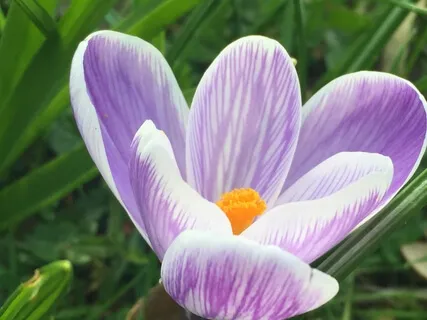
That's that lotus that can bloom from the mud of our suffering.
We have a collective lotus that can bloom from the mud of our collective suffering.
And so I wanted to tell a story about how I saw this in action.
I was a nun on a trip to Vietnam with Thich Nhat Hanh,
My teacher,
And our group of hundreds of monastics and also lay practitioners.
The purpose of that trip,
This was in 2007,
Was to do three ceremonies.
They were called mass requiem ceremonies for healing in Vietnam,
Both in the north,
In the center,
And in the south.
So these were three day long ceremonies.
One thousand people came to each one in all these different places.
It was the first time in the history of Vietnam that the suffering of the war was being acknowledged publicly.
So people were invited to share the names of their loved ones that had been killed in the war,
And where they had died and how they died.
And this was for,
We were praying for all people of all,
Whatever background,
North,
South,
Whether they were with the pro-communist or pro-American or nun.
So anyone could bring the name of their loved one,
How they died.
And so we had long lists of names that were stapled to altars.
There were altars all through these temples.
We had these big temple complexes that agreed to host these ceremonies.
So there were thousands and thousands of names on pieces of paper and then offerings on the altar.
And we had a chant master from Vietnam who was skilled in tantric chanting and mudras was guiding us and Thay was sitting there next to him.
And then the monastics we were chanting all night long.
All night long.
We didn't get up for hours and hours.
We didn't eat.
We didn't go to the bathroom.
We just sat there chanting all night long.
This went on for three days,
Offering ceremonies.
And it was like the first time in this country's history since the war that the collective consciousness got to be massaged.
That there was this circulation that got to be allowed.
This block of suffering of all these people who lost loved ones.
Sometimes their whole families were wiped out and they didn't even know sometimes where they were killed,
How they died.
They just,
They disappeared.
They could grieve for them.
This block of suffering was allowed up into the mind consciousness of a nation and was massaged,
Was held,
Was lovingly,
You know,
The grief was allowed to be there.
Everyone was asked to be vegetarian during those three days.
Everyone was asked to keep the precepts in their family homes during these three days.
They were asked not to yell at their family members,
Not to fight each other,
To keep an environment of like a retreat at home,
To meditate,
To pray,
To call all these who died violently and painfully,
Tragically,
To come and be healed by this chanting.
And I'll just tell you a few stories of some of the things that happened and I don't claim,
You know,
You don't need to believe them but they moved me so I'm just sharing them with you and you can do what you want with them but in Hue,
I believe,
One of the ceremonies we did in the middle of the country,
People went to this river where many people had been massacred and they put this big cloth in the river to invite the souls of those who had died there to come onto the cloth so they could bring it and bring that as part of the ceremony.
Well,
This was just a piece of cloth and after they did the chanting and ceremony inviting these souls to be there,
Like nobody could pull the cloth,
It was so heavy,
They couldn't pull it out.
It took like 10,
20 men with lots of effort to finally get the cloth out of the river.
And then another thing that happened was there was a,
This was in Ho Chi Minh City,
I believe,
At the temple where we were chanting,
They had a pole that was straight up,
A metal pole with a flag that was at the sort of the peak of this,
The highest point of this center and during the ceremony,
During the chanting,
It just bent over.
This straight solid piece of metal just got weighed down by something and it bent over.
So these were some of the things that I heard.
Another thing I noticed for myself was every day,
Every ceremony,
Each time we did it on the third day,
It rained,
Every time as we ended the ceremony,
It rained.
So for me,
That's an example and I had a very profound personal experience as we chanted,
Just looking at my own suffering,
Feeling I was also inviting my own ancestors and my blood family to come and there was healing happening for them that I'd never experienced before.
But it's something that I thought about after that,
Those very life-changing ceremonies,
That this is something we can do,
We can repeat,
We can do it in the United States,
We can,
Many people are doing things like this,
Like in places of the Holocaust,
Concentration camps,
Doing ceremonies of healing,
Of forgiveness.
I know there are people that have done a walk through the United States along places where the Middle Passage,
Where boats came and sold people from Africa,
They walked through the United States.
But I think these kinds of ceremonies we need to do more of and figure out also around healing are the damage we're doing to the earth,
Coming together to grieve,
To honor the earth,
To allow this block of suffering in our collective to have circulation and begin to heal so that all these solutions that are just under the surface of our collective trauma can arise and keep us from self-destructing.
So thank you for that question,
Laurie.
There's another one from Ginger Cloud.
Hello,
Thank you so much for sharing these teachings.
You offer so much compassion and sweetness in your presentation.
I'm curious to hear about your Vipassana sit and how that experience mirrors or is different from Thay's teaching of the Dharma.
Thank you for that question,
Ginger.
So I am a Dharma teacher in Thich Nhat Hanh's lineage and I'm also becoming a teacher in the Vipassana tradition and I found silent retreats in the Vipassana tradition to be very beneficial and complementary to my Plum Village practice.
I think there's a big emphasis on community in Thich Nhat Hanh's lineage and on personal practice,
But as it relates to how you connect with others,
Especially in the monastic community,
It's so much about Sangha.
And the Vipassana practice in many places that I've encountered in the U.
S.
Is not so much about community as about really mastering techniques of meditation.
Of course,
Sangha is the jewel in all Buddhist communities,
So that's a jewel that's very precious and it forms in these retreat centers,
But then you're in silence the whole time on a Vipassana retreat.
So what I found was beneficial for me there was really getting different kinds of meditation instruction than I had gotten in the Plum Village tradition that in certain ways were more specific.
Like,
I learned a lot more about the Brahma Viharas in the Vipassana tradition because there were specific ones for each of the four Brahma Viharas.
I had only learned them as one,
Like metta meditation,
And then of course we were encouraged to practice compassion and practice joy and practice equanimity,
But I hadn't learned like specific meditations to cultivate those on their own.
And many different kinds of ones.
In the Tibetan tradition there's also very specific ones that cultivate joy,
That cultivate equanimity.
So I think yeah,
That's been a lovely compliment to the,
You know,
A lot of,
In the Plum Village tradition,
A lot of training and loving speech,
Deep listening,
That doesn't happen that much in Vipassana because you're in silence,
But then this deepening and getting to know your own mind through just the meditation practices in the silence.
But I see they very much compliment each other and I'm very happy to be part of both traditions.
And both of them are changing and there's more silent retreats happening in the Thignon tradition and there's,
You know,
More people in Vipassana talking about we need to develop more of a teachings around community and Sangha.
So thank you for the question,
Ginger.
This is from Coby Rivlin.
I notice people in my life often not admitting they are suffering,
Stressed or in pain and are very defensive to the idea they have the power to transform and heal themselves and their environment as it is perceived by them as being blamed.
How do you recommend to approach them with compassion and help?
So thank you,
Coby.
I think that's,
You know,
We live in a society that's more and more,
I mean globally,
That's more and more not,
It's not okay to be vulnerable.
If you think about the populations that are most vulnerable,
Children,
Refugees,
People of color,
Poor people,
Women,
In many countries,
In many places,
Life is becoming more hostile,
I mean society is becoming more hostile to these people that are more vulnerable.
There's less and less of a social net.
There's less and less tolerance,
You know,
For refugees,
For people who are different.
At least in the mainstream.
And I think that's a collective response of fear to knowing that we're at a turning point right now,
We're coming to a precipice where we have to change or cease to exist.
We have to figure out how to let this mud become a lotus.
So because of that hatred of the vulnerable,
That I think many people in power hate the vulnerability in themselves,
And so it gets projected out as hatred,
As fear of those who are vulnerable in society.
So I think that's quite a tendency,
And I don't know,
Coby,
If some of these people you experience this happening with tend to be more male or masculine,
Masculine identified,
But I think that's also something that's very hard for those who are male identified to allow vulnerability,
And it's not something society has allowed men to experience,
Or even women who are in more positions of power,
They're not allowed,
They don't allow themselves to be vulnerable,
So to help them,
I think we need to understand that this is something that they are caught in,
That they may not have chosen,
So we don't want to judge them,
That they're also suffering a lot when they can't own up to and they can't feel into their own suffering.
I think one of the best things we can do is be practicing to embrace our own suffering,
And sometimes just being around us,
That can have an effect,
But maybe just very gently,
I mean,
It's so important not to impose anything on anyone and not to tell someone we know what's happening with them,
Because it needs to kind of,
They need to feel that they have space to discover,
And also that we really want them to not feel judged,
But to maybe just begin to be the mindfulness to their suffering,
So if it's someone you're close to,
To just say,
You know,
I notice that you're tense,
Or I'm feeling like I see the lines in your forehead,
Are you worried?
You know,
When someone goes like that,
When they're worried.
Just being the mindfulness of reflecting back to them the ways that we see their suffering without judgment can maybe begin to help them notice that they're also suffering.
So sometimes,
You know how we might be holding something and we're not even aware of it,
And someone else says it to us,
And then we realize,
Oh yeah,
I'm like all tense,
Or I'm all worried,
Or someone just comes and puts a hand on our shoulder,
And we,
Oh,
We start to relax,
We didn't realize we were tense,
But they put their hand on our shoulder and they helped us to,
So just connecting with them,
Helping them feel your compassion,
Your care,
Your non-judgment,
And maybe gently,
Gently reflecting back to them that you see their suffering,
That you see that they're in pain,
And that that's okay,
And letting them know you're a safe person to be with if they want to explore it,
If they want to learn to be with it.
So thank you for that question,
Koby.
Alice,
We got a lot of questions coming in now,
So I'm happy to go over time,
If that's alright,
Kara,
And those of you who wish you can stay on with me,
I'll just keep answering as many as we can.
So Alice writes,
I initially tried to use a situation causing me stress and anxiety at the moment to work with,
However I found it difficult not to be sucked into the feelings of anxiety.
I then switched to another issue which is more about feeling hurt and sad.
This worked much better as I felt able to take care of that hurt.
Is this meditation appropriate for anxiety or better for emotional distress?
Thank you for your teaching.
Thank you,
Alice,
What a good question.
Also appreciate how clearly and carefully you were tracking your own experience as you tried to practice this in the meditation.
I think this meditation of embracing our emotions can also work with anxiety,
But I think it might be that we need to stabilize our mindfulness so that it's stronger in order to deal with something more provocative or more triggering.
Or it could be that having someone with you or even tuning in with someone on the phone or on a Zoom call who can meditate with you could also help so that it's not so overwhelming.
So either strengthening your own mindfulness or getting in,
Calling in more backup to help you hold it and then bringing it up and asking other people to help you hold it.
One of the things that I want to just share about this that I find a beautiful practice that you might consider doing with others is called Vipassana out loud.
But it's basically like that process.
And Tara Brock and other teachers in the Vipassana tradition,
I gave you Thich Nhat Hanh's version of RAIN bringing up a difficult emotion and embracing it,
But in the Vipassana tradition it exists as a practice called RAIN.
Four steps recognize,
Are allow,
Accept,
Investigate,
And nurture.
So nurturing yourself,
Not identifying with the suffering,
But nurturing and taking care of yourself as you look into what that emotion is and what it needs from you.
Wonderful resources all over the internet for free.
There's a new book Tara just wrote about RAIN also.
But you can do this out loud and she shares how to do this in her book where you have a partner.
You don't have to have a teacher,
No one has to know more than the other to do this together.
But you do the RAIN practice together and some of it's in silence,
Some of it's where you're sharing out loud what you're experiencing.
So that could be a way also to get at this more triggering anxiety where someone else is with you and then you're not so overwhelmed by it because you're not alone with it.
So you might look into that book,
Look into those resources.
If someone can look online and just see what the title of that book is and put it in the chat that'd be great so people can find it.
Okay so we can go over just a few minutes.
Okay thanks Kara.
So I'll just try to answer another question,
One other question.
Okay Annie or Amelia.
Here's Amelia's question.
What can you say about childhood abuse,
Physical and verbal and the things you said?
I have experienced this and feel how big the fear is.
It can feel so deep and changing the narratives,
Criticism through being aware of them and choosing other ways hasn't been easy nor the journey of understanding and being compassionate with that.
I mean trying to observe fear hasn't been enough but that there are other things involved that can take very long to be aware of.
And then she adds,
Amelia adds,
I mean it's not just about letting go of the expectation of not ever having fear again.
It can be helpful in certain ways as each emotion is but how difficult it is to live with so much fear.
That's all thank you very much.
So there's a couple other questions about fear as well.
So I hope what I'll say will be relevant to some of the others as well.
So thank you for this question.
Thank you for your vulnerability for asking and I just appreciate your courage for bringing this because it can be such a deep experience like paralyzing fear when we've had these experiences in our childhood.
So you talk about how the journey of understanding and being compassionate with that is not very easy and that it's not enough to observe the fear.
So it is a journey and there are many many you know many angles of you know where the healing comes.
And I think you know really that step of recognizing that this is there and getting ourselves resourced to really be with it,
To really hold it and care for it.
And I didn't I hope I didn't explain it in a way that made it seem like it was easy or quick or you know this big block of suffering would be over you know in a short time.
It could be a lifetime process but this sense of honoring it like really honoring that this is this is part of our story and it needs our care and our attention.
And you know it is it is a big it can be a very big part of our identity.
It can be something that really shapes us in a huge way for a long time.
And it also doesn't need to confine us you know that part of the meditation about space,
About freedom,
Even in the midst of like the deepest fear,
The most paralyzing and overwhelming fear that seed of space and freedom is still there in our the depths of our mind.
So just like when the sky is very dark and rainy and cloudy and stormy and there's lightning and thunder,
The sun is still shining.
If we would go above the clouds we would notice the sun was still shining.
So we might live for many years in a storm where there's constant fear and that's maybe all we've known but it doesn't mean that the sun ever stopped shining and that it's not shining now it's always shining.
So it's possible when we you know get resources,
When we learn more mindfulness in our daily life I mean we can practice mindfulness in every moment of our life as we brush our teeth we can know we're brushing our teeth.
As we sit on the toilet we can know we're sitting on the toilet.
Any time we bring our attention into the present moment we're not feeding the seed of fear.
Any time we bring our attention into our body to notice what's here and now we're taking energy away from that part of our self that lives in the past and that is caught in that fear of what happened to us in our childhood.
That daily moment by moment every time we take a step and just realizing I'm stepping right now this is my right foot this is my left foot we're nourishing sanity we're nourishing stability we're nourishing in us the ability to not be carried away when the fear arises.
So that daily practice not just in our sitting meditation but in our mindful eating our mindful drinking mindful working when we vacuum when we sweep knowing following the motions of our body you know there's a beautiful book with mindful verses to help us be mindful in all different times of our of our day it's called present moment wonderful moment I really recommend this practice of mindful gatas to mindfulness verses to help us be mindful when we wash the dishes to help us be mindful as we eat to help us be mindful when we open the window when we wake up in the morning when we go to bed all these moments we can infuse with presence and that diminishes our fear that diminishes the trauma of our childhood because we're not living in that past story right so this is more than I mean this would you know your question deserves much more time and attention and we don't have it but I would encourage you to read books about healing trauma if you haven't that also there's mindfulness based trauma resources that the body keeps the score is a beautiful book about trauma many more that also help us to become embodied live in the present and slowly as we get more resourced we can massage that block of suffering so it's no longer imprisoning us and it is a process and we need to be very gentle and very respectful of the speed we need to go to heal it it's not something anyone else can dictate we need to learn for ourselves what's the speed that's going to work for us to slowly begin to heal so I'm so grateful for everyone for your questions I'm sorry we couldn't get to all of them I have a website I'll leave you the link right here kirajoule.
Com I also have a newsletter that I send out every so often with teachings that I give sometimes guided meditation sometimes a written transcript of a Q&A so sign up for the newsletter on kirajoule.
Com stay in touch with me you can send me some of these questions that we didn't get to I have a contact page on my website I'm happy to write to you some thoughts after this thank you all so much for your practice for your presence for our time together today and may we offer up the merit together may the merit the good energy of our meditation of our receiving and practicing the dharma of our question and answer time of our deep looking of our sincere practice may all of that benefit all beings everywhere so that we all can leave the forest of confusion and fear and hatred and violence and destroying our planet and heal the collective trauma that we are all a part of so that the joy the health the living in harmony with the earth the treating each other as family can become a reality for our generation for all future generations so may we all live safely and beautifully in this next year in this next new decade thank you all.