Welcome to the USU podcast.
Get ready to discover the truest you,
The one you were born to be.
You'll get an inside peek on the incredibly human and empowering stories from leaders who have chosen to become their most extraordinary selves.
Join me,
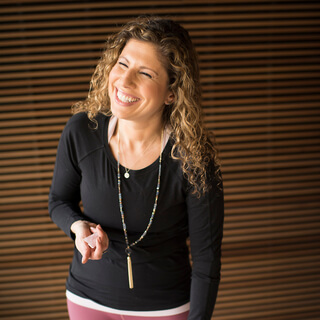
Julie Riesler,
Your host and author of Get a PhD in You to get uplifted,
Inspired and unleashed as you connect more deeply to your purpose by living as your USU.
Hey,
Amazing listener.
This is Julie.
I just wanted to let you know that I have created some free goodies for you at my new page,
The USU.
Com.
And I put together some things that I use.
I've shared a downloadable USU personal growth plan and also a manifesto.
It's one that I have created for myself.
And there's also a blank one for you to make for yourself.
I hope that these gifts will really help you in add to unleashing your USU.
They were created in love with love for you.
And as always,
So appreciate you listening,
Subscribing,
Reading,
Reviewing and sharing this podcast with anyone else that you love.
Hey,
Everyone.
Hello,
USU listeners.
This is Julie.
And let me just tell you,
You are not going to want to miss a minute of this interview.
You are in for such a gift.
I am so honored,
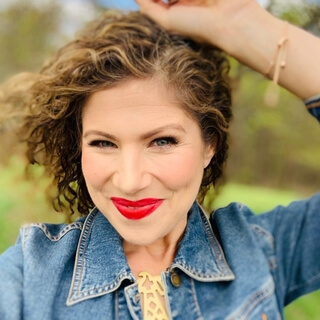
So excited to introduce you to Dr.
Judith Orloff,
MD.
Dr.
Orloff is the New York Times bestselling author of the empath survival guide,
Life strategies for sensitive people.
Her new book,
Thriving as an Empath,
Offers daily self care tools for sensitive people,
Along with its companion,
The empaths empowerment journal.
Dr.
Orloff is a psychiatrist and empath and is on the UCLA psychiatric clinical faculty.
She synthesizes the pearls of traditional medicine with cutting edge knowledge of intuition,
Energy and spirituality.
Dr.
Orloff also specializes in treating highly sensitive,
Empathic people in her private practice.
Dr.
Orloff's work has been featured on the Today Show,
CNN,
Oprah Magazine,
The New York Times,
And many other publications.
Dr.
Orloff has spoken at Google LA and has a popular TEDx talk.
Her other books are Emotional Freedom and Guide to Intuitive Healing.
You can explore more information about her empath support online course and speaking schedule and amazing upcoming events,
Which we'll be talking about that are happening in October,
November,
All at our website,
Which is drjudithorloff.
Com.
Before I get to introduce you to Dr.
Orloff,
I need to share with you that I recently discovered that I am an empath and highly sensitive person and had the blessing of doing a session of one on one session.
We're going to get deep into this.
It was so powerful.
And I am just so grateful to be able to share so much of what I've learned and discovered and to share this leading expert on being an empath.
Dr.
Orloff,
Thank you so much for being here today.
You're very welcome.
I,
You know,
I really would love to just to dive in and I feel like the place to start.
I know a lot of people that are tuning in,
Many might be self identified empaths.
Other are wondering,
I don't know,
Maybe I might just be highly sensitive.
Would you be willing to just talk about kind of the world of what it means to be an empath?
And then we can kind of go from there.
Good question.
And I just want to say in my new book,
Thriving as an Empath,
I address all these questions and offer self care strategies daily for everyone who's an empath.
And the reason that's important that empaths are emotional sponges who tend to not have the same filters that other people have.
So they feel everything in the world.
They're wide open,
Rather than guarded.
And so the plus side of that is that empaths are creative and intuitive and so open and can feel what's going on in other people and are very deep.
But the downside is they tend to take on the stress and negative energy of the world into their own bodies and become exhausted or depressed or anxious or just not want to leave the house.
There's so many symptoms that an empath can have where it's just too much.
The world just feels like too much and you're on sensory overload and it's too late,
It's too noisy,
It's too crowded.
And I just want to go home,
Is the cry of an empath.
And I'm an empath,
So I understand that.
And the reason why I wrote Thriving as an Empath was to convey to people,
You are not alone.
There are specific strategies you can use to minimize the challenges and really optimize the gifts because we need all you empaths out there to be in your power.
This is the time and place to do that.
And so in order to get into your power,
You need to learn how to not absorb the negative energy and the stress around you.
Okay,
Wow.
So there's definitely a bunch of questions to come back to.
Before I get into some of the strategies and just what you said,
Which was so powerful,
Wondering for those listening,
I don't know,
Whatever you feel comfortable sharing just a little bit more about you,
Dr.
Urloff,
Your background,
How you even,
Maybe some of the clues that you are an empath and how you got into becoming an expert in this field.
Well,
I was an empath child.
I think I was born an empath.
I mean,
My first memory is I remember being in my crib looking up at the sky and just seeing the spaces between things,
Like being more interested in the infinite than in the everyday life.
And I felt like I was an alien here on earth because I couldn't find other people who experienced life as I did.
And I had fantasized that a spaceship would come and land and take me away to my true home.
And this is one of the feelings that empaths often have.
And so,
In Thriving as an Empath,
I write about the gift of being different and how it's so essential.
If you feel different,
Like I did,
If you feel like you don't go down the mainstream and you follow the road less traveled,
As an empath,
It's very important to honor your gift and to be as different and as outrageously different as you like.
So I grew up,
I had two parents,
I had 25 physicians in my family,
Very scientific lineage.
And I was a little girl who couldn't sense things,
Know things,
Do it.
I couldn't go into shopping malls or crowded places without getting either exhausted,
Anxious,
Depressed,
Overwhelmed.
And I didn't realize as an empath,
I was absorbing the energy and emotions of the people around me.
And in crowded places,
That just gets amped up.
But how did I know that as a child?
And so as a result,
I felt very alone and lonely and misunderstood,
Not seen with the capital S.
And so my healing process has been incorporating my empath self into my personal life and my psychiatric practice.
So as a psychiatrist,
I can use my empathy and then see how I can help people and how far I can see into them.
Well,
I just,
I find it so fascinating that the healing for you has now become a way to help so many others heal,
Which I find is often the case.
It is often the case,
Everybody who's listening,
You know,
Who feels wounded or feels misunderstood or feels so exhausted and can't move because you don't have any strategies,
That is short lived.
You know,
Things can change,
Things can heal once you determine that you're an empath.
Can you speak a little bit to the different types?
Because I know that,
I know this is in your book,
But just to do like a cliff notes for those that are,
You know,
Haven't yet read it and are kind of sitting on the end of their seat,
Like,
Okay,
How do I know if I'm one?
What kind am I?
Because I know there's different types.
Like I didn't realize I'm a physical empath.
Would you be able to just talk us through the different types of empaths and maybe some ways to know if that's you?
Yeah.
Well,
In the front of the book,
There's a 20 question self-assessment test to determine if you are an empath.
And some of the questions include,
Have you been called quote overly sensitive all your life in a critical way?
Or do you replenish being alone versus being with a lot of people?
Now,
Are you sensitive to noise,
Smells or excessive talking?
Do you tend to take on the emotions or physical symptoms of other people into your own body?
Those are just a couple of the questions.
And the different types of empaths I write about are emotional empaths and physical empaths.
Emotional empaths tend to take on the emotions of others where somebody's angry,
Suddenly you're feeling angry.
You know,
If someone's depressed suddenly you your mood goes down.
Yeah.
No,
Or an am a fit and an emotional empath.
So I can really relate to that one.
And a physical empath is somebody who feels the physical symptoms literally of other people and then takes it on in their own body.
So you actually can have an empathic illness and take on someone's back pain,
Stomach pain,
Whatever they're experiencing that you're vulnerable to,
You can actually take it on.
And this is very real,
But you to determine if you're a physical or emotional empath,
You have to observe your life and see how you feel before you meet someone while you're with them and after.
Observe and be very mindful of any changes of energy,
Emotions or physical symptoms that you experience and don't write it off as being not real.
I,
You know,
It's interesting,
And I'm thinking for those listening,
One of the things that confused me,
Dr.
Olaf is that I know that,
You know,
Like many out there,
I'm extroverted,
Right?
So I'm get a lot of energy being around people.
I love it when it's not in a crowded area,
But in the right space.
If I'm in my zone and flow.
However,
What I didn't realize,
I remember when I was little going into department stores,
It would like really hurt my head,
Like the lighting,
The fluorescent lighting.
I just remember homes that didn't like the energy,
If it didn't feel good or like these stores,
I just was really sensitive to energy and to lighting.
And so it's interesting and I'm curious.
I know you talk about this,
But you know,
It can be confusing,
Especially someone who is extroverted,
But I do need to recharge in a very introverted solo way.
And so that,
You know,
That I remember reading thinking,
Okay,
You don't,
It doesn't just mean if you're introverted,
You're an empath,
You can be extroverted empath.
There's all different types of different ways of expressing.
Right.
You know,
There are two types of empaths,
The introverted,
Which is the majority and I'm an introverted and the extroverted,
Which is the other type,
You know,
Like you just described,
You love being around people.
However,
You must decompress.
You're around people.
So just because,
You know,
You're an extroverted person doesn't mean you can't be an empath at all.
No,
It's just,
You have to see what your own style is.
You know,
This is all about,
You know,
Accepting yourself,
Seeing what your style is and loving it and being okay with it.
You don't have to change.
You just have to come into your full empath self with extrovert,
Introvert.
And once you decide that you're an empath,
Then you can practice the strategies and thriving as an empath.
You know,
Every day,
You know,
How do you,
Like,
For instance,
It's not your job to take on the pain of the world.
Now it's one meditation,
Because if empaths take on the pain of the world,
You're not going to be good for anything.
You know,
And it's not going to help the world.
So,
You know,
You learn how to hold the energy for some something if it's the world,
If it's a homeless,
If it's someone suffering,
You hold it,
But you don't absorb it.
And this is all a skill set that I talk about in the book.
It's something that you're probably not taught as a child.
And so I want to teach it to you as an adult.
Right.
I want to talk about the strategies just before that,
Because I know many people have written in about also struggling.
One of the things I know I haven't many people struggled and I would guess many of us are empaths is,
You know,
For this whole realm of addiction for me with food,
Really using it,
I think,
To protect myself,
Some use alcohol,
Some use sex,
Drugs,
Different things to what could you say a little bit about,
Because it really helped me to talk to you about this and to read about this,
Like,
Oh,
Okay,
That's I was using that as a coping mechanism.
I didn't understand that.
And I didn't know.
Maybe if you had some thoughts about,
You know,
Acceptance,
But also how we might be using some of these substances and things like food to to to deal with being so sensitive.
Yeah,
A good question.
There's a chapter in the book on addictions and impact.
There's so many people in recovery programs that I treat who are recovering empath,
As well as recovering food addicts,
As well as recovering substance abusers.
And what happens is empaths are so sensitive that the world is overwhelming.
It can be so painful when you're on sensory overload.
So you reach for a drive,
You reach for food,
You reach your chocolate cake,
You reach for sex,
You reach for,
You know,
Alcohol,
Whatever it is,
Your substance of choice,
You reach for it to calm yourself down so that your mind is peaceful and calms down and your body calms down.
But,
You know,
That's an unhealthy,
You know,
Way of coping with the sensory overload that comes from being an empath.
But you probably didn't even know about the empath element.
But now I'm telling you so that,
You know,
For those of you who are out there and still using or still,
You know,
Binging,
Whatever you're doing,
You know,
Have compassion for yourself and read the section of the book and just know that because you're so sensitive,
And you may have a history of addiction genetically in your family,
You're prone to addiction,
Trying to cope with the sensory overload aspects of being an empath.
So really important to know.
And then in terms of food,
You know,
I write about the turn of the century faith healers used to be very,
Very obese women,
Maybe 300 plus pounds,
They swore they needed to have that much weight on them to work with their patients so they didn't take on their pain.
And this is an unhealthy coping mechanism.
I've had discussions with these women who are current day seers,
Also,
And they feel they need the excess weight in order to do their work.
And there are other strategies to you other than using added mass and weight to buffer negative energy.
Yeah,
It does buffer it,
You know,
An armored truck.
Yeah.
I mean,
I was gonna say I remember parts of my life where I didn't honestly it blocked feelings and having to feel it's hard to explain,
But exactly what you're saying.
I mean,
I've been heavier at other points where I think I used it as a strategy was unconscious.
But you know,
Talk,
I'd love to talk because you know,
Today,
For example,
With me,
I'm not leaning on food.
And so I recently had something happen to my family.
It was very upsetting.
And what I noticed is I'm like,
Whoa,
The feelings are very,
Very strong and powerful.
And they're,
You know,
I have in reading your book and working with you,
I have some strategies.
But for those listening who don't know the strategies yet,
I would love for you to go into.
Okay,
So you're you've you've realized you're an empath.
What can you do?
Because I know you talked about the gifts which we want to get to as well.
But what are some strategies that we can use to be able to to be to be able to be in the world as an empath?
Well,
Some quick tips,
You know,
If first of all,
Notice when you're going on sensory overload,
Begin to observe yourself,
You know,
Are you starting to feel anxious to the light starts seeming really bright to the people talking too loud,
You know,
Do you feel like you're in a bubble,
Whatever,
You know,
Symptoms you feel,
But it's starting to get worse.
So as soon as you can,
You have to decompress,
Go to a quiet room,
Make it make it a dark room,
Quiet room,
You know,
And just meditate for a few minutes,
Deep breathe to calm it down.
As you want to decrease your stimulation level,
So it doesn't build.
That's the first quick thing you can do.
Another quick thing is to jump into water.
If you have a bath,
A shower,
Even wash your hands or put some water in your face just to purify.
It's very relaxing.
And it's a purification agent water,
Is the impasse friend,
But it by the water,
You drink pure water,
You stay hydrated,
You know,
You get in a bath,
All of that can quickly help detoxify you.
And then also,
To set boundaries with the person,
It's very important skill set for empaths and learn how to set boundaries.
And if they know,
You know,
Know is a complete sentence,
You know,
For instance,
If somebody starts putting you down,
If you have a relative is critical or starts,
You know,
Trying to control you or put you down,
Instead of eating over it or drinking over it,
You take a breath and you know,
Set a boundary,
You know,
Maybe,
You know,
I'm sorry,
This doesn't feel very,
Very good to me.
Can you please stop?
You know,
And then back off or whatever would work with your particular person,
You've got to figure out the language.
But you have to start setting limits with toxic stimuli,
You can't just sit there like many empaths do.
Yes,
They're people pleasers,
They don't want to rock the boat,
They don't want to be rejected,
They don't want to disappoint others,
Those are all typical empaths.
That,
You know,
It's a matter of maturing into the realizations that you will disappoint people sometimes.
That's a hard ball.
And you're trying to do it,
You know,
With love,
And you do it with love,
And you're able to say,
No,
I need to stay home tonight,
Instead of going out,
You know,
To a movie or going out to a party,
I'm just too tired to go.
You know,
These are ways of protecting yourself.
And you can say it in a very loving way without hurting people's feelings,
But getting in the habit of setting boundaries.
Another technique I use to quickly decompress is to put my hand over my heart.
This heart centered meditation that I have been thriving as an empath,
It just breathing focusing on something really beautiful,
An image like gear like the ocean or the night sky or a waterfall in motion.
And then focus on how much you love it with your hand on your heart,
And take some breaths.
And so you begin to circulate loving energy into your own body,
Which is a skill empaths need to learn how to do that is activate your own soul energy system.
And the energy of love is the most healing and soothing.
So if a patient comes into my office with an anxiety attack,
That's the first thing I have them do is put their heart and teach them how to circulate this loving,
Peaceful,
All as well energy,
You know,
Instead of panic and catastrophizing.
Yeah,
That's so powerful.
I love these strategies and I love that they can be done even if you're not you know,
By the ocean or able to get in the bath or shower it like you said,
Put water on your face,
Wash your hands,
Drink water,
Hand on your heart.
Like these are things that,
You know,
It's so fascinating because I've really been starting to use them.
I just recently did a went in a dark room did a meditation.
It's unbelievable.
I felt like a different person after it was so healing.
And you had mentioned,
You know,
That I love what you said we need empaths to be in their power because of the gifts that the empaths have and curious just to,
You know,
Kind of verbalize what you what you see and feel are the gifts that we bring to the world that empaths bring.
And the gifts empaths bring to the world are so many.
It's their empathy.
It's their openness.
It's their goodness.
It's their open heart,
Wanting truly the best for themselves and humanity.
It's the desire to do good.
It's the desire to help others in knowledge that we're all one family.
Simple as that.
There's no debate over it.
It's just,
You know,
How can we love one another?
That's an empath.
How can we love one another?
And how can I take care of myself and practice self care in the midst of loving one another,
You know,
Without giving myself away without martyring my energy,
There's a section in thriving as an empath on on how not to be a martyr.
You can't martyr our energy will be good for nothing.
We need to take care of our energy and be compassionate,
But not give ourselves away.
And there's a fine line with that.
So empaths are the creatives of our culture.
They're the lovers of the poets,
The people who want to better the earth.
They're the ones that have a connection with the earth.
You know,
The people we see in the public eye who have no connection with the earth and don't know why poisoning it is not a good thing.
You know,
They really don't get it.
You know,
Right.
Right.
Right.
Feels her sister.
Yeah.
So mother,
The empath has a deep connection to earth and,
And all of its creatures.
And so the empath knows this,
But these poor people who are so wounded and have such crippled hearts,
They can't know this.
This is very,
Very sad to me.
So the empath knows no way.
So the more we can rise up and speak our truth,
The more we can tip the balance to loving the earth and being her steward.
Oh,
That's so beautiful.
I'm chuckling.
I was with my son yesterday in the car and we saw someone litter and I literally,
I mean,
It's gonna make me,
I was like,
Oh gosh,
I know I already knew I was an empath,
But I literally felt like crying.
I was like,
How could you ever put anything that's not recyclable or lovable?
Like,
How could you like,
I felt the pain of what it might,
I mean,
This sounds probably crazy,
But not crazy to you.
I was like,
And my son who I believe is an empath was like,
Oh my God,
That person littered on the earth.
I'm like,
I know,
But like ready to be in tears.
And I thought,
Okay,
That's not a bad thing to feel that connected.
And I think that's part of what you're saying.
This is deep connection.
But it,
You know,
It's important.
I write about in the book how empaths are sometimes prone to destructive relationships like narcissists.
And it's really important to realize not everyone has your point of view.
Not everyone is as empathic and loving and caring as you are.
And I know that's hard to take and you know,
Go and you're with a narcissist who has empathy deficient disorder,
Self-absorbed,
It will be very destructive for you.
So you need to be aware of being with people like your son,
You know,
Who takes responsibility and knows the pain of leaving trash on the,
You know,
On the streets.
You know,
There's so many of us,
Our numbers are growing.
I have,
You know,
So many people writing me and wanting to come in and come into my workshops,
You know,
It's just who are awakening.
And then once they awaken,
They go off and they can do their work with freedom.
You know,
You have to hide in shame because they think they're overly sensitive.
I am so tired of people using that term.
You're overly sensitive as a criticism.
It's ridiculous.
It's a gift.
I love that you said that,
That reframe,
Because I'll spare the details,
But I know in the past in my life,
I'm sure people tuning in can listen.
You know,
I got a lot of like,
You're hypochondriac,
You're overly sensitive,
Not from my parents,
But from some other people.
That's okay.
They didn't,
They didn't,
They didn't get it because they weren't empaths,
But I could feel people and could feel the emotions and could feel nice.
And it's just,
I think what you're saying,
I love this focus on the gift.
I know you started to mention your workshops.
I'd love to talk about you've two incredible events.
You've a bunch of events,
Two I know coming up soon,
One October 26th,
27th in New York called Becoming an Intuitive Healer.
God,
That looks amazing.
And then one in Los Angeles on November 2nd,
Which is Thriving as an Empath.
And maybe just say a moment,
You know,
Word,
A little bit about each of those and kind of what your,
Your intention and goal is with these,
With these events.
Well,
I'm on a book tour for my new book,
Thriving as an Empath.
And so I'm going to various cities and you can check out on my website drjudidoroloff.
Com,
O R L O F F.
Com.
But these two events specifically,
November 26th,
I mean,
October 26th,
27th in New York City,
It's how empaths can get in touch with their healing abilities and how you can center yourself and how you can self heal whatever needs to heal during our time together and also channel that healing to others.
And for those in healthcare professions,
You get CEUs for coming,
Which is fantastic.
So that's at the New York Open Center on October 26th and 27th in New York City.
And then November 2nd,
I'll be in Los Angeles at the Mystic Journey Crystal Gallery on Lincoln in Venice.
And it's especially fun for me because the crystals,
You know,
Is bigger than the human being are in the space,
You know,
Any,
I mean,
You know,
Many gorgeous,
You know,
Clear crystals,
Amethyst crystals,
But huge.
And so I'll be able to give the talk and the dialogue because there's always a dialogue with all my events,
You know,
To answer Q&A's and to network for empaths and network,
But to come to the Mystic Journey Crystal Gallery,
November 2nd at 3pm.
So everyone in the Southern California area,
You can come to that.
And plus I have a bunch of other events,
You know,
In San Francisco,
I have three events in November,
Passage,
East West and Copperfields and Sebastopol.
And then I go to Portland,
Renaissance Books and Seattle,
East West Books.
So I hope you can join me along the way and have these discussions about empaths,
Especially if you're a newly awakening empath.
Yeah,
Really.
So amazing you're doing this.
I'm thinking,
My gosh,
Because I know you're an introverted empath.
I'm thinking,
Well,
I'm an extroverted empath and I still need to,
I'm sure you have a whole way of taking care of yourself when you're with so many people.
See,
My first thought is,
Are you going to be okay?
It's the empath thing.
Like I want to make sure.
How are you going to take care of yourself?
Although Dr.
Orloff,
I'm sure you have a way of caring for yourself because you do a lot now with your books and on tour.
See,
That's a very good example of your empaths,
If I'm going to be okay.
My empowered empath is this and I would not do it if I wasn't going to be okay.
I mean,
I totally know how to take care of myself and I do a lot of meditation on book tours,
A lot of quiet time.
I don't overbook social things when I'm on book tour because I want my energy to be clear for the people who come to my events.
I'm in baths all the time.
I really take care of myself and I've gone on so many of them over the years.
Each one is different,
But I practice self-care.
I practice everything.
All the self-care techniques I write about and thriving as an empath.
I'm reading that book with me on my book tour and I'm reading it to remind myself because we are reminders.
I love what you just said.
This is like the essence of your new book,
Thriving as an Empath.
I'm like,
Must have it.
It's going to be like my new Bible because you're such a great example.
It's such an inspiration because I know for me,
So many of us tuning in want to make an impact in the world.
I feel like if you're listening to this,
You're probably connected.
You feel like either you're an empath or you live with one or no one.
I feel like we attract a lot of big hearted people.
What I love about you and this book and your strategies is that you're living this and you're able to make such a big difference in our planet and put self-care first.
You're such a great model for that.
As someone who also wants to make a big impact,
It helps me to listen to you and share you and these strategies and just see,
Oh yeah,
You can have a huge book tour and self-care is first paramount and you're able to be fully in the world and fully recharged.
It's really,
It's powerful.
Oh,
Absolutely.
I just want to say that when I'm out among people and the public,
It also fuels me because of all the loving heart energy in these rooms and the amazing questions.
So it fuels me.
It's not as if going out and so a crowd drains me.
You're with this type of crowd.
Sure.
One quick question before I know we're going to wrap up in a moment.
You mentioned it because you're going to be in this crystal gallery.
I've noticed an affinity for crystals and I'm curious,
I don't know if that's something you also get into in your new book,
But the power of crystals or earth,
Rocks,
Energy,
Is that something that you also use as a strategy like being with crystals or meditating with them?
I personally do.
And I know the woo woo red flag comes up for a lot of more linear people with crystals.
And you don't have to use them,
But I believe in what is created from the earth to bring power.
And so there are various crystals and I write about the power of gemstones in the spring,
In thriving as a land path.
For those of you who are attracted to it and if you think this is woo woo,
Just don't do it.
It's totally fine.
You don't make any difference.
Just go towards what you're attracted to.
If you love them,
You need to feel them in your hand.
And I have a black onyx that grounds me and my beautiful assistant,
Rhonda,
Gave it to me one year when I was going through a hard time.
And it's the most wonderful black onyx rock.
It's smooth and it fits right in my palm and it's just and it's cool.
It really does it for me.
But you have to pick which gemstones you love and get joy from them as well because they're incredibly beautiful.
And they impart,
You can feel anything from the earth and part power if you're open to it.
And I encourage everyone who's awakening as an empath to play with your sensibilities,
See how far they can go.
Don't let people tell you,
Oh,
No,
It's not possible.
You can feel,
You can sense and you can know.
So you need to play with that and expand it and be around like-minded people who will support you.
Yeah,
That's so great.
Such great wisdom.
And I know there's like,
There's so much more we could get into.
And one of the things I loved in your,
In the empath survival guide,
You talk about different partners that work well and the different types of empath.
I mean,
There's just so much goodness there.
And I know your new book,
Thriving as an Empath,
Has so much as well to help people that are becoming aware of being an empath,
How to really,
Like you said,
How to thrive,
How to flourish,
How to be your best self,
Get nourishing heart energy.
I mean,
I can tell you,
Your work has greatly impacted me in such a positive way.
And one of the reasons I wanted to bring you is just to share your wisdom,
Your expertise,
Your deep,
Deep understanding.
This has been so helpful and so,
So grateful,
Dr.
Orloff,
For your time and what you're doing.
I believe our world really needs,
As you said,
The gifts of those that are tuned in and sensitive and empathic,
Like we need.
As you can see,
If you look around,
I feel like there's a need for that.
So this is extremely helpful for everyone who's waking up to being an empath.
Glad to be of service and glad to spread the word.
Thank you so much again.
And I'm just letting everyone know,
Sometimes people listen when you're driving,
We're going to have all of the information,
Dr.
Orloff's events and her website,
Everything and some recap from the conversation in the show notes.
Don't worry.
You don't have to do not take notes on the road or if you can't get to a place to take some notes,
We got you covered.
And thank you again for your big heart and just modeling how to have an amazing life and make a huge impact as an empath.
You're very welcome.
Thank you so much for listening and tuning in.
We are thrilled to have you part of the USG community.
By being your best self,
You are adding enormous value and service to the planet as you can't give away what you don't have.
If you've enjoyed the show,
Please rate and recommend it on iTunes,
IHeartRadio,
Overcast,
Stitcher,
Or wherever you get your podcasts.
You can always get more info at julieriesler.
Com.
Here's to you and your becoming your Uist Uel.