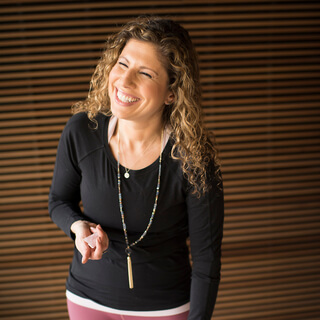
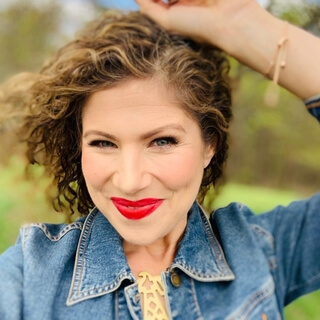
Welcome to the USU podcast,
Now reaching earbuds in over 175 countries and growing.
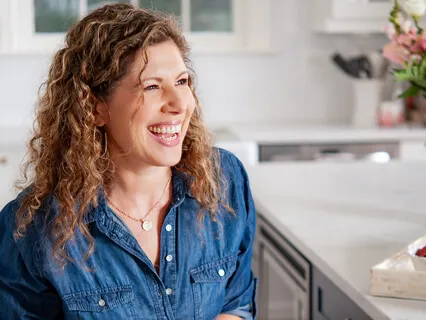
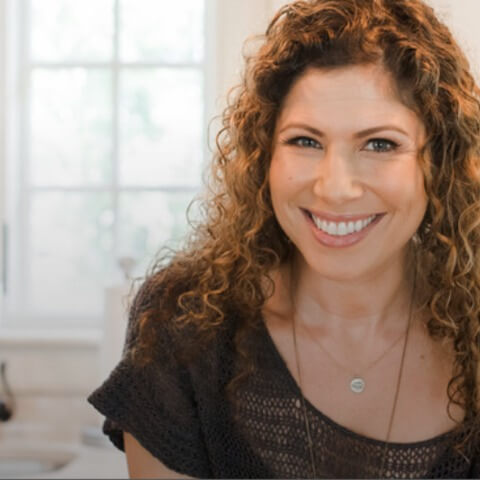
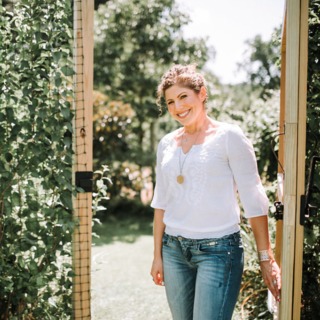
I'm Julie Riesler,
An interior designer for your soul.
I'm a master life coach,
Author of Get a PhD in You,
Founder of the Life Designer Coach Academy,
Professor at Georgetown University,
And host of this powerful show.
I created this show because I believe you are meant to expand,
Evolve,
And express yourself fully as your most authentic,
Extraordinary,
Truest USU.
That dream that lives within you,
It's meant to manifest.
Tune in with me to hear life-changing conversations with leading experts,
Spiritual luminaries,
And fellow entrepreneurs and creatives to help guide you back to your divine self,
To your inherent worthiness,
Your sacred purpose,
Your right to prosperity and full health,
And your ability to do,
Be,
Or have whatever lights you up the most.
This podcast will help you live a life that's designed by your soul and not your fear.
Now that we've got that clear,
I'm just going to remind you one more time,
You were born to fully be your USU.
It's your time.
Are you ready to join me on this journey?
Let's do it.
Hey,
Beloved soul family,
USU listener.
This is Julie,
And I am actually recording this intro after my conversation with Gay Hendricks.
I got to tell you,
That was one of the most powerful and meaningful conversations I've had here.
He's been mentoring me from afar for a long time,
And I know for many of you as well.
And so I just hope that you got so much from that conversation.
I would love to hear what were your biggest takeaways,
Your ahas.
Love to know because we just looked at so many aspects of how to really tap into your highest self,
Your USU,
What he calls your zone of genius,
Your genius zone.
And his stories are just incredible.
I don't want to give it away because I want you to listen and let me know,
But I'm just still at a high after this conversation.
So let me tell you a little bit about Gay in case you are new to Gay Hendricks or in case you just want a refresher.
Gay Hendricks has been a leader in the fields of relationship transformation and body-mind transformation for more than 45 years.
After earning his PhD from Stanford in 1974,
Gay served as professor of counseling psychology at the University of Colorado for 21 years.
He has written more than 40 books.
You heard me correct,
An amazing writer.
Some of these are including bestsellers such as Five Wishes,
The Big Leap,
One of my personal favorites.
You must read that.
Conscious Loving and Conscious Loving Ever After,
The last two he co-authored with his co-author and mate for more than 35 years,
Dr.
Kathleen Hendricks.
He is also a mystery novelist with a series of five books featuring the Tibetan Buddhist private detective,
Tenzing Norbu,
I did not know that,
As well as a new mystery series featuring a Victorian era London detective.
His book,
Conscious Luck,
Reveals eight ways to change your fortunes through the power of intention.
Gay has appeared on more than 500 radio and television shows,
Including Oprah,
CNN,
CNBC,
48 Hours,
And so many others.
His latest book is The Genius Zone.
So we talked a lot about both The Big Leap,
The Genius Zone,
And really like how Gay came into this work from massive,
You know,
From humble beginnings,
From addiction,
From a lot of pain and suffering.
And you're just,
I think you're going to be,
As I say,
Blown away.
Mind is going to be blown after hearing this conversation.
So without further ado,
I am going to turn this over to Gay Hendricks.
So happy you're here,
My friend,
And please let me know what you think.
Oh,
USU family,
Community,
Soul Sisters and brothers around the world,
You really are in for one of the biggest treats of your lifetime.
And I don't usually say this,
But our guest today,
Literally,
And he doesn't even realize this,
Is one of my favorite people.
I have been mentored by Gay Hendricks from afar for a long time.
And it's just,
It's such a gift to have you here today,
Gay.
I've been taking notes on questions I want to ask you.
And I just,
I know from many of friends and peers and people that write in,
And I shared that you were coming,
There was so much excitement.
You already have so much love in this episode before we've even started.
And thank you,
Thank you for your time and your generosity and wisdom.
And I'm just so happy you're here.
Well,
Thank you very much.
It's my pleasure,
Julie.
I'm really happy to be talking to you.
Well,
I think we just,
We dive right in.
And so I,
If it's okay with you,
We'd love to,
Just for those who may not know you yet,
Or haven't read your works yet,
Your story is quite,
It's inspiring.
I've heard you talk about it in different ways,
Just to give a little sense of how,
You know,
The work that you're doing,
You've been doing for so long,
Has been incredibly powerful.
And,
You know,
I think your story of how you grew up,
And maybe you can share even the,
I don't want to give it all away,
But you're setting up the stand to help people.
You can tell the story.
I loved it though.
Can you share a little bit about you and how you even found yourself in this whole world of helping people in the inner work and transformation?
Well,
It's an amazing story,
Even looking back on it myself,
Even though I've lived it,
I can hardly believe it sometimes,
Where I ended up compared to where I started out.
I had a kind of a rough start to my life.
I was born down in the deep south in central Florida.
And what made it a kind of a rough start is that while my mother was pregnant with me,
I have one older brother,
Mike,
Who's eight years older than I am.
And while my brother,
While my mother was pregnant with me,
My father died suddenly and unexpectedly at age 32.
And so my mother went from being a happy housewife with one son and another one on the way,
To all of a sudden being a widow with $300 in the bank and a car that wasn't paid for in the house.
And so she was right on the edge.
And so my father made a good living,
But he also liked to spend money too.
And so they didn't have any savings to speak of.
So how that impacted me on a very deep level,
Beyond the psychological level,
Was that it was later discovered,
After I was born,
I put on weight,
A tremendous amount of weight in my first year.
So I looked like one of those real fat babies that we sometimes see pictures of in the National Enquirer and things like that.
I was in the top 2% of baby weight and they couldn't figure out why.
Later it was discovered that during pregnancy,
There's a key time when it's not that long,
But it's a key time when if stresses happen,
It keeps a certain hormone from getting to the baby.
And this hormone regulates weight and all that kind of stuff.
But that didn't get discovered until much later on.
And I was a fat kid and they took me around to different medical specialists and I was put on different pills and shots.
And I remember once when I was 14,
I went to an experimental weight doctor because I still was carrying around all this extra weight.
And he put me on these pills,
Which looking back on it,
Must have been some sort of speed because my heart was,
For the next six months,
My heart was always pounding and I would wake up at 4 a.
M.
Ready to go instead of waking up at 7.
30.
But it did take the weight off me,
But then as soon as they discontinued the pills,
The real problem hadn't been fixed.
So it came back.
Anyway,
Long story,
But by the time I got to be 24 years old,
I weighed more than 300 pounds.
And I was also trying to kill myself in a bunch of other ways.
I was smoking heavily,
Two or three packs of Marlboro's a day,
And I lived on junk food.
And I was in a very toxic relationship on the day that the magic happened.
On one magic day in 1969,
When I was 24 years old,
More than 50 years ago,
My whole life changed.
And what did it was kind of a whack on the head by the universe.
You know,
I always say now that the universe is happy to teach us by tickling us with a feather if we're paying attention,
And then we get the enlightenment and we say,
Oh,
I see,
And we make the change.
But also,
If we're stubborn and dug in and aren't willing to learn,
The universe is also totally happy to hit us over the head with a giant mallet to teach us the exact same lesson that it was trying to teach us by tickling with a feather.
Anyway,
That's kind of a comic book way of putting it.
But that I think is the way that happened for me was on this one day,
I went out for a walk.
It had snowed.
I lived in New Hampshire at the time.
And I went out for a walk to kind of clear my head after a big argument with the woman I was with at the time.
And I slipped on the ice.
There was snow over covering a patch of ice.
And I stepped right through it.
My feet shot out from under me.
And I went,
Ooh,
Down on my back.
And I banged my head,
But I didn't knock myself out.
But just to give you a comparison,
300 pounds is about what your kitchen refrigerator weighs.
And so for a 300-pound object to hit the ground,
I remember I even bounced.
And it was amazing.
I never had any experience like that in my life.
And it didn't knock me out unconscious,
But it knocked me out of my usual way of seeing myself.
And for about two minutes,
I had this amazing thing happen,
Which was if I could see down through all of these levels of myself that I had never known existed before.
It was like I had an emotional body that I discovered where I could feel I was angry about a bunch of things.
And I could feel a lot of deep sadness down,
Way down almost in my bones,
It felt like,
In my chest.
And I also felt all these fears and anxieties.
But the funny thing was,
I hadn't noticed them before.
It was like they were in a dark room.
And I finally turned on the lights 24 years later.
And so,
But it was really vivid.
I could see my anger,
My sadness,
My fear,
My sexual feelings,
All of this.
It was like I could see them in Technicolor for the first time in my life.
And I could see them in Technicolor for the first time and feel them in my body for the first time.
And that was huge.
But then what happened next was really astounding.
As I kind of let myself feel all of those feelings I'd never let myself feel before,
I went to the center of those feelings and then beyond into this space that I call pure consciousness,
Which is the space that all of our feelings and all of our thoughts,
It's the space that we actually are,
The matrix of everything that we have inside ourselves.
And in that moment,
I became a totally different person because I turned on the lights in the rest of my being.
It was like I had lived on the surface of myself for a long time.
And I don't know if you've ever,
I hope you haven't ever been addicted to anything,
But I imagine some people in your audience have smoke or drink or weed or alcohol,
Whatever it is,
You know,
They're all the same in the way.
I always say an addiction is anything you lie about.
So if you lie about your food intake,
It's an addiction.
If you lie about your sexual porn use,
It's an addiction.
And so all of those things I realized in me that I had all these things I'd never acknowledged the truth about or told the truth about,
I just hadn't realized they were there.
And so I felt this amazing new feeling though,
This pure consciousness that seemed to be everywhere and at the center of me at the same time.
And I could almost feel like it connected me that we all had that same sense of consciousness,
That same pure consciousness.
Well,
I say it took me about two minutes,
This whole experience,
And then I begin kind of coming back to reality.
I realized,
Oh,
I'm laying here on a frozen road,
Shivering.
And I'm like,
Shivering.
And oh,
I've got to go back and go into that same little one bedroom apartment that I hate and have another argument with that person that I don't want to be with anymore,
But I can't,
That's $39 in the bank,
So I can't rent another apartment,
So I don't know how to get out of the relationship.
So there's all of these thoughts crowded back into my head.
I realized,
Oh,
I want a cigarette.
You know,
It was like my old life came crowding back in,
But then the magic that made it happen,
That changed my life thoroughly,
Was before I kind of got up,
I made a new declaration.
I said,
I commit to feeling that state of pure consciousness all the time.
I'm going to do whatever it takes to feel that all the time without falling down on the ground.
Because once I got up and started moving around,
You know,
And got back into my 300-pound body and it was cold,
I kind of left that pure consciousness feeling behind.
I couldn't feel it anymore.
It was heartbreaking.
You know,
I felt sad about it.
But then I made that commitment to doing whatever it took.
And wow,
My life,
It's like has been on a completely different track or train.
It was like getting aboard a train that says universal lifetime blessing and good luck.
You know,
Because once I got on that new train,
Everything opened up as if by magic.
And I think now looking back on it,
I can explain how the magic works so you don't have to fall down on the ground to make the magic happen.
That's why I spent a year of my life writing The Big Leap and other,
The Genius Zone and books like that,
Because I want to transmit the information so other people don't have to get hit by a sledgehammer in order to learn how to do it.
Well,
Anyway,
Here's where the magic starts with a commitment.
Okay,
So you've got to make that heartfelt mind-body commitment.
You've got to feel the passion of that commitment.
So I got back to my regular life and a couple of things I had control over.
I didn't have any control over moving out because I didn't have enough money or anything like that.
And also the job I had was on the campus of the School for Delinquent Boys and the apartment came with the school.
I mean,
I got to live in it free by being on the faculty.
And if I left that job,
Or left even the apartment,
Where would I go?
So big thorny problem.
I hope nobody in our audience has ever had the problem of having not enough money,
But there are some times in my life where I've had that and it's no big fun at all.
But what happened on this magic day,
I changed my diet right away.
I realized the one thing I have control over is I can choose foods that feed pure consciousness rather than my 300-pound body.
By the way,
I weigh about 180 pounds now.
I'm about six feet tall.
So if you pass me on the street,
You'd say,
There's a tall,
Athletic-looking old guy.
Or some version of those kind of thoughts.
I'm 77,
So the old guy part would probably come along with it.
But I have the requisite great white hair that comes along with my age,
Too.
But other than that,
I look fit.
But I looked anything but fit in the year of 1969.
I weighed 300 pounds plus.
And not only that,
I wore big,
Thick glasses.
I had 400 vision in my right eye,
400,
2,
400 vision.
And so I'd never been able to pass my driver's license without glasses.
And so anyway,
When I got back,
I started eating this new way.
And I remember the first thing I had were some blueberries that seemed to feed my pure consciousness rather than a vanilla malt or a cheeseburger or a plate of French fries.
Or I lived in New England at the time,
A plate of fried clams.
That was like,
Oh,
Man.
You're from New England.
Yes.
Chowder and clams.
Yes.
Or tonic.
That was another word for soda back then.
But Bob's Clam Hut in Portsmouth,
New Hampshire.
That was like the gourmet destination of my life back then.
So it took me a year or so to get out of the relationship.
And it took me a while to kick the cigarettes and get a different job and everything.
But everything started changing.
And then a very direct magic happened.
A friend of mine called me and said he was going up the road to hear an old Harvard professor of his give a lecture.
And I said,
OK,
What's that about?
Because I'd been to college too.
And the thought of hearing another college professor give a lecture didn't sound that.
It was a Sunday afternoon,
I remember.
And so Neil said,
No,
No,
This is different.
He said,
My professor has been to India and had some kind of big life transformation.
And he's no longer Richard Alpert from Harvard University.
He's now from DAS.
And now I'd never heard of,
I didn't know anything about meditation or yoga or anything like that.
And so he picked me up and we went down about 30 miles down the road to this beautiful estate on Webster Lake,
New Hampshire.
Beautiful place.
And it turned out his father was a very wealthy man and had this big beautiful estate.
So we went in,
Neil and I,
And here comes up a girl dressed in an Indian sari.
And she's got this basket of fruit.
And she's saying,
Welcome,
Welcome,
Come on in and meet Ram Dass.
And everybody had on these yoga suits,
Our Indian saris.
And Ram Dass had a kind of a white,
Flowing robe sort of thing.
And I grew up in central Florida in a town that grows watermelons.
We don't do yogis in Eastern Florida.
And I couldn't figure out what was going on.
I thought,
What are these people selling?
And what kind of cult is this?
But anyway,
Ram Dass gave this lecture for three hours and it was mind bending.
He talked about life,
You know,
And he talked about the real,
I'd never heard anything like that in my life.
And the thing that amazed me though,
You know,
I worked with juvenile delinquents at a school,
Junior high and high school,
But I never went into a class without systematic notes about what I was going to talk about and activities,
Lesson planning.
Ram Dass sat there for three hours and just spoke from his heart.
He would pause to breathe occasionally.
But my mind was going,
Where is this stuff coming from?
And occasionally he would look down at this picture of this grizzled old guy who was his yogi and he'd look at it and smile and then he'd start talking again.
So I went up to a mass for words and I said,
Ram Dass,
My mind is blown basically,
But I may never see you again.
Tell me,
Give me some advice.
Look at me,
Give me some advice.
And he said this amazing thing.
He said,
In India,
People might not go for therapy.
You might go for therapy for this over here,
But they might do some yoga postures and breathing practices and chanting.
And he said,
Above all,
Meditation.
And I said,
OK,
I don't know anything about any of that,
But I'm willing to learn.
Where would I go?
And he did this funny little move.
He kind of dismissed the little move.
He said,
Oh,
Don't worry,
Something will come to you.
And then he turned away and started talking to somebody else like my audience was over.
And so later I went to the grocery store and I was checking out and on my left was this paperback book kiosk and one of them almost seemed to jump out at me.
It was called Yoga,
Youth and Reincarnation.
And what it was was a whole book about yoga.
And I took it home and I just started doing it.
And by midnight,
I got into that same space that I was in when I fell on the street.
And that made a huge impression on me that I could go to the same place without injuring my body or bashing my head on the ground or anything like that.
So it was available.
It was the same place.
And I was just sitting there and I was just like.
.
What can I afford for one thing?
I could get all of this out of thin air.
50 years ago,
I embarked on a road that I didn't know really where it was going to go,
But I was going to follow that pure consciousness.
And later I learned to meditate.
And there's all sorts of stories about that.
Butrippson went and got the book,
So I ended up visiting hisJimmy and there's all sorts of stories about that,
But that's where it all started there.
Woo!
Okay.
I did not know your story about Ram Dass.
I listen often to the recordings,
The three hours where he's just channeling,
Tuning in,
Speaking from the heart,
I mean,
To think you were there,
That is,
What an incredible story.
Gay,
Like the whole,
I mean,
Just you falling and now I'm starting to,
Like,
You know,
Because I want to talk about so much of what you talk about in The Big Leap.
I just,
I was like,
Oh,
I feel this for me and so many of us where we start to expand that capacity to feel good more and more,
Where you don't have to fall on ice to have that state of consciousness.
And I just,
That story is incredible.
Really,
Really,
I had no idea.
That is amazing.
Amazing.
And it's pretty amazing.
Like I said,
Even looking back on it,
I say,
Well,
It almost seems like a movie,
You know?
It could be,
Like,
I would just say,
Let's documentary,
I don't know.
Like,
This is pretty,
It's pretty incredible.
I would love to,
So you made this commitment to yourself at 24,
1969,
And I'd love to hear how that commit,
I've experienced this on a smaller scale,
Yet I want,
You know,
You've just,
As you said,
You've found yourself on the blessed and lucky train.
And I,
What I believe and know,
And I know you have spoken about this,
This is for everyone,
It's there for everyone.
We can all be on this train.
So let's get on the train with you.
And let's talk about,
We'd love to talk about how that commitment,
How that's shown up in your life.
Would love to talk also about,
You know,
Getting into some of the key aspects of The Big Leap,
Which just,
I mean,
This upper limit problem,
I don't want to cue too much ahead.
But so we're going to get on the train with you,
Because I know everyone listening is like,
I would like to be on that train with Gay.
So I'm inviting you,
Everyone listening,
We're getting on the train with you.
And,
You know,
Maybe take us from,
As much as you would like from that commitment to,
You know,
Of course you can't say every magical moment,
But what's happened since?
Well,
One other thing happened that year,
Which is I decided to get into the University of New Hampshire counseling master's degree program.
And it so happened that Durham,
New Hampshire was only 20 minutes or so away from where I lived and worked.
And so it made it very easy to go over for night classes.
And most of the classes were held at night.
So for about two years,
I worked like crazy on my master's degree in the evenings and did my job,
My juvenile delinquent teaching and dorm counselor job at the same time.
And in the meantime,
I was trying to sort of wriggle out of that relationship I was in.
And so a major thing happened.
I've always loved writing.
My mother was a writer too.
But even before I knew she was a writer,
She said I was always scribbling little things,
Little drawings and things and putting them in a drawer.
And when I learned to write,
That was a big deal because then I began to write stories and things like that.
And so my mother's a newspaper,
Was a newspaper columnist and reporter.
So I was never drawn in that direction,
But I love to do creative writing.
My original idea with writing was I really wanted to write a great American novel,
But I had this great conversation with one of my professors.
He always indebted to Dwight Webb,
Dr.
Dwight Webb.
I told him,
I said,
Dwight,
I'm really interested.
I love this whole new field of counseling I'm in.
And yet at the same time,
I really,
I had my heart set on being a writer,
You know,
And I feel like I'm cheating on my writing by falling in love with this other career.
And he said this obvious thing.
I mean,
Yeah,
I can't believe I had not even thought of it.
He said,
Why don't you use your writing skills to write about stuff that happens in the counseling process and in real human beings?
That,
The light went off in my head and I started writing poetry about the counseling process and something amazing happened.
Not only did they let me write a whole sort of a book of poems for my thesis,
But at the same time,
Dwight encouraged me.
He found three of the poems particularly interesting.
He encouraged me to send them to the Counseling Journal,
The Journal of American Journal of Counseling at the time,
Which was a professional journal for the field of counseling.
And so I sent in these three poems and they published them in one issue.
And it got a lot of attention because unbeknownst to me,
A lot of counselors and therapists write poetry on the side.
And so I ended up doing a big thing at the annual conference called the Poetry of Counseling.
And I got just hundreds of people showed up for that.
We wrote poems together,
But it really,
Then what happened,
Interestingly enough,
Is one of the professors at Stanford who had been a professor at Dwight Webb's,
Saw my poetry.
And at the time they were trying to do,
They called it behavioral humanism at Stanford.
They wanted to have humanistic psychology and behavioral psychology,
Kind of a happy marriage.
It turned out to be more of a slam dance than a happy marriage.
But that was the great idea.
And so I got accepted for my PhD,
I think basically on the strength of three points because my grades were,
I didn't make straight A's or anything because I had a full-time job and didn't have time to crack the books that much.
So I skated through with A minuses and B pluses and things like that.
But anyway,
I did get into Stanford,
Got my PhD there,
And that led me into being a full-time writer and thinker and practitioner of coaching and counseling and therapists.
I became a licensed psychologist in Colorado in 1977,
I believe.
I was a professor at the University of Colorado for 21 years,
Starting in 1974.
And I enjoyed being a university professor.
I taught only graduate students,
So I never had to give those big lectures to 800 undergraduates or anything like that.
I was always working with a dozen people,
Training them to be counselors and therapists and that kind of thing.
So it was a kind of a wonderful academic career,
But it had its limitations,
Like having to go to faculty meetings and things like that.
What happened,
Another piece of magic was in 1979,
I had a flash of enlightenment about what I'd been doing that created misery in my relationships and what people did in relationships that created unhappiness.
And I realized that I was in a bad habit of concealing my feelings,
Somebody,
A woman.
In fact,
I couldn't count the number of women since I was 17 years old.
On the day I had this big enlightenment wake up,
I was 34.
So I hadn't had any really successful relationships up until that time.
That lasted any long length of time.
And so I realized that I would lie about,
Like she would say,
What are you feeling right now?
Is something going on with you?
And I would say,
Nope,
I'm fine.
Everything's fine.
Now,
If anybody would do that to me,
I would shake them and say,
Wait a minute,
Man,
Wake up.
But I was just still so oblivious at the time,
I guess,
In the area of relationships.
That radiant feeling I felt about all my feelings and everything,
I hadn't been able to translate that yet into what to do about relationships.
And so on this day,
I realized,
Oh,
I lie and conceal about my feelings.
So one way I can change that is I'm going to just start telling the truth microscopically.
I use that word microscopically about what I'm feeling.
Like,
Oh,
I'm feeling some tightness in my chest right now.
Or I'm feeling sad right now,
If I knew how to name it.
But I realized that I needed to make a commitment to being honest all the time.
So that was number one.
My second big down loader,
Hit of enlightenment,
Was I messed up my relationships by going for the victim position.
When there was some kind of stress came up,
Or when somebody would criticize me,
I would go into the victim position and then blame and project onto them and then they would be busy blaming and projecting onto me.
So now Katie and I always say,
Couples arguments are always a race to occupy the victim position.
One claims to be the victim,
Then the other one says,
No,
Wait a minute,
I'm the victim here.
And then it goes on for 20 or 30 minutes,
Or sometimes 20 or 30 years,
Unfortunately.
But I realized,
OK,
The second thing I do,
Not only do I conceal and lie about my feelings or things,
But I also don't take responsibility when stress comes up.
Instead of saying,
OK,
Let me take responsibility for that,
I say,
No,
That's your fault.
And so I made a vow to,
OK,
I'm always going to tell the truth and I'm always going to take responsibility,
Even if it looks like it's 100% the other person's fault.
Instead of saying,
It's your fault,
I'm going to say,
Hmm,
Why am I sitting here and why am I setting up my life so I'm having this experience?
No,
Hmm,
That's taking responsibility.
The third thing I downloaded was,
Oh,
I have unsuccessful relationships because I go in a tug of war between the relationship and my creative energy.
And I sacrifice my creative energy in favor of the relationship.
Like the relationship I was in when I had this realization,
She objected to my going off into a little room by myself for three hours a day to write my books.
But to me,
That's as essential as eating and taking a shower.
And so I didn't want my creativity to be a hassle ever.
I wanted somebody that really was so blown away by their own creativity that they would not hassle me about going into a room for three hours to work on mine.
And so that became a big thing,
Number three.
So guess what happened?
What happened?
What happened?
By the way,
If I'm being too much of a blabbermouth here,
Blow the whistle on me,
OK?
No,
OK.
Please.
These are long stories.
I was just thinking to myself,
Please keep talk.
I just,
I'm enamored.
Please keep going.
I don't even want to stop you.
We want to know what happened.
Yes,
You'll love this part.
I had this big download.
And I made a vow,
Just like my vow when I was 300 pounds,
I made a vow to the universe that I would only have relationships that fit those three criteria,
That I would never again get into a relationship.
I had a real bad habit because of my early life experience of being raised around a lot of people with addictions.
I unconsciously attracted women with addictions.
And then I would make it my mission to take care of them,
To rehabilitate them.
And so one of my girlfriends was a secret valium junkie.
And another one was a secret drinker.
And another one was a secret smoker.
So there was always something going on with somebody's addictions.
And then I would be very self-righteous.
I quit smoking.
Why can't you quit smoking too?
And that's probably the worst way to get somebody to quit smoking,
By the way.
So I made this vow to the universe.
And I was only going to have honest relationships where I took responsibility,
And I was committed to my creativity,
And where the other person was too.
So that was a big thing.
Guess what happened a month later?
I walked into a room in Menlo Park,
California.
And I was going there to give a talk and to teach a workshop at the Institute of Transpersonal Psychology,
Which was an institution where about 50 people were getting their PhDs and about a dozen people were their professors.
And one of them was a woman named Kathleen Spencer,
Who was one of the professors.
But she was also finishing her PhD there.
She was using her teaching courses to finish paying for her PhD.
But anyway,
So she kind of had a joint status there.
And so there was 50 or 60 people in the room when I walked in.
And as I was looking around the room,
I saw this woman that just had this special something about her.
And she looked beautiful,
But it was something more to that.
I don't really see auras or anything.
But I just see you have some special energy around her.
And so I had a little mental note.
I've got to find a way to meet that woman during one of the breaks.
And I couldn't see her ring or whether she was across.
I couldn't tell whether she was married or not.
So but fortunately,
During one of the breaks,
She came over to ask me a question.
And I said to her,
She said,
Can I ask you a question?
And I said,
Yes,
But before,
I need to be absolutely honest with you.
I've had some feelings of attraction about you.
And I've had the urge to ask you out for a cup of coffee or tea.
But I have just had this big realization that I only want relationships where both people are committed to honesty,
To taking responsibility instead of blaming,
And to really invest in their creativity so passionately that marital arguments or relationship arguments don't even occur because they're unnecessary.
And I said,
On those terms,
Would you like to have a cup of coffee with me?
And so what happened?
Her eyes sort of rolled back.
I don't think that was what she was expecting.
But finally,
She made eye contact with me and said,
How about lunch?
And so that took it to the whole other level.
So that was 42,
Almost 43 years ago,
Coming up in January.
And so we've been together working and living and playing together ever since,
43 years almost now.
And we got married the year after.
So we just had our 41st wedding anniversary.
So we've spent our life working together and playing together and writing 10 or 12 books together.
We've been on Oprah together on more than one occasion.
And other shows like that,
I think we've done maybe 400 or 500 shows together.
But it's been a magnificent relationship of two people who are totally committed to our creativity and totally committed to honesty and totally committed to taking responsibility.
And as a result,
Conflict doesn't happen.
You know,
We've been doing all those things.
We've lived in this house now for 21 years.
And neither one of us have said a critical word to the other one in the whole time we lived in this house.
So imagine the kind of vibes,
Creative vibes,
That can happen if you're not spending your time arguing or having problems with addictions or apologizing for your addictions or apologizing for having blow ups and all that kind of stuff.
You just have to start where you are.
And that's why we wrote our book,
Conscious Loving.
It took us 10 years to figure out from 1980 to 1990 how to explain all of these things to other people.
And then we wrote our book,
Conscious Loving,
And talk about luck.
The first call our publicist made was to Oprah,
Who said yes,
And we were out there recording the show,
I think,
Three days later or something like that.
Wow.
And there's,
In a way,
There's a big difference between working with 10 couples in our living room and working with 10 billion people on Oprah.
But in a way,
It's absolutely the same,
Because you're always inviting people to open up and be more revealing of themselves and own more of themselves,
Own the responsibility for how they're creating their lives and open up to their creative.
Like I wrote The Big Leap because I saw that there were two problems people had that I could help them solve.
One was a problem that you called and I called the upper limit problem,
Which is the tendency to sabotage ourselves when things are starting to go well.
And I figured out how to put a halt to that,
And put a halt to that in my own life.
And now,
Hopefully,
A few million people are putting the halt to it in their lives by reading the book.
But the second thing,
I think life has to be about the emergence and expression of your true genius,
What you are really here to do,
What you're really here to bring forth.
I think if we bring forth what we're here to bring forth,
Our lives proceed in waves of satisfaction and good health and good relationships.
But if we keep the door closed and don't quite really make a full commitment to making the most of our time here on Earth,
Life just doesn't go as well.
It's like driving down the highway with one foot on the brakes lightly.
You know,
Hee,
Hee,
Hee,
Hee,
Hee,
Hee,
Hee,
Hee,
Hee.
So we just need to take the brakes off and own what we're here to do and come out from behind the shadow of our past and say,
Here's what I am here for in this moment,
In this present.
Moment of silence.
That was just so powerful,
So beautiful.
I'm hearing the common thread of making this deep commitment,
This commitment from your heart with the universe.
This story,
To go back from it,
I'm sorry,
It's just cracking me up that you got clarity,
The three things.
And she's asking you a question,
And you're like,
Actually,
Since I'm practicing being honest,
Here's the thing.
And you know,
The beautiful thing is,
Just for us to reverse engineer it,
We hear that story.
And it's like,
We all have some version in ourselves when we make that commitment.
We're honest.
I'll be honest,
Even this name that I made up,
The USU,
You just said it.
I'm like,
This is what I've been trying to say this means.
It's your genius,
Your divine creative abilities.
And you're just even working on this book out of heart and love and then sharing it on Oprah.
I doubt you thought this was possible when you were in Durham,
New Hampshire.
You know?
Yeah,
I really didn't see the future at all.
I think the first time I really saw how the future could open up was with Katie Kethlin.
I think there had always been this part of me that had,
Once I woke up when I was 24 and started opening up to who I really was and finding my own genius inside,
Writing poetry and writing books and things like that,
Not only did I lose the weight,
But also my vision changed.
So I didn't have to wear glasses anymore when I took my driver's test,
Which has continued actually up until now.
So I really feel very grateful about that.
But it's a metaphor for my vision kind of clearing up about what I wanted to do with my life.
And I put in the big leap a thing I call the ultimate success mantra or the universal success mantra.
Oh,
Good,
You haven't written that.
Oh,
I say it every day.
I came up with this one idea that expressed what I'm here for,
Which is the idea of I expand and love creativity,
Abundance,
As I inspire other people to do the same.
See,
Julie,
I think that you only get to feel really good in life when you're doing something that you love and that makes a contribution to other people at the same time.
That's what I call the genius zone.
See,
Right now,
You are in your genius zone.
You're doing something you love to do.
I can tell it on your face.
And you're doing something because you've made a commitment to helping other people live better lives in themselves too.
It's like my grandmother used to say,
You'll never fail in life as long as you keep looking around and asking yourself,
What am I good at that other people want and need?
That's a basic genius move.
It's like looking inside and saying,
What do I most love to do?
Well,
What I most love to do is be part of people's lives as they're expanding and opening up and make some kind of contribution to them that makes a difference.
Because I wrote The Big Leap,
And it's been basically on the charts for the last 15 years.
Great.
I say I have what I call the nicest inbox in town.
Because every day when I open my email,
I get email from people all over the world who are expressing their genius.
And so they send me their things they're doing,
And they send me their TV shows they're producing,
And their movies they're making,
And all that kind of stuff.
And I just start my day with a succession of,
Wow,
Wow,
Wow.
Because genius is contagious.
Once you start opening up and expressing your genius,
Other people see the look on your face,
And they say,
I want some of that.
I love it.
And I got to say,
I think this is the contagious we want.
We want the genius contagious.
This is what we,
I think,
Need and crave in the world.
And thank you for what you said.
It's funny.
I listened in those questions you ask in The Big Leap as well about what do you love to do and that unique ability.
And it's funny.
I've read it before,
But I just recently listened as I was walking.
And I'm like,
Hey,
I'm not sure.
I was listening and talking to you,
Pretending you could hear me.
And I'm like,
I have this,
And I have this.
And so when you said that,
I'm like,
I do love doing this.
I do.
That could be.
And I just,
I love your example.
This is my belief in your just proof that for me,
There's a spiritual component as well.
There's a greater universal divine force that when we tune in,
It's like that what you love,
It's just,
It is contagious.
It just continues and continues to expand.
And just listening to you talk about how it just sounds like every day.
I mean,
Every day does expand in abundance,
Success,
And love as you inspire others to do that.
And that's one of the reasons I was like,
We have got to have a conversation.
Because so many people right now are really looking to expand their capacity to feel that connection,
To love what they're doing,
To feel abundant,
To be in that energy of love.
And you're really teaching how to do that.
It's important.
That's what I've been up to for the last 50 years.
Just,
You know,
Just.
I haven't had a dull moment.
Do we,
If it's OK,
I had one quick question,
If that's all right,
To ask you really,
Really briefly.
So I recently,
In listening again to your book,
I had this,
I guess,
Download moment.
You talked about time.
And I was like,
Oh,
This is something I know and I need support within a lot of people.
I know that just from coaching and teaching,
Like a lot of us need support with that.
And you talked about the difference between Einstein and Newtonian time.
And it hit me as you were talking.
And I stopped and I'm like,
Oh,
Where am I not being cause in my life?
And definitely,
Time is one of them.
I actually created,
I'm just laughing.
I'm showing you all my Post-its.
But I have this,
I took it and I wrote,
I am,
What did I say?
I am at cause for everything.
Which is really like,
I am responsible.
My time,
My money,
My health,
My life.
But the time one,
I was like,
Oh,
I'm blaming time.
I'm doing this thing.
And I was like,
Oh,
Goodness,
Thank you.
OK,
This is really painful,
But really good.
And I just,
Maybe just to share,
Because I think this would be helpful.
The difference between the Newtonian time,
The Einstein time,
And what you meant.
Yes,
A very big thing in life is how you manage your time.
And I call my way of doing time Einstein time.
And my promise is that if you really understand and start practicing what I'm talking about,
You will be able to get twice as much done in half as much time.
That's a big promise.
But nobody has ever come back to me and said,
Hey,
I tried it out and you were wrong.
Like I say,
I have the best inbox in town.
Because a lot of people have big trouble with time.
They're either on the backside of time in the sense of,
They're late all the time,
Or they're on the front side of the moment.
They're there five minutes early,
But feeling anxious about how they got there.
And so I always say the big difference between giving a seminar on the East Coast and giving one on the West Coast.
On the West Coast,
Particularly in California,
People saunter in five or 10 minutes late and take off their flip-flops and things.
On the East Coast,
People are dressed much nicely,
And they're five minutes early.
I really appreciate that when I come to New York or some place to do seminars.
But here's the thing.
Most people have a relationship with time where they complain about some aspect of time,
Or people complain about them with some aspect of time.
So listen up,
Folks.
Have you ever complained about not having enough time to do all the things you really want to do?
Or have you ever complained about getting stuck in situations where you're wasting your time?
Or have you ever been criticized for something about your time,
Like somebody says,
Why do you always show up late?
Or why are you always looking at your watch?
You always seem so anxious about the time.
So just check that out in yourself and find out if you need a good dose or some training at Einstein time.
Here's the main principle of Einstein time.
Einstein tells a story that is how he explained relativity to some junior high school students.
He said,
The theory of relativity goes like this.
A minute sitting on a hot stove goes by like an hour.
But an hour with your girlfriend or boyfriend goes by in like a minute.
And that's a very interesting analogy,
Because it's very practical in the sense,
Because when you're experiencing some pain or lack of fulfillment,
Maybe it's not physical pain,
Maybe not sitting on a hot stove,
But when you're in pain in some kind of way,
You're contracting toward the middle.
You're afraid.
You're in pain.
You're not sure you're going to get out of it.
And so you're contracting toward the center to solidify your body so that you don't feel as much pain.
And in the act of contracting,
Time slows down.
Now on the other side of things,
Let's say you're having a wonderful smooch with your girlfriend or boyfriend or partner,
Your beloved.
I just had a memory of being in the ninth grade and smooching with delicious Maureen Barney,
One of my ninth grade,
Who I heard was,
Quote,
Boy crazy.
And I was checking this out for the first time.
She was.
And so I remember smooching with her all afternoon,
And it just went by so quickly.
But then when I got home,
My mother said,
How did you get those bruises on your neck?
What are you even up to?
That's how I learned the meaning of the term,
Picky.
And so that was one of Maureen's subspecialties,
By the way.
So wherever you are out there today,
Maureen,
God bless you.
I hope you found fulfillment in your relationship as I have.
But to me,
You're either in a process of expansion or contraction.
And the big enlightenment is to be had on the expanding mains.
But we all have to take responsibility for our expansion and our contraction,
Because nobody can just keep expanding consciously all the time,
Out and out and out,
Because we're wired into these bodies that take a breath in and then give a breath out 20,
000 times a day.
So we need to resolve the issue of contraction and expansion.
And that is done by opening up and taking responsibility for both of them,
For both the expansion and the contraction,
To being the space beyond contraction and expansion.
And that is the space of the newest you,
And that's the space of Einstein time,
And that's the space of pure consciousness,
Where you're aware of time but outside of time and taking responsibility for it.
The good thing is,
Is from there,
You can make up as much time as you want to do the things you really love to do.
So you're in charge of time because you're no longer the victim of it.
Here's what you should not do over the next week or two.
Don't go a year or two.
Don't speak about time from a victim position.
Don't go around saying,
Oh,
I'd love to talk to you,
But I just don't have time.
Gee,
I'd love to stop and chat,
But I'm on the way to the grocery store.
Or I'd love to bake cookies for the something or other meeting on Wednesday night,
But that's the night I'm the chairman of my bowling team's board of directors,
Whatever the thing is.
It's using time as a way to not do something you don't want to do.
Write this down on your forehead or on your dashboard or somewhere.
You'll never have enough time to do all the things you don't really need to do.
And you'll never have enough money to buy all the things you don't really want to buy anyway.
Take responsibility for creating the time you need to do the genius things you want to do.
Start with 10 minutes a day.
That's what we have people do when they come here to our institute.
Just start with 10 minutes a day of doing something you know for sure that you love to do.
Then next week,
Make it 20 minutes.
Then next year,
Make it an hour and 20 minutes.
It took me 20 years to go from 10% of doing what I love to do to 100% by the end of the last century.
I started thinking about it around 1980,
And I finally pulled it off at the end of the century,
Doing every day only things that I love to do that make a contribution to other people's lives.
I have to sleep and brush my teeth like everybody else.
And here at the Hendricks household,
I'm in charge of certain things like putting the trash cans out on Monday and cleaning the kitty litter out on Wednesdays and Sundays and all those kinds of things.
So all those things in the material world I do.
And at the same time,
I'm also doing every day the things that are in my zone of genius.
And that's what I want to have the whole world doing.
Well,
I just keep feeling like there's not much to even,
I don't want to say anything because that was just so powerful.
And I'm so honored that this,
You know,
I was really thinking about it.
My gosh,
Like he showing up here,
Your time is so valuable.
And I'm so honored to have you in your zone of genius playing with me and all of our beautiful listeners.
And I love this idea of starting with the 10 minutes a day.
That's doable.
It's doable.
Yeah.
And how you're now doing 100%.
Just I really,
From my heart to yours,
Kay,
I mean,
Really,
You've been mentoring me on this side for a long time.
I'm just so grateful that you chose to honor that commitment with yourself and with the universe.
Because to me,
This is what's possible.
I mean,
Helping serving millions and millions around the world.
I happen to just be one of them.
Yet everyone listening and all of the people who will tune in and hear this and get to know you or do know you,
Thank you.
Because your work has just,
I mean,
It's definitely changed my life in so many lives.
Well,
Thank you.
You're doing the same thing for so many other people.
So many blessings to you on your work,
Julie.
And thanks for living your life and your genius.
Thank you.
And thank you,
Everyone,
For tuning in.
And yes,
We are going to have show notes.
Don't worry.
As well as Gay's,
All of his information.
You can check him out in all of his incredible books and courses and everything at hendrix.
Com.
All of this will be in the show notes.
And here's the thing,
Because I really didn't hit me until we had this conversation.
Your USU is your genius zone.
I feel like we just had a match there.
So please,
Please,
The world needs your genius zone and needs your USU.
Whatever resonates,
Please,
Please,
Please,
Take more than just one thing from this conversation and get into action so you can express fully in your genius zone as your USU.
Love you.
I'm so honored to be a part of your journey.
Thank you for listening to this episode.
And I hope it inspires you to remember who you really are and who you chose to be in this lifetime.
If you're interested in becoming your USU,
I would love to guide you.
Please check out my website for additional information on how we can work together.
And if you feel moved,
Please subscribe,
Rate,
And review this podcast so that more big-hearted individuals can find these inspiring conversations.
Here's to being and loving your USU.
We'll see you soon with every episode of the Southern fertile man Workshop.
Thanks.