Walking beside me on white shores today are not one,
But two very special people.
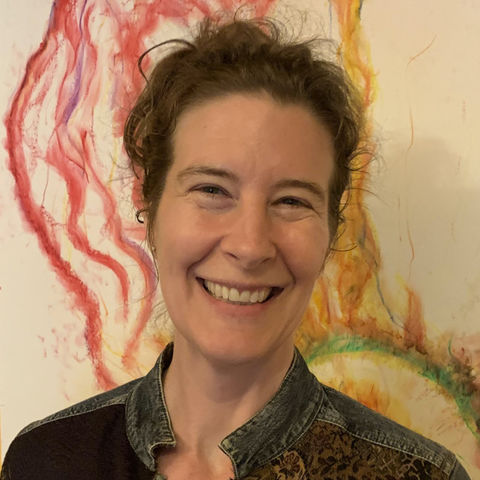
The first is Dr Julia Mossbridge,
A futurist who studies time and the relationship of people to time.
I've had the honour of a lifetime to write a book with her called The Premonition Code,
The Science of Precognition.
And she's one of the most remarkable scientists I know and one of the most inspiring people I know as well.
She bravely pushes boundaries and if anyone could cross space and time,
I think it would be her.
In season one of White Shores,
Way back in 2019,
Seems like a different time and place,
Doesn't it?
She was a hugely popular guest,
So please do check out that episode.
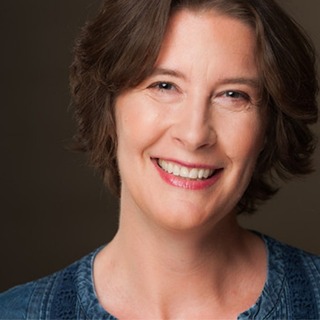
She's joined today by Dr Michael Sapiro,
A clinical psychologist and meditation teacher and researcher.
Now,
Julia and Mike have recently collaborated on the HOPE intervention.
Goodness,
Isn't hope what we need more of in the world today?
Hello,
Julia.
And I'll say,
Hello,
Mike,
When he drops in because he's flying from another meeting.
But Julia,
Being the precog she is,
Knows that he will be here shortly.
So I'm going to start with you,
Julia.
Hello.
Hello,
Theresa.
It's great to be back.
Well,
First of all,
We can't ignore world events.
How are you coping?
Right.
You're on the other side of the pond there,
Right?
We're in the United States.
Living and breathing every second,
I can tell you.
That's actually breathing.
That's how I'm coping.
I've been taking long,
Deep breaths and recognizing that any time of change,
Any time of transition,
Even if it's towards a positive end,
You know,
In our country,
We're moving towards understanding how to,
In my opinion,
We're moving towards understanding how to share power and how to recognize that we're a very pluralistic society.
And we have people with very different needs.
And so any transition to really meeting the needs of all the different kinds of people in our country is going to be stressful.
So mostly coping by breathing deeply and remembering that that this is a transitional time and that that's OK.
Brilliant.
And you are very accurate in your precognition.
Mike is here.
Hello,
Mike.
Hi.
Thanks for having me.
Thank you.
I'm going to ask you the same question I asked Julia.
As I said,
It's impossible to ignore what's happening in your country at the moment.
How are you?
I'm good.
I spend a lot of time grounding and being in nature so that I can serve my community from a place of peace and equanimity as best as I can.
I think that's where I start my day and work from that space.
You have such a calming voice,
Julia,
Doesn't he?
I feel I love his voice.
I love his meditations.
Absolutely.
I'm almost like calm.
Thank you so much,
Mike.
Because I'm quite frenetic and it's just lovely to hear your calmness.
Thank you so much.
You're welcome.
My listeners will know,
Julia,
Well,
They should do anyway.
If you haven't read The Premonition Code,
You're missing out on a very unique book.
But for anyone listening who isn't quite sure who Dr.
Julia Mossbridge is,
Julia,
Could you just tell us your story,
Prickly?
And then,
Mike,
Could you tell us your story,
Who you are?
Imagine people meeting you for the first time.
Sure.
Julia?
Okay,
Hi,
Person.
It's nice to meet you.
I don't know who you are,
But I'll tell you about me.
You know,
I've always been interested in the inside and the outside of human experience,
The inside being the brain,
And that's what drew me to neuroscience.
So my training is in cognitive neuroscience,
Trying to understand sort of the inside of human experience by understanding the biology of it,
But also the outside of it.
What are the behaviors that people do and the things that they do in the world?
And the same,
Then that sort of turned inside out.
And I asked,
Is the brain really the inside of the experience?
Is the inside of the experience really our primary perception of what's happening to us?
And so lately,
I would say over the last 20 years,
I have been asking the question about our primary experience of what it means to be a person and how that relates to love and how especially that relates to time and how time and love are related.
So I have a lot of questions,
Very few answers,
And I pursue the questions with colleagues who are committed to various aspects of those questions.
And I'm especially recently very interested in people's relationship with their future and past selves and what that means for hope,
What that means for the experience of deep,
What I like to call deep hope.
So that's me in a nutshell.
There's a dog!
I'm so sorry.
That's why evenings are difficult.
No,
Just be quiet.
It's approving.
It's approving.
That's really,
Really an honor if my dog embarks.
Wonderful.
So when I was working with you,
As I said,
It was a wonderful experience.
It was very much precognition and looking in the future.
You're still that way or have you branched out into other areas?
Is that still where your focus mainly is?
You know,
Working with precognition is really important to me,
And studying it is still very important and other aspects of mental time travel.
But it really led to thinking about mental time travel in the broader sense.
And I noticed that when people started studying their own capacity to use precognition,
For the most part,
If they were coming from a stable psychological environment,
It improved their connection with themselves over time.
It increased resilience.
And so we have a relationship with our future selves.
Whether we think we do or not,
Even as simple as,
Oh,
You know,
I'm going to stay up late tonight and too bad for that person who has to wake up in the morning.
You know,
That's a simple relationship with your future self,
And it's sort of adversarial,
But it is a relationship with your future self.
And so actually paying attention to that relationship and nourishing it like you would a friendship with someone else or a love relationship that you wanted to make last,
That's a powerful healing position to come from.
And I started to notice that.
So lately I've been studying how to help people have that experience with or without precognition.
It sort of doesn't matter to me.
It's can you have the experience of strengthening yourself by connecting over time?
And that's what I worked with Mike on with the Time Travel Narratives Project.
Oh,
We're going to go into that in a minute.
I love that.
Mike,
How did you become aware of Dr.
Mossbridge?
How do you two know each other?
And how did you start to collaborate?
We're both fellows at the Institute of Noetic Sciences.
We come from a little bit different angles,
Hers really being a scientific angle and mine being I work primarily as a clinician in the community with people and groups,
Although the aim for both of us I think is the same,
Awakening to unconditional love that is in the universe,
In our bodies,
In ourself for the sake of healing and growth.
And so we both shared our work in a meeting a few years ago and realized we're doing very similar work in terms of connecting people to love inside themselves in any direction to heal their past,
To heal their present,
To heal the future.
All those selves are existing in any given moment.
And so I gave an example of a patient I was working with where we went backward in time where she became the loving presence for this part of herself that was traumatized as a young child and she became the presence in the room where her young self was being wounded.
And I shared that story and I think Julie has a similar story.
And so we started working together on this project that has been very powerful for me personally and to see the changes in the participants in her study.
Where did your desire to do this kind of work come from?
Because it's very unusual,
Isn't it?
I know it's what you do every day so you think it's the norm,
But for a lot of people and a lot of listeners for this,
They're not deep in that world or that kind of research.
I'm fascinated by where does that desire,
That spark come from to devote your life to this kind of study?
Are you asking me or Julia?
No,
I'm asking you Mike because I know Julia.
Growing up in a household that.
.
.
I'm surprised she's keeping quiet this long actually.
Sorry.
Well,
It's really important to hear Mike's story.
I want to hear Mike's story.
No,
It's really important.
Thank you,
Jo.
Sorry,
Mike.
No,
It's lovely.
I like this.
And Julie and I had,
You know,
I was thinking before I got on the show,
I used to have weekly meetings with Julia and it felt like better than taking antidepressants,
Which I don't do,
But I might need them for the current circumstances that we're all facing,
But being with Julia every week was great medicine.
So I'm really glad to be on the show with her and feel your presence,
Julia,
Through this.
Yeah,
She should be a prescription,
Shouldn't she?
Have you taken your dose of Julia?
Mike,
Where did your desire.
.
.
I'm trying to find out from your family.
Was it you born into this?
Was it something you,
You know,
When you were studying?
You know,
Where did this desire to research these kind of esoteric mystical topics,
You know,
Come from?
Yeah,
So it's actually less interested in the research,
Although I'm so grateful to be a part of our team and to do research with Institute of Noetic Sciences and other amazing scientists.
But my interest is in the embodiment of these principles.
So taking them from a theoretical and philosophical into the body themselves.
How do I help transmit the truth of unconditional love into people's experience?
And it started for me very,
Very young because I grew up in a Holocaust surviving family.
And my mom herself was a war refugee from the Hungarian revolution.
I believe 56,
1956.
And,
Or possibly,
Yeah.
And so she had to escape as a seven-year-old from Hungary to Austria and to get over to United States.
So I grew up in a family that was just rich with resiliency,
Tenacity and trauma responses.
So I had to learn to heal myself in the presence of really thick PTSD response in the household and be as resilient as I could growing up with that around and in me.
And so very early on,
And I'm speaking 12,
13,
14,
You know,
I was looking for ways to regulate and nourish myself.
And so I found meditation,
Psychedelics,
And just kept going into the experience of unfolding myself in letting the universe hold me in love because my family did their best and I did my best,
But I needed something much bigger than that.
And so that's where those mystical experiences became profoundly felt in my body.
And I've just spent my lifetime practicing and then teaching those things.
And so it felt natural to step into the realm of science and add what I could as a clinician and healer to the science,
To the study of these things.
Fascinating.
Hearing both your voices,
There's such a,
As I say,
A calm certainty.
Maybe that's an American thing.
I don't know,
Being a Brit.
Do you ever doubt what you're doing?
Just finding it interesting.
And how do you deal with that?
Well,
Let's see,
Was that for Mike or can I go ahead?
Either,
Either,
Please,
Whoever feels,
You know,
I'm just curious.
I said,
You know,
You're very optimistic Americans that I know.
It's in your nature.
I mean,
I'm a cynical Brit.
I try not to be.
But do you ever have moments of,
Maybe I've got this wrong,
Because I said the theme of this season is truth.
I'm wanting to know what you do in your dark moments.
Okay,
This is really important because,
Or at least it seems important to me because,
You know,
Now also in American culture,
There's this feeling among,
Especially among well-educated professional people,
That if you're hopeful or happy or confident that the future will be better,
Optimistic,
That you're not very smart.
You must not be very smart.
I think that comes from the British ideal,
Like,
Well,
If you're savvy,
You know that everything's just crap.
And I'd like to say,
Actually,
One of the most intelligent things you can do is recognize that there's research showing that the more positive you are and the more confident you are that eventually there will,
Times will be better,
The better off you are in terms of your well-being.
So it's actually very intelligent to say,
Now,
Wait a minute,
I'm consistently spending all my time thinking about how the future will be bad or worse than it is now,
Which may be the case,
You know,
But training yourself to say,
Okay,
That may be the case.
It may be going way downhill.
It may be even worse than it is now.
And that really may be the case,
But what would it be like for me to remember that in the past,
Things have been better and that it's very likely in the future things will get better?
So to use hope,
This deep resilience as a bridge between the down times,
You know,
That life is like a graph.
You're going on high hills and then low times and then up times,
And it's true for everyone.
So what about using hope as a bridge where you say,
Yes,
We're in a downtime?
When does.
.
.
And buy gum,
You know,
I think,
I know things will get better.
So I think it's,
I think it's a practice skill.
Absolutely.
And that's what I want to talk about the hope intervention in a minute.
I'm going to ask Mike about that.
I'm just going to ask you though,
When does hope become delusion?
Right.
You know,
Because as I say,
You know,
The power of positive thinking,
We've seen it embodied in your former president.
Yes.
Absolutely belief that what I say and what I believe and what I want and what I hope for is true.
Well,
There's such an important distinction here because what I'm talking about in terms of hope is not,
Oh,
I have this wish that things are better than they are.
What I'm talking about,
I call that shallow hope.
That's,
That's not well informed.
That's ignoring and being in a state of denial about what's true around you.
If you're locked up in a prison,
For instance,
And your life is miserable,
It's not helpful to say,
Oh,
But really I live on,
You know,
The planet Mars and I get servants bringing me all the food I want every day.
Like that's just going to make,
That's going to push you further into denial.
Right.
And depression.
So what's helpful is to acknowledge what's really true.
Like I'm living in a prison and my life is really horrible.
That's,
That's the first step of deep hope.
In fact,
There's a wonderful book called Learned Hopefulness by Dan Tomasulo at Columbia University in New York.
And what he says is hope is the only positive emotion that requires the acknowledgement of negative emotions to exist.
You can't have real deep hope without acknowledging there's a reason for you to need hope right now.
And so that's very different from,
Oh,
I wish I was,
You know,
I could fly.
This really makes sense.
Thank you so much for that.
That's really helped sort things out for me.
Thank you,
Julia.
And hope,
You know,
It's,
It's,
It's divine.
It's,
You know,
It's what we,
We,
We all need,
The whole world needs right now,
Especially right now.
Mike,
Can you tell us about hope intervention,
How it was formed,
What it is?
Just,
Could you just share with the listeners what,
What the hope intervention is,
Please?
Yeah,
It's,
It's an intervention that allows us to connect really deeply actually to the world around us and become a bigger part of the picture than just the narrow constricted version of ourselves that we usually fall into worries and despair.
And I know that's the more lofty big version of it but for me really the hope intervention is a process for us to connect to something much greater and bigger,
Not to avoid what we're experiencing not to bypass it,
But that we end up seeing that we're going to be okay in the end because we are connected to something so much greater and that is ultimately unconditional love.
And it's very hard to touch that when we're stuck in such a constricted kind of identity as Mike is just this thing he's going through this thing where he sucks and his body hurts.
If I was just stuck there all the time I would be miserable all the time I'd be anxious and in despair,
Because there's so much suffering where we can we can live through in our lives because of this narrow kind of thing in our self.
The hope intervention,
Ultimately,
Exposes us to something much greater and wider,
But you know,
Literally what is it it's us learning how to have a relationship with ourselves in the past,
Looking back with compassion and love and learning to be wound and be nurture nurturers to that part of ourselves that really was wounded.
It's,
It's looking forward and visualizing the best of ourselves moving forward the wise,
More experienced version of ourselves that looks back from the future and saying I'm not going to get through this.
You're going to work through this,
And I'm already through it and I'm fine.
And so I believe you can get through it and then it's this bolstered sense of self that we have now through time.
So it's looking back with compassion and love and connecting to this future self that is really wise empowered emboldened.
And then we step into that version of ourselves.
Literally I asked patients and clients to step into that self try that cell phone How does it feel to feel confident empowered wise.
And then that stretches our sense of self out beyond just the present moment where we may be stuck in a very small sense of ourselves.
And then we have this technology that Julian the team have developed to help us kind of create this relationship with the patient and then Julian can speak to the technology part of that.
We speak so if people wanted to find out about it and sign up or take part,
Is it still running,
Is it how,
How can they do that.
So,
We just finished the pilot study which showed that people are really having positive experiences with the technology and then we're growing the technology and we will release it for free on the website time machine dot love.
So,
Yeah,
Time machine dot love using a time machine.
Isn't that cool.
Love and time you've always been about love and time Julia that's that's beautiful,
And the technology please tell me about that I'm fascinated what what what technology.
Well it's simple it's,
It's remarkably simple and it doesn't sound like much but it turns out to really impact people in a very positive way.
So the technology we tested started with a focus group where Mike and I would talk to people about I would talk about the science of hope and he would bring people through beautiful meditation to connect with the past and future parts of ourselves.
And then we told people about the rules of the study,
And they for 26 days interacted with this website that allowed them to record a message to their future self,
And then the next day they would listen to the message and record a new message to their future self.
Very simple stuff.
Profoundly impactful.
It's almost like stringing along little messages to yourself,
It was pretty cool.
It's so profoundly simple,
But brilliant,
Isn't it,
Just to record a message to yourself,
Talk to your tomorrow.
Well,
And users can,
I mean,
People,
We talked to people in the study who were disappointed that it was ending and we said look,
Just record a text message,
You know,
You can record a verbal text message,
Send it to yourself and get in the habit of listening to the next day.
And we're just doing that until we get the technology out there that makes it easier because we're going to add things like meditations and record your own meditation and little resources and things like that.
So,
So people will be able to access this.
Yeah,
Is an app or a website how how it'll be a website that can be changed into what's called a portable web application so it'll look like an app on your phone but also you can get to it via the internet.
Everyone should be prescribed that right now.
I mean,
Hope is diminishing,
Isn't it?
People need it more more than ever.
I mean,
Especially over here in the UK,
We need it too.
We're not having a great time right now.
But is that the same as the time travel dialogues or is that different?
The time travel dialogues,
Are they part of hope intervention or separate?
Yep,
There.
Well,
There was that we did an original hope intervention which was a 14 class webinar which you can find if you go to loveandtime.
Org loveandtime.
Org Yeah,
And you can look at hope intervention or you could go to Mike's website.
Mike,
What's your website?
Michael's sopiro.
Com and it has the link to our 14 day 14 week hope intervention which can be found on YouTube.
And yeah,
They're totally free.
It's totally free.
So this,
This is your focus at the moment what you're focusing on I know you Julia you're probably doing loads of things are you doing working on other projects as well.
Yes,
Of course.
I bet Mike is as well.
Yeah,
My handful and.
But really they're all the central theme.
And I say this in all my meetings is about love.
The felt sense of it around us within us.
I think why this intervention has been so powerful and why a simple tool like recording a message to yourself has such profound impact is because we spend so much time looking for validation and love from other people.
Most of us are sensitive to rejection to abandonment.
And so we spend a lot of time out of like a base need of survival really looking toward others to be there for us and what we find is when we start connecting to ourselves and having our own backs,
Knowing we're here for ourselves.
Now we find this sense of strength and empowerment,
That is not dependent on relationships that are up and down or someone else's mood or state of being.
This is not an isolated sense of self this is a sense of self that's interdependent and interconnected to other people and all things,
But starts inward here that I know Mike is here for me I know I'm here for Mike so Mike can relax,
Because I've got,
I've got it.
I've got it for you Mike I know you're struggling but I'm here.
And that's what protocols like self compassion are doing really connecting us to ourselves so we have our own backs first.
So that's that's my take on why this has been so profound even though it's simple.
Why do you think so many people struggle to,
To do that for themselves to take care of themselves to parent themselves to be there for themselves.
Well,
We're really not taught that it's a value to learn how to do this we're taught that it's important to get exercise and eat well to get educated,
These are things that we sort of know,
But there's no priority placed on,
You know,
How well do you love yourself can you learn to love yourself better.
And when I say love yourself and when Mike says love yourself we're not talking about narcissistic.
Look at me world,
It's the opposite of that,
It's,
It's this.
It's like,
It's almost like a sacred love or an unconditional love evolutionary love,
There have been different names for it but it's this feeling of like,
Okay,
I am who I am,
And who I am is okay.
And I forgive myself for not being perfect because guess what I'm a person.
And I'm moving forward into my life doing the best I can,
With love for myself.
And when you experience that experience,
Loving other people becomes not at all effortful in fact it's it's like being a sponge and the extra water just drips from you,
You know what I mean.
Yeah,
So it's.
It's just not been a priority.
And,
And,
You know,
That's not always been the case I mean thousands of years ago,
Perhaps it might have been more of a priority but in modern culture there's this competitiveness.
And there's this sense of failure and not being able to live up to things that that just permeates everything and that needs to be switched around.
Well,
Maybe what the world's been through in 2020,
You know,
A lot of people have gone in would be more contemplative evaluated what truly matters in their lives maybe that we will start seeing a shift I mean I don't think we can go back to that rat race that was before,
We've all changed I think so much by the impact of what's happened.
I've seen it in people you know my colleagues or friends,
Family members,
They're all suddenly evaluating who they are.
And that's kind of beautiful,
In some ways.
I don't know if you found that with your people you know and work with.
Absolutely,
And in different ways,
And some people have adapted in ways that are are very very difficult for me to understand,
But I need to love them.
And other people have adapted in ways that like move them closer to where it's easy for me to love them.
Thank you so much so just can you quickly say what your current your,
Your this 2021 your obviously hope intervention and what you're doing and what what both of you are going to be focusing on in 2021 What have your,
Your future selves got in store for Julia and in store for Mike.
My future self in 2021 is really hoping to be of service,
I think this is a difficult,
Very difficult time for humanity as a whole.
And I'm hoping to find out what I could do with my unique.
Let's just say unique background and talents.
What could I do to be of service to to creating more love in the world and more peace.
And you might.
Yeah,
I seem to always dedicate my life to what I call personal awakening for the sake of collective and planetary transformation.
And that looks like a lot of different things awakening to our highest potential awakening to the need to care and be tender to ourselves.
Because the more we do that,
The greater positive impact we have on our communities nation in the world.
So,
You know,
The projects I'm working on are all geared toward personal awakening,
Increasing a sense of love for each other the world,
The earth,
Animals.
I continuously dedicate myself to practice every day I have teachers I checking with and practices that I'm learning,
Working at a ketamine clinic so I'm still on that trying to be in the frontier edge of science psychology and spirituality,
And just doing a lot of the projects that fill my soul up and getting out into nature as much as I can,
A lot of cross country skiing and watching my dog run through the snow that fills me up with joy and a lot of laughter.
You know,
You two are just,
Oh,
I don't know,
Awesome.
And I don't say that lightly because I'm getting quite cynical and critical in my old age.
So I really I know that you are because I started this podcast sort of all huddled up trying to make everything right with the technology and I'm now realizing I'm sitting so straight.
Right,
My shoulders are back,
And it just happened whilst you were talking to me both of you.
I think my body was just saying,
Teresa,
Pull up.
So you've just given us a big spiritual uplift.
I know everyone listening will be uplifted and I can't thank you enough.
Can you just recap the websites that people can find out about hope intervention and about you both and then I've got one,
One or two cheeky questions to ask before you go.
So you can go to loveandtime.
Org or Michael Sapero,
S A P I R O dot com.
Brilliant.
I hope everybody does because I love each podcast that people have something to research somebody,
Something new to discover that's on the whole point of this podcast because that's what happening.
People are finding out about things and you know people that they may not be aware of whatever I really hope you check these two icons out.
That's what they are.
They really are both ions fellows as well.
And you know how much I respect the work of ions.
I'm just going to finish with two questions.
Julie and I both share musical sons,
Don't we?
With the guests for season four of White Shores.
I'm trying to create an orchestra so I'm asking each guest if they could be a musical instrument.
What would it be and why because I do believe that music speaks words that says what words can't and it's language of spirit of the unseen.
So Julia,
First of all,
If you could be a musical instrument,
What would it be and why?
It would be a tambourine.
Triangle.
Because anyone can play a tambourine and it's a delightful to play a tambourine and it makes a loud and percussive sound,
But also slightly melodic.
And you know,
Anyone could do it.
A two year old could do it.
Brilliant.
Mike.
Well,
I'm actually a professional guitar player and Oh,
We have a guitar.
Yeah,
I do other instruments but professionally guitar.
So the reason I would choose a guitar because I would love to be touched the way that I play my guitar.
Like I'd love to feel what it would be like to have such dynamic,
Tender,
Aggressive,
All those different emotions coming through.
So I guess I'd like to be touched the way I touch my guitar.
So,
Would you,
Standard guitar or electric guitar?
In this case,
It would be an electric guitar for all the different tones and shapes that you make through the amp and with pedals,
But really the bends are the best.
When you bend an electric string,
It just it changes time and space around you.
It kind of molds it with that bend.
So I want to be a guitar that's bent a lot.
I'm just now picturing a tambourine and electric guitar.
It's just making me laugh.
And finally,
If you could both give,
You know,
As I say,
I do believe that especially now in,
You know,
In Britain in the lockdown,
We're watching far too much TV,
Netflix or whatever.
I mean,
It's interesting the impact of all this storytelling on our lives,
You know,
Because we've all had more time.
But is there something uplifting,
Inspirational or mind opening that you could recommend for people to watch?
Because it's great to have recommendations because there's a lot of rubbish out there.
Could I switch it to something to listen to?
Listen to?
Absolutely,
Yes.
OK.
Apart from one Shores,
Of course.
Of course.
I created something called a Hope Technology Playlist on Spotify.
So it's publicly available and it's curating a bunch of songs,
Different types of songs that seem to increase hope.
So you can just go to Spotify and look for Hope Technology Playlist.
Hope Technology Playlist.
Thank you,
Julia.
And you can close your eyes and you can visualize,
Which is a much more proactive way,
Isn't it,
To be entertained.
Well,
There's a show on Amazon that I've seen four times the whole thing through.
It's called Undone.
Not Breaking Bad,
Is it?
No,
No,
That's a lot of TV watching.
If I did that four times.
I watched it.
That's what the pandemic did to me.
It's pretty cool.
I love that show.
There's something good about watching someone Breaking Bad,
Actually,
And seeing the unfolding of that process.
But the show is called Undone and it's one season long on Amazon.
It's about somebody's experience with spiritual emergence.
What is the fine line between psychosis and spiritual emergence and how does someone navigate that as they're finding new abilities and new powers within themselves as they're crossing over into the spirit world?
It's really brilliant.
Wow.
Who's in it?
Do you know?
Well,
I forgot the actors' names.
Bob something something and he's also in Breaking Bad as the lawyer,
But it's an animated series and the animation itself is brilliant because it looks like real people that have the animated,
Drawn cartoonish version of themselves overlaid on top of them.
And it really comes in and out of the dream world and reality and it's hard to differentiate sometimes.
So that's where I also work in that realm.
So definitely recommend that and I want to get the writer on my radio show,
But I'm struggling to find how to get that.
So pass over that contact if you ever any listener.
I will.
Undone.
I haven't seen it.
I will.
It's on my must see.
I'm surprised neither of you didn't didn't say Soul.
Oh beautiful.
Yeah.
Did you watch that Julian?
No,
It's on my list.
That's why I didn't say it is because I don't know.
So you think it's wonderful?
Oh,
It's just so you know,
It's just wonderful isn't it?
Disney picks are taking these big,
Big themes about life's meaning and yes,
It is beautiful.
Especially,
You know,
I know I love music and music plays a part in it and all these ideas about pre-life,
Life after death.
It's just wonderful that kids are being introduced to these big,
Big themes now.
It would have been unheard of wouldn't it?
20 years ago,
And I'm sure it's because of the work of what you know,
You guys are doing.
Girls,
Girls and guys,
What you're doing.
Well,
And perhaps because of what you're doing Teresa.
I mean you have you have I don't know how many books about this that have been changing the world.
Well,
I'm a serial writer.
Yes.
I'm doing what I can but I just think you know it's just I just I just felt it's mainstreaming what you to talk about and teach and research and devoted your life to that's why it's just wonderful and released on Christmas Day I believe as well didn't they?
I think so yeah on that Friday.
That's right.
Yeah,
I have to check it out.
It sounds great.
Oh,
It's beautiful.
I'll like you to thank you so much.
Thank you from my heart.
I feel a real sense of connection to you and I'm grateful for that and I hope everyone listening checks these two wonderful people out.
Thank you so much.
Thanks,
Teresa.
Thank you.
Thank you.