Hi,
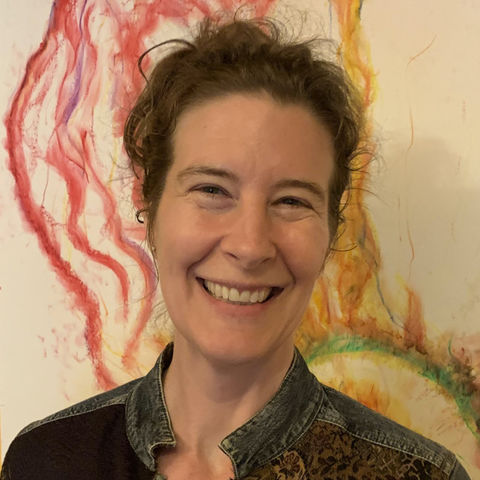
So I'm here with Adam Rizvy,
Who's an ICU doctor.
That's what I know about him.
I think he's better at introducing himself.
But I wanted to talk with him today about his unique approach to working with patients.
And I think more people would be hopeful and also more practitioners would be educated and enthused and inspired by listening to how he does it.
So that's why I got you here,
Adam.
Can you introduce yourself?
Sure.
I'd be happy to.
Thanks.
First of all,
Thank you,
Julia.
It's an absolute pleasure.
You invited me to do this maybe,
I think,
Eight hours ago.
Something like that while I was at work.
So yes,
I'm an intensivist.
That's the term we give ourselves.
I see doctors trained at both the University of Minnesota and Stanford out in California and have a background in neurology,
But decided to go full time in ICU or critical care.
And that's what I'm doing right now in Arizona.
Great.
Thank you.
That's much better than I could have said.
So let's start with sort of this,
Something I alluded to,
But was kind of mysterious about this approach you have with patients that I think is unusual,
But I'm hoping that in this COVID crisis,
It becomes more usual.
And that's why I wanted to talk with you.
So can you kind of outline what you do when you first encounter a patient?
Yeah,
I'd be happy to.
So over the course of my training,
I've realized that the way in which I relate to a patient and their disease has a profound impact on my being,
But also on the patient themselves,
Their whole family,
And the entire care team.
I've noticed the ripple effects of simply of my perspective on a situation.
And specifically what I do on a high level is I choose not to give reality to disease.
And let me unpackage that a little bit.
What we often do in medicine,
And we're trained to do this for good reason,
Is we identify the person by their disease.
We often,
During rounding,
Which means every morning we come together,
All the providers,
And we talk about the patient.
We say,
This is a 60-year-old male with chronic obstructive pulmonary disease who came in with these lab findings.
That is the pulmonary disease patient.
We relate to the patient as the disease.
And when we do that,
There's a certain reality that it takes.
And it concretizes the disease.
And then we start to relate as a disease in a room that I'm interacting with,
If you can kind of get a sense of emotionally,
Psychologically what that does.
We don't realize how it's impacting us because we take it for granted that that's how we relate to our patients as the disease.
There's a lot of unspoken,
In my opinion,
Detrimental effects to relating to a patient that way.
Before you get there,
Can I just clarify something?
Does that mean kind of like you might internally,
At least in your head,
Say something,
Or not you,
But it may be a habit that people can get into in this situation,
To say in their heads,
Oh,
I got to go deal with that COPD in room 92B or whatever.
That's exactly right.
Okay.
Okay.
So really calling the person by the disease.
That's their name.
That's their name.
That's their essence.
Right.
That's,
I think you hit the nail on the head,
As if that's their essence.
And that's the key.
So I'll pose a question to you and to the listeners.
If you had a particular condition,
Let's say you had a bad cough and a fever or whatever,
And you had a provider,
A physician come up to you,
And you had a choice between two providers.
You had one provider that looked at you as the cough and fever,
Or one provider that saw you as the human being with the depth of the personality and the story that you bring,
Right?
I think for most people,
It's a no-brainer who they'd rather have as the physician caring for them.
Well,
Of course.
I mean,
It sort of feels to me like if you're the cough and the fever,
So if I have a cough and a fever and I go to a doctor and I am the cough and the fever,
Then what the doctor wants to do is get rid of me because I'm a cough and a fever.
So the goal is to literally get rid of who I am,
Which sucks.
It does.
It's funny,
I've never really put it that way,
But that's exactly right.
There are implications to how we relate to our patients that are subconscious.
So what I do is,
And this comes from many,
Many years of meditative practice and my own spirituality,
Is I go through,
There's this great phrase in the Buddhist traditions,
It's called trekk-cho.
It's actually a particular practice,
But it means cutting through.
And so what I feel like I'm doing is I cut through the appearance of disease.
And I use that word,
It's an appearance.
I cut through the appearance of disease to the core essence of who I'm relating to as light,
As a soul,
As a perfect being who hasn't done anything wrong,
Someone who's whole.
I take a moment to relate to their wholeness.
All right,
Let me back up.
First of all,
How do you spell this word?
For those out there,
I'm sorry,
I'm probably butchering this up,
But I believe it's t-r-e-k-c-h-o.
Okay.
Cutting through.
Cutting through.
So cutting through to the essence.
Cutting through to the essence.
What is that?
So philosophically,
That sounds great.
Of course we want every doctor to do that,
Right?
Sure,
Sounds wonderful.
How do you do that in practice?
I mean,
You've been recently working in a surge hospital in California during the COVID crisis.
In practice,
What does that look like on the outside and how do you do that even when things are going nuts around you?
Right.
Well,
There's different ways to do it,
But the simplest way.
.
.
I'll start with the simplest way and then I'll share a little bit more of what I've been doing more recently.
The simplest way is to use your imagination.
See the person as if they were in the peak of their health.
What that'll look like for me is if I see this 60-year-old with COPD who's intubated,
Comatose sedated,
I will instead imagine him on the edge of a lake fishing,
Smiling with his family around him,
Really enjoying life.
I'll create a picture of him in his prime,
So to speak.
The emotional aspect of it I think is really important to really tap into the joy that's at his core.
With that comes a sense of love.
I think it's almost natural.
I really start to love this other human in front of me because I'm relating to them in their wholeness,
In their perfection,
If you will.
Okay,
Great.
We're just starting to unpack this practice,
But it reminds me of Larry Dossie's beautiful article about love for healers.
Love is.
.
.
I forget what the title is,
But I can look it up.
Love for healers or something like that.
It's this idea that we've sort of forgotten that love is a key ingredient to.
.
.
Even though it's embedded.
I was hearing some students today in New York reciting the Hippocratic Oath.
It's a beautiful oath,
And clearly love is embedded in there.
You're not only talking about love.
.
.
I mean,
Not about that as if love is an only or a just.
Love is the basis of it all.
It sounds like there's also this other piece that's like a habit of imagination.
Yeah,
That's a really good way of putting it.
Love has become second nature at a certain point.
I do remember when I really took this on.
It was several years ago,
Right before I started fellowship.
I did take a moment.
I paused and I saw my patient as if they were free of disease or pre-disease,
If you will,
And happy and joyful,
And really tap into that part of being whole.
What I got was that the more I did that,
The easier it was for me to see that,
Yeah,
What I'm seeing right now really isn't who they are.
It's at the least,
It is temporary.
It is a transient moment in time.
It does not define them for who they are.
There's so much to them.
Even if they weren't happy before they got sick,
There was a moment where they felt joy and love in their life.
I think there's a moment in all of our lives where we touch that.
I see them in that moment.
Yeah,
Well,
You create the habit of sensing that and imagining that.
That's beautiful.
You know,
I think a lot about time.
Of course,
The part to me of this habit that you have or this practice that you have that really resonates with me is that we are not,
I mean,
People say live in the moment,
But connect with your whole self and your whole self is distributed through time.
If other people can see us as,
Yeah,
Yeah,
You're being annoying in the moment,
Or you're being this or you're being that,
But yeah,
There are times when you've been wonderful and that that counts too.
We get to see ourselves and each other and each other and ourselves much more.
That's really beautiful.
Okay,
But I have a couple of questions about this.
Can we go a little deeper?
Yeah,
There's still a little bit more because there are a little bit more,
I don't know if I want to use the word advanced,
But I've found there's depth to how I relate to the patient that I'd love to share at some point too.
Yeah,
So that's exactly what I want you to do.
Let's go deeper.
All right.
So what I've learned so far is this practice has imagination.
So I'm imagining this person,
If I'm the practitioner,
I'm imagining this person in a joyful moment in their life and their full health.
And if you want to put them on the edge of a stream fishing,
That's great,
Or whatever comes into your mind.
That's what that is.
And then loving,
Loving that person.
Okay.
Great.
Just before we move into the further depth,
If I were an emergency room doctor,
Rather than an intensivist,
Would I have time to do this?
Is this something that takes a long time or can this be like snappy?
So I go to the emergency room.
That's where I get called oftentimes.
And I will see the broken bones and the bleeding guts and the trauma come in.
And those are the times,
Oddly enough,
Right now for me,
Where it is easier to go there.
And I think it's easier because it's so evident to me that this is not who they are.
Right.
They don't walk around with blood all over themselves with broken bones.
So for me,
My mind is so used to knowing that they are not this,
That when I see something so obviously not who they are,
It's easier to go there.
Right.
And the thing just happened.
This has just happened.
And so you're also closer in time to their self.
That's the normal self.
That's great.
Yeah,
That's a good point.
I hadn't thought about that.
Yeah,
I can relate to who they were maybe 30 minutes ago prior to the car accident.
Right.
Right.
Okay.
So let's go deeper into the,
What else have you learned in this practice?
Okay.
So the other thing that I learned while playing around with this is I hadn't realized that I was unconsciously relating to humans and disease in particular as the way things are that we are inherently broken.
Right.
That there's something we need to fix about us.
And I didn't realize that that was a subconscious operating system,
If you will.
And it's possible that led to me wanting to become a doctor.
Let me fix what I believe to be broken.
But what's shifted pretty considerably in the past couple of years is there's a knowing now that we are not broken.
That who we are in essence,
And which is why I like that word that you used initially,
Our essence is wholeness.
We're not halves that need a second whole.
We are not pieces that need to be put together and mended by a doctor,
A therapist,
A counselor.
Our base is we are whole.
That wholeness gets covered up temporarily by circumstances,
By beliefs,
By thought patterns,
By whatever.
But it's like the sun on a cloudy sky.
Just because you don't see the sun doesn't mean it's not there.
Just because we manifest disease temporarily doesn't mean that our essence isn't whole.
And now I'm starting to relate to patients that way.
I know they're whole.
I know that whatever I'm seeing is a temporary blip on the grandeur that they are underneath it all.
See,
What's interesting to me about that is,
I mean,
It feels,
Of course,
True to me,
But also it also feels like intellectually,
If I heard that and I didn't get it,
I might think,
Well,
Then you would just stop being a doctor because,
Oh,
You're in the emergency room and your leg fell off,
But it's okay because you're whole.
But what I know from my own experience with pursuing this kind of mystical path is that that stuff is always paradoxical.
In fact,
It makes you a better doctor to be able to recognize the wholeness that's already there.
It's this fantasy that you have to fixate on brokenness or choose that there's a brokenness in order to heal something.
It's just incorrect.
If you can see the wholeness more clearly,
Then you can pull towards the future wholeness.
That's exactly right.
More accurately.
So I'm glad you said that.
You need an anchor.
So first of all,
I just want to acknowledge,
Yes,
It's very easy for this to be intellectual and theoretical.
I don't have anything more than my request for a trust that I've lived beyond the theory of it.
In fact,
I guess the theory has been born of experience with how I've related to people.
Go back to that example of the two physicians.
Do you want a physician that sees you as inherently whole and is guiding you to the return,
To the awareness of that wholeness?
Or do you want someone that relates to you as a broken being that he or she will come and save you and mend you?
To me,
It's like.
.
.
The second one can't mend you.
I mean,
The second one can't mend you because you are broken.
So you'll never be in their presence when you're mended.
Right.
Wow.
That's great.
Well put.
Yeah.
To me,
It just viscerally makes sense.
If I have someone that's relating to me as whole,
It changes everything.
It just changes the relationship.
And then I also wanted to comment what you said,
Pulling to the future.
I don't have an anchor if I start off by relating to you as broken.
But if I relate to you as whole,
That's my anchor.
And we're both on a journey in that direction.
Yes.
And do you find that your patients respond?
I mean,
Do you find that other.
.
.
Do other people.
.
.
I'm curious how other.
.
.
I'm sorry.
You may also have something else that's deeper than you want to.
.
.
No.
No?
You're feeling good?
I'm feeling good.
Okay.
Do you find that the people.
.
.
Patients get the difference?
Do you find that the other physicians you work with get the difference?
Do people ask you questions about it?
Or is this all private inside you and no one's the wiser?
I think between you and me and everyone listening,
It's more on the private side.
I don't feel that my colleagues would totally understand where I'm getting from.
I think most would get the general gist and that it's better to relate to someone in a positive way and they would get that aspect of it.
I mean,
The depth that you and I are going into and as you put the mystical side of this,
They may not resonate with.
And the patients,
Most of them are intubated and sedated,
So I don't get the chance to relate to them.
But I will share a story of one patient of mine.
She had terminal cancer,
It was breast cancer,
And it spread to her lungs and metastasized and she was going into respiratory failure.
And she already knew it was too far gone to respond to chemo,
Radiation,
Or all the treatments.
And so she requested not to be intubated and if that was her time,
It was her time.
And I remember I got really close to her and we would touch base multiple times a day and she was with me for maybe five or six days in the ICU.
And towards the end,
I knew maybe she had a day or two left before she would go.
I remember sitting with her at the edge of her bed and I felt like we had enough of a rapport where I could kind of open up how I was seeing her and I remember looking at her,
Into her eyes and I said,
Her name was Alice,
And I said,
Alice,
You know there's nothing wrong with you,
Right?
And I really wanted her to feel that,
To feel that I saw her as perfectly whole.
I mean,
Yes,
Her body was riddled with tumor and cancer,
But if anyone could be with her in that moment,
They would know the truth of that.
And that's what I mean by it's visceral.
You can relate to someone as there's nothing wrong with them.
And for me,
It was one of the greatest gifts to know,
To have been able to share that with her and to see in her eyes that she got that and that she could pass peacefully having tasted that aspect of who she was.
So she couldn't respond because she was intubated,
But she could see and hear you and you could tell.
She had a mask on,
She chose not to be intubated.
She had a positive pressure mask so she couldn't talk and she was too short of breath,
But I mean she nodded her head and there was the look,
You know,
Where she just,
The look,
Like she got it.
Yeah,
She knew what's up.
That's beautiful.
Yeah that's really,
That's a beautiful story.
It reminds me of when my husband was going,
Getting ready to be prepared for his double lung transplant,
But we thought at the time was probably going to die.
And he had one of those masks on and he,
You know,
He can't take it off,
But he took it off anyway.
And in between taking it off and we're like,
Don't take it off and he would take it off.
In between he would just,
He said the sentence one word at a time,
You know.
And then replace the mask and the sentence was,
The sentence was,
I'm not the candle on the flame.
And that just,
It reminds me of that same sort of awareness of like this essence.
This is who we are.
And these bodies,
It's not that our bodies don't matter.
There's a relationship between this essence and our bodies that's really sacred and beautiful and really real scientifically.
And yet the essence is who we are.
Right.
And it can't be destroyed.
It can't melt down.
I feel that where we are right now as a human race,
We're on the cusp of a potential leap forward in our understanding of ourselves.
We talked a little bit about this in our telegram or in our chat,
But if we,
We've thus far been relating to each other as bodies that come and go and then die,
Live a short while and die.
And yet,
And because of that,
Because of that,
There's such a panic,
There's such a fear,
There's a mass facing of our mortality.
And if we truly got that we were these whole,
I would even say innocent beings that don't die,
Don't ever die.
Like if we got that and we related to each other as that,
I don't think we would be seeing this level of fear and panic.
And we could grow through this pandemic,
Through this intense catalytic period as a race.
I think so.
And I think there's a fear that comes with statements like that.
And check me on this,
But I think the fear is something like this.
If we start acknowledging that we are these,
I don't know what to call them.
As a scientist,
There's an imprecise,
There's no precise term,
But if we acknowledge that there's something in us that's more than the body,
That's related to the body,
That's this essential thing,
And that exists after the body is done.
If we acknowledge that,
Then we somehow will not want to save the body.
We will not keep human life as sacred.
We will not do the work that it takes.
We'll just be like,
Oh well,
It doesn't matter,
I'll just commit suicide or something like that.
There's a fear that that's where people will go with it.
But the interesting thing is,
In my experience,
The opposite is the case.
So in my experience,
The more materialistic our culture has gotten,
The more focused on the physical and the random and the idea that the universe is impersonal and that scientific laws are impersonal and they have nothing to do with meaning and they have nothing to do with the essence of who we are.
The more people start thinking that way,
The more we have suicides,
The more we have people shooting up other people,
The more that there seems to be no meaning in the world.
So to me,
That fear that people have,
Again,
It's one of these paradoxical things.
If we can acknowledge that we don't need to be afraid of death,
We actually are more functional and capable of supporting each other in life.
I think you're absolutely right.
It is a bit of a paradox,
But here's why I would say that that's,
I'm not worried about that happening if we truly did go to a place of acknowledging the essence that we are,
Because then we would start to ask ourselves,
Well,
Why did I choose to create this disease?
Or why did this happen in this particular way?
I'm of the opinion that the majority of disease were not victims of.
And that's a controversial statement from a Western physician,
But there are dimensions to disease that are often self-generated,
Whether consciously or unconsciously.
And we wouldn't give up on treating the disease with the wisdom and the deeper understanding.
We would start to ask ourselves,
What are the deeper reasons for this disease?
Because right now,
I'll tell you,
As a physician,
We,
In the Western tradition,
At least,
Allopathic,
We treat disease as a completely random event that we are victims of,
In particular,
Infectious disease.
It floats out there,
And God help us if we happen to catch it.
Same thing with accidents.
I think it's very easy to see yourselves as victims of that.
Or I mean,
There are other scenarios too,
Where we will say that the disease was inflicted upon us.
I have had so many experiences that would suggest that that's not the case.
And maybe that's a different interview and a different conversation.
But I have a feeling that that deeper evolution that we could take would have us relate to disease and its treatment in a different way.
I don't think we can just leave that there,
Because it's a very controversial position.
Not only is it controversial vis-a-vis MDs,
I think it's controversial in the mystical world because I hear too much.
And I don't think this is what you're saying,
But I think this is a misunderstanding of your position.
But I hear many people reflecting that position in a way where it can result in this dis-compassionate sort of,
Well,
Whatever.
Why did you choose to have cancer?
You did that to yourself.
Yeah,
You did that to yourself.
So what's your deal?
And I remember when my husband was really sick,
People would say,
Oh,
Well,
You just haven't dealt with your sadness or whatever.
And he's like,
That is not helpful,
Because I can't breathe right now.
It's kind of the opposite of people.
When people come up with that point of view,
It's related to what you're talking about,
But you're coming at it from underneath or from this deeper perspective where you're like,
Remember,
I'm always holding up this person,
Or at least when you're doing your practice,
You're always holding up with love this person in their state of wholeness.
And so then you can ask these questions generously and with compassion around it.
Now you are a person in this state of wholeness.
Now,
How can we pull you towards that?
And what do you think,
You know,
Pulls you down into this state?
But if you're not holding up that with love,
Then you're doing this like,
Well,
You know,
It's your problem that you did this.
Not what you're talking about,
But what can easily be misconstrued.
It often goes there.
And if we do not relate to each other with compassion,
It's not worth it.
It's absolutely not worth it.
It's not worth going down there.
I'm not necessarily a Buddhist,
But I can't help bringing up some of its tenets.
I just happen to have been reading a book,
So it's fresh in my mind.
There are two wings in a Buddhist approach to viewing life.
One wing is wisdom and the other is compassion.
And it's always emphasized that the two have to go hand in hand.
Wisdom is generally considered the intellectual,
Insightful aspect of the mind and how we relate to things.
We understand the truth behind a particular situation,
Right?
Why things are the way they are.
And that's wisdom.
But if it's just that,
It can become cold and heartless.
We'll say things that are cutting and are maybe technically true,
But are devoid of any sort of caring,
Which is why we need to have compassion.
Always,
Always be with wisdom because that holds that the person is whole and there really isn't anything wrong with them at the bottom of it all.
If you hold compassion and wisdom together,
I think that's a much more effective approach to being with each other.
Okay,
Cool.
Save that one.
I know we need to sign off soon,
But if you had any parting words,
I'm really grateful to you for your time.
I know it's the end of a long day and you're probably going to crash for as long as you can crash,
Which is probably like six hours,
But four or something.
But if you have any wisdom you want to pass on to any health practitioners,
Mental health practitioners,
Doctors,
Allopathic or otherwise out there,
What would your sort of brief summary be?
Okay,
I'm just realizing we absolutely need to have another one of these because there's something I want to say that was part of my summary,
But we didn't actually touch upon it.
Go for it because then we'll just have another one that'll force us to do that.
Yeah,
Okay,
Good.
It'll be a little seed for a future event.
That the people in front of you are often mirrors for you,
Whether we are aware of that or not.
And so to the extent that you can see someone as whole is the extent to which you see that in yourself.
And that I would say is a very fundamental reason why it's so important to relate to your patients that way because ultimately you're subconsciously telling yourself those very same things.
If you relate to your patient as broken,
Then that's how you relate to yourself in a certain sense.
And so with,
I would invite every practitioner who's listening to this to practice,
Just play,
I would say,
Play with their next patient,
With their next client.
What if you relate to them as completely whole?
How would you talk?
How would you interact with them?
It would be a fun game to try on.
Well,
That's beautiful.
I see you as whole,
Adam.
Thank you,
Julia.
I see you as whole as well.
It was a total pleasure being with you.
Total pleasure.
Thank you so much.
Wow.
Okay.
So another time,
We'll do it again.
Yeah.
You got it.
Okay.