Welcome to day four of Insight Timers Strategies for Stress Challenge.
Let's take a moment to get settled.
Close your eyes,
Take a deep breath in,
And exhale out.
Let's dive into today's strategy for stress.
Hello and welcome to Insight Timers Strategies for Stress Challenge.
Throughout the course of this challenge,
You're learning strategies to not only help you handle stress in the short term,
But important shifts that you can make so that you can change your relationship to stress in the long term.
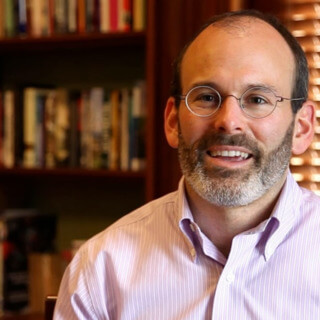
My name is Dr.
Judd Brewer.
I'm an addiction psychiatrist and a neuroscientist.
Today we'll explore how to work with worry and overthinking,
Why the relationship we have with our thoughts leads to heightened levels of stress,
And how to break free from this cycle.
Let's start by defining some terms.
Stress,
Anxiety,
Worry,
And overthinking have a lot in common.
They can feel pretty similar.
Oh,
I'm stressed.
I'm anxious.
But it's important to also know how they're different so we can see how they relate to each other.
Stress is a state of mental strain or tension that results from challenging or demanding circumstances.
We feel stressed because of something.
For example,
We feel stressed because of an upcoming deadline for a project or a presentation.
Or we feel stressed about a meeting with someone like our boss or a neighbor that we aren't on good terms with.
And we can even get stressed by simply looking at our to-do list and feeling like we'll never get it done.
Stress tends to go away when whatever caused it is over.
You've given the presentation or you've had the meeting that made you stressed.
The definition of anxiety is a feeling of nervousness or unease,
Typically about something in the future or something with an uncertain outcome.
Unlike stress,
Anxiety can come out of the blue,
Like feeling anxious when you first wake up in the morning.
Overthinking is defined as thinking about something too much or for too long.
And worry is defined as allowing one's mind to dwell on difficulty or troubles.
Notice how overthinking and worrying are pretty related.
Often we overthink something and before we know it we're worrying about it.
Worrying then makes us feel stressed or anxious.
So how do all of these fit together?
And what gets us started and then stuck in a stress or anxiety cycle?
Let's start with our brains.
Our brains don't like uncertainty.
Put another way,
Things are always changing in the world and our brains needed to evolve a mechanism to deal with this uncertainty so that we can learn whether something that happens in an unexpected way is just different or dangerous.
For example,
Let's say our ancient ancestors are safely in their cave at night,
But suddenly they hear a rustling sound outside that's unfamiliar.
Not knowing if it's a tiger or simply one of their relatives going to the bathroom puts their brain on high alert.
That uncertainty drives them to go see what it is,
So they know whether to run away or protect themselves if it's a predator looking for dinner,
Or to ask their family member to please let them know the next time they're going outside so they don't accidentally attack them.
Think of it this way.
When our stomach is empty,
A neurotransmitter called dopamine fires in our brain,
Urging us to go get food.
Dopamine is a motivation molecule.
When we're hungry or we think about our favorite treat,
That craving urges us into action.
It motivates us to move.
Information to our brain is like food to our stomach.
When we're uncertain about something,
That rustling in the bushes for example,
Dopamine also fires,
Telling us to go get that information.
Just like our stomach settles down and stops rumbling when we eat,
Once we know the answer or feel more certain about something,
Our brain also calms down.
Oh,
That's my family member making that noise in the kitchen.
That's not an intruder.
I can go back to sleep.
So how does this fear-based survival mechanism flip into overthinking and anxiety,
Which aren't actually that good for us?
Well,
Uncertainty can lead to fear in the present moment.
That drives us to act right now.
Fear plus uncertainty about the future can lead to anxiety.
Remember,
Anxiety is all about the future.
This is when overthinking and worrying come in.
Let's use relationships as an example.
Let's say you're on the phone talking to a co-worker,
A family member,
Or a romantic partner.
You're having a relatively intense conversation about something that's important.
Suddenly that other person's really quiet.
You ask,
Is everything okay?
And they say,
Oh yeah,
Everything's fine,
But their tone of voice suggests otherwise.
Then they say,
I have to go,
And they end the call quickly.
What are you left with?
A whole lot of uncertainty.
For many of us,
Our brains start wondering,
Was it something I said or did?
We start dissecting that conversation or the situation,
And before we know it,
We're spending the rest of the day overthinking.
We might start worrying about the person.
Are they okay?
We might start worrying about our relationship.
Are we okay?
As our brains start to spin out into worry and dread.
Often our brains are really good at coming with all of the worst case scenarios,
And we start dwelling on them.
This is how overthinking and worrying make us anxious.
The mental behavior of worrying feeds back and makes us feel worried.
Being uneasy or worried is the hallmark of anxiety.
Can you now see how fear plus uncertainty equals anxiety?
If we could resolve that anxiety,
For example,
Know that the person we were just on the phone with is okay,
Or that our relationship is okay,
Or at least we know what's going on,
We could resolve that uncertainty in the present moment.
Then the fear goes away.
When we can't resolve the uncertainty,
That fear spins into the future.
Oh no,
What will happen?
And we can't act to make that future uncertainty go away because it's in the future.
So anxiety is basically a fear of the future.
We worry,
Which makes us anxious,
Which can then trigger more worry.
It becomes a vicious cycle where the more we get stuck in the habit of worrying,
The more anxious we get.
Yes,
Anxiety can become a habit.
I wrote a whole book on this.
So knowing that worry and anxiety can become a habit,
What can we do?
We have to know how our brains work in order to work with our brains and even put them to work for us.
So now hopefully you have a sense of how your brain might get triggered into an overthinking,
A worry,
Or an anxiety spiral.
The key thing to remember is that uncertainty prompts us into action.
Our brain is trying to reduce that uncertainty.
And to do this,
Our brain shifts into information gathering and or problem solving mode.
If we can't solve the problem or reduce that uncertainty in the present moment,
Our brain can get stuck in an overthinking or worry loop.
Overthinking doesn't change the facts or the amount of information that we have.
But overthinking or worrying can make us feel like we're in control,
We're on top of it,
Or we're at least doing something.
There's a joke that you might have heard.
It goes like this.
What's the definition of insanity?
Here's the answer.
Doing the same thing over and over again and expecting a different result.
Worrying might fit into this category.
We keep worrying about something,
But the only result that comes from it is more worrying,
More anxiety.
As a psychiatrist,
I'd have to say that sounds pretty insane to me.
So let's explore how to step out of the insanity of overthinking and worrying.
I'll walk you through three simple steps that you can use anytime you find yourself in one of these loops.
Step one,
Map it out.
Any habit has three essential elements,
A trigger,
A behavior,
And a result.
We'll make this even simpler.
Because it can be hard to identify triggers or cues,
And triggers aren't what drive habits in the first place,
Let's focus on the behavior and the result instead.
With any habit,
You have to identify when you're in it or you can't step out of it.
That's what this mapping process helps with.
It helps you identify when you're caught in an overthinking or worrying habit loop.
And to do this,
All you have to do is be on the lookout for when you start overthinking or worrying.
When you start getting caught up in one of these mental behaviors,
Simply identify or name it.
Oh,
I'm overthinking.
Oh,
I'm worrying.
That's it.
If you're consciously aware that you're doing it,
You're not in autopilot mode anymore.
You're aware of what's happening.
Step two,
Once you're aware of the overthinking or worrying,
Now simply check to see what the result of the behavior is.
What happens when you overthink or worry?
Does it solve a problem?
Does it keep a loved one safe?
Does it make that uncertainty go away?
No,
It doesn't.
If it did,
You wouldn't be worrying because the problem would be solved or you would know the answer to whatever the question is.
So what is the result of worrying?
Almost all of the patients in my clinic tell me that worrying makes them anxious.
Yes,
In an ironic twist or possible evolutionary bottleneck,
These helpful functions of fear and planning get squashed together to create anxiety.
Fear helps us reduce uncertainty in the present moment,
And planning helps us plan for the future.
But anxiety,
Which is basically fear of the future,
Can trigger us to worry,
Which feeds back and triggers more anxiety.
And the only way our brains change unhelpful habits is to see how they don't actually serve us.
In other words,
We have to see and feel how unrewarding a behavior is before we'll change it.
For example,
My lab did a study with an app called Eat Right Now where we could have people pay attention as they overate.
People who had been overeating for years started to change this behavior when we brought in a mindfulness exercise to have them pay attention to the results of overeating.
It doesn't take long to feel how unrewarding overeating is when we pay attention.
In fact,
In the study,
It only took 10 to 15 times of people paying attention when they overate for that reward value to drop below zero.
And that's when they shifted their behavior.
They began to stop overeating simply by paying attention.
So that's what step two is all about.
Seeing and feeling exactly how rewarding or unrewarding overthinking or worrying is.
You can do this by recognizing when you're worrying,
That's step one,
And then asking a simple question.
What am I getting from this?
That's step two.
When asking,
What am I getting from this?
It's really important to pay careful attention to your embodied experience.
In other words,
What does worrying feel like?
Don't get stuck in your head.
Focus on your body.
That's where all of the action is.
Your feeling body is much stronger than your thinking brain.
So see how curious you can get when you ask that question so that you can really see all of the results of overthinking or worrying.
Most people notice pretty quickly how anxiety-provoking worrying is or that it doesn't get them anything but anxiety and exhaustion.
And then they start wondering why their brain would do this to them.
If you remember from earlier,
This is probably an evolutionary bottleneck.
Fear is helpful.
Planning for the future is helpful.
So our brain thinks,
Oh,
Two good things.
Let's put them together.
Fear of the future.
Remember that fear of the future doesn't end up being helpful because it's in the future.
And now when you ask,
What am I getting from this?
You can see that in your own direct experience.
You have to directly experience how overthinking and worrying don't serve you and how painful they are for you to become disenchanted with them.
Only then can you begin to break free of these cycles.
Ready for step three?
Once you experience how unrewarding overthinking and worrying are,
Once you begin to become disenchanted with them,
You can then step out of the cycles.
How can you do this?
Well,
If your brain is set up to do things that are more rewarding,
Find your brain something better,
Something more rewarding.
I call this finding the bigger,
Better offer.
When faced with uncertainty,
Especially with something in the future that you can't get information for or make the uncertainty go away right now,
You now know that worrying doesn't get you anything.
So what can you do instead?
Have you ever explored wondering instead of worrying?
In other words,
What if you train yourself to be curious in the face of uncertainty instead of worrying?
What feels better,
Being curious or worrying?
To our brains,
It's a no-brainer.
Curiosity feels better.
One of the simplest ways that I've found to help people tap into their natural capacity to be curious is to check their attitude or tone of voice.
This could be in our head or how we're speaking out loud.
What does worrying sound like?
Oh no,
This could happen,
That could happen,
Oh no.
On the other hand,
What does curiosity sound like?
Oh,
Maybe it could be this,
Oh,
Maybe it could be that.
Can you hear the difference between worrying and wondering?
Oh no,
Oh,
Oh no,
Oh,
Versus oh.
That's the sound of curiosity.
That's right,
Curiosity helps us wonder instead of worrying.
Because wondering feels better than worrying,
We can train ourselves to shift our habitual way of approaching uncertainty.
At first,
Choosing curiosity can be scary because it isn't what we're used to doing.
And change itself can be scary.
But as Brene Brown put it,
Choosing to be curious is choosing to be vulnerable because it requires us to surrender to uncertainty.
But whether we worry or wonder,
The uncertainty is still there.
So we might as well explore stepping out of worry habit loops into wondering what might happen.
Opening to,
Surrendering to,
And even embracing the uncertainty.
Once we get the hang of awakening our curiosity,
We can leave our worries behind and move forward into a life of being more and more curious.
As the author and poet James Stevens put it,
Curiosity will conquer fear even more than bravery will.
So that's it.
Three steps that can help you move from worrying to wonder.
Step one,
Identifying when you're in a habit of worrying or overthinking.
Step two,
Asking what am I getting from this so you can see how worrying isn't serving you.
Step three,
Flipping that tone of voice from oh no to oh so that you can learn to relate to uncertainty in a different way.
Discover how worry saps your strength and makes you anxious while curiosity gives you strength to face and be with uncertainty one moment at a time.
So try these three steps out today.
See if you can leave overthinking and worrying behind and build curiosity and wonder as new habits.
And share your discoveries in the discussion forum.
For example,
What situations lead to overthinking and worrying?
What do you get from worrying?
And what's it like to get curious?