Ted Talks are recorded live at the TED conference and partner events.
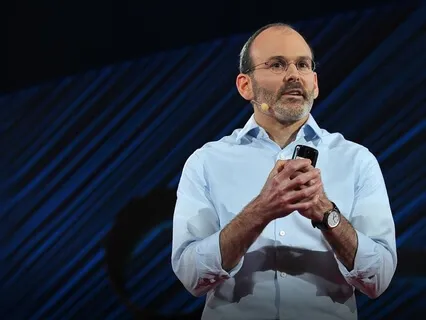
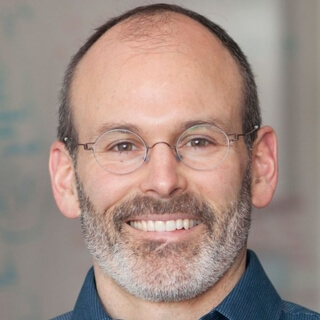
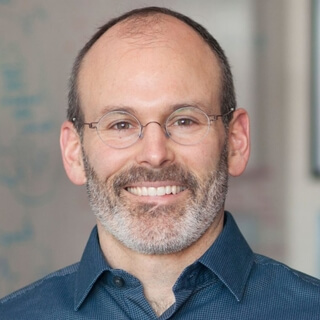
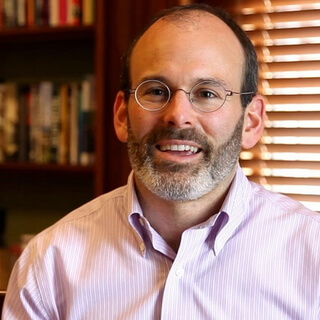
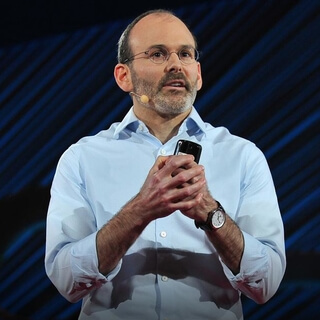
This episode features mindful addiction doctor Judson Brewer.
Here's Judson Brewer.
(*Applause*) When I was first learning to meditate,
The instruction was to simply pay attention to my breath,
And when my mind wanted,
To bring it back.
It sounded simple enough,
But it was also very difficult to do.
And I was very,
Very frustrated.
I was sitting on my chair,
Sitting on my chair,
And I was thinking,
I want to bring it back.
It sounded simple enough,
Yet I'd sit on these silent retreats,
Sweating through T-shirts in the middle of winter.
I'd take naps every chance I got because it was really hard work.
Actually,
It was exhausting.
The instruction was simple enough,
But I was missing something really important.
So why is it so hard to pay attention?
Why is it so hard to pay attention to something,
Like maybe this talk?
At some point,
About half of us will drift off into a daydream or have this urge to check our Twitter feed.
So what's going on here?
It turns out that we're fighting one of the most evolutionarily conserved learning processes currently known in science,
One that's conserved back to the most basic nervous systems known to man.
This reward-based learning process is called positive and negative reinforcement and basically goes like this.
We see some food that looks good.
Our brain says,
Calories,
Survival.
We eat the food,
We taste it,
It tastes good.
And especially with sugar,
Our body sends a signal to our brain that says,
Remember what you're eating and where you found it.
We lay down this context-dependent memory and learn to repeat the process next time.
See food,
Eat food,
Feel good,
Repeat.
Trigger,
Behavior,
Reward.
Simple,
Right?
Well,
After a while,
Our creative brains say,
You know what,
You can use this for more than just remembering where food is.
You know,
Next time you feel bad,
Why don't you try eating something good so you'll feel better?
We thank our brains for the great idea,
Try this and quickly learn that if we eat chocolate or ice cream when we're mad or sad,
We feel better.
Same process,
Just a different trigger.
Instead of this hunger signal coming from our stomach,
This emotional signal,
Feeling sad,
Triggers that urge to eat.
Maybe in our teenage years,
We were a nerd at school,
And we see those rebel kids outside smoking,
We think,
Hey,
I want to be cool,
So we start smoking.
The Marlboro man wasn't a dork,
And that was no accident.
See cool,
Smoke to be cool,
Feel good,
Repeat.
Trigger,
Behavior,
Reward.
And each time we do this,
We learn to repeat the process,
And it becomes a habit.
So later,
Feeling stressed out triggers that urge to smoke a cigarette or to eat something sweet.
Now with these same brain processes,
We've gone from learning to survive to literally killing ourselves with these habits.
Obesity and smoking are among the leading preventable causes of morbidity and mortality in the world.
So back to my breath.
What if instead of fighting our brains or trying to force ourselves to pay attention,
We instead tapped into this natural reward-based learning process but added a twist?
What if instead we just got really curious about what was happening in our momentary experience?
I'll give you an example.
In my lab,
We studied whether mindfulness training could help people quit smoking.
Now,
Just like trying to force myself to pay attention to my breath,
They could try to force themselves to quit smoking.
And the majority of them had tried this before and failed,
On average,
Six times.
Now with mindfulness training,
We dropped a bit about forcing and instead focused on being curious.
In fact,
We even told them to smoke.
What?
We said,
Go ahead and smoke.
Just be really curious about what it's like when you do.
And what did they notice?
Well,
Here's an example from one of our smokers.
She said,
Mindful smoking smells like stinky cheese and tastes like chemicals.
Yuck!
Now,
She knew cognitively that smoking was bad for her.
That's why she joined our program.
What she discovered just by being curiously aware when she smoked was that smoking tastes like shit.
(*Laughter*) Now,
She moved from knowledge to wisdom.
She moved from knowing in her head that smoking was bad for her to knowing it in her bones.
And this spell of smoking was broken.
She started to become disenchanted with her behavior.
Now,
The prefrontal cortex,
That youngest part of our brain from an evolutionary perspective,
It understands on an intellectual level that we shouldn't smoke.
And it tries its hardest to help us change our behavior,
To help us stop smoking,
To help us stop eating that second,
That third,
That fourth coat.
That third,
That fourth cookie.
We call this cognitive control.
We're using cognition to control our behavior.
Unfortunately,
This is also the first part of our brain that goes offline when we get stressed out,
Which isn't that helpful.
Now,
We can all relate to this in our own experience.
We're much more likely to do things like yell at our spouse or kids when we're stressed out or tired,
Even though we know it's not going to be helpful.
We just can't help ourselves.
Now,
When the prefrontal cortex goes offline,
We fall back into our old habits,
Which is why this disenchantment is so important.
Seeing what we get from our habits helps us understand them in a deeper level,
To know when they're our bones,
So we don't have to force ourselves to hold back or restrain ourselves from behavior.
We're just less interested in doing it in the first place.
And this is what mindfulness is all about.
Seeing really clearly what we get when we get caught up in our behaviors,
Becoming disenchanted on a visceral level,
And from this disenchanted stance,
Naturally letting go.
This isn't to say that,
Poof,
Magically we quit smoking,
But over time,
As we learn to see more and more clearly the results of our actions,
We let go of old habits and form new ones.
The paradox here is that mindfulness is just about being really interested and getting close and personal with what's actually happening in our bodies and minds from moment to moment.
This willingness to turn toward our experience rather than trying to make unpleasant cravings go away as quickly as possible.
And this willingness to turn toward our experience is supported by curiosity,
Which is naturally rewarding.
What does curiosity feel like?
It feels good.
And what happens when we get curious?
We start to notice that cravings are simply made up of body sensations.
Oh,
There's tightness,
There's tension,
There's restlessness,
And that these body sensations come and go.
These are bite-sized pieces of experiences that we can manage from moment to moment rather than getting clobbered by this huge,
Scary craving that we choke on.
In other words,
When we get curious,
We step out of our old fear-based reactive habit patterns and we step into being.
We become this inner scientist where we're eagerly awaiting that next data point.
Now,
This might sound too simplistic,
Too simplistic to affect behavior,
But in one study,
We found that mindfulness training was twice as good as gold standard therapy at helping people quit smoking.
So it actually works.
And when we studied the brains of experienced meditators,
We found that parts of a neural network of self-referential processing called the default-mode network were at play.
Now,
One current hypothesis is that a region of this network,
Called the posterior cingulate cortex,
Is activated not necessarily by craving itself,
But when we get caught up in it,
When we get sucked in and it takes us for a ride.
In contrast,
When we let go,
Step out of the process just by being curiously aware of what's happening,
This same brain region quiets down.
Now we're testing app and online-based mindfulness training programs that target these core mechanisms and ironically use the same technology that's driving us to distraction to help us step out of our unhealthy habit patterns of smoking,
Of stress-eating and other addictive behaviors.
Now remember that bit about context-dependent memory?
We can deliver these tools to people's fingertips in the context that matters most,
So we can help them tap into their inherent capacity to be curiously aware right when that urge to smoke or stress-eat or whatever arises.
So if you don't smoke or stress-eat,
Maybe the next time you feel this urge to check your email when you're bored or you're trying to distract yourself from work,
Or maybe to compulsively respond to that text message when you're driving,
See if you can tap into this natural capacity,
Just be curiously aware of what's happening in your body and mind in that moment.
It will just be another chance to perpetuate one of our endless and exhaustive habit loops.
Or step out of it.
Instead of see text message,
Compulsively text back,
Feel a little bit better,
Notice the urge,
Get curious,
Feel the joy of letting go and repeat.
Thank you.
Thank you.
Thank you.
Thank you.
That was Judson Brewer,
Recorded at TED Med 2015 in Palm Springs,
California,
November 2015.
For more information on TED,
Visit TED.
Com.