Hi everyone,
It's Judy Cohen and this is Wake Up Call 375.
I hope you're doing well.
I hope you are enjoying this December season.
Last week I began talking about the perfection of meditation,
Which is the fifth of the six Zen paramitas.
And so I'll continue with that today.
And the question last week was whether it's really necessary to meditate and the answer is yes.
And I know how tempting it is,
Because I want to do this too,
To take a walk or be lying in bed and paying attention to my breath or gardening or whatever and call that my meditation.
And it is meditative,
But there's this real benefit,
A different benefit,
To meditation itself,
To sitting in silence that just isn't available in the portable practices or the implied practices.
And I know I'm always talking about formal or formal versus portable practices or formal and portable practices,
But I think that really the portable practices are following from our formal practice.
So there are two main kinds of meditation in the traditions that I've studied.
And one is a meditation to cultivate a calm and steady mind and heart.
It's sometimes called shamatha practice.
And whenever we're paying attention to the breath,
Then noticing when the mind wanders off coming back to the breath,
That single focused endeavor,
That's shamatha practice.
I love what Pam Weiss says.
She's a meditation teacher and also runs a company called Appropriate Response,
Which brings mindfulness into the corporate world.
And about shamatha practice,
She says,
You have to calm down before you can wake up.
And this is really true for me.
When my mind is racing around and bouncing off of ideas or full of aversion or grasping,
Not calm,
Then it's really hard for me to pay attention to what's going on internally and to pay attention to the world.
I can't really look in at my own mind-body system and tune my instrument because there's too much static and I can't really look up and other humans,
Other beings at the world and be of much use because there's too much static.
So I agree with Pam.
I think we have to calm down before we can wake up.
And calming down involves this settling,
Settling the body into the present moment and doing that with an anchor like the breath.
But we can do that with other anchors as well.
We can do that using the sensations in the body.
So body scan,
We can do that with sound.
In some traditions,
Shamatha is practiced by focusing on a candle or a photograph of a guru or some other object.
It's also practiced by chanting.
And there are various other practices.
I don't even know about or haven't ever done.
So we never actually perfect this element of meditation.
There's no such thing as a perfect meditator as far as I know.
What there are,
Are people like us who make this deep unshakable commitment to calming down,
To finding our seat,
Locating our anchor,
Sitting still for 10 minutes,
30 minutes or an hour.
Doing it every day,
Training the mind-body system to calm down by placing our attention on an anchor and when the attention wanders,
Coming back with kindness,
With bemusement,
But also with seriousness and doing that again and again and again.
There are deeper states of concentration that can be achieved.
And on a long retreat,
I was in one once,
One of the preliminary deeper states,
And it was pretty delicious,
But they're not usually available to people who aren't on longer retreats.
And even everyday states of concentration,
Of paying attention moment to moment,
Are pretty delicious,
I think.
So we can take it further,
But we can also simply dedicate ourselves to the ordinary,
Which is also an extraordinary practice of cultivating a calm,
Steady mind.
And to me,
This is the perfection of meditation.
Once we've done that,
And I don't mean become perfect meditators,
But begun living into the perfection of meditation,
Then what naturally arises is the second type of meditation that I've studied in my tradition,
Which is insight meditation.
And the Pali word for this is vipassana.
Samatha is the Pali word for calling or concentration meditation,
And for insight meditation,
Vipassana.
And this is what Pam Weiss means when she talks about waking up.
And waking up in this context,
As far as I understand it,
Doesn't mean being woke in the political or social justice sense,
But I'm not probably a very woke person,
So maybe that's not right.
But what I'm using the word to mean is waking up to the way the world really is,
From a classic meditative perspective,
Waking up to the three characteristics.
And those three characteristics are,
In Pali,
Dukkha,
Anicca,
And anattatva,
Or actoriness,
Impermanence,
And not-self.
So impermanence,
I sometimes consider the bad news,
Especially because we ourselves are not excluded from the calculation,
Meaning we're born,
We live our lives,
Then we die.
And we all know this intellectually,
But we maybe don't know it,
And then one day,
Maybe our minds are calm and clear enough that we do.
So I was in the hospital last week,
I just had a routine procedure,
But then I spiked a fever so I had to be on IV antibiotics for a minute,
And I'm fine now.
But while I was there,
When I wound up being nethered and poked and assessed,
I was spending some time meditating on impermanence,
And considering this body and how very attached I am to it,
And realizing it's not going to last forever.
So yeah,
It's a good insight to work with,
And not an easy one in my experience,
But important.
And then the next insight,
Which is another of the three characteristics,
Dukkha,
Is that everything is just a little bit unsatisfactory.
And so we have suffering in our lives because things are unsatisfactory.
It is unsatisfactory to be a human.
And you know,
You can be very happy,
Be in a joyful relationship,
Love your job,
Have terrific kids,
Or no kids,
You could have had a happy childhood,
And still,
In this moment,
The temperature is a little too cold,
Or a little too hot,
Or the traffic is a little too much,
Or your partner forgot to pick up the bread,
Or you're late and there's no way to get to where you're going on time.
And that doesn't even take into account the bigger elements of unsatisfactoriness.
Everything we have will someday be lost or broken,
That the people we love,
We will lose them.
So as humans,
We experience unsatisfactoriness,
Dukkha,
And it's just a fundamental characteristic of being human.
And so vipassana practice is gaining insight into that.
And then another characteristic,
You could call it the third characteristic,
But they're not in any particular order,
Or insight,
You could call it,
Is that this self that we consider so solid,
So durable,
And so definable,
Is just a complete illusion.
You know,
There is no solid self.
We're changing all the time.
And this is anatta in the Pali.
So these are the meditation practices,
And just to say one thing about mindfulness,
Mindfulness takes all of this into account.
It takes shamatha,
The calm,
Concentrated mind,
As its foundation,
And then it remembers impermanence,
Not-self,
And unsatisfactoriness as you could fabric.
And then it gives us this amazing gift,
Which is the ability to be with whatever is arising moment after moment,
Not concentrating so much as attending,
Not noticing aha insights so much as taking the three characteristics as part of life.
So this is the wisdom of mindfulness,
And it's compassion,
Is that when we are calm,
When we see clearly,
We can remember that we're all in this together.
We're not different.
We're not separate.
And in this way,
Mindfulness evokes compassion,
First as a kind of relief,
And then as this great delight.
Great delight.
Okay,
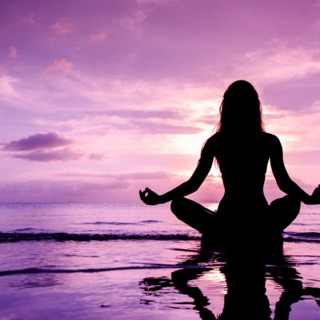
So let's sit.
So we'll do some shamatha practice,
Yeah?
Either finding a comfortable posture that is also upright and dignified,
And maybe turning the corners of the mouth up into a small smile,
Because there's real joy in these practices.
And then giving yourself this gift of practicing,
Yeah?
And then finding your anchor,
So this sit might be the breath,
Might be the ambient sounds in your environment,
Maybe the sensations in the body.
We're sitting.
And the invitation is just to allow the practice to work its own magic.
Just coming back to the object of your attention,
To your anchor,
Whenever the mind wanders off,
And just relapsing in that very grounded place.
Okay.
You you you you you and remembering when the mind wanders out to come back with a lot of kindness a lot of joy for that moment of noticing that you've wandered off and perfect now time to come back you you you you seeing how the mind can be so easily seduced away by thoughts planning and worry all the things not a problem not making that a problem just coming back the breath the body is you you you you thank you everyone for being on the wake up call lovely to see you have a really nice thursday and a nice weekend and have a beautiful solstice and i'll see you just after that next question