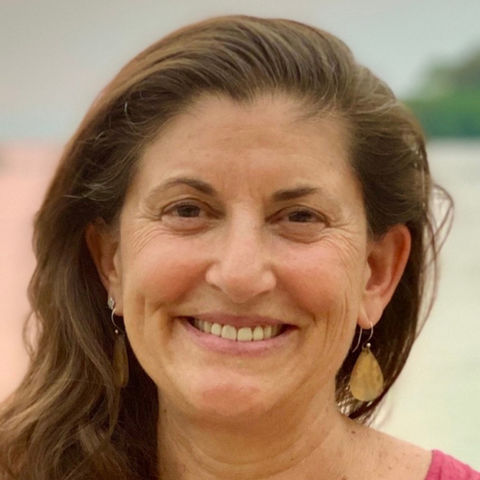
Hey everybody,
It's Judy Cohen and this is Wake Up Call 518.
It's really nice to see you all.
So we've been meandering down the Noble Eightfold Path and the world is meandering off the path.
So let's see what we can do here today to ground ourselves on the path and maybe think of some ways to support others in doing the same.
So we've been investigating the bucket called SELA,
Which is the three ethical steps of the path.
And the first of those three is wise communication,
We've looked at that.
And now we're in the middle of the second one,
Which is wise action.
And wise action breaks down into doing no harm and not taking anything not freely offered,
Which we looked at,
Although I'm going to circle back to not taking anything not freely offered just for a minute.
And then it includes don't misuse sexuality,
Don't communicate unskillfully and don't use substances to cloud the mind.
So we're going to look at not misusing sexuality.
I have some questions about what that means and how broadly we can imagine it.
But first I want to share something from yesterday.
So I was in class exploring this list with the students and a group of students were working with don't take what's not freely offered.
And they said,
You know,
The most important thing for us is time.
And I hadn't thought about that,
But it's so interesting because in the law,
So much is about time.
And yeah,
In some law jobs,
Time is money.
It's almost a universal code,
Even if that's true,
That we don't talk about time.
If somebody asks us to do something,
Whether it's a partner or a supervisor or a client or a colleague,
We just do it.
And to do it,
We give up our time.
And then we miss stuff,
We miss social stuff,
Family stuff,
Meals,
Sleep,
Personal time if we have it,
You know,
Time to exercise,
Time to be outside,
Time to meditate.
So is that time freely offered?
Or are others taking it?
I mean,
We may be making tons of money or not.
Or are we stealing our own time?
Right?
All those nights I worked until 3 a.
M.
,
Was I freely offering that?
Or was I doing it because I knew the client would find a lawyer who would if I wouldn't?
100% the latter,
100%.
And when we ask others to do work for us,
Junior lawyers,
Support staff,
Are we taking something that's freely offered?
Does overtime matter?
Do they feel free to say no?
I just think this is food for thought,
You know,
And leave it to a bunch of 20-somethings to point it out.
All right,
So not misusing sexuality,
Not misusing sexuality.
When we frame it as a kind of in-the-law question,
It could be simply about not bringing sexuality into spaces where we're working to protect others,
Right?
We want to protect those less empowered from being taken advantage of.
We want to protect those who don't want attention from being given it,
Those who are uncomfortable with sexuality in the workplace from having to deal with it,
You know,
Many other things.
And the people involved,
If they're committed elsewhere,
We want to protect the family and children,
Right?
So these are the things that we can sort of think about on an individual level and on an interpersonal level.
But then can we widen the lens?
So if we zoom out a little,
You know,
Maybe what we're doing is examining biases around sexuality and gender identity,
Ours,
Those of our firm or organization or school.
I mean,
It is a patriarchal profession and world after all,
Right?
So on a personal level,
You know,
Starting with our own hearts,
What do we believe about our own competence and effectiveness as women,
As men,
As queer,
As transgender,
Gender neutral,
Non-binary,
Two-spirit,
Other identified people?
What do we believe about the competency and effectiveness of our colleagues who identify differently from the way we do?
Or what about those who identify the same way we do,
Right?
So just in our hearts,
On an interpersonal level,
You know,
How do we treat one another,
Which is going to be informed at least,
If not based on those beliefs,
Right?
So are we causing harm with what we say or do with our gestures,
With our beliefs,
With our attitudes?
And then from a systems perspective,
You know,
What sexuality and gender-based policies and understandings do we vote for?
Do we support?
Do we implement?
Or do we not speak up for?
Who do we not stand beside and support?
Not work as hard as we can to create change for.
So this is,
You know,
Still for me,
Kind of a narrow lens.
And then,
You know,
This is what's coming up for me in the wider lens.
How does this,
You know,
This is so fundamental,
Right?
Because as humans,
You know,
Our gender identity,
Our sexuality is so fundamental.
How does this affect the way we treat others in general?
In other words,
If we're in the habit of being biased,
And from what I know about implicit bias,
We all are,
You know,
Whether it's based on sexuality or gender identity or race or religion or politics,
Right?
And politics is something that we might even feel like we should be biased about right now,
Which is something to pause and consider,
Right?
How is all of this bias,
Which is really just hate,
Right?
Let's just call it what it is.
It's just hate.
I mean,
It's in that big bucket of hate,
Right?
How's it affecting our hearts?
And how's it affecting our interactions?
And how's it affecting the system,
The systems that we work in and live in,
You know?
So that's the rhetorical question.
But actually,
We know how it's affecting things.
Renee Good,
Alex Pratty,
The whole Minneapolis area,
Ilhan Omar,
You know,
And that's just right now,
These past few weeks.
So,
So what do we do?
On a personal level,
We can start by looking for,
Right,
And then looking at our own biases,
So we can heal them.
I mean,
We have to start at home,
Right here at home in the heart.
And I mean,
There's practical things we can do.
We can take the Harvard implicit bias tests.
I don't know if everybody here has taken them or not,
But we all should be taking them.
They're online.
They're free.
Well,
I hope they're still online.
I actually probably should have checked.
They're still there.
I hope they're still there.
They're free.
They're really revealing,
You know,
To see what might be going on,
So we can develop the capacity to sit,
You know,
Sit with what we see and lovingly heal it.
And just an FYI,
For all of us who are longtime mindfulness practitioners,
Which is all of us,
I noticed that I'm like,
When I take those tests,
I use my mindfulness practice to like skew so that it's not my automatic response.
It's my mindful response.
And I don't know if that's useful.
So just an FYI,
Just interesting.
So we can do that,
You know,
And we can do other things,
Take,
You know,
Study in other ways to find out,
Well,
What are our biases?
And then we can practice,
Right?
So we can recommit to our meta practice,
Recommit to our compassion practice,
To the practices of patience and generosity,
You know,
To listening to others and to caring about others,
Including everyone,
You know,
To respect and to self-respect also,
We can recommit to that.
If I'm not committed to that,
Then I'm relying on my own native neural pathways,
Which are carved over 66 years of living in these times in this country,
In my family,
Families,
Working for 40 years in the law,
Which gives me enough to roll up my sleeves and work as hard as I can to support our democracy and the rule of law.
But it doesn't give me enough to rely on that solidly points me away from bias and hate and towards abiding respect for others.
It doesn't do that,
But my practice does.
So,
You know,
Taking the time day in and day out to incline the mind towards respect,
Compassion and love,
It carves more skillful neural pathways.
I can see that happening and I'm sure you can too,
You know,
And without taking even a smidge of my edge,
You know,
Which is probably also hopefully also true for you.
And if it is,
It has the power,
If we choose to use it to change things,
You know,
For the better,
For the more respectful,
For the safer,
For ourselves,
Sure,
But for mostly also for those around us,
You know,
Especially for those who don't feel safe or empowered to create change.
Okay,
So let's sit.
I'm going to try a kind of a hybrid practice here.
So if it's resonant,
Wonderful.
And if it's not,
Then you can just let go of the words and sit and pay attention to the breath or whatever your practice is.
So it's called dipping into the power of respect and yeah,
Just find your comfortable posture for right now,
Posture that will support you and first checking in,
Stabilizing the mind and heart.
Just take a few breaths and really begin to tap into the goodness of your own heart.
Maybe put your hand on your heart if that's helpful.
I do that a lot these days.
And then maybe there's someone that you can call to mind who is different from you,
Thinks differently or believes different things about the world.
It might be someone who is behaving in inappropriate ways,
Unskillful ways,
But maybe not the worst person.
You know,
We can work up to this.
And just imagine that they are in front of you,
But that you're safe.
So you don't feel unsafe.
So maybe it's just their image,
Or maybe if that doesn't even feel safe,
Maybe it's just an imagination of them.
And then just say in your heart to them,
I see you.
You are wounded and flawed,
Just like me.
You are afraid and angry,
Just like me.
May your wounds heal,
Just like I want mine to.
May you accept your imperfections,
Just like I'm learning to do.
May your path lead to learning how to care for and respect yourself and others without exception.
And may mine lead that way as well.
And may we both orient our work and our lives and reorient when we go off course towards love.
Thank you,
Everybody,
For sitting all together.
It's really great to sit with you all.
I hope that was helpful or that you just let it go if it's not.
And yeah,
Be safe out there,
Everybody.
If you're back east or down south,
Stay warm.
And if you're coming into the MLTT cohort on Sunday,
Yay,
Welcome.
Can't wait to see you.