Hey everyone,
It's Judy Cohen and this is Wake Up Call 421.
Happy Holidays and Happy December 21st,
Which here in the Northern Hemisphere anyway is the Winter Solstice and the Southern Hemisphere of course the Summer Solstice.
I just heard from my dear friend and co-teacher Elisa Gray in the Mindfulness and Law Teacher Training who sent a beautiful Winter Solstice note out to her community explaining that the word solstice comes from the Latin word solstitium,
Or to stand still and that's exactly what I'd like to talk about today,
Standing still,
Sitting still,
Which doesn't necessarily come naturally,
This idea of sitting still,
This practice of sitting still,
Or at least it didn't come naturally for me.
So when I first started meditating,
I could barely sit still in meditation for five minutes and it's funny because I didn't have any trouble sitting still for other things,
I mean we all pretty much sit still for watching a movie or a show a lot longer than five minutes,
A lot longer than 30 minutes a lot of the time,
Or we sit at a table with a friend or we sit at our desk at our screen for a long time sitting still and in fact the problem for us lawyers is often not that we can't sit still for long enough but that we sit still for too long.
So it's actually not about sitting still per se,
It's about sitting still and being with our own experience,
So sitting still without distracting ourselves from our own experience.
And that's the thing that isn't necessarily something we know how to do or have any practice doing and especially in these super stimulated times,
Right?
We may not have ever done that before we sit down to meditate and even after we begin to meditate we might not really be meditating,
We might be just sitting quietly and engaging with our own active mind.
So I like the way Pema Chodron explains this in The Places That Scare You,
She says we really don't want to stay with the nakedness of our present experience,
It goes against the grain to stay present.
And this is definitely my experience.
But in mindfulness practice the instruction is to sit still and so many times I hear that instruction I'll be sitting and I have this urge,
It's so strong sometimes it feels insurmountable to move,
Change my posture,
Check my timer,
Just get up.
In meditation Pema says we discover our inherent restlessness and this can be so uncomfortable that we feel it's impossible to stay.
And I know that's true for me and it's not a problem unless we relate to it as a problem.
So the first instruction when we discover our inherent restlessness is to get interested in it,
To literally turn towards the sensations of restlessness in the body or jumpiness in the mind and observe.
And observe in a particular way without judging or assessing.
Even if it's the millionth restless moment in one's sitter,
Even if we feel like restlessness is our constant companion.
And we also want to do that with one more quality of mind or heart which is kindness.
We notice restlessness for the millionth time and we turn towards it for the millionth time and we say something to ourselves like,
It's fine my friend,
Restlessness is here again,
Welcome.
Restlessness in meditation can also be emblematic of an inability to sit still in our lives.
When I'm feeling restlessness in meditation it's a signal that I'm feeling restless in general.
Not wanting to stay with the nakedness of my present experience,
As Pema says,
On the cushion,
It's often an indication for me that I'd rather not be with the nakedness of my present experience of whatever is arising in my life.
And it shows up in a lot of ways.
I'm restless on the cushion then I might be restless on the road.
My patience with other drivers is low and restlessness takes the form of objecting to what I judge to be their imperfect driving.
Or when I'm restless on the cushion and I'm talking with someone,
Especially someone I disagree with or I'm in a dispute with,
My open-mindedness is low.
Restlessness takes the form of objecting to what I judge to be their unwise or dispassionate or imperfect ideas or positions.
When restlessness is happening and I'm just on my own,
I may be thinking about not having handled something as well as I could have or not having put in 110% or how I can do better.
And restlessness takes the form of objecting to my own imperfections,
In that case,
My own imperfections.
And you know,
I mean,
Of course,
We're lawyers in our profession,
There are times and places for objections.
But as a moment-to-moment or even a daily strategy,
Personally,
I find objecting to be pretty exhausting.
And it's,
You know,
Also counterproductive for me professionally and personally.
Sitting still in meditation with curiosity,
With kindness,
Even when restlessness is present or pervasive,
Is for me,
It's an antidote for living a life of persistent,
Exhausting objection to everything and everyone,
Even those tiny little objections.
And that includes objections to myself,
Or maybe it's especially objections to myself.
So sitting still in meditation translates directly,
Sitting still in meditation and turning towards my restlessness with kindness and compassion,
Translates directly to a greater ability to sit with difficulties in my life when it's safe and wise to do that.
And which if I'm being honest,
If it's traffic,
If it's opposing counsel,
Partner,
Friend,
Or my own wild mind,
It's safe most of the time.
And it also gives me the tools to know when it's not safe to sit still,
When it's wiser to walk away,
Not only when,
But how,
As an act of self-care and in a non-harming way.
Pema talks about four qualities of mind that we are cultivating when we sit still.
We are cultivating steadfastness,
The ability to be with our lives in a compassionate way,
To be with our own pain,
Sorrow,
Boredom,
Wild thoughts,
Difficult emotions without objection.
And she calls this loyalty to our own experience,
Which I just love.
Loyalty to our own experience.
We develop clear seeing,
Which means seeing our own imperfect habits and patterns,
Including our tendency to object to those or to turn away from those.
And seeing them can feel a bit cringy.
Seeing that we turn away from them can feel a bit cringy.
So clear seeing isn't for the faint of heart.
And like steadfastness,
Clear seeing to be useful has to be based in compassion.
So in other words,
Both require not only courage,
But also love.
We develop an experience of our own emotional distress,
Which doesn't sound like anything anybody would really want to sign up for,
But it's really important.
We stop chirping,
I'm good,
Every time we check in and we begin to acknowledge that this being human is not easy,
That while we certainly have joy and wonder in our lives,
We also experience difficulty and we learn to move towards it,
Towards our frustration,
Our anger,
Our sorrow with love instead of objecting to it or denying it.
And then we develop attention to the present moment,
Which for me actually supports all the rest.
It supports steadfastness,
It supports clear seeing,
And it supports my ability to turn towards and experience my own emotional distress.
And I love what Pema says about attention to the present moment.
She says it's that attending to our present moment,
Mind and body is a way of being tender towards self,
Towards other,
And towards the world.
So as we move towards the close of 2023 and begin to feel into an imagination of 2024,
I just want us,
I want to invite us all to sit still with an abundance of love to cultivate as much steadfastness and clear seeing and curiosity about our own emotional life,
Including the distressing parts,
And to practice with as much attention to the present moment as we can.
So let's do that right now.
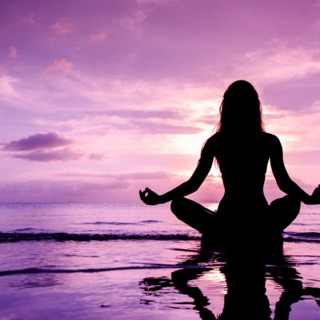
Let's sit.
So finding a comfortable posture,
Posture that supports you right now in the practice of stillness,
Right?
So how can you organize your body,
Settle into wherever you're sitting or standing or walking or lying down,
Or if you're in your car,
And how can you organize your body around being able to be still for the next,
Oh,
I don't know,
Eight or nine minutes?
And then however,
However you do that,
Come to stillness or invite yourself to come to stillness,
Right?
And bringing in that gentleness.
So not as an order,
But as an invitation.
And maybe the first thing you notice is that the breath is not still.
So if you're bringing the attention to the breath,
You'll notice that it's moving,
It's flowing in,
Flowing out.
More attention to the body,
You'll notice that the heart is beating.
So no matter how much stillness there is,
There is still movement.
And can we invite a kind of container of stillness?
And still there may not be stillness.
The body may be restless,
The mind may be agitated.
And so the invitation might be to turn towards the restlessness or the agitation.
And just see,
Oh,
Restlessness feels like this,
Agitation feels like this.
And then if you haven't already,
If it's not already your practice,
Which maybe it is,
Or I hope it is,
Bringing in that love,
That compassion,
That this is just,
This is just how the mind is,
This is just how the body is.
And being really,
Well,
Tolerant as a baseline,
But loving,
Loving towards yourself and towards whatever your experience is.
And if the mind has wandered,
Coming back to the practice of just being present,
Sitting still,
Or standing still,
Lying still.
And then maybe for the last minute of our sit together,
Kind of opening up to the possibility of bringing stillness with you into your day,
Into the weekend,
And any family gatherings,
Friends gatherings,
Celebrations that you may be heading towards,
You know,
How can stillness support you and support the people that you love?
Thanks everyone for being on the wake up call today.
It's lovely to see you.
I hope you find some coziness and safety and joy for tonight's long,
Long night.
If you're up here in the Northern Hemisphere,
And I hope you enjoyed the long day if you're down South,
And I will see you next week for the last wake up call of 2023.
Take care and Merry Christmas to those of you who are celebrating.