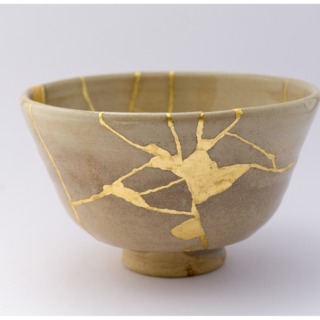
Hey everyone,
It's Judy Cohen and this is Wake Up Call 439.
In her final few paragraphs of Chapter 17 of The Places That Scare You,
Pema Chodron talks about the last two perfections of mind from the Zen tradition,
Which are meditation and wisdom.
And she essentially says meditation makes wisdom available.
She refrains the three-fold purity practice,
Which I mentioned on the last Wake Up Call.
No big deal about the doer,
No big deal about the action,
No big deal about the result.
And she does it in slightly different language.
She says,
When we sit down to meditate,
The practice is to leave behind the idea of the perfect meditator,
The ideal meditation,
And preconceived results,
And train in simply being present.
We open ourselves completely to the pain and pleasure of our life.
Then because we see our thoughts and emotions with compassion,
We stop struggling against ourselves.
In this way,
The wisdom we were blocking becomes available.
For me,
It's not easy to sit down to meditate and leave behind the idea of the perfect meditator.
There's so much perfectionism inside this mind and heart,
So much striving to achieve that is really alive and well.
I mean,
For 50 years,
Or maybe for 60 years,
If I go back to kindergarten,
I took in the message from my parents,
From society,
That I need to be perfect.
I took it in,
And I believed it.
Being a lawyer only reinforced that belief because perfectionism is really one of our highest values.
Throughout law school,
I really believed I had to understand everything perfectly.
I had to read every case.
I had to grok its meaning.
I had to articulate the party's positions and motivations and arguments,
And why each was reasonable and not.
Clearly understand the ruling,
The dissent,
Be able to say the meaning of the case in the larger context of whatever course it was assigned.
At the same time,
I knew that I didn't understand perfectly that there were things I didn't get or couldn't articulate.
And so it was perfectionism paired perfectly with knowing I was imperfect.
In my day in law school,
Professors called on us by our last names.
We were expected to stand,
State the case,
And then remain standing and be grilled or humiliated in front of the class.
And plenty of times,
We'd be kept standing the entire class,
Depending on how well we were able to spar with the teacher,
Or we would be permitted to sit only when some other student either jumped in or the teacher moved on with disgust,
You know.
And so there I sat,
Day after day,
For three years,
Knowing I didn't have perfect understanding,
Believing I was supposed to,
And living in terror of having to reveal my imperfection.
And for me,
And I don't know,
Maybe you can relate,
I hope you can't relate,
But maybe you can,
Perfectionism in the classroom context activated anxiety and worry and depression.
It kept me up at night.
It got me up at 5 a.
M.
It was this very shaky ground on which I stood,
Or which I fell over,
And the common ground for my classmates.
And then it accompanied me into practice and was the common ground for me and my colleagues,
Again,
Because it's so highly valued in our profession.
Everything we do has to be right,
From citations to punctuation to diction to winning,
And there's literally zero room for error.
There may occasionally be room for loss,
But never for error,
Right?
Sharon Salzberg,
The great meditation teacher,
Came to the Mindfulness in Law teacher training last Sunday.
And at one point,
She commented on,
Oh,
It must be so hard when we do our best,
But we end up having to turn in a brief six days late.
And I think everyone on the Zoom either smiled or startled,
Because every one of us knew,
Every lawyer knows,
It's not six days late that would cause us that anxiety.
It's the pain of turning in a brief or a memo six seconds late,
Right?
It's like that.
And then I ended up porting my perfectionism into my life outside the law as well,
Naturally,
You know,
Especially in those early days without a strong mindfulness practice,
Perfectionism snuck into my parenting,
My housekeeping,
My relationships.
You know,
None of which ever was or ever will be perfect.
When my daughter was little,
Actually,
She still is a prolific artist,
Quite good.
And her work was just glorious and messy and imperfect.
She'd draw over things and smudge things,
And it was,
I took so much joy in watching her do that and hoping that she would feel okay to be imperfect and hoping that I maybe hadn't transmitted perfectionism to the next generation,
But I'm not sure she'd say that I didn't at this point.
And then naturally,
Perfectionism translated onto the cushion,
Right?
So even though I've known from the very first time I sat down that I'm no perfect meditator,
I had an ongoing sense that I should be,
That someday I should be.
And this belief,
This formation in my mind and heart that perfectionism is the ideal,
It really got in the way of simply paying attention,
Which is all we're pointing at when we sit down.
For years,
I believed we sat down in order to,
So in order to feel better,
In order to be better.
And what I finally realized,
And it's not like a realization that's fully stuck and never changes,
But what I have some realization of,
I guess I should say,
Is that we don't do that at all.
We sit down in order to allow love to emerge,
Which is not different from allowing wisdom to emerge.
You know,
Pema says that we just train in simply being present and open completely to the pain and the pleasure of our lives.
And I think what she means is we let go of striving to be the perfect meditator or to experience the ideal meditation or to have that be the ideal,
If we do happen to experience or to achieve anything at all.
And we just notice the body breathing.
And when the attention wanders,
When we or our meditation becomes imperfect is another way of saying that,
Which for me happens a hundred times in a sit,
We can be glad about noticing the wandering,
Imperfect mind,
Right?
We can sit with the pain of wanting to do it right,
Wanting to be better,
Wanting to feel better.
And the love that reminds us that it isn't really possible to get anywhere because meditation is just like life and it's just like love and it's all imperfect.
And then once we see that,
Maybe we can also see that pretty much everyone has some perfectionism,
Some striving to feel better or be better.
And then once we see that and realize we're not alone,
Then compassion can arise,
Compassion in the form of love,
Love that remembers that everyone lives in terror of being called on in one way or another.
And once we see that,
Then maybe it's possible to follow Pema's instructions and stop struggling against ourselves.
And in my experience,
When we can stop struggling for perfection or against imperfection,
Then wisdom can emerge.
The moment when,
As Pema says,
The blockages created by our habits and prejudices start falling apart and the wisdom we were blocking becomes available.
The wisdom of knowing that imperfection,
Maybe not in terms of a filing deadline,
But certainly in terms of being human,
Is by design,
It's perfect.
So that's all I have for today,
Other than,
By the way,
In three years of law school,
I was never called on.
And I spent every night reading and every moment in class afraid that my imperfection would be revealed.
And it never was,
At least in that way,
It always was,
But it never was in that way.
And all that terror.
And I never got to see that I could just be just smart enough,
Just good enough.
I mean,
Of course,
That might not have been what I saw if that happened back then,
But it could have been a start.
Anyway,
Let's sit.
So finding whatever posture would support you today,
Whatever posture would support you in having an imperfect sit,
The posture that is good enough for right now,
And taking a few breaths to just help ground in the present moment,
Paying attention as each breath flows in and out of the body.
And then beginning to notice if the mind is steady or if the mind is agitated,
If the body is settled or restless,
If the heart is open or clenched.
Just noticing,
Noticing,
And also noticing if there's any element of wanting things to be different or better.
And if there is,
And it's possible to just let that go,
Just inviting yourself to let that go.
And when the mind wanders,
Notice if there's any sense of frustration or feeling like the mind should not be wandering,
And seeing if it's possible to bring in some gladness,
Just gladness for noticing,
And let go of all the rest,
Letting go of wanting to feel better or be better,
Just training in simply being present,
Remembering Pema's instruction to open completely to the pain and the pleasure of our life.
Thanks everyone for coming to the wake-up call,
Great to see you all,
Take good care,
Be safe out there,
I'll see you next Thursday,
We may be off next Thursday,
I'll send a note to everyone.