So welcome everyone,
This is Judy Cohen and this is Wake Up Call 470.
How are your holidays going?
I hope you're all doing well,
Not stressing too much,
Not worrying too much,
Enjoying the moments as you can.
So it's the ending of the year,
Happy solstice,
Happy almost solstice Saturday,
And we've been looking at the trainings of the five hindrances.
So desire,
Aversion,
Sloth and torpor,
Restlessness and worry and doubt,
And obviously not trying to cultivate those qualities,
But to recognize them and investigate them and let them attenuate and let them go so that we can recollect and return to a kind of clarity of mind,
Clarity of heart,
And ultimately we're training to appreciate them for the insight that they offer and also appreciate that mindfulness enables us to do that.
So I've shared a bunch of thoughts about desire and aversion and sloth and torpor and today I want to explore restlessness and worry.
And of the five hindrances,
This is the one that I'm most familiar with and we may be most familiar with,
Most fluent with in the legal profession and even in the world.
And you know,
For me,
The obvious reason is that there's plenty to worry about.
There's plenty to be restless with,
You know,
There are the holidays.
How will they go?
Will I feel happy?
Will I feel lonely?
So many variations of that.
There's the political situation or transition in the U.
S.
Elsewhere.
Things are uncertain in a lot of places.
There's the weather,
You know,
Completely unknown,
The climate.
And then the personal things like,
You know,
Will I make my hours for the year?
Will everyone else,
Will my syllabus be ready?
And how impacted are my students and how do I create space for that in my classroom?
That's where I'm at right now.
And then there are singular worries and elements of restlessness that we bump up against all the time.
And that's just off the cushion,
Right?
And then these hindrances of restlessness and worry,
Like all of the hindrances,
They also show up on the cushion.
The classic image for restlessness and worry is a mind like water whipped up by the wind,
Crashing waves,
Agitated and unclear.
And restlessness in the body shows up for me as kind of an unbridled energy coursing through the body.
So when I'm sitting on the cushion,
It feels like my body wants to get up or shoot up or move.
I can't settle and I want to scratch my nose instead of sitting with the sensation of the edge.
Or I want to fidget under the guise of correcting my posture or something like that.
And that's instead of paying attention to the sensation of the body sitting,
Right?
When I'm not on my cushion,
Restlessness shows up in a kind of perpetual doing.
So that might be going straight to my to-do list the minute I finish one project and taking up the next.
Right?
Anybody familiar with that?
Or I go to wash the dishes and the next thing I know,
I'm cleaning up the house and then I'm finding something next to do.
Or not feeling like I'm getting enough exercise ever and pushing for a little more mileage or a few more sun salutations or a couple more laps.
Restlessness in the mind,
And this is as it's most familiar to me,
Is persistent thinking or scattered thinking,
Right?
So the mind is going a mile a minute and not in a focused and productive way,
But swinging from thought to thought.
Right?
And for me,
This happens at night a lot when I wake up and there's something on my mind and then the mind swings to the next thing and then it swings to the next thing.
Right?
So the restless mind is like a monkey swinging from branch to branch.
And that's where we get the name monkey mind,
Is this restless mind swinging from branch to branch.
Right?
Grasping onto the branch,
Grasping the next branch.
Worry might also have the element of swinging from thing to thing,
But it also takes forms.
So it's either regret,
What I think of as a kind of shoulda,
Coulda,
Woulda mind.
Right?
The why didn't I?
How can I rewind?
What was I thinking?
What were they thinking?
Why?
Why?
Why?
Mind.
It's inhabiting the past.
And then it also takes the form of anxiety,
Inhabiting the future.
How will the holidays go?
How will my end of year go?
How will the inauguration?
How will.
.
.
Oops.
Hold on.
I have to.
.
.
Let me mute.
Oops.
There we go.
Hi.
How will.
.
.
How will things go?
Right?
How will the next four years go?
How will the earth go?
How will the humans survive?
So worry is small things and it's also big things and it's also gigantic things.
And swinging from worry to worry,
It feels in this mind anyway,
Like a mind whipped up by wind.
It does.
It feels agitated and unclear.
Gil Fronsdale says that having any hindrance is like walking through a maze,
Staring at the ground.
Right?
And that feels really true for me.
I'm lost.
I'm not.
.
.
I'm not paying attention internally.
I'm not looking in and I'm not looking up,
Paying attention around me,
Not taking the time to look at who's around me or look,
Look at nature and see the actual world around me.
Right?
Not just the virtual world and not just the humans,
But the actual earth,
Actual world.
I'm lost and all I'm doing is staring at the ground.
Restlessness and worry,
If they're really profound or they're really pervasive,
It might be best to address them with therapy.
But with sort of ordinary restlessness and ordinary worry that those states that we go into throughout the day,
A little here and a little there,
Or a lot here and a little there,
It's the same prescription as the other hindrances,
Right?
Look up,
Look in,
Look up,
Practice mindfulness.
And the first thing,
The first thing to do is what the Tibetans call changing the pasture for the horse.
Right?
Y'all have probably heard me name that phrase many times here on The Wake Up Call.
Create a bigger space,
A larger space for the thoughts and the worries and the restlessness and the body to move around in so they're not banging so intensely on the side of a small container.
So for me,
Get outside,
If at all possible,
Be in nature,
No matter the weather,
Right?
Go to the park or the river or the lake or the ocean,
If that's safe and available,
Or the mountain or the woods,
Or find a small urban space that's large and safe enough just to move in with some physical ease,
A botanical garden,
Your yard,
Your auntie's yard,
Your friend's garden,
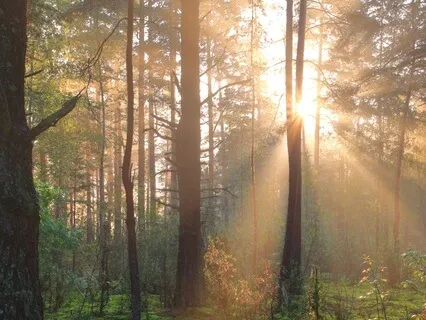
Or imagine yourself out in nature or look out the window and imagine yourself out in nature.
Locate a place of physical or imaginal space where there's some grandeur,
Right?
Something larger than yourself.
And then walk in that space,
Attend to the body,
And do that with gentleness and do that with love.
And that might be all that's needed to begin working with Bella,
Right?
Being with restlessness or worry,
Examining them,
Maybe slowly,
Gently beginning to turn towards the agitation and experience them in the body as you breathe instead of towards the thoughts being generated by them,
Right?
And then gently examine what conditions support their arising and support their falling away.
So does looking at your calendar support their arising or anticipating being with certain people or just being in this historic moment,
Does that cause them to arise?
And do they subside when you go out into nature or imagine doing or when you lay down on your yoga mat or when you listen to music or paint or draw or write,
Right?
What calms your nervous system and supports the passing away of restlessness and worry?
And maybe it's as simple as the recollection,
Like the recollection that they,
Like all of the hindrances are permanent,
Right?
They're all just arising and passing away unless we identify with them or wrap our identities around them.
Like if I say,
Oh,
I'm such a worrier.
And even then,
The moment we shine mindfulness on them,
They begin to dissipate,
Right?
They begin to fall apart.
So some inquiries that can support asking if I can let restlessness subside,
Let worry go,
Right?
Can I allow this restless body and mind,
This worried mind to be my teacher?
Can I let the body be my teacher?
Let nature be my teacher.
Let mindfulness be a true doorway into insight.
Let restlessness be a friend and worry be a friend and let nature bring some peace.
So let's sit.
And yeah,
You're very welcome to close your eyes for this sit and you're also welcome to open them if there is some element of nature outside your window,
If you're near a window,
And just gaze out at whatever is out there.
It might be a snowy landscape or maybe you're in Hawaii and it's a palm tree,
Or it might be something in the middle like here in California,
Kind of gray,
Foggy,
Wet.
And if the eyes are closed or even if they're open,
Imagine the body as spacious.
So beginning to pay attention to the body as a big,
Spacious container,
Begin to pay attention to the breath as it gently expands into the body and maybe even expands the container of the body.
And if there's any restlessness,
If there's an urge to move around,
To move the body,
Or if there's worry,
I don't have time for this,
When will this end?
I have to do this,
I have to do that,
My to-do list.
See what happens when you create imaginal space first,
Just creating space for all that's happening,
Not trying to stop it from happening,
Just making space for what is.
Just in this moment,
Making space for whatever is present,
Whatever hindrances might present.
And then imagining being in nature somewhere,
Your favorite version of being in nature.
Or being with nature,
It could be as simple as just holding a bouquet of flowers or looking out your window at your favorite tree,
Or might be being out in nature,
Handled up or down,
Whatever version of being in nature best supports your body,
Your mind.
And seeing how in nature there is no worry,
There is just whatever is happening.
There is no restlessness,
Just the natural movement of the trees and the rivers and the oceans and the wind,
Rain and the snow,
And the other beings,
The other beings.
And imagining or knowing that that's all that we are as well,
Just part of nature.
Peace of wild things,
Says Wendell Berry,
The poet Wendell Berry says,
The peace of wild things.
Thanks for being on the wake-up call,
Happy solstice,
Merry Christmas,
Happy Hanukkah,
Happy Kwanzaa.
I'll see you on the 26th.
Be safe.
Don't forget Festivus for the rest of us.
Festivus for the rest of us.
I want to hear more about that,
Matt.
Oh,
It's from Seinfeld.
Thank you.
Yes.
Happy Festivus for the rest of us.
Happy Festivus.
Take care,
Everybody.
Bye-bye.
Bye.