Music Hi everyone it's Judy Cohen and this is Wake Up Call 374.
It's been a minute so I'm glad to be back and really glad to see you.
Let's see let's head back into exploring the Paramitas.
And we've looked at the perfection of generosity,
Ethical conduct,
Patience and joyful effort.
And Norman Fisher in his wonderful book The World Could Be Otherwise calls these first four of the six Zen Paramitas the ordinary ways that humans of all cultures develop character by learning to be generous,
Ethical,
Patient and full of joyful effort towards an upright life.
The last two Paramitas are Dhyana Paramita or the Paramita or the perfection of meditation and Prajna Paramita or the perfection of understanding or wisdom.
And these Norman says invite us into an exploration of a more mystical or spiritual perspective.
And I'd say that in my experience meditation and wisdom are also abundantly practical.
I haven't I hadn't ever even heard the word meditation before I took my first meditation course in 1993 and when I sat down for my first meditation ever in that course I thought it was impossible.
My mind was completely gone which it still is during many sits but for the first time I realized that being gone was actually a thing and that not being gone was a possibility and could be really useful.
About a year before I'd been playing with my then 14 month old daughter and she was just exploring her world she was picking up one toy at a time looking at it closely feeling its texture tasting it of course and then putting it down and picking up something else.
Just one toy at a time.
Just one sense at a time.
Sight,
Sensation,
Taste,
Maybe smell.
It occurred to me that I never did that.
I didn't pick up one toy I didn't pick up one kitchen implement one document or if I did I didn't just do one thing with it I multitask which I was super proud of.
The more things I could do at once I believed the more I could get done.
Yet there was this tiny being soaking in the world one thing at a time.
Fast forward to that first mindfulness workshop and I realized how little I knew about one thing at a time as if I were trying to swim and had never been in the water.
Once I was at a law and social change jam and we had found this gorgeous farm in the Catskills and there was this beautiful deep natural pond and it was summertime and I'm part of the team that leads the jam and one of my teammates and I were up early so we decided to head to the pond and we got there and I dove in and started swimming out into the middle but my teammate was staying in the shallows and I was beckoning at them but they didn't budge and I swam back and we both waded out and we sat on the shore and my teammate looked so heartbreakingly sad and all their life they said they had wanted to swim but they had never learned how and I just remember sitting on the shore and holding one another and it was dawn and it was warm and they were just crying and that grief was so familiar to me because that was what eventually surfaced after a few weeks of practicing meditation after that first workshop.
I mean I knew how to hold a baby and cook dinner at the same time or how to keep five or seven or twelve matters in mind all at once or you know how to go for a run and listen to music and tease out a case but I had no idea how to do just one thing.
So I learned and it took a lot of time I mean to take didn't take more time than learning to practice law or than learning to be a decent cook or a good enough mom but it took time I'm still learning and also by the way my teammate learned how to swim.
So when people ask me if they can learn to meditate by paying attention while doing something else my answer from my own experience anyway is not really.
Portable practice is great don't get me wrong do that as much as you can check in as you walk into a room meditate on your walk to the park pay attention while you're driving always good idea take 20 seconds to breathe when that awful email arrives you know I do all of these things and they're really supportive but none of them would be supportive if I weren't also taking some time every day to just do one thing just meditate.
Here's how Norman puts it he says meditation is a specific technical skill it requires instruction discipline and development.
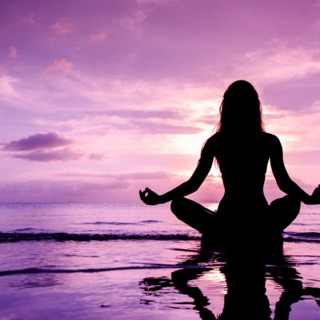
Meditation is the basic background practice that makes all the other practices possible and effective and while the word meditation with its roots in Old French and Latin means from a Western perspective to think over to think deeply to reflect mindfulness meditation is different it comes to us from India from Buddhism and is what Norman calls the psychophysical practice of concentration sitting upright unmoving silent steady and aware.
Focusing on the breath noticing when the mind wanders off and gently kindly replacing it on the breath not also walking to the park or riding a bike or cooking and also not also thinking.
And back to Norman's point that the perfection of meditation and understanding are mystical spiritual when we practice mindfulness meditation over time the mind really does become quieter during meditation and that spills over into everyday life or at least that's been my experience and contemplative neuroscientists say we're rewiring neurons and carving new neural pathways but there's something mystical going on too.
There's also less anxiety when we're meditating and we're less prone to depression something else that's been studied but is also a kind of awakening to the beauty and peace available in each moment.
There's less physical mental and emotional reactivity the body becomes calmer the heart rate slows and heart opens and those of us who've noticed those things probably everybody here knows this goes deeper than the research has at least at least as of yet and we learn I hope everybody learns we learn to be kind to ourselves which for me has been nothing short of miraculous and which spills over into our lives and is what I think the poet Mary Oliver meant when she said in the summer day I don't know exactly what a prayer is I do know how to pay attention how to fall down into the grass how to kneel down in the grass how to be idle and blessed how to stroll through the fields which is what I've been doing all day tell me what else should I have done doesn't everything die at last and too soon tell me what is it you plan to do with your one wild and precious life so don't multitask your meditation make meditation something ordinary and regular that you just do like brushing your teeth or showering and also something sacred and beautiful that you're grateful you heard about and decided to try and are able-bodied and clear-minded enough to do right now and so yes to today's question meditation is pretty much required and how lucky that we can do it so let's do it you finding a comfortable posture that is also upright dignified joyful and relaxed turning the corners of the mouth slightly up into a small smile locating the breath either at the nostrils as it flows in and out or in the sensation of the chest rising and falling are in the way that the belly fills and empties choosing one and then just attending to the breath each breath in and out in and out and whenever the mind wanders away from the breath which it definitely will not a problem don't make it a problem first readjust your smile and then just come on back to attending to the breath checking in with the attention where is it bringing it back to the breath and also checking in with the attitude and letting go of any stress striving and just joyfully gratefully relocating the breath and one more time just checking in where is the attention bringing it back to the present moment to this breath and what is the attitude joy gratitude attitude of gratitude Thank you.
Thank you.
You are welcome.
Thank you.
Good morning.
See you tomorrow.
And for the rest of you,
I'll see you online next Thursday.
Be well.