Hey everyone it's Judy Cohen and this is Wake Up Call 427.
Here we are at Chapter 10 of Pema Chodron's book The Places That Scare You and she is bringing up an idea that I really love that joy is a requisite for being a warrior.
And she's not just saying that joy is a crucial element of warriorship,
She's pointing to a particular kind of joy.
A joy that some combination of peace in the present moment and confidence that more peace will follow.
So she starts by saying,
At the beginning joy is just a feeling that our own situation is workable.
We stop looking for a more suitable place to be.
And to me that feels like letting go of wanting things to be different.
So circling back to our working definition of mindfulness for the legal mind,
And by the way I found this slide,
Happiness without a hangover,
Of this seal who looks like he she has a hangover,
They anyway.
Yeah so to me it feels like letting go of wanting things to be different.
And so circling back to the working definition of mindfulness for the legal mind,
Present moment awareness,
Courage because not every moment is pleasant,
Grace because that's how we want to aspire to be and to train to be in those unpleasant moments,
And then not wishing things were other than they are,
Not wishing things were other than they are.
It feels like Pema is pointing at the heart of that definition by saying that joy is just a sense that our own situation or each moment is workable.
And then that joy is about not searching or at least not yearning so often for ways to change the situation to get more or bigger or better.
It makes me think about how clenched things feel in the law and maybe in the world but especially in the law.
You know starting in school I learned and I suppose I also taught for a long time to grab for the brass ring,
You know to do better,
To take on more,
To strive for the top,
To be the best,
Help more the people,
Win more of the cases,
On and on.
And then our culture of course reinforces those messages at so many levels.
So how do we swim against that powerful stream to some peaceful place and gain some confidence that more peace will follow?
Well swimming against the stream is actually a classical mindfulness concept.
The legends say that before Gautama achieved enlightenment he realized that not only was wanting more and better and higher not leading him to freedom but neither was asceticism.
And that was why what he felt was needed was a middle way.
That's often what mindfulness is called.
And he was supposedly so thin on his journey because he had engaged in this journey of asceticism with his friends,
His spiritual friends.
He was apparently so thin or allegedly so thin that his ribs were showing through the front of his body.
And he was offered some rice by a woman named Sujatha.
And legend has it that he took the rice,
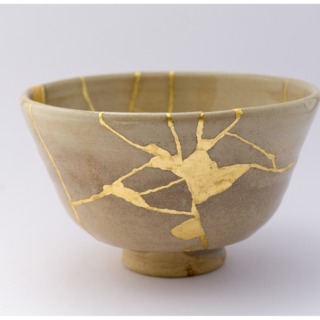
It was offered in a golden bowl,
And he took it at the risk of being derided by his companions who were firmly devoted to the starving themselves path.
And this was the way to enlightenment,
Right?
A little bit like my,
I remember my life as a young lawyer not starving myself but just working so hard all the time.
That sense of like breathlessness that was accompanying every moment of my day.
And then after he finished the rice,
He tossed the golden bowl in the river and he said,
If the bowl floats upstream against the stream,
Which was the direction that he felt like he was going by taking that bowl of rice and not continuing on this ascetic path,
Then I'll attain enlightenment.
And it did and he did,
Right?
So that's the legend.
So I think Pema is inviting us to swim against that stream,
That current of always wanting things to be different,
Better,
More in subtle ways and also in gross ways of believing that if only we could get what we wanted or more of what we wanted,
Then we would be happy,
Then we would experience joy.
Which to me feels like the opposite of peace.
And that's the kind of thing that kind of gives me the hangover.
So on some level,
I think we all know that that's not true,
Right?
We know that happiness and joy don't come from getting everything we want or more of what we want past a certain level of ease and safety.
They come from from letting go of the wanting,
Right?
The happiest moments I've experienced are when I've been present,
Noticing what's here,
Not wanting anything different,
You know?
Those are the moments of peace.
But it does raise the question of what is it about each moment that's joyful?
Like where is the joy in each moment?
And Pema says it's the opportunity to connect with our own basic goodness,
Right?
So when she talks about feeling that our lives are workable,
She's talking about how in each moment,
We can place our attention on whatever measure of good health we have,
Or the roof over our heads if we have one,
Our warm clothes and nourishing meals if we have those,
Our friends,
Our family.
Which she calls the fortunate conditions that constitute a precious human birth.
And they are,
If you think about it.
I mean,
Not all beings have those.
Those are not things that all beings,
Even if they have imaginations,
Could imagine having.
Our existence on this human level includes all of these really amazing things.
And then the other thing that she says,
The other joyfulness in each moment is remembering the great advantage we have to be living in a moment in time when it's possible to hear and practice mindfulness.
And therefore become joyful,
Become peaceful,
Become free.
So I don't know about you,
But I find that it can be easy to overlook joy.
And in order to have joy,
You know,
The joy that's right here in those moments of gratitude or relief or amusement or appreciation for this precious human life,
Or for something right in front of me,
Like a warm cup of tea.
First,
We have to notice them and not overlook them,
Right?
And not only notice and not overlook them,
But store them,
Which there is a process for.
And Pema's process is this classic process of wishing for joy for ourselves and then wishing it for the other people in our lives.
And we're going to do that together in a couple of minutes.
I just wanted to offer one tidbit of the science on this.
And this comes from Rick Hansen,
Who is a Bay Area scientist who studies mindfulness and talks about something called experience-dependent neuroplasticity.
And he's talking about the way that our brains have this lifelong plasticity and are always changing.
And in each moment,
Our neural circuitry is changing in small or large ways,
Depending upon the experiences that we are having.
So,
For example,
This time together on the wake-up call will change all of us in some maybe tiny way that we may not even know.
Or maybe,
You know,
It will change in something larger.
We don't know.
The tea,
The coffee we're sipping changes us,
The judge,
The jury,
The clerk,
Opposing counsel,
Our breakfast,
All those things.
And the question is,
Are we being changed for the better?
Are we cultivating joy?
Because we have this negativity bias that keeps us safe and alive from becoming someone's breakfast a few million years ago.
And it's hardwired into our brains.
And we reinforce that in the law,
Where we're at continual risk for installing and reinstalling this look for the danger,
Look for the danger neural pathway.
Right.
And so what we want to do is we want to be looking for the joy,
Right?
And the joy in each moment,
And then really see it or savor those joyful moments and then lift them up.
And then notify someone or tell someone,
Remind ourselves or tell somebody else,
I saw a beautiful rainbow today,
There was a break in the weather.
And if you're familiar with the RAIN acronym for working with afflictive emotions,
This is the acronym SUN,
Or seeing,
Lifting up,
And then notifying,
S-U-N,
For joyful moments.
And we just need to do that for five or 10 seconds for each joyful moment.
Right.
And this is what's going to begin to hardwire,
Install this joy into our brains.
So that's the neuroscience.
All right.
So let's practice a little bit of this together from the Chodron,
Tibetan,
But this is also very common throughout all streams of mindfulness perspectives.
So first,
Just taking a deep breath and settling into your seat.
If you're sitting,
Feeling your feet connected to the floor,
The earth.
Same if you're standing or if you're lying down,
Feeling the connection of the body to the earth,
Taking a moment to settle in.
And then just considering whatever good fortune that you have that comes to mind.
And maybe it's something very small.
Maybe it's something large.
Like I said,
It could be your tea,
Your coffee this morning,
This afternoon.
It could be sun shining in through the window.
It could be something joyful happening in your life.
And really making a wish for yourself and saying it affirmatively.
You could say it out loud if you're in a space where you can do that,
Or you could just say it to yourself.
May I attend to this joy and may my joy continue.
May I attend to this joy,
Really see it,
Feel it,
Drink it in.
And may my joy continue.
And if there's any resistance,
Just smile at that resistance.
It's kind of funny sometimes,
I don't know about you,
But the way that I can sometimes resist joy.
So don't resist.
Or if you do,
Just smile at the resistance.
May I notice my joy,
May I savor it,
May I see my joy and may my joy continue.
And now call to mind someone who you really love in an easy way.
So it could be a best friend,
Could be your favorite sibling,
Could be your dog,
Your cat,
Could be a spiritual figure who's very alive for you.
And specifically call to mind some moment of joy that they have experienced.
And then say,
You could say out loud or just say to yourself,
I see your joy.
May your joy continue.
May your joy increase.
May your joy continue.
May your joy increase.
And maybe you're already smiling.
If you're not,
It's helpful to bring a smile to your face.
And now think of someone who is just a friend,
Someone you care about a little,
You know,
Maybe not the person who is the closest to you,
But you know them,
They're a friend to you.
And just see some joy in their lives,
Small or big,
Small or big.
And just say,
I see your joy.
May your joy continue.
May your joy increase.
May your joy continue.
And may it increase.
Just check in internally and see if there's a little bit of peace.
Peace because of wishing joy for other people.
Right?
So the joy of this human birth and part of that part of that is connecting,
Realizing that we are interconnected.
Another amazing part of being human.
I see your joy.
May your joy continue.
May your joy increase.
And now for a completely neutral person in your life,
Someone you don't even know,
The person at the market that you see every so often,
Or it could be the person who's unhoused,
Who you see on the street,
Or could be someone in a big meeting in a Zoom that you occasionally see,
But you barely know their name.
And just imagine some joy in their life.
Perhaps only this joy of being human,
Of being connected to other people.
And say,
I see your joy too.
May your joy continue.
And may your joy increase.
And now you know where we're going.
We're going to the difficult person.
Yeah?
The difficult person.
And you know,
If this gets tricky,
Then just smile at that.
Right?
The joy of doing the very best that you can and thinking of your difficult person.
Right?
Yeah,
I see your joy.
I see your joy.
May your joy continue.
May your joy increase.
Because maybe if this difficult person has more joy in their life,
They'll be less difficult.
Right?
And anyway,
It's better if they're happy in a wholesome way.
Right?
Not wishing unwholesome happiness,
Which they may wish for themselves,
But wishing them wholesome happiness to be connected to everyone else.
And then just letting go of the categories altogether.
And just imagining your connection,
Our connection to each other,
To all beings,
And seeing that there is joy in that.
And may that joy continue.
And may that joy increase.
And I'll just close with that the Dalai Lama says that this practice is crucial because there are something like 8 billion people on the planet.
And so when we do this,
And we take joy in the joy of others,
Then we're increasing our chances for happiness by 8 billion times.
So have have a great rest of your Thursday.
Thank you for being here.
And I'll see you next Thursday.