Hey everyone,
It's Judy Cohen and this is Wake Up Call 436.
As we get to the end of Pema Chodron's book,
The Places That Scare You,
Just a reminder that we're exploring the paramitas,
The perfections of mind.
The first one is generosity or dana in the Pali,
Which was last week's Wake Up Call.
And the next is sila in the Pali.
And I've mostly heard sila translated as ethics.
And then I've also heard it translated as virtue.
And then I've also heard it translated as harmony.
And when I when I went into my photo library,
You know,
My online library where I get to pick the photos,
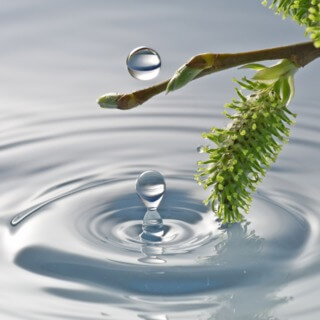
This was one of the first images that came up for harmony,
And I just really loved it.
So I'm not sure exactly what it has to do with harmony,
An elephant sitting on a thin branch is what it's called,
But there it is.
So from,
And I think it's an elephant baby too,
Anyway,
From an ethical perspective.
Okay,
So sila,
We could sum it up by saying do no harm,
Right?
That's it.
But more expansively,
It includes a few ways of not causing harm.
So not causing harm to other living beings,
Not taking anything not freely offered,
Not communicating in ways that aren't kind and compassionate,
Not misusing sexuality,
Not using intoxicants to cloud the mind.
And in a way,
Unpacking these should be simple,
Maybe it should even be simple to follow the guidelines.
But then as lawyers,
And our jobs are to be these really passionate advocates to bring this kind of ferocity to our work,
For me,
These precepts haven't always been so simple.
And I don't pretend to have the solution or the answer.
So today,
I just want to offer some questions.
And starting out with just not causing harm to other beings,
How do we do that?
When I win,
Someone else loses,
And then they feel harmed.
It's kind of simple,
But we're in this adversary system.
So how do I not cause harm?
When someone who loses against me is going to feel like I have caused harm.
And then what is not taking what is not freely offered for a lawyer?
I mean,
For sure,
Stealing,
Not stealing.
But what about winning a motion,
You know,
When I've made a motion,
What I've moved for wasn't freely offered by the other side,
Or I wouldn't have had to make the motion,
Right?
In a mediation,
In an arbitration,
In a settlement,
Is either side really freely offering what they're putting on the table?
I mean,
Just the very fact that our profession requires us to have sides makes this element of SELA feel,
I don't know,
Dubiously achievable to my way of thinking.
But what if the conversation between the sides or among the sides were courageous and truthful and kind and mindful,
You know,
Is there a world in which resolution could feel freely offered by all?
And how would we point ourselves in that direction?
So not harsh,
No unkind words,
That's the next one.
But looking at this third element of SELA,
Harsh words often,
They're so often our currency,
You know,
But could we speak to one another,
To our clients and to our opponents with kindness,
You know,
With compassion,
With love?
What would that look like?
Seems like it would help get us at least pointed in that direction of solutions that feel freely offered by everyone.
And then not misusing sexuality might do the same thing.
Not only not misusing our own sexuality,
Not putting our sexual energy out in places where it's not welcome,
But also not enabling,
Not even ignoring others' biases against sexual orientation or gender identity and not having those ourselves,
Or at least working very hard diligently in an ongoing way to not bring,
To not have those biases,
To heal those biases.
I feel like we might have a different profession,
Maybe different world if we could model not misusing sexuality,
Model that for society and all of its nuances.
And then finally,
Not using intoxicants to cloud the mind.
I mean,
I like a glass of wine or the occasional whiskey,
That's my favorite.
But when I don't take one to try to numb myself after a day that maybe went sideways,
I'm always better off,
Always better off.
So what about you?
And I feel like all of these questions are the main thing,
You know,
The answers are not the main thing.
Pema says,
It's easy to regard the Paramitas as a rigid code of ethics,
A list of rules,
But the Bodhisattva's work is not that simple.
The power of the Paramitas is not that they're commandments,
But that they challenge our habitual reactions.
You know,
These guidelines are not written in stone.
The intention to open the heart and mind is what's essential.
If we do good deeds with an attitude of superiority or outrage,
We simply add more aggression to the planet.
I really love that.
If we do good deeds with an attitude of superiority or outrage,
We simply add more aggression to the planet.
So maybe take a moment to consider,
With these aspirations,
Are we simply dividing the world into good and bad and plaintiff and defendant and really self and other?
Pema poses this question.
If we draw a line down the center of a room and tell those in it to put themselves in the category of virtuous or non-virtuous,
Are we truly more liberated because we choose virtuous?
More likely,
We're just more arrogant and proud.
Bodhisattvas are to be found among thieves and murderers.
And then she tells this great story.
It's a traditional story,
And I had never heard it until I read this book.
It's about a ship captain traveling with 500 people,
And then a pirate boards the ship and threatens to kill the law.
And the ship captain can see that if he allows the pirate to do this,
Not only will he and all his passengers die,
But the pirate will be sowing the seeds of his own intense suffering.
And so out of compassion for everyone,
Including the pirate,
The captain kills the pirate.
I don't know about you,
But maybe this is helpful in understanding that there may be a wise use of aggression or even outright destruction in our profession.
Pema even goes so far as to say,
There is no act that is inherently virtuous or non-virtuous.
The warrior trains in the discipline of not causing harm,
Knowing that the way to do this skillfully will change in the circumstances.
And in understanding this training becomes less moralistic and more tolerant.
Which points me back to harmony,
And my question is,
Is all of Sila just pointing at harmony?
In other words,
Is our aspiration to create a less divisive profession and world and to bring harmony into the world?
Maybe is that the role of Sila?
Because if it is,
I love that as an aspiration.
And what about to bring more harmony to our inner world too?
So yesterday,
One of my students called me out about something I'll probably explore here on the wake up call once I've had a chance to sit with it for a while.
And I can see these two fundamental tasks ahead of me.
And maybe there are more of which I can't see yet.
But first,
To be really honest about what happened and not try to explain or deny,
Because I know that would cause more harm to the student.
And I'll certainly circle back with them.
And second,
To practice non-harming towards myself while I sit with what I heard from the student and try to understand.
And so,
In other words,
Remembering my own fundamental goodness,
Not as a shield,
But as a recollection of my potential,
Even though clearly I wasn't manifesting that potential in the classroom yesterday,
At least from the student's perspective.
And so maybe you're familiar with these two tasks as well,
You know,
Caring about someone whom you've harmed enough to contemplate how that happened and what you can do better next time.
And also at the same time,
Still loving yourself and honoring your own good heart.
And I mean,
In a way,
I hope you're not too familiar with these two tasks in the sense that I don't want you to have been sitting with having hurt anyone.
But it's probably not realistic to be a human living in the world and get by without ever doing that.
So since the first part is maybe inevitable,
I hope I hope you're familiar with the second part.
And these are what my friend and teacher,
Rhonda McGee,
Calls the long loving look.
You know,
Can we be in this continual process with this continual commitment to take a long loving look at ourselves,
At others,
At ourselves?
And I feel like true sila,
True harmony might be attainable if we can commit to practices like that.
So let's sit together,
Finding a comfortable posture,
A posture that will support your practice today,
Right now.
Taking a few intentional breaths and letting go of all the words.
My words are your internal words.
Dropping into the body,
The body in this moment,
Sitting,
Standing,
Lying down,
Walking,
Driving,
Wherever you are.
Wherever your body is in this moment.
Noticing the weight of the body.
The way that the body is connected to the earth.
Weighted down by the earth and to the earth.
Noticing the sense of each moment as it arises and passes away.
The pleasantness of the moment or the unpleasantness of the moment.
Maybe there are aches and pains in the body or there's hunger or there's sleepiness or there's energy.
Maybe there are sounds in the environment or smells or there's a taste in the mouth.
Or the eyes are seeing something even if they're closed.
Maybe thoughts are arising and passing away or emotions.
What sense do you have of each of these phenomenon as they arise and pass away?
Is there a sense that they are pleasant or is there a sense that they are unpleasant?
Or really no sense at all?
And is it possible to attend to this present moment with love?
Whatever is happening.
And especially if thoughts or emotions are arising.
But also sensations if you notice there is anything difficult at all.
Is it possible to take a long loving look?
The image that's coming to mind is pulling taffy with so much joy.
Can we take that long loving look?
Doesn't need to take a long time,
Just a moment.
But looking in.
Is there harm that's been done to me?
Have I caused harm?
Looking at this question with love.
And then maybe taking this inquiry with you as you flutter the eyes open if they were closed.
Take a couple of intentional breaths.
Move into the next part of your day.
Thanks so much everyone for being on the wake up call.
It's lovely to sit with you.
Be safe out there.
Bring a little bit of peace into your world.
See you next week.